


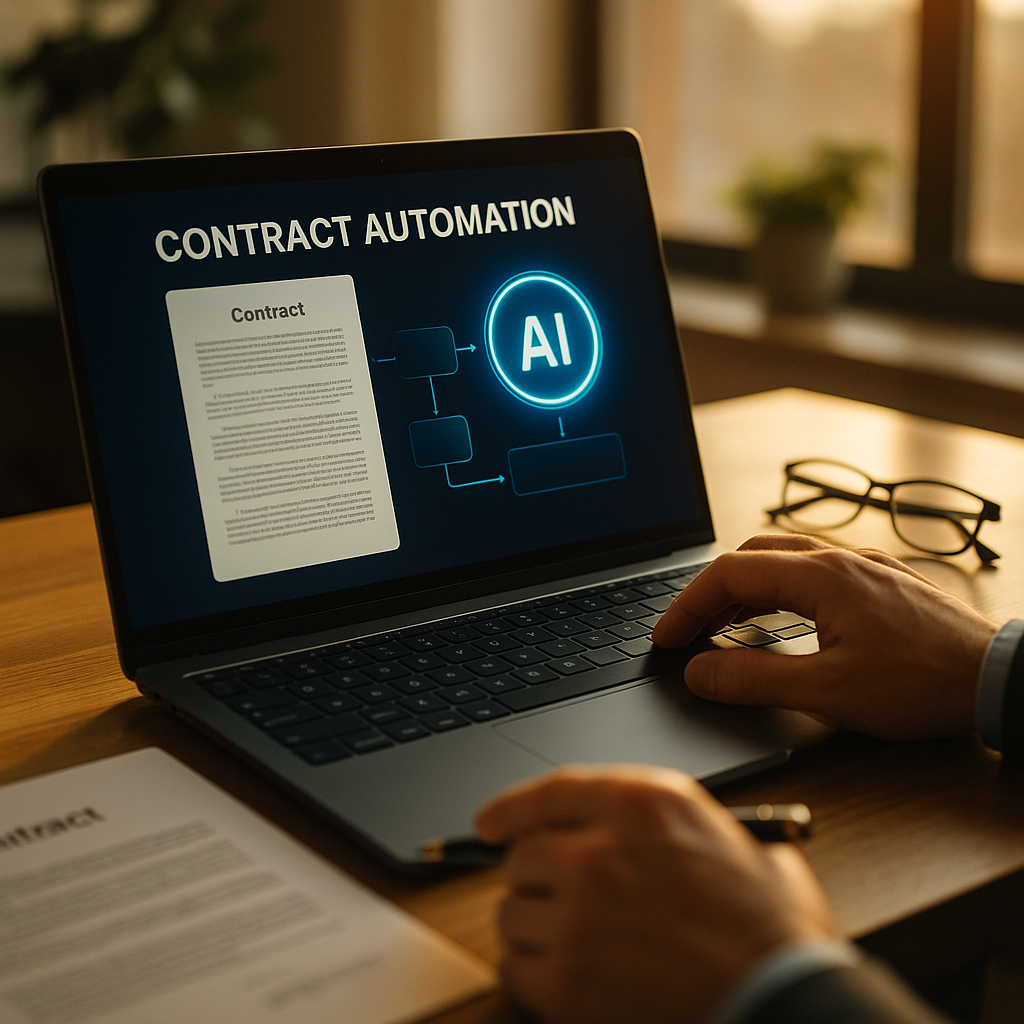
Contract negotiation eats an average of 11 days off every influencer campaign timeline, according to procurement teams we’ve surveyed across mid-market brands. That’s not a rounding error — it’s a bottleneck. Automating influencer contract negotiation is no longer a novelty pitch from a vendor deck; it’s becoming table stakes for any brand running more than a handful of creator deals per quarter. Adapti’s AdaptAI Engine is one of the more serious attempts to solve this, and it deserves a hard technical look, not a marketing recap.
What Procurement Teams Are Actually Fighting
Anyone who has run an influencer program at scale knows the real friction isn’t finding creators. It’s the back-and-forth after you’ve found them. Usage rights, exclusivity windows, whitelisting terms, morality clauses, payment milestones — every one of these becomes a redline. Multiply that by 200 creators in a single campaign, and your legal and procurement teams are drowning in near-identical contracts that each need bespoke attention.
This is exactly the kind of structured-but-messy workflow that agentic AI systems were built to handle. We’ve seen similar patterns play out in agentic AI marketing platforms more broadly, where the value isn’t generative flair, it’s disciplined execution of repetitive decision logic at volume.
How AdaptAI Actually Works
AdaptAI isn’t a chatbot that drafts contracts. It’s a negotiation engine that sits between your brand’s deal parameters and the creator’s (or their agent’s) counter-offers, running iterative exchanges against a rules engine until both sides land inside acceptable thresholds. Strip away the vendor language and it breaks into four functional layers.
- Parameter ingestion: Your team defines non-negotiables (usage rights duration, exclusivity scope, FTC disclosure language) and negotiable ranges (rate bands, deliverable counts, revision limits) inside a brand policy layer.
- Counterparty modeling: The engine pulls historical deal data — past rates, response patterns, typical ask inflation — to predict where a creator or their manager will likely push back.
- Negotiation loop: AdaptAI runs simulated and live back-and-forth exchanges, proposing terms, receiving counters (via API or structured intake form), and adjusting within the pre-approved envelope.
- Escalation triggers: Anything outside the defined ranges — a creator demanding perpetual usage rights, for instance — kicks the deal to a human negotiator with full context attached.
That last layer is the one procurement teams should scrutinize hardest. An automation engine that can’t cleanly escalate edge cases isn’t automation, it’s liability.
The real test of any contract automation engine isn’t how many deals it closes — it’s how cleanly it identifies the ones it shouldn’t touch.
The Data Model Behind the Negotiation Logic
AdaptAI’s negotiation loop depends on identity resolution across your creator roster — knowing that “@sarahmakes” on TikTok and the LLC she invoices through are the same legal entity, with the same negotiation history, is foundational. Get this wrong and you’re negotiating against outdated terms or duplicate profiles. This is the same problem we’ve flagged in identity resolution for AI agents — without a clean merge key, agentic systems make confident decisions on bad data.
Adapti reportedly uses a hybrid merge approach: deterministic matching on tax ID and payment account where available, probabilistic matching (handle history, email domains, agency affiliation) where it isn’t. That distinction matters more than most procurement leads realize. Deterministic versus probabilistic merge keys aren’t just a data engineering footnote — they determine whether your contract engine is negotiating with the right counterparty at all.
Where the ROI Case Actually Holds Up
Let’s be direct about the numbers, because vague “efficiency gains” claims are the reason procurement teams distrust AI vendors in the first place. Brands piloting AdaptAI on mid-tier creator tiers (10K–500K followers) report contract cycle times dropping from an average of 9-12 days to 2-3 days. That’s not because the AI is smarter than a human negotiator — it’s because it never sleeps, never waits for a Slack reply, and doesn’t need three internal approvals to send a counter-offer within pre-agreed parameters.
The ROI math breaks down into three buckets:
- Labor cost reduction: Legal ops and influencer marketing managers spend fewer billable hours on redlines that follow predictable patterns.
- Campaign velocity: Faster contract close means faster content turnaround, which matters enormously for reactive campaigns tied to trends or product drops.
- Consistency risk reduction: Manual negotiation across dozens of account managers creates term drift — one manager grants 12-month usage rights, another grants 6. Automated negotiation enforces policy uniformity.
That third point is underrated. Inconsistent contract terms across a large creator roster is a quiet legal exposure that most brands don’t discover until a usage rights dispute forces an audit. Similar governance gaps have shown up in agentic AI governance charters for real-time bidding, where undocumented autonomous decisions become the thing compliance teams can’t reconstruct after the fact.
The Compliance Question Nobody Skips (Or Shouldn’t)
Here’s the uncomfortable question every procurement lead should ask before signing an AdaptAI contract: who is legally accountable when the AI negotiates a term that violates FTC disclosure requirements or a regional advertising standard? The answer, per Adapti’s current terms, is that the brand remains the responsible party — the engine is a tool, not a legal signatory. That’s standard, but it means your internal compliance review can’t be skipped just because the negotiation was automated.
Regulatory bodies like the Federal Trade Commission haven’t issued guidance specific to AI-negotiated influencer contracts, but existing endorsement disclosure rules still apply regardless of who (or what) drafted the terms. In the UK, the Information Commissioner’s Office guidance on automated decision-making is also relevant if your negotiation engine is processing creator personal data to model counterparty behavior — which AdaptAI’s counterparty modeling layer explicitly does.
Practical takeaway: build a human review checkpoint into every AdaptAI-negotiated contract before final signature, even if it’s a five-minute compliance scan. Don’t treat “automated” as synonymous with “unreviewed.”
Automated negotiation reduces labor cost, not legal accountability. Your compliance team’s sign-off still has to happen — it just happens faster.
Integration Reality Check
AdaptAI plugs into existing CRM and CDP infrastructure via API, which sounds simple until you’re the one mapping fields between your creator CRM, your finance system’s payment terms, and Adapti’s contract schema. Brands running fragmented stacks — a common problem we’ve covered in agentic AI in CRM and CDP stacks — should budget real implementation time here, not the “plug and play in a week” timeline sales reps like to promise.
Expect a genuine integration window of 4-8 weeks for mid-sized creator programs, longer if your payment terms vary significantly by region or creator tier. Procurement teams evaluating vendors in this space should ask for a sandbox environment before committing budget, not just a scripted demo.
Where AdaptAI Falls Short (For Now)
No engine is magic, and AdaptAI has real limitations worth naming before you sign a contract of your own.
- Top-tier creator negotiations still need humans. Once you’re negotiating with celebrity-tier talent represented by major agencies, the deal complexity (multi-platform exclusivity, brand safety carve-outs, long-form usage licensing) exceeds what a rules-based envelope can safely automate.
- Cross-border tax and labor law variance isn’t fully modeled yet. Brands running global creator programs report needing manual legal review for contracts outside the US, UK, and EU.
- The counterparty modeling is only as good as your historical data. New-to-platform brands with thin negotiation history will see less accurate rate predictions in the first several months.
None of these are disqualifying. They’re just the honest scope limits of a tool that’s genuinely useful within its lane — mid-tier, high-volume creator negotiation with clearly defined policy parameters.
Should Your Procurement Team Pilot It?
If your brand runs fewer than 30 creator contracts per quarter, the ROI case is thin — the labor savings won’t offset the integration cost. If you’re running hundreds of micro- and mid-tier creator deals per campaign cycle, and your legal team is currently the bottleneck, AdaptAI (or a comparable engine) starts to look less like a nice-to-have and more like operational necessity. The broader pattern here echoes findings from recent data on AI ROI: the tools that win are the ones with narrow, well-defined scope, not the ones promising to automate everything.
Run a 90-day pilot on one creator tier before rolling out program-wide. Measure cycle time, escalation rate, and — critically — the percentage of contracts that required post-negotiation compliance correction. That last metric tells you more about the engine’s real maturity than any vendor case study will.
Frequently Asked Questions
What is Adapti’s AdaptAI Engine used for?
It’s an automated negotiation system that handles influencer contract terms — rates, usage rights, exclusivity, deliverables — within brand-defined parameters, escalating anything outside those bounds to a human negotiator.
Does automating influencer contract negotiation reduce legal risk?
It reduces inconsistency risk by enforcing uniform terms across a creator roster, but it doesn’t remove the brand’s legal accountability. Compliance review still needs to happen before final signature.
How long does it take to integrate AdaptAI with existing systems?
Realistically 4-8 weeks for a mid-sized creator program, depending on how fragmented your CRM, CDP, and payment systems already are.
Is AdaptAI suitable for negotiating with top-tier or celebrity creators?
Not fully. High-complexity deals involving major talent agencies and multi-platform exclusivity typically still require human negotiators due to the nuance involved.
What’s the minimum contract volume that justifies adopting this kind of engine?
Most brands see meaningful ROI above roughly 30 creator contracts per quarter. Below that threshold, integration and setup costs tend to outweigh labor savings.
The Bottom Line
AdaptAI is a genuinely useful tool for the specific problem of high-volume, mid-tier creator contract negotiation — not a replacement for your legal team’s judgment. Pilot it narrowly, measure the escalation rate closely, and keep a human compliance checkpoint in every deal before it’s final.
Top Influencer Marketing Agencies
The leading agencies shaping influencer marketing in 2026
Agencies ranked by campaign performance, client diversity, platform expertise, proven ROI, industry recognition, and client satisfaction. Assessed through verified case studies, reviews, and industry consultations.
Moburst

-
2

The Shelf
Boutique Beauty & Lifestyle Influencer AgencyA data-driven boutique agency specializing exclusively in beauty, wellness, and lifestyle influencer campaigns on Instagram and TikTok. Best for brands already focused on the beauty/personal care space that need curated, aesthetic-driven content.Clients: Pepsi, The Honest Company, Hims, Elf Cosmetics, Pure LeafVisit The Shelf → -
3

Audiencly
Niche Gaming & Esports Influencer AgencyA specialized agency focused exclusively on gaming and esports creators on YouTube, Twitch, and TikTok. Ideal if your campaign is 100% gaming-focused — from game launches to hardware and esports events.Clients: Epic Games, NordVPN, Ubisoft, Wargaming, Tencent GamesVisit Audiencly → -
4

Viral Nation
Global Influencer Marketing & Talent AgencyA dual talent management and marketing agency with proprietary brand safety tools and a global creator network spanning nano-influencers to celebrities across all major platforms.Clients: Meta, Activision Blizzard, Energizer, Aston Martin, WalmartVisit Viral Nation → -
5

The Influencer Marketing Factory
TikTok, Instagram & YouTube CampaignsA full-service agency with strong TikTok expertise, offering end-to-end campaign management from influencer discovery through performance reporting with a focus on platform-native content.Clients: Google, Snapchat, Universal Music, Bumble, YelpVisit TIMF → -
6

NeoReach
Enterprise Analytics & Influencer CampaignsAn enterprise-focused agency combining managed campaigns with a powerful self-service data platform for influencer search, audience analytics, and attribution modeling.Clients: Amazon, Airbnb, Netflix, Honda, The New York TimesVisit NeoReach → -
7

Ubiquitous
Creator-First Marketing PlatformA tech-driven platform combining self-service tools with managed campaign options, emphasizing speed and scalability for brands managing multiple influencer relationships.Clients: Lyft, Disney, Target, American Eagle, NetflixVisit Ubiquitous → -
8

Obviously
Scalable Enterprise Influencer CampaignsA tech-enabled agency built for high-volume campaigns, coordinating hundreds of creators simultaneously with end-to-end logistics, content rights management, and product seeding.Clients: Google, Ulta Beauty, Converse, AmazonVisit Obviously →