


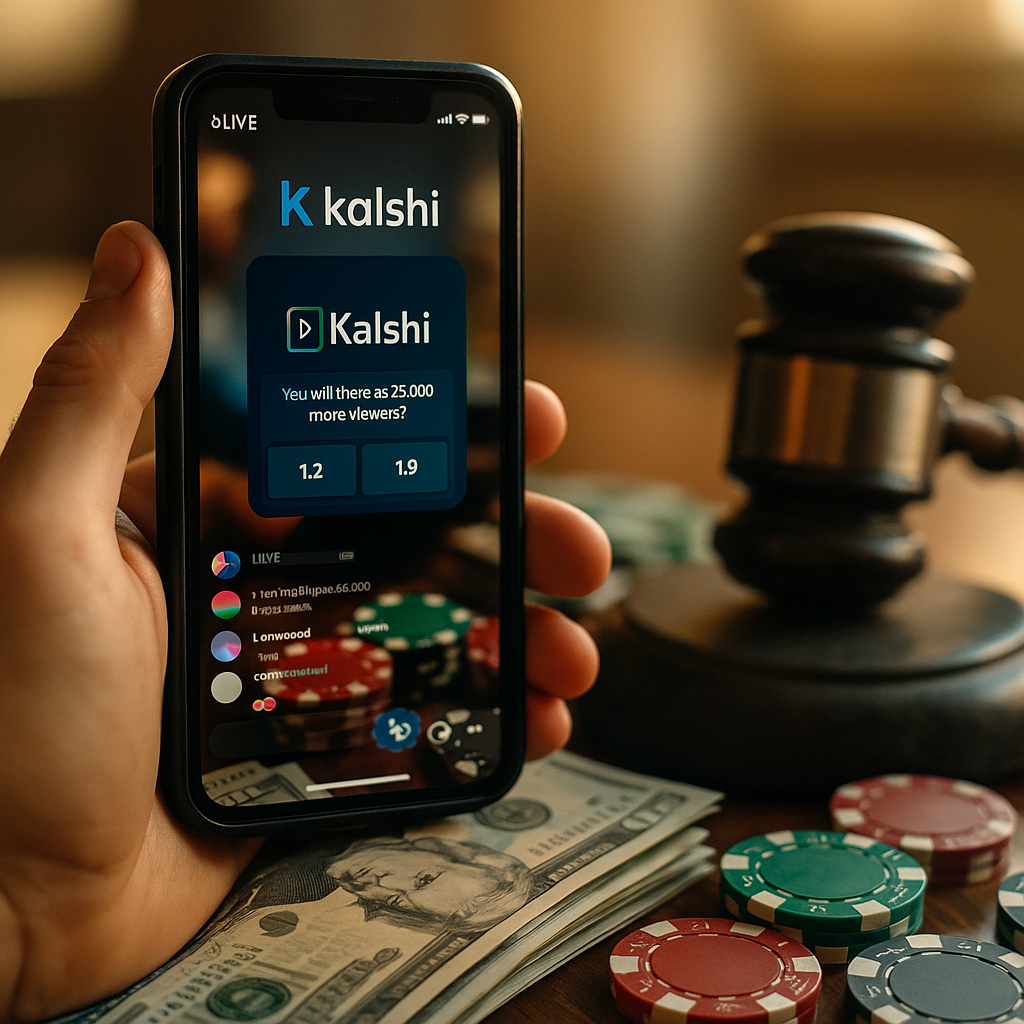
Prediction markets aren’t sportsbooks, at least not on paper. That distinction let Kalshi run TikTok livestream content that looked, sounded, and functioned like sports betting promotion, without tripping the gambling ad restrictions that would sink a DraftKings campaign. The Kalshi TikTok livestream playbook has become a case study in regulatory arbitrage, and it’s forcing sportsbook marketers to rethink what “compliant” actually means.
What Kalshi Actually Did on TikTok
Kalshi built its growth engine on event contracts, financial instruments that let users “trade” on the outcome of real-world events, including sports results. Because the CFTC regulates Kalshi as a derivatives exchange rather than a state gaming commission overseeing it as a sportsbook, the company operates outside the ad rules that govern licensed betting operators in most states.
On TikTok, that regulatory gap turned into a content strategy. Creators partnered with Kalshi ran livestreams walking through NFL and NBA matchups, breaking down “yes/no” contract odds on game outcomes in language nearly indistinguishable from point-spread betting talk. Hosts used phrases like “lock in your position” instead of “place your bet.” Semantics did the regulatory heavy lifting.
The content performed. Livestream shopping-style formats, borrowed from the same playbook that turned livestream auctions into a top-performing format for platforms like Whatnot, kept viewers engaged for extended sessions while creators walked through contract pricing in real time. TikTok’s own advertising policies restrict gambling promotion heavily, but event-contract trading doesn’t fit neatly into that category, so enforcement was inconsistent at best.
Kalshi didn’t break gambling ad rules. It found content that gambling ad rules were never written to cover, and that gap is exactly where regulators are now focused.
Why the Regulatory Line Is So Blurry
Here’s the uncomfortable truth for compliance teams: gambling regulation in the US is a patchwork of state gaming commissions, each with different definitions of what counts as a wager. Prediction markets exploit a jurisdictional seam. The CFTC governs derivatives at the federal level, and federal preemption arguments have let platforms like Kalshi push back against state cease-and-desist orders in places like Nevada and New Jersey.
Several state regulators have already issued warnings. Nevada’s Gaming Control Board and New Jersey’s Division of Gaming Enforcement both flagged Kalshi’s sports-related contracts as unlicensed sports wagering, disguised. Kalshi’s response has been to lean on its federal registration as legal cover, arguing that CFTC oversight preempts state gaming law entirely. Courts haven’t fully settled the question, and that uncertainty is precisely what makes this a live risk for any brand adjacent to the space.
For marketers watching from sportsbook or affiliate businesses, the lesson isn’t “copy Kalshi.” It’s understanding that regulatory arbitrage strategies have a shelf life. The FTC and state attorneys general tend to close these gaps once enough attention accumulates, and Kalshi has accumulated plenty.
The Creator Layer Made It Worse
Individual creators running these livestreams weren’t disclosing paid partnerships consistently, and several didn’t hold any gaming-related licensing because, again, Kalshi isn’t classified as gaming. That created a second layer of risk: even if the platform’s content technically complied with derivatives marketing rules, individual creators were making claims about win probability and “guaranteed value” that read like unlicensed financial or gambling advice, depending on which regulator you ask.
This is where sportsbook brands should pay close attention. A creator program built on ambiguous legal footing doesn’t just expose the platform. It exposes every creator in the network, and by extension, the brand’s reputation when one of them gets named in an enforcement action.
What Sportsbook Brands Are Actually Watching For
Licensed sportsbooks operate under far tighter constraints than Kalshi does, at least for now. DraftKings, FanDuel, and BetMGM all run creator programs, but those programs sit inside a compliance apparatus built over years of state-by-state licensing fights. Marketing teams at these companies are watching Kalshi’s TikTok success with a mix of envy and alarm.
- Envy, because Kalshi is capturing exactly the demographic sportsbooks want, without paying the same compliance tax on every piece of content.
- Alarm, because if prediction markets get reclassified as gambling (a real possibility being litigated right now), any creator content built on the same tone and format becomes retroactively risky.
Sportsbook compliance and marketing teams should treat this moment as a stress test of their own creator vetting process, not an invitation to mimic Kalshi’s tone. If your legal team hasn’t reviewed how your influencer program describes odds, probability, or “value bets” in the last two quarters, that’s a gap worth closing before a regulator closes it for you.
Three Things to Audit Right Now
- Disclosure language across livestream formats. Static post disclosures don’t translate cleanly to livestream content, where hosts talk fast and disclaimers scroll past in seconds. Platforms are inconsistent on this, and TikTok’s own branded content policies require real-time disclosure, not a caption buried at the bottom.
- State-by-state creator eligibility. A creator based in a state where sports betting ads are restricted shouldn’t be running livestream betting content targeted at users nationally. Geotargeting and creator location need to align with the messiest possible regulatory map, not the most convenient one.
- Contract language with affiliate creators. If a creator gets flagged for unlicensed gambling promotion, does your indemnification clause protect the brand or leave it exposed? Most influencer agreements were written before livestream betting content existed as a format, and it shows.
The ROI Math Regulators Don’t Care About
From a pure performance standpoint, betting-adjacent livestream content converts. Engagement rates on sports prediction livestreams reportedly outperform standard sportsbook promo content by a wide margin, largely because the “trading” framing feels more legitimate to younger audiences skeptical of traditional gambling branding. That’s not a coincidence. Gen Z audiences respond better to fintech-coded language than casino-coded language, even when the underlying mechanic is identical.
The format works because it doesn’t feel like gambling marketing. That’s also exactly why regulators are circling it.
Brands chasing that same engagement lift need to separate the format from the framing. Livestream commerce works because it’s interactive and real-time, the same dynamic that made livestream shopping formats successful for CPG brands selling yogurt, not sports contracts. Sportsbooks can absolutely borrow the format. They can’t borrow Kalshi’s regulatory positioning, because they don’t have it.
According to eMarketer, sports betting ad spend continues climbing as states expand legalization, and that spend is increasingly shifting toward creator and livestream formats rather than traditional broadcast placements. The budget is moving in Kalshi’s direction. The compliance framework isn’t moving as fast.
What This Means for Creator Program Design
If you run influencer marketing for a licensed sportsbook, the Kalshi situation is a preview of where enforcement attention is headed, not a loophole to exploit. Build your creator vetting the way structured brand frameworks handle multi-market complexity: centralized approval, consistent disclosure templates, and legal sign-off before format innovation, not after a livestream goes viral.
Rapid content testing has its place. Fast iteration cycles cut acquisition costs for plenty of app marketers, and sportsbooks can apply similar testing discipline to creative formats. But testing speed and compliance review speed need to move together. A format that gets pulled after a cease-and-desist letter isn’t a fast win, it’s a wasted media spend plus a legal bill.
Track how state gaming commissions respond to Kalshi’s ongoing litigation. Every ruling sets precedent that will eventually apply to how “prediction,” “trading,” and “contract” language gets classified across the industry. Marketing teams that wait for a final court decision before adjusting their own creator guidelines will be reacting to enforcement instead of anticipating it.
Frequently Asked Questions
FAQs
Is Kalshi legally classified as a gambling platform?
No. Kalshi is regulated by the CFTC as a designated contract market for event-based derivatives, not by state gaming commissions. That classification is precisely why its TikTok content hasn’t faced the same ad restrictions as licensed sportsbooks, though several states dispute the classification for sports-related contracts.
Why did Kalshi’s TikTok livestream content avoid gambling ad restrictions?
Because platforms and ad networks apply gambling ad policies based on how a company is licensed, not how its content sounds. Since Kalshi isn’t licensed as a sportsbook, its livestream content describing sports outcome “contracts” fell outside standard gambling ad enforcement, even though the format closely resembled betting content.
Could sportsbook brands legally run the same type of content Kalshi uses?
Not without significant risk. Licensed sportsbooks operate under state gaming ad rules that require specific disclosures, age-gating, and responsible gambling messaging. Adopting Kalshi’s tone or format without that compliance layer would likely trigger regulatory action, since sportsbooks don’t have the same federal preemption argument available to them.
What should brands do to reduce risk in creator-led betting or prediction market content?
Audit disclosure language across livestream formats specifically, confirm creator location and targeting align with state-by-state restrictions, and update influencer contracts to address liability if a creator is flagged for unlicensed promotion. Legal review should happen before a format launches, not after it goes viral.
Is prediction market advertising expected to face tighter regulation soon?
Multiple state gaming regulators, including in Nevada and New Jersey, have already challenged Kalshi’s sports-related contracts as unlicensed betting. Litigation is ongoing, and any ruling against Kalshi’s federal preemption argument would likely trigger broader regulatory scrutiny of similar prediction market advertising.
The Kalshi case isn’t a template to copy, it’s a warning about how fast enforcement can catch up to clever positioning. Sportsbook marketers should audit their own creator content against the strictest plausible interpretation of state gaming rules now, before a regulator does it for them.
Top Influencer Marketing Agencies
The leading agencies shaping influencer marketing in 2026
Agencies ranked by campaign performance, client diversity, platform expertise, proven ROI, industry recognition, and client satisfaction. Assessed through verified case studies, reviews, and industry consultations.
Moburst

-
2

The Shelf
Boutique Beauty & Lifestyle Influencer AgencyA data-driven boutique agency specializing exclusively in beauty, wellness, and lifestyle influencer campaigns on Instagram and TikTok. Best for brands already focused on the beauty/personal care space that need curated, aesthetic-driven content.Clients: Pepsi, The Honest Company, Hims, Elf Cosmetics, Pure LeafVisit The Shelf → -
3

Audiencly
Niche Gaming & Esports Influencer AgencyA specialized agency focused exclusively on gaming and esports creators on YouTube, Twitch, and TikTok. Ideal if your campaign is 100% gaming-focused — from game launches to hardware and esports events.Clients: Epic Games, NordVPN, Ubisoft, Wargaming, Tencent GamesVisit Audiencly → -
4

Viral Nation
Global Influencer Marketing & Talent AgencyA dual talent management and marketing agency with proprietary brand safety tools and a global creator network spanning nano-influencers to celebrities across all major platforms.Clients: Meta, Activision Blizzard, Energizer, Aston Martin, WalmartVisit Viral Nation → -
5

The Influencer Marketing Factory
TikTok, Instagram & YouTube CampaignsA full-service agency with strong TikTok expertise, offering end-to-end campaign management from influencer discovery through performance reporting with a focus on platform-native content.Clients: Google, Snapchat, Universal Music, Bumble, YelpVisit TIMF → -
6

NeoReach
Enterprise Analytics & Influencer CampaignsAn enterprise-focused agency combining managed campaigns with a powerful self-service data platform for influencer search, audience analytics, and attribution modeling.Clients: Amazon, Airbnb, Netflix, Honda, The New York TimesVisit NeoReach → -
7

Ubiquitous
Creator-First Marketing PlatformA tech-driven platform combining self-service tools with managed campaign options, emphasizing speed and scalability for brands managing multiple influencer relationships.Clients: Lyft, Disney, Target, American Eagle, NetflixVisit Ubiquitous → -
8

Obviously
Scalable Enterprise Influencer CampaignsA tech-enabled agency built for high-volume campaigns, coordinating hundreds of creators simultaneously with end-to-end logistics, content rights management, and product seeding.Clients: Google, Ulta Beauty, Converse, AmazonVisit Obviously →