


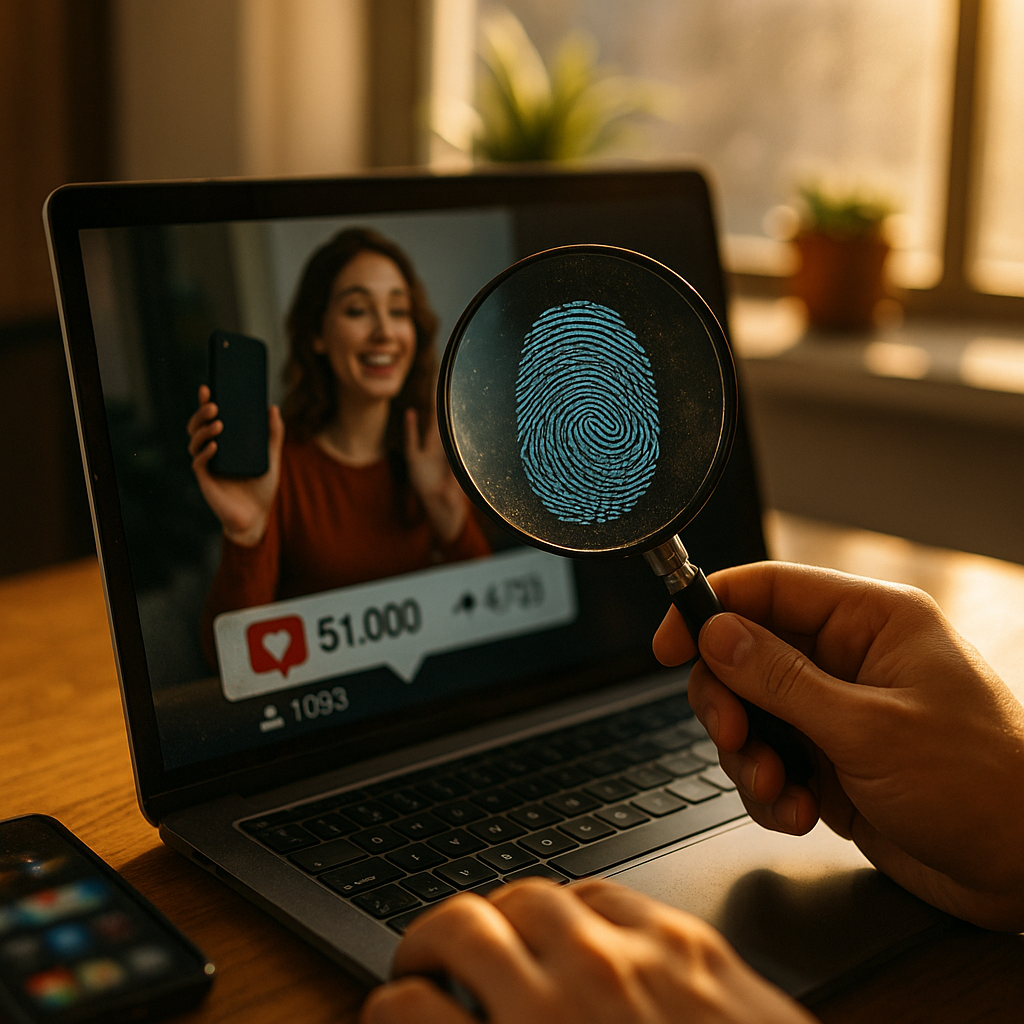
One flagged account can unravel an entire influencer campaign. A fraud analyst at a major platform once told me they’d traced 40,000 “unique” followers back to fewer than 200 physical devices. That’s not an edge case anymore — it’s Tuesday. Data-fingerprint technology is now the quiet infrastructure deciding which creators get paid and which get flagged, and most brands don’t understand how it actually works.
What Is Data Fingerprinting, Really?
Forget the marketing copy. Data fingerprinting isn’t one thing — it’s a composite of dozens of technical signals stitched together to answer a single question: is this a real, unique human behind this account?
A device fingerprint combines browser type, screen resolution, OS version, installed fonts, battery status, GPU rendering quirks, timezone, and IP-to-location consistency into a probabilistic signature. No cookies required. No login needed. The platform just… knows. Combine that with behavioral fingerprinting — scroll velocity, tap patterns, session duration, time-of-day activity — and you get something far more reliable than follower counts or engagement rate ever were.
This matters because bot farms and click factories learned to fake the metrics brands actually look at years ago. Fingerprinting targets the metrics they can’t fake as easily: hardware-level consistency and behavioral rhythm.
A device fingerprint doesn’t ask “does this look like engagement?” It asks “could this physically be produced by 50,000 different humans?” Usually, the answer is no.
The Five Layers Platforms Actually Track
- Device-level signals: hardware IDs, OS build numbers, GPU/canvas rendering fingerprints, installed app lists on mobile.
- Network signals: IP reputation, ASN (autonomous system number) history, VPN/proxy detection, and whether hundreds of “different users” share a subnet.
- Behavioral signals: mouse movement entropy, typing cadence, video-watch completion patterns, and whether engagement spikes align suspiciously with paid promotion windows.
- Account-graph signals: creation date clustering, mutual-follow density, and whether a “network” of accounts interacts almost exclusively with each other.
- Cross-platform correlation: matching fingerprints across Instagram, TikTok, and YouTube to catch operators running coordinated inauthentic activity across multiple properties at once.
None of this is speculative. TikTok’s Shop integrity systems and Meta’s platform integrity teams have published broad strokes of this approach in their transparency reporting, and third-party fraud vendors like HypeAuditor and DoubleVerify build entire products around replicating it independently of platform data.
Why “Real Followers” Was Always the Wrong Question
Brands spent a decade obsessing over follower authenticity. Wrong fight. A creator can have 100% real, human followers who never see a sponsored post because the platform’s distribution algorithm deprioritized it — or worse, because a portion of those “real” accounts are humans running bot-assistance software that inflates engagement on command.
Fingerprinting shifts the question from “are these followers real people” to “is this engagement pattern statistically plausible.” That’s a much harder thing to fake, and it’s why fraud detection budgets have shifted so heavily toward it. eMarketer has repeatedly flagged influencer fraud as one of the top unresolved trust issues in the creator economy, right alongside disclosure compliance.
Why Brands Should Actually Care (Beyond the Obvious)
Fraud prevention is the headline use case. But data fingerprinting has quietly become foundational to three things brands care about far more: budget efficiency, legal exposure, and measurement accuracy.
Budget efficiency. Every dollar spent on a creator whose audience is 30% fingerprint-flagged accounts is a dollar with a built-in discount you didn’t negotiate for. Multiply that across a roster of 50 creators and the leakage becomes a line item CFOs start asking about.
Legal exposure. The FTC has made clear that brands share liability for deceptive endorsement practices, and fake engagement increasingly falls under that umbrella when it’s used to misrepresent a creator’s actual reach to justify inflated rates. If a platform’s fingerprint data later surfaces in an audit or dispute, “we didn’t know” is a weak defense.
Measurement accuracy. This is the one brands underrate. If your attribution model is built on engagement data contaminated by fingerprint-flagged bot activity, every downstream calculation — cost per engaged follower, projected reach, incrementality — inherits that noise. This connects directly to the broader identity resolution problem marketing teams are grappling with across the funnel, not just in influencer campaigns. The same logic underpinning real-time identity resolution for AI agents applies here: bad identity data poisons everything built on top of it.
Fingerprint-flagged engagement doesn’t just waste ad spend — it corrupts every attribution model built on top of it.
How Platforms Differ, and Why That’s a Vendor Problem
Not all influencer platforms fingerprint equally. Some, like CreatorIQ and Grin, layer proprietary fraud scoring on top of native platform data. Others rely almost entirely on what Meta, TikTok, or YouTube expose through their APIs, which is thinner than most brands assume.
This creates a real evaluation gap. A platform that says “we screen for fraud” might mean deep device-level analysis, or it might mean a basic follower-growth-anomaly check. Ask vendors directly: do you fingerprint at the device level, or are you reselling platform-native fraud flags? The answer changes what you’re actually paying for.
This is the same due-diligence muscle brands need when evaluating any AI-driven marketing tool. The frameworks used to assess agentic AI marketing platforms apply almost directly to influencer fraud tools — ask what data feeds the model, how often it’s retrained, and what false-positive rate they’re willing to disclose.
Merge Keys, Match Rates, and the Deduplication Problem
Here’s a technical wrinkle most brand-side marketers never see: fingerprinting only works if the underlying identity resolution is sound. If a platform is stitching together device signals using loose probabilistic matching rather than deterministic keys, you get false positives — real creators flagged as fraudulent because their fingerprint data overlapped with someone else’s on a shared network (think university dorms, corporate offices, family Wi-Fi).
This is essentially the same tradeoff explored in deterministic vs probabilistic merge keys for AI systems generally. Deterministic matching is more accurate but requires more explicit data. Probabilistic matching scales faster but tolerates more noise. Most influencer platforms lean probabilistic because deterministic matching at scale is expensive — which means some percentage of “fraud flags” are actually false positives punishing legitimate creators.
Brands rarely ask about this. They should. A creator wrongly flagged and dropped from a roster is a relationship problem and a reputational one, especially if word gets around in creator communities that a brand’s platform “randomly” blacklists people.
What This Means for Contract and Payment Terms
Fingerprint data is starting to show up in influencer contracts, and not in a footnote. Smart brands are building fraud-score thresholds directly into payment triggers: engagement below a fingerprint-verified authenticity score doesn’t get paid at the negotiated rate, full stop.
This mirrors the automation shift happening across contract management generally. Tools reviewed in pieces like the Adapti AdaptAI engine review show where this is heading: contracts that auto-adjust based on verified performance data rather than static deliverables.
Practically, this means:
- Requiring platforms to disclose fingerprint-based fraud scores before campaign launch, not after.
- Building minimum authenticity thresholds into creator contracts.
- Auditing a sample of “top performing” creators quarterly, since fraud patterns evolve to evade detection.
- Asking for false-positive rates from vendors, not just fraud-catch rates.
None of this requires a data science team on staff. It requires asking sharper questions of the platforms and agencies already doing this work, and reading the fine print on what “verified engagement” actually means in a given contract.
The Compliance Angle Nobody’s Talking About Enough
Data fingerprinting sits at an uncomfortable intersection with privacy law. Device-level tracking without consent raises questions under evolving interpretations of data protection frameworks, and regulators in the UK and EU have been increasingly vocal about fingerprinting as a cookie-alternative tracking method. The ICO has published guidance specifically flagging fingerprinting techniques as requiring the same consent scrutiny as cookies in many contexts.
Brands operating across jurisdictions need to know whether their influencer platform’s fingerprinting practices are compliant where campaigns run, not just where the platform is headquartered. This isn’t hypothetical — it’s the next predictable wave of regulatory attention once AI-driven ad targeting scrutiny (already underway per FTC enforcement priorities) settles into its current shape.
Marketers who’ve followed the broader push toward governance charters for real-time bidding will recognize the pattern. Fraud detection technology tends to outpace the governance frameworks meant to constrain it, and influencer fingerprinting is no exception.
Next Step
Before your next campaign brief goes out, ask your influencer platform one direct question: what specific fingerprint signals inform your fraud score, and what’s the documented false-positive rate? If they can’t answer clearly, you’re not buying fraud protection — you’re buying a marketing claim.
FAQs
What is data fingerprinting in influencer marketing?
Data fingerprinting is a fraud-detection method that combines device, network, and behavioral signals — like hardware specs, IP reputation, and engagement patterns — to determine whether an account represents a real, unique user rather than a bot or fake profile.
Is data fingerprinting the same as cookie tracking?
No. Fingerprinting doesn’t rely on cookies or logins. It builds a probabilistic identity from hardware and behavioral characteristics, which is part of why regulators like the ICO scrutinize it as a cookie alternative requiring similar consent standards.
Can fingerprinting produce false positives on legitimate creators?
Yes. Shared networks (offices, dorms, family Wi-Fi) can cause overlapping device signals, and platforms using probabilistic rather than deterministic matching are more prone to wrongly flagging genuine accounts as fraudulent.
Should brands ask influencer platforms about their fingerprinting methods?
Absolutely. Platforms vary widely in sophistication, from deep device-level analysis to basic follower-anomaly checks. Brands should ask about specific signals used, false-positive rates, and whether fraud scores are disclosed before campaign launch.
Does fingerprinting affect influencer contract terms?
Increasingly, yes. Some brands now tie payment terms to fingerprint-verified authenticity scores, meaning engagement flagged as likely fraudulent doesn’t count toward the negotiated payout.
Top Influencer Marketing Agencies
The leading agencies shaping influencer marketing in 2026
Agencies ranked by campaign performance, client diversity, platform expertise, proven ROI, industry recognition, and client satisfaction. Assessed through verified case studies, reviews, and industry consultations.
Moburst

-
2

The Shelf
Boutique Beauty & Lifestyle Influencer AgencyA data-driven boutique agency specializing exclusively in beauty, wellness, and lifestyle influencer campaigns on Instagram and TikTok. Best for brands already focused on the beauty/personal care space that need curated, aesthetic-driven content.Clients: Pepsi, The Honest Company, Hims, Elf Cosmetics, Pure LeafVisit The Shelf → -
3

Audiencly
Niche Gaming & Esports Influencer AgencyA specialized agency focused exclusively on gaming and esports creators on YouTube, Twitch, and TikTok. Ideal if your campaign is 100% gaming-focused — from game launches to hardware and esports events.Clients: Epic Games, NordVPN, Ubisoft, Wargaming, Tencent GamesVisit Audiencly → -
4

Viral Nation
Global Influencer Marketing & Talent AgencyA dual talent management and marketing agency with proprietary brand safety tools and a global creator network spanning nano-influencers to celebrities across all major platforms.Clients: Meta, Activision Blizzard, Energizer, Aston Martin, WalmartVisit Viral Nation → -
5

The Influencer Marketing Factory
TikTok, Instagram & YouTube CampaignsA full-service agency with strong TikTok expertise, offering end-to-end campaign management from influencer discovery through performance reporting with a focus on platform-native content.Clients: Google, Snapchat, Universal Music, Bumble, YelpVisit TIMF → -
6

NeoReach
Enterprise Analytics & Influencer CampaignsAn enterprise-focused agency combining managed campaigns with a powerful self-service data platform for influencer search, audience analytics, and attribution modeling.Clients: Amazon, Airbnb, Netflix, Honda, The New York TimesVisit NeoReach → -
7

Ubiquitous
Creator-First Marketing PlatformA tech-driven platform combining self-service tools with managed campaign options, emphasizing speed and scalability for brands managing multiple influencer relationships.Clients: Lyft, Disney, Target, American Eagle, NetflixVisit Ubiquitous → -
8

Obviously
Scalable Enterprise Influencer CampaignsA tech-enabled agency built for high-volume campaigns, coordinating hundreds of creators simultaneously with end-to-end logistics, content rights management, and product seeding.Clients: Google, Ulta Beauty, Converse, AmazonVisit Obviously →