


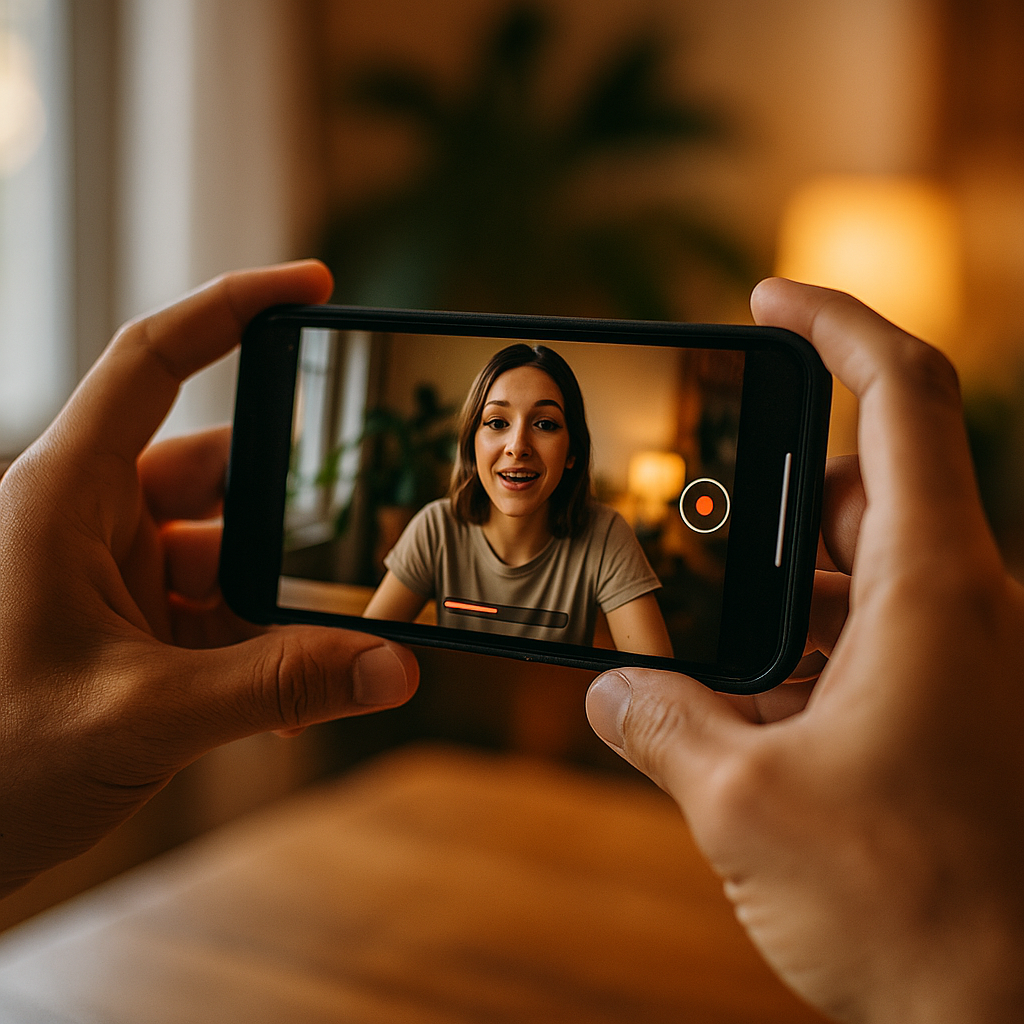
Platforms don’t trust polish anymore. Meta, TikTok, and Google’s AI-driven surfaces are now scoring content for authenticity markers before they’ll amplify it, and brands still shooting studio-perfect ads are watching reach collapse. UGC authenticity signals have quietly become a ranking factor across discovery algorithms, and most marketing teams haven’t caught up.
That’s not a hypothetical. It’s a budget problem happening right now, in Q4 planning meetings, where CMOs are asking why a $40,000 campaign got outperformed by a $200 creator post.
What Changed in the Algorithms
Discovery algorithms used to optimize almost entirely for engagement velocity: watch time, shares, comments in the first hour. That’s still part of the equation, but it’s no longer sufficient on its own. TikTok’s recommendation system, Instagram’s Reels ranking, and even Google’s AI Overviews now weight signals that correlate with perceived authenticity — things like unscripted pacing, natural audio, visible product use rather than staged demos, and comment sentiment that reads as genuine rather than incentivized.
Meta has said publicly that its systems increasingly downrank content patterns associated with “ad fatigue,” which in practice means anything that looks like a commercial. TikTok’s algorithm documentation and creator guidance point in the same direction: content that mirrors organic creator behavior gets more initial distribution than content that mirrors traditional advertising, even when both come from verified brand accounts.
Platforms aren’t rewarding authenticity because they suddenly care about honesty — they’re rewarding it because authenticity-coded content keeps users watching longer, and retention is still the metric that pays the bills.
This matters because it changes what “good creative” means from a distribution standpoint. A beautifully lit product shot might convert fine on a landing page. On a discovery feed, it can get throttled before it ever reaches a meaningful audience.
The Signals Algorithms Are Actually Reading
Nobody outside these platforms has the full model, but pattern analysis from creator tools and agency testing points to a consistent set of proxies:
- Production texture: handheld camera movement, ambient sound, imperfect framing — all correlate with higher initial distribution than polished b-roll.
- Disclosure placement and language: algorithms appear to treat clearly disclosed sponsored content more favorably than content that tries to disguise its commercial intent, likely because flagged, compliant posts get fewer user reports.
- Comment velocity and sentiment quality: generic praise (“love this!!”) reads differently to sentiment models than specific, detailed reactions referencing the product or creator by name.
- Watch-through behavior on the first 500-1000 views: this early sample audience acts as a signal generator, and creator-style content tends to hold attention longer than ad-style openings.
- Cross-posting patterns: content that appears first on a creator’s personal account, then gets reshared by a brand, seems to retain more distribution than content posted brand-first.
None of this is officially confirmed line-by-line by the platforms. But the pattern is consistent enough across independent testing by agencies and MMPs that treating it as directional truth is the safer bet than ignoring it.
Why This Is a Ranking Factor, Not Just a Vibe Shift
“Ranking factor” is the right term here, not just a stylistic preference. Discovery algorithms make binary distribution decisions at scale — show this to the next 1,000 people, or don’t — based on scored inputs. Authenticity signals are now measurable inputs in that scoring, the same way backlink quality became a measurable input in Google’s early ranking systems.
That comparison isn’t accidental. This shift echoes what happened in SEO, where GEO, AEO, and SEO are merging into a single discipline built around trust signals rather than keyword density. UGC authenticity is doing something similar to paid and organic social distribution — collapsing the line between “content marketing” and “content that earns its own reach.”
Why Brands Are Getting Caught Flat-Footed
Most influencer programs were built for a different scoring system. Briefs still specify shot lists, brand color compliance, and scripted CTAs — all things that read as “ad” to a discovery algorithm trained on authenticity proxies. Agencies optimizing for brand safety over the last five years inadvertently built a content pipeline that fights the very algorithms it needs to win.
There’s also a measurement gap. Many brands still track follower count instead of audience quality, which means they’re rewarding creators for reach metrics that no longer predict distribution. A creator with 40,000 highly engaged followers producing rough, authentic content will often outperform a 400,000-follower account posting polished brand integrations, simply because the algorithm treats their content differently at the distribution stage.
This is compounded by the fact that view count methodology keeps changing, making historical benchmarks unreliable for judging what “worked.” Teams comparing this quarter’s authenticity-coded content against last year’s polished campaigns are often comparing apples to a metric that no longer means the same thing.
The Compliance Layer Nobody Wants to Talk About
Here’s where it gets tricky for legal and brand safety teams. Content designed to look unscripted and organic — the exact style algorithms favor — is also the content most likely to blur disclosure lines. The FTC has been explicit that visual authenticity doesn’t exempt creators or brands from clear disclosure requirements, and enforcement has moved beyond the #ad hashtag into evaluating actual commercial intent and viewer perception.
That creates real tension. The more “raw” a piece of content looks, the more scrutiny it may deserve internally, not less. Brands chasing algorithmic favor by stripping away obvious ad markers need airtight disclosure practices to avoid regulatory exposure. Check current guidance directly through the FTC’s endorsement guides before greenlighting any campaign built around a deliberately unpolished aesthetic.
The safest authenticity strategy is the one that’s actually authentic — real creators, real disclosure, real product use — not a production style that mimics rawness while hiding commercial intent.
What This Means for Sourcing and Production
The operational fix isn’t complicated in concept, though it does require rebuilding some workflows.
First, source more content directly from creators’ native workflows rather than brand-directed shoots. Let creators use their own cameras, their own pacing, their own editing habits. Second, weight vetting criteria toward engagement authenticity signals rather than raw follower count — comment quality, watch-through rate, and repeat viewership matter more now. Third, integrate UGC into paid distribution earlier. Spark Ads, Meta’s Partnership Ads, and similar formats let brands boost creator-native content without re-editing it into something that reads as corporate.
This also has downstream implications for how brands staff creative teams. The rise of direct-response video editors as a hiring category reflects this shift — teams need editors who understand platform-native pacing, not just brand guideline compliance. Similarly, the trend toward AI-native creative hiring is partly about building teams that can rapidly produce authenticity-coded variants at scale, rather than a handful of polished hero assets.
Live and shoppable formats are accelerating this even further. As live shopping and shoppable video merge, the premium on unscripted, real-time creator content is only going up — there’s no time to over-produce a livestream, and audiences increasingly prefer that they don’t.
A Quick Gut-Check for Your Next Brief
Before greenlighting a UGC campaign, ask:
- Does the brief demand scripted lines, or does it give creators room to speak naturally?
- Is disclosure integrated into the content itself, not buried in a caption?
- Are you measuring watch-through and comment sentiment, or just impressions and follower count?
- Would this content survive being posted on the creator’s own feed, unedited by your team?
If the answer to that last one is no, the algorithm will probably agree with your instinct.
Where This Is Heading
Expect authenticity scoring to get more sophisticated, not less. As generative AI makes it trivial to fake “raw” aesthetics — shaky cam filters, synthetic ambient noise, AI-generated creator likenesses — platforms will need better detection, and they’re already investing in it. Google’s broader push toward AI-assisted search, detailed in coverage of how AI assistants are reshaping search, suggests the same authenticity-detection logic will eventually extend into how AI answer engines decide which brand content to cite or summarize.
For data on how fast this shift is moving, industry trackers like eMarketer and Sprout Social are already publishing benchmark data on UGC-style content outperforming produced ads across nearly every major platform. That gap is likely to widen before it stabilizes.
The brands that win this cycle won’t be the ones with the best production budgets. They’ll be the ones who rebuilt their sourcing, vetting, and compliance processes around what the algorithms are actually rewarding — and who did it before their competitors noticed the reach was slipping away.
Frequently Asked Questions
What are UGC authenticity signals in the context of discovery algorithms?
They’re the measurable proxies — production style, disclosure clarity, comment sentiment, watch-through rate — that platforms use to estimate whether content feels genuinely creator-made versus overtly branded, then use that score to decide initial distribution.
Do polished brand ads still work on social platforms?
They can still convert well on paid placements with strong targeting, but they typically get less organic algorithmic amplification than creator-native content, especially on discovery-driven feeds like TikTok’s For You Page and Instagram Reels.
Does disclosure hurt reach if authenticity is rewarded?
Available evidence suggests the opposite: clearly and properly disclosed content tends to perform better than content trying to hide its commercial nature, likely because it generates fewer user reports and negative sentiment signals.
How can brands measure UGC authenticity performance?
Track watch-through rate, comment sentiment quality, and repeat viewership rather than relying solely on impressions or follower count, which no longer correlate reliably with algorithmic distribution.
Is this trend likely to affect AI search and answer engines too?
Yes. As AI-driven search surfaces increasingly summarize and cite content, similar authenticity and trust signals are expected to influence which brand content gets referenced, mirroring the shift already underway in social discovery algorithms.
Start by auditing one live campaign against watch-through rate and comment sentiment instead of impressions, then rebrief your next creator batch to prioritize native pacing over scripted polish. The teams that make that switch now will be the case studies everyone else references next quarter.
Frequently Asked Questions
What are UGC authenticity signals in the context of discovery algorithms?
They’re the measurable proxies — production style, disclosure clarity, comment sentiment, watch-through rate — that platforms use to estimate whether content feels genuinely creator-made versus overtly branded, then use that score to decide initial distribution.
Do polished brand ads still work on social platforms?
They can still convert well on paid placements with strong targeting, but they typically get less organic algorithmic amplification than creator-native content, especially on discovery-driven feeds like TikTok’s For You Page and Instagram Reels.
Does disclosure hurt reach if authenticity is rewarded?
Available evidence suggests the opposite: clearly and properly disclosed content tends to perform better than content trying to hide its commercial nature, likely because it generates fewer user reports and negative sentiment signals.
How can brands measure UGC authenticity performance?
Track watch-through rate, comment sentiment quality, and repeat viewership rather than relying solely on impressions or follower count, which no longer correlate reliably with algorithmic distribution.
Is this trend likely to affect AI search and answer engines too?
Yes. As AI-driven search surfaces increasingly summarize and cite content, similar authenticity and trust signals are expected to influence which brand content gets referenced, mirroring the shift already underway in social discovery algorithms.
Top Influencer Marketing Agencies
The leading agencies shaping influencer marketing in 2026
Agencies ranked by campaign performance, client diversity, platform expertise, proven ROI, industry recognition, and client satisfaction. Assessed through verified case studies, reviews, and industry consultations.
Moburst

-
2

The Shelf
Boutique Beauty & Lifestyle Influencer AgencyA data-driven boutique agency specializing exclusively in beauty, wellness, and lifestyle influencer campaigns on Instagram and TikTok. Best for brands already focused on the beauty/personal care space that need curated, aesthetic-driven content.Clients: Pepsi, The Honest Company, Hims, Elf Cosmetics, Pure LeafVisit The Shelf → -
3

Audiencly
Niche Gaming & Esports Influencer AgencyA specialized agency focused exclusively on gaming and esports creators on YouTube, Twitch, and TikTok. Ideal if your campaign is 100% gaming-focused — from game launches to hardware and esports events.Clients: Epic Games, NordVPN, Ubisoft, Wargaming, Tencent GamesVisit Audiencly → -
4

Viral Nation
Global Influencer Marketing & Talent AgencyA dual talent management and marketing agency with proprietary brand safety tools and a global creator network spanning nano-influencers to celebrities across all major platforms.Clients: Meta, Activision Blizzard, Energizer, Aston Martin, WalmartVisit Viral Nation → -
5

The Influencer Marketing Factory
TikTok, Instagram & YouTube CampaignsA full-service agency with strong TikTok expertise, offering end-to-end campaign management from influencer discovery through performance reporting with a focus on platform-native content.Clients: Google, Snapchat, Universal Music, Bumble, YelpVisit TIMF → -
6

NeoReach
Enterprise Analytics & Influencer CampaignsAn enterprise-focused agency combining managed campaigns with a powerful self-service data platform for influencer search, audience analytics, and attribution modeling.Clients: Amazon, Airbnb, Netflix, Honda, The New York TimesVisit NeoReach → -
7

Ubiquitous
Creator-First Marketing PlatformA tech-driven platform combining self-service tools with managed campaign options, emphasizing speed and scalability for brands managing multiple influencer relationships.Clients: Lyft, Disney, Target, American Eagle, NetflixVisit Ubiquitous → -
8

Obviously
Scalable Enterprise Influencer CampaignsA tech-enabled agency built for high-volume campaigns, coordinating hundreds of creators simultaneously with end-to-end logistics, content rights management, and product seeding.Clients: Google, Ulta Beauty, Converse, AmazonVisit Obviously →