


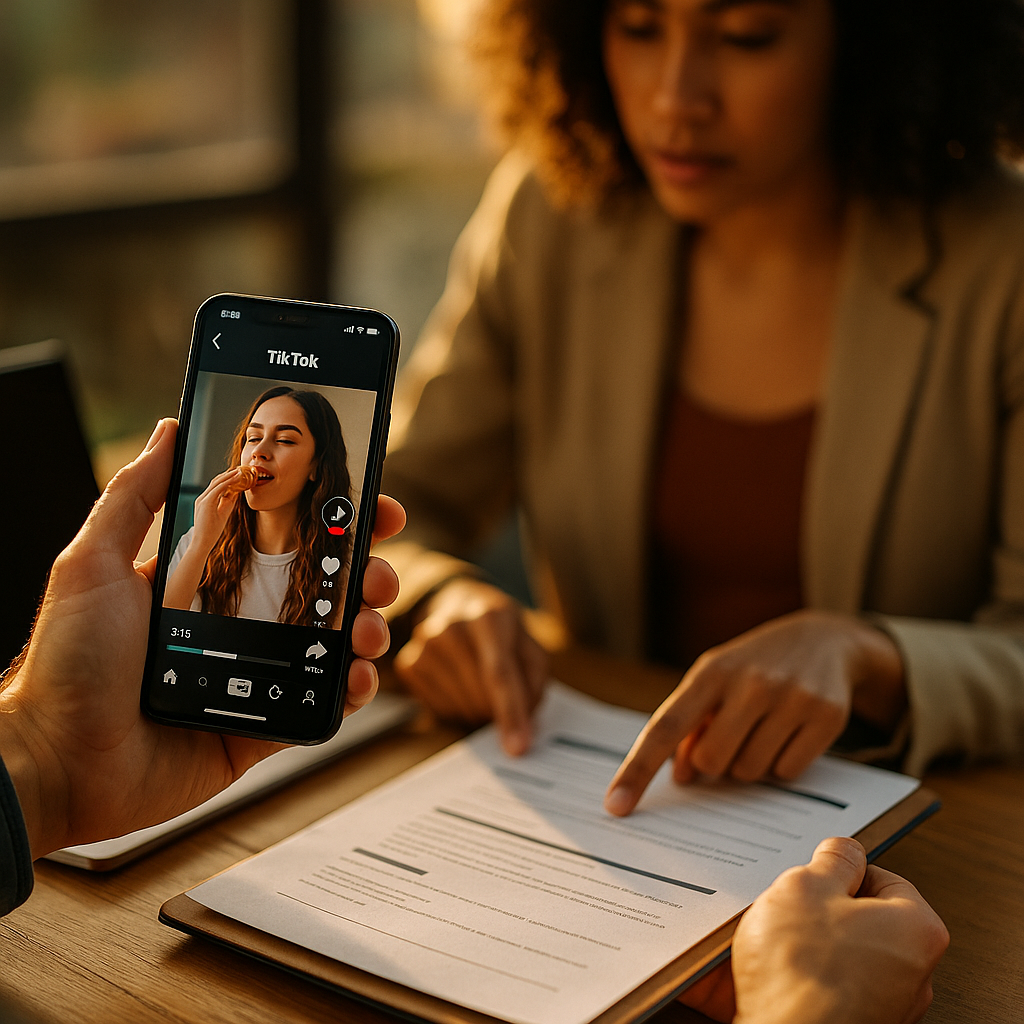
Sixty percent completion used to get you reach. Now it might get you buried. TikTok’s watch-time-weighted algorithm update quietly rewrites the rules that governed distribution for half a decade, shifting weight away from raw view volume and toward how long people actually stay. For brands still briefing creators on hook rate and total views, this is the wake-up call.
What Actually Changed
TikTok has always claimed retention mattered. But practitioners who’ve spent years pulling Creator Center data know the platform historically rewarded velocity: fast initial view spikes, high share counts, completion rates that cleared a modest bar. The latest overhaul recalibrates the ranking model to weight cumulative watch time and re-watch behavior far more heavily than first-30-second engagement or raw impression counts.
In practice, that means a video with 200,000 views and a 35% average watch-through can now underperform a video with 40,000 views and 78% watch-through, especially in For You Page distribution beyond the initial test pool. TikTok’s own creator documentation, available through TikTok’s advertiser resources, has started nudging brands toward “session value” language instead of view totals. That’s not marketing spin. It’s a preview of how the model scores content.
Volume-optimized content built for the first three seconds is now competing against a system that scores the last three seconds just as heavily.
Why TikTok Is Making This Move Now
Two pressures are converging. First, advertiser demand for measurable outcomes has outpaced TikTok’s ability to defend vanity metrics. We covered this shift already in TikTok’s view count methodology change, which quietly redefined what counts as a “view” earlier this cycle. Watch-time weighting is the natural next step: if views were getting easier to inflate, retention becomes the harder-to-game proxy for genuine attention.
Second, competitive pressure from YouTube Shorts and Instagram Reels, both of which lean heavily on session-length signals, has pushed TikTok to match a retention-first model or risk losing ad dollars to platforms with cleaner attention metrics. eMarketer and Statista data on short-form video ad spend consistently show marketers reallocating budget toward platforms that can prove sustained attention, not just impressions. See eMarketer’s ad spend research for the broader trend line across short-form platforms.
The Metric Brands Actually Need to Watch
Average watch time and completion rate aren’t new metrics. What’s new is their weight in distribution decisions. Brands running influencer programs need to stop treating these as vanity dashboard numbers and start treating them as the primary lever for organic reach.
- Average percentage watched now functions closer to a quality score than a performance footnote.
- Re-watch rate (loop behavior) appears to carry outsized weight, particularly for content under 15 seconds.
- Session continuation, whether a viewer keeps scrolling TikTok immediately after your video or exits the app, is reportedly factored into downstream distribution for the creator’s next several posts.
That last point matters enormously for brand-creator partnerships. A single low-retention sponsored post could theoretically dampen a creator’s algorithmic standing for content that follows, organic or paid. Nobody at TikTok will confirm this publicly, but agency-side testing across multiple creator rosters has shown consistent dips in reach immediately following high-drop-off branded content.
This is the kind of risk that never showed up in a media plan two years ago.
Volume Strategy Is Now a Liability
Programs built around posting frequency, five branded TikToks a week, spray-and-pray creator activations, multi-post retainers with no pacing strategy, are the most exposed. Volume-first strategies assumed that more shots on goal meant more chances at virality. Under a retention-weighted model, low-quality volume actively signals to the algorithm that a creator’s account produces skippable content. That’s a compounding penalty, not a neutral outcome.
Brands should audit their current creator retainers for exactly this pattern. If your influencer manager is optimizing for post count in a contract instead of watch-time benchmarks, you’re building a program for an algorithm that no longer exists. This connects directly to broader shifts in how influencer manager roles now require performance fluency rather than just relationship management.
Rebuilding the Creative Brief
Retention-first strategy changes what a good creative brief looks like. Hook-rate obsession isn’t dead, you still need someone to stop scrolling, but the brief now needs a second act. Pacing, narrative structure, and payoff placement matter as much as the cold open.
A few practical shifts we’re seeing agencies implement:
- Briefs now specify a target average watch time, not just a hook concept, often benchmarked against the creator’s historical retention data.
- Scripts are storyboarded for a mid-video “second hook” around the 40-60% mark to combat drop-off.
- Caption and on-screen text are used deliberately to extend watch time without gimmicks like fake cliffhangers, which TikTok’s trust and safety team has flagged as manipulative in past policy updates.
- Native Sprout Social and Creator Center analytics are pulled weekly, not monthly, since retention patterns shift fast under algorithm updates.
None of this is theoretical. Estée Lauder’s creator program restructuring, which we detailed in Estée Lauder’s tiered creator model, already incorporates retention benchmarks as a tier-qualification metric, not just follower count or past brand deals.
What This Means for Measurement and Reporting
If you’re still reporting influencer campaign success primarily through views and impressions, you’re reporting on a metric TikTok itself is de-prioritizing. That’s a credibility problem waiting to surface in your next budget review.
Reframe reporting around watch-time efficiency: cost per completed view, average session contribution, and re-watch rate benchmarked against category norms. This mirrors a pattern we’ve tracked across the industry broadly, detailed in reach’s decline as a north-star metric. Retention is simply the platform-native version of that same shift, and it’s arriving whether your dashboard is ready or not.
Cost-per-completed-view is quickly becoming the metric CFOs will ask for, whether your team has built the reporting infrastructure yet or not.
For audience quality more broadly, this dovetails with findings we covered in audience quality’s role in influencer ROI. Retention-weighted distribution is essentially TikTok’s algorithmic bet that quality audiences behave differently than quantity-driven ones. The platform is now scoring for it directly.
Compliance and Risk Considerations
There’s a quieter risk here too. As creators adjust content structure to maximize watch time, some are leaning into pacing tricks, delayed disclosure placement, or misleading thumbnails, that could edge toward compliance problems. The FTC has been explicit that retention tactics don’t excuse disclosure obligations; brands should revisit guidance from the FTC’s endorsement guidelines before greenlighting aggressive pacing strategies. Our coverage of FTC commercial intent enforcement is a useful checkpoint for any brand pressuring creators to hit new retention targets at the expense of clear disclosure.
Building a Retention-Native Platform Strategy
The brands that will win the next 12 months on TikTok aren’t the ones posting most often. They’re the ones treating every video as a retention test before it ever goes live. That means testing hooks and pacing in smaller batches, watching Creator Center data in near-real time, and being willing to kill a content format the moment retention data says it’s underperforming, regardless of how many views it initially pulled.
It also means renegotiating creator contracts around outcomes TikTok’s algorithm actually rewards. Flat per-post fees tied to view guarantees are increasingly misaligned with how the platform distributes content. Some agencies are already shifting toward retention-indexed compensation models, a logical extension of the trend covered in the creator economy’s move from flat fees.
Next step: Pull your last 90 days of TikTok content, sort by average watch time instead of views, and identify the format that’s quietly outperforming your “best” post. Brief your next creator campaign around replicating that pattern, not chasing another view spike.
FAQs
What is TikTok’s watch-time-weighted algorithm change?
It’s an update to TikTok’s ranking model that gives more weight to how long viewers watch a video, including re-watches and session continuation, rather than prioritizing raw view counts or early engagement spikes.
How does this affect influencer marketing strategy?
Brands need to shift creative briefs, KPIs, and creator compensation models away from volume and view totals toward retention metrics like average percentage watched and re-watch rate.
Will posting more content still help visibility on TikTok?
Not automatically. Under the retention-weighted model, high-frequency posting with low watch-through rates can actually suppress distribution rather than boost it.
What metrics should brands track now instead of views?
Average watch time, completion rate, re-watch rate, and cost-per-completed-view are becoming the more reliable indicators of algorithmic performance and campaign ROI.
Does this change affect paid TikTok ads too?
Yes. Paid distribution increasingly draws on the same underlying signals as organic ranking, so ads with poor retention can see higher costs per result even with strong initial click-through rates.
Top Influencer Marketing Agencies
The leading agencies shaping influencer marketing in 2026
Agencies ranked by campaign performance, client diversity, platform expertise, proven ROI, industry recognition, and client satisfaction. Assessed through verified case studies, reviews, and industry consultations.
Moburst

-
2

The Shelf
Boutique Beauty & Lifestyle Influencer AgencyA data-driven boutique agency specializing exclusively in beauty, wellness, and lifestyle influencer campaigns on Instagram and TikTok. Best for brands already focused on the beauty/personal care space that need curated, aesthetic-driven content.Clients: Pepsi, The Honest Company, Hims, Elf Cosmetics, Pure LeafVisit The Shelf → -
3

Audiencly
Niche Gaming & Esports Influencer AgencyA specialized agency focused exclusively on gaming and esports creators on YouTube, Twitch, and TikTok. Ideal if your campaign is 100% gaming-focused — from game launches to hardware and esports events.Clients: Epic Games, NordVPN, Ubisoft, Wargaming, Tencent GamesVisit Audiencly → -
4

Viral Nation
Global Influencer Marketing & Talent AgencyA dual talent management and marketing agency with proprietary brand safety tools and a global creator network spanning nano-influencers to celebrities across all major platforms.Clients: Meta, Activision Blizzard, Energizer, Aston Martin, WalmartVisit Viral Nation → -
5

The Influencer Marketing Factory
TikTok, Instagram & YouTube CampaignsA full-service agency with strong TikTok expertise, offering end-to-end campaign management from influencer discovery through performance reporting with a focus on platform-native content.Clients: Google, Snapchat, Universal Music, Bumble, YelpVisit TIMF → -
6

NeoReach
Enterprise Analytics & Influencer CampaignsAn enterprise-focused agency combining managed campaigns with a powerful self-service data platform for influencer search, audience analytics, and attribution modeling.Clients: Amazon, Airbnb, Netflix, Honda, The New York TimesVisit NeoReach → -
7

Ubiquitous
Creator-First Marketing PlatformA tech-driven platform combining self-service tools with managed campaign options, emphasizing speed and scalability for brands managing multiple influencer relationships.Clients: Lyft, Disney, Target, American Eagle, NetflixVisit Ubiquitous → -
8

Obviously
Scalable Enterprise Influencer CampaignsA tech-enabled agency built for high-volume campaigns, coordinating hundreds of creators simultaneously with end-to-end logistics, content rights management, and product seeding.Clients: Google, Ulta Beauty, Converse, AmazonVisit Obviously →