


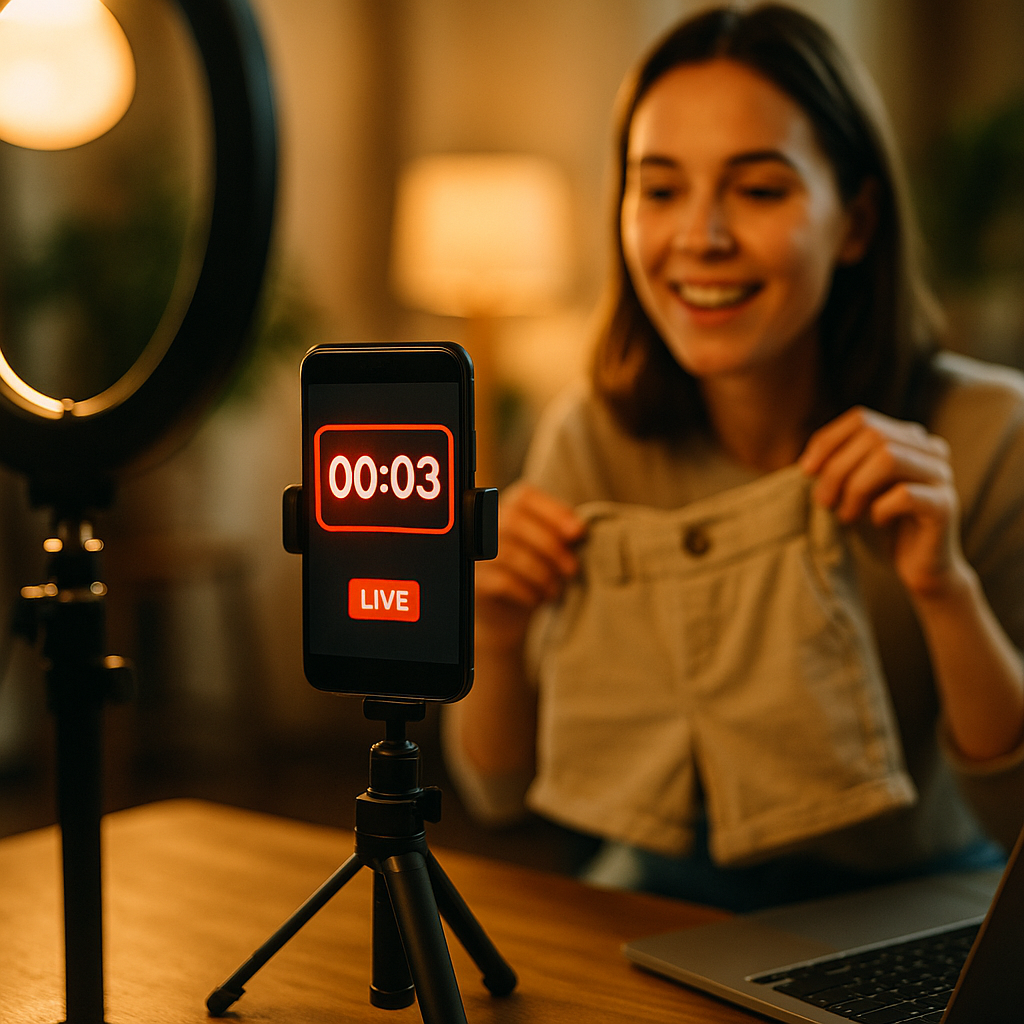
Livestreams with a visible countdown clock convert up to 30% better than those without one, according to data shared by multiple shoppable livestream platforms. But here’s the catch nobody puts in the creative brief: most brands are one poorly worded “only 3 left!” away from an FTC inquiry. The livestream countdown format is one of the highest-converting tools in live commerce, and also one of the easiest to get legally wrong.
This brief exists to fix that. Not by watering down urgency, but by structuring it so it holds up under scrutiny.
Why Countdown Urgency Works (And Why Legal Teams Hate It)
Scarcity is one of the oldest levers in direct response marketing. A visible timer triggers loss aversion, and loss aversion moves carts faster than almost any other psychological trigger. Live commerce platforms like TikTok Shop, Amazon Live, and Whatnot have all leaned into this, building countdown stickers and “limited stock” badges directly into their livestream UI.
The problem is that most of these claims are either exaggerated or entirely fabricated. A “closing in 10 minutes” banner that resets every hour isn’t urgency, it’s deception. The FTC has been explicit about this in its guidance on deceptive advertising practices: scarcity and urgency claims must reflect actual, verifiable conditions. If your countdown clock hits zero and the “sale” simply continues, you’ve created a paper trail of a false claim, livestreamed, timestamped, and often archived on the platform itself.
A countdown timer that doesn’t reflect real inventory or real time constraints isn’t a conversion tool anymore. It’s evidence.
That’s the risk calculus brands need to internalize before greenlighting another “flash drop” livestream. The upside is real. The downside, if you get sloppy, is a regulatory headache that costs far more than the incremental revenue the fake urgency generated.
What the FTC Actually Cares About
Read the FTC’s guidance on endorsements and unfair practices closely and a pattern emerges. The agency isn’t against urgency marketing. It’s against urgency marketing that misrepresents facts consumers rely on to make purchase decisions. Three things trigger scrutiny most often:
- False scarcity — claiming limited stock when inventory is functionally unlimited or easily replenished.
- False deadlines — countdown timers that reset, extend, or never actually expire the advertised offer.
- Undisclosed material connections — creators pushing urgency without disclosing they’re paid, sponsored, or gifted product.
Livestream commerce compounds all three risks because it happens in real time, with no editing pass, no legal review, and often a creator improvising dialogue under pressure to hit sales targets. That’s exactly why the brief matters more here than in almost any other format.
Structuring the Brief: Build Urgency on Real Constraints
The fix isn’t removing urgency. It’s anchoring urgency to something true. Every countdown element in the livestream should map to a real, documentable constraint your ops or inventory team can verify before the stream goes live.
Step One: Define the Actual Constraint
Before writing a single script line, get answers from your operations team:
- How many units are genuinely allocated to this livestream?
- What time does the discount code actually expire in your promo engine?
- Is the “bundle” or “bonus gift” a limited batch, or can you keep making more?
If the answer to any of these is “we can just extend it,” don’t let the script promise otherwise. This single step eliminates 80% of FTC exposure before a creator even opens their mouth.
Step Two: Script the Countdown Language Precisely
Vague urgency language is where brands get sloppy. Compare these two lines:
- “This deal won’t last long, so grab it now!” (vague, unverifiable, borderline)
- “We have 200 units for this stream only. When the counter hits zero or we sell out, whichever comes first, this price is gone.” (specific, verifiable, defensible)
The second version is longer, sure. It’s also bulletproof. Brief creators to use specific numbers, specific timeframes, and language that ties the deadline to an operational reality rather than a vibe.
If your countdown script can’t survive a screenshot next to your actual inventory report, rewrite it before the stream, not after the complaint.
Step Three: Build the On-Screen Timer to Match the Verbal Claim
Visual and verbal urgency need to be identical. If the on-screen graphic says “Sale ends in 15:00” but the host says “this deal is basically gone forever,” you’ve created a contradiction that undermines both compliance and trust. Sync your production team and your talent script so the countdown graphic, the spoken claim, and the actual backend promo expiration all say the same thing, down to the minute.
This is also where platform tools help. TikTok Shop’s live countdown sticker, for instance, pulls from the actual promotion end time set in Seller Center. Use the platform-native tool instead of a manually operated on-screen graphic whenever possible. It removes human error and creates a system-generated record that your countdown matched your actual promotion terms.
Disclosure Still Applies Even When You’re Racing a Clock
Urgency doesn’t suspend disclosure obligations. Creators still need to state clearly and conspicuously that the content is sponsored, gifted, or affiliate-linked, and they need to do it early in the stream, not buried three minutes in after the hook has landed. This gets harder in a live format because there’s no caption overlay you can add in post. The disclosure has to be spoken or persistently displayed on screen throughout.
Brief creators to state the relationship at the top of the stream and again at natural breaks, particularly right before major “buy now” pushes. If you’ve already built disclosure habits into other live or reactive formats, this will feel familiar. Our brief on live-reaction unboxing briefs covers similar real-time disclosure timing, and the same logic applies to countdown streams: say it early, say it again, don’t rely on a single mention.
Pacing the Stream Around the Clock
A well-structured countdown livestream typically breaks into three phases:
- Setup (0-5 minutes): disclosure, product intro, and framing the real constraint (“we only have 200 units tonight”).
- Build (middle 60-70%): product demonstration, Q&A, social proof, with periodic, honest countdown reminders tied to the actual clock.
- Close (final 5-10 minutes): final urgency push, using the real, verifiable numbers established earlier, no new claims introduced under pressure.
Notice that the close doesn’t introduce new scarcity claims. This is a common failure point. Hosts under pressure to hit a sales number in the last five minutes will improvise (“actually, we might have a few more, but hurry!”). Brief this explicitly as off-limits. Any claim made in the final stretch has to have been pre-approved, not invented live.
Where This Format Fits in a Broader Live Commerce Strategy
Countdown streams work best as a scarcity layer on top of an existing content strategy, not a standalone tactic. Brands running full-lifecycle content briefs for TikTok Shop often use countdown streams as the final conversion push after weeks of top-of-funnel demo content. The countdown works because trust was already built. Without that groundwork, urgency alone reads as pushy rather than persuasive.
It’s also worth pairing countdown mechanics with concrete product proof. A livestream selling brief built around ingredient callouts or feature overlays gives viewers a reason to buy beyond the clock. The countdown should be the closer, not the entire pitch. Data from eMarketer’s live commerce research consistently shows that urgency mechanics perform best when layered onto strong product education, not used as a substitute for it.
Legal Review Before Go-Live, Not After
Get your compliance or legal team to review the countdown script and on-screen graphics before the stream airs, not after a viewer flags it. This sounds obvious. It’s skipped constantly because live commerce moves fast and legal review feels like friction. Build a lightweight checklist instead of a full review cycle:
- Does the inventory number match the actual allocated stock?
- Does the timer match the backend promo expiration exactly?
- Is the disclosure scripted at the top and repeated before major CTAs?
- Is there a fallback script for what happens if the product sells out early, or doesn’t sell out at all?
That last point matters more than brands think. If you sell out before the timer hits zero, what does the host say? If you don’t sell out and the timer hits zero, does the offer actually end? Script both outcomes in advance. Improvising the resolution live is exactly how brands end up with a countdown that contradicts itself on camera.
FAQs
Frequently Asked Questions
Is a livestream countdown timer itself against FTC rules?
No. Countdown timers are legal and widely used. The issue is whether the timer reflects a real, verifiable constraint (actual inventory, an actual expiring promo code) rather than a fabricated or endlessly extended deadline.
How specific does the scarcity claim need to be?
Specific enough to be checked. “200 units available tonight” is defensible because it’s a number you can verify against inventory records. “Almost sold out” with no number attached is vague and harder to defend if challenged.
Do creators need to repeat the disclosure throughout a long livestream?
Yes. A single disclosure at the start of a 45-minute stream isn’t sufficient, especially for viewers who join midway. Brief creators to restate the sponsorship or affiliate relationship at natural breaks and before major purchase pushes.
What happens if a product sells out before the countdown ends?
Script this scenario in advance. The host should clearly state the product sold out and the offer is closed, rather than improvising a new claim or extending availability on the spot.
Can brands reuse the same countdown livestream format repeatedly?
Yes, but each instance needs its own real constraint. Running an identical “limited time only” countdown every week without any actual scarcity behind it undermines credibility and increases regulatory risk over time.
Next step: before your next livestream countdown airs, run the script and on-screen graphics past whoever owns your actual inventory numbers. If they can’t confirm the claim in under five minutes, don’t air it until they can.
Frequently Asked Questions
Is a livestream countdown timer itself against FTC rules?
No. Countdown timers are legal and widely used. The issue is whether the timer reflects a real, verifiable constraint (actual inventory, an actual expiring promo code) rather than a fabricated or endlessly extended deadline.
How specific does the scarcity claim need to be?
Specific enough to be checked. “200 units available tonight” is defensible because it’s a number you can verify against inventory records. “Almost sold out” with no number attached is vague and harder to defend if challenged.
Do creators need to repeat the disclosure throughout a long livestream?
Yes. A single disclosure at the start of a 45-minute stream isn’t sufficient, especially for viewers who join midway. Brief creators to restate the sponsorship or affiliate relationship at natural breaks and before major purchase pushes.
What happens if a product sells out before the countdown ends?
Script this scenario in advance. The host should clearly state the product sold out and the offer is closed, rather than improvising a new claim or extending availability on the spot.
Can brands reuse the same countdown livestream format repeatedly?
Yes, but each instance needs its own real constraint. Running an identical “limited time only” countdown every week without any actual scarcity behind it undermines credibility and increases regulatory risk over time.
Top Influencer Marketing Agencies
The leading agencies shaping influencer marketing in 2026
Agencies ranked by campaign performance, client diversity, platform expertise, proven ROI, industry recognition, and client satisfaction. Assessed through verified case studies, reviews, and industry consultations.
Moburst

-
2

The Shelf
Boutique Beauty & Lifestyle Influencer AgencyA data-driven boutique agency specializing exclusively in beauty, wellness, and lifestyle influencer campaigns on Instagram and TikTok. Best for brands already focused on the beauty/personal care space that need curated, aesthetic-driven content.Clients: Pepsi, The Honest Company, Hims, Elf Cosmetics, Pure LeafVisit The Shelf → -
3

Audiencly
Niche Gaming & Esports Influencer AgencyA specialized agency focused exclusively on gaming and esports creators on YouTube, Twitch, and TikTok. Ideal if your campaign is 100% gaming-focused — from game launches to hardware and esports events.Clients: Epic Games, NordVPN, Ubisoft, Wargaming, Tencent GamesVisit Audiencly → -
4

Viral Nation
Global Influencer Marketing & Talent AgencyA dual talent management and marketing agency with proprietary brand safety tools and a global creator network spanning nano-influencers to celebrities across all major platforms.Clients: Meta, Activision Blizzard, Energizer, Aston Martin, WalmartVisit Viral Nation → -
5

The Influencer Marketing Factory
TikTok, Instagram & YouTube CampaignsA full-service agency with strong TikTok expertise, offering end-to-end campaign management from influencer discovery through performance reporting with a focus on platform-native content.Clients: Google, Snapchat, Universal Music, Bumble, YelpVisit TIMF → -
6

NeoReach
Enterprise Analytics & Influencer CampaignsAn enterprise-focused agency combining managed campaigns with a powerful self-service data platform for influencer search, audience analytics, and attribution modeling.Clients: Amazon, Airbnb, Netflix, Honda, The New York TimesVisit NeoReach → -
7

Ubiquitous
Creator-First Marketing PlatformA tech-driven platform combining self-service tools with managed campaign options, emphasizing speed and scalability for brands managing multiple influencer relationships.Clients: Lyft, Disney, Target, American Eagle, NetflixVisit Ubiquitous → -
8

Obviously
Scalable Enterprise Influencer CampaignsA tech-enabled agency built for high-volume campaigns, coordinating hundreds of creators simultaneously with end-to-end logistics, content rights management, and product seeding.Clients: Google, Ulta Beauty, Converse, AmazonVisit Obviously →