


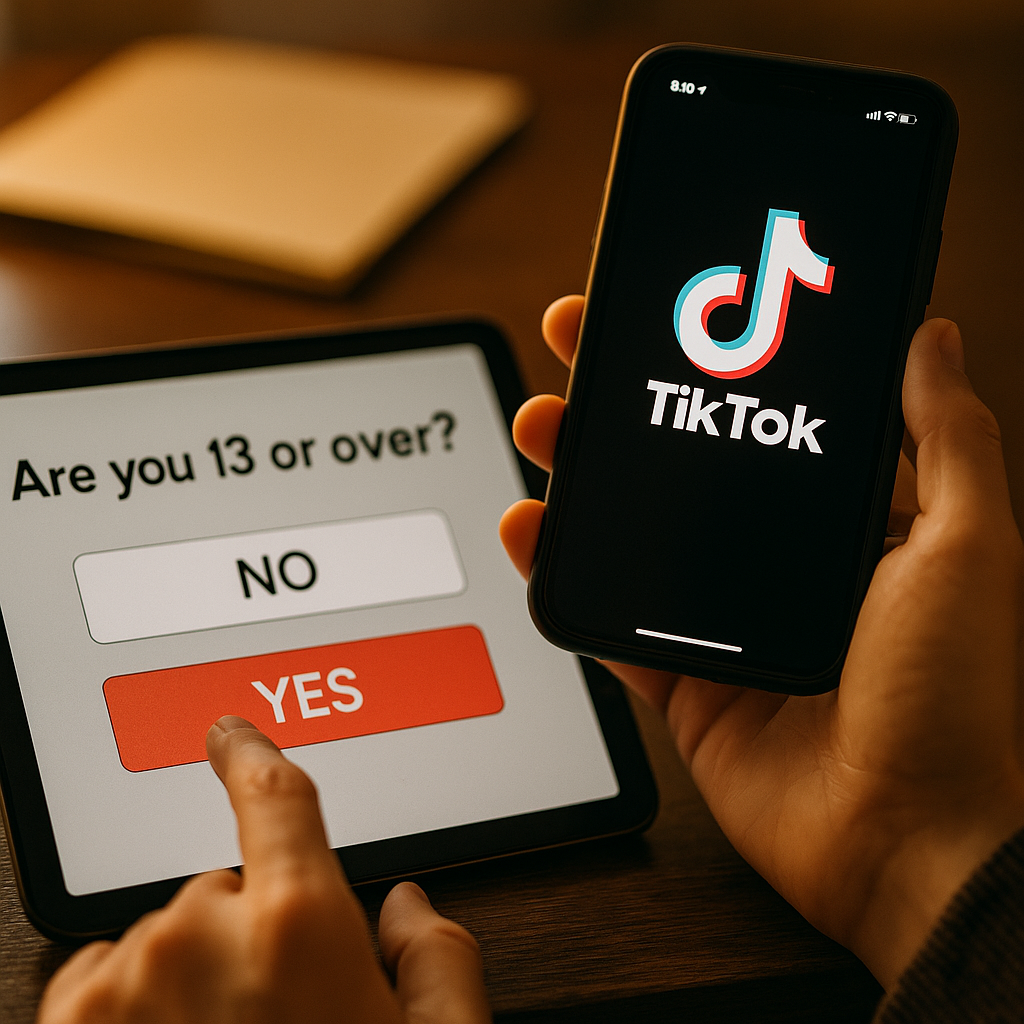
Roughly 40% of TikTok’s US audience skews under 24 — and a growing chunk of that cohort now falls behind an age wall your ad targeting can’t see through. If your media plan leans on TikTok’s interest and behavioral signals to reach Gen Z or teen-adjacent audiences, you’re already feeling the squeeze on personalized ad targeting. This isn’t a minor platform tweak. It’s a structural shift in how youth-adjacent brands buy, measure, and justify TikTok spend.
The Compliance Backstory, Fast
COPPA — the Children’s Online Privacy Protection Act — has governed data collection from kids under 13 since 1998. TikTok has spent years under regulatory fire for allegedly letting underage users slip through age gates, culminating in a record-setting FTC settlement and continued scrutiny from state attorneys general. The platform’s response has been aggressive: stricter age verification, default privacy settings for minors, and — critically for advertisers — a near-total lockout of personalized ad delivery to accounts flagged or suspected as under-18.
That last part is where marketing teams are getting hit. TikTok isn’t just blocking ads to confirmed kids. It’s applying conservative age-assurance logic across a much wider band of accounts, including plenty of adult users who get miscategorized or whose signals look “youth-like” to TikTok’s classifier models.
TikTok’s age-assurance systems now err heavily toward restriction, meaning brands lose personalized targeting access not just to minors, but to a meaningful slice of legal-age users caught in the same net.
What “Audience-Setting Rules” Actually Restrict
Let’s get specific, because “COPPA compliance” gets thrown around vaguely in marketing meetings. Here’s what’s actually changed on the ad platform side:
- No behavioral or interest-based targeting for accounts under 18, and increasingly for accounts in an “unverified age” bucket.
- No third-party data matching — lookalike audiences and Custom Audience uploads can no longer pull in users flagged by TikTok’s age-assurance systems.
- Contextual-only delivery for youth-adjacent content categories, meaning your ad shows based on the video it’s next to, not the viewer’s inferred interests.
- Frequency capping and reduced retargeting windows for accounts near the age threshold, shrinking the funnel you can build against them.
For brands in beauty, gaming, fashion, snacks, ed-tech, or entertainment — categories that naturally skew young even when the target buyer is an adult parent — this reclassification problem is a real budget leak. TikTok’s own advertiser resources now flag age-assurance status as a targeting variable brands need to actively account for in campaign setup, not just a background compliance detail.
Why “Youth-Adjacent” Brands Get Caught in the Crossfire
Nobody built a Claw Machine skincare ad for 11-year-olds. But if your product content, hashtags, or engaged audience overlaps with teen culture — K-pop fandoms, back-to-school shopping, mobile gaming — TikTok’s classifier can lump your buyers into the same restricted bucket as actual minors. That’s the collateral damage nobody warned brand teams about.
Think about a direct-to-consumer skincare brand targeting 18-24 year old women. Their organic audience already includes plenty of 14-17 year olds who found the brand through creator content. TikTok’s system doesn’t cleanly separate “brand followed by teens” from “brand targeting teens.” The result: your custom audiences shrink, your lookalikes get diluted, and your CPMs climb because you’re now competing for a narrower pool of verifiably-adult, interest-matchable users.
This is the same pattern we’ve seen play out with TikTok’s US data mandate reshaping targeting infrastructure more broadly. Compliance-driven data restrictions rarely stay narrowly scoped — they ripple into adjacent audience segments that were never the actual regulatory target.
The ROI Math Brands Are Now Running
Here’s the uncomfortable spreadsheet conversation happening at youth-adjacent brands right now. Personalized targeting historically drove down CPA by letting algorithms find high-intent users based on behavior. Strip that away for a meaningful audience slice, and you’re back to spray-and-pray contextual buying for part of your funnel.
Early data from agency media buyers suggests contextual-only delivery within COPPA-restricted segments runs 15-30% higher CPMs than comparable personalized placements, with wider variance depending on category competitiveness. That’s not a rounding error on a seven-figure TikTok budget.
Smart teams are responding in three ways:
- Reallocating budget toward verified-adult-heavy placements — Spark Ads on creator content with clearly adult audiences, rather than broad interest targeting.
- Shifting measurement expectations — building COPPA-adjusted benchmarks into media plans so a CMO doesn’t panic when blended CPA rises quarter over quarter.
- Doubling down on first-party data as the connective tissue, since TikTok’s own age-inferred targeting is less reliable than it used to be. This mirrors guidance we’ve covered around DPAs for platform APIs, where owning the data relationship reduces exposure to platform-side restrictions.
Creator Content Isn’t Exempt Either
If you’re running influencer campaigns and assuming organic creator posts sidestep these restrictions, think again. Boosted creator content (Spark Ads) still runs through the same age-assurance and targeting logic as standard ad buys. A creator with a large teen-skewing following can still deliver great organic reach, but boosting that content for personalized paid distribution hits the same walls.
This is exactly why brief attribution and disclosure practices matter more, not less, in a restricted-targeting environment. When you can’t rely on precise audience targeting to control who sees an ad, your compliance exposure around endorsement disclosure and content accuracy actually goes up, because the content reaches a broader, less-controlled audience. Brands managing this shift should revisit how they structure creator brief attribution to keep performance data honest amid noisier audience composition.
Practical Moves for the Next Two Quarters
Waiting for TikTok to loosen these rules is not a strategy. Regulatory pressure on youth data privacy is only intensifying — state-level laws modeled on California’s Age-Appropriate Design Code are adding more layers, not fewer. Treat the current restrictions as the new floor, not a temporary inconvenience.
Concrete steps that are actually moving the needle for brand teams right now:
- Audit your audience overlap. Pull TikTok Ads Manager reporting on age-assurance segment distribution within your custom audiences. If a large share is flagged as unverified or under-18, your targeting strategy needs restructuring, not just budget padding.
- Build first-party audience feeds. Email and CRM-based custom audiences with verified age data from your own systems reduce dependence on TikTok’s classifier accuracy.
- Reweight creative for contextual relevance. Since contextual delivery is doing more heavy lifting, invest in creative that performs well adjacent to specific content categories rather than relying purely on algorithmic interest matching.
- Update measurement frameworks with finance and leadership. Set expectations early that blended TikTok CPMs and CPAs will look different for youth-adjacent categories, and document why, so quarterly reviews don’t turn into blame sessions.
- Cross-check creator audience composition before boosting content, similar to the diligence brands now apply under data minimization practices for livestream identity tools.
Industry benchmarking from eMarketer and Statista continues to show TikTok holding strong engagement numbers among younger demographics even as monetization mechanics tighten — meaning the audience isn’t going anywhere, but the path to reaching them profitably is getting narrower and more compliance-dependent.
The Bigger Pattern: Compliance Is Becoming a Targeting Variable
Step back and this fits a broader trend we’ve tracked across platforms: regulatory compliance isn’t a legal-department afterthought anymore, it’s a live input into media planning. The same dynamic is playing out with TikTok’s data localization requirements and how they constrain targeting infrastructure at the technical level.
Brand and media teams that treat COPPA-driven restrictions as purely a legal box to check will keep bleeding efficiency. Teams that build age-assurance status into their planning models — the same way they already account for platform algorithm shifts or seasonal CPM swings — will out-compete on both compliance posture and cost per acquisition. The FTC’s own guidance on children’s privacy enforcement makes clear this scrutiny isn’t easing up, so the brands adapting fastest now will have the most runway before the next round of restrictions lands.
Frequently Asked Questions
FAQs
What is COPPA and why does it affect TikTok ad targeting?
COPPA is the US federal law restricting data collection from children under 13. TikTok’s enforcement of it now includes broader age-assurance systems that also restrict personalized targeting for unverified or teen-flagged accounts, not just confirmed minors.
How do I know if my TikTok audience is affected by age-assurance restrictions?
Check TikTok Ads Manager’s audience insights and delivery reports for age-assurance segment breakdowns. A high proportion of unverified-age impressions or reduced custom audience match rates are strong indicators.
Does this mean I should stop running TikTok ads for youth-adjacent products?
No. It means shifting strategy: lean more on first-party data, contextual placements, and verified-adult creator audiences rather than broad interest-based targeting that now underperforms in restricted segments.
Are boosted creator posts (Spark Ads) subject to the same restrictions?
Yes. Spark Ads run through the same targeting and age-assurance infrastructure as standard TikTok ad buys, so creator content with youth-skewing organic followings faces the same limitations when boosted.
Will these restrictions get stricter or loosen over time?
All regulatory signals point toward stricter enforcement, not relaxation. State-level youth privacy laws and continued FTC scrutiny suggest brands should plan for these constraints as permanent, not temporary.
Next step: Pull your TikTok Ads Manager audience-composition report this week, quantify what percentage of your custom audiences fall into unverified or restricted age segments, and use that number to rebuild your Q3 media plan around first-party data rather than platform-inferred targeting.
FAQs
Top Influencer Marketing Agencies
The leading agencies shaping influencer marketing in 2026
Agencies ranked by campaign performance, client diversity, platform expertise, proven ROI, industry recognition, and client satisfaction. Assessed through verified case studies, reviews, and industry consultations.
Moburst

-
2

The Shelf
Boutique Beauty & Lifestyle Influencer AgencyA data-driven boutique agency specializing exclusively in beauty, wellness, and lifestyle influencer campaigns on Instagram and TikTok. Best for brands already focused on the beauty/personal care space that need curated, aesthetic-driven content.Clients: Pepsi, The Honest Company, Hims, Elf Cosmetics, Pure LeafVisit The Shelf → -
3

Audiencly
Niche Gaming & Esports Influencer AgencyA specialized agency focused exclusively on gaming and esports creators on YouTube, Twitch, and TikTok. Ideal if your campaign is 100% gaming-focused — from game launches to hardware and esports events.Clients: Epic Games, NordVPN, Ubisoft, Wargaming, Tencent GamesVisit Audiencly → -
4

Viral Nation
Global Influencer Marketing & Talent AgencyA dual talent management and marketing agency with proprietary brand safety tools and a global creator network spanning nano-influencers to celebrities across all major platforms.Clients: Meta, Activision Blizzard, Energizer, Aston Martin, WalmartVisit Viral Nation → -
5

The Influencer Marketing Factory
TikTok, Instagram & YouTube CampaignsA full-service agency with strong TikTok expertise, offering end-to-end campaign management from influencer discovery through performance reporting with a focus on platform-native content.Clients: Google, Snapchat, Universal Music, Bumble, YelpVisit TIMF → -
6

NeoReach
Enterprise Analytics & Influencer CampaignsAn enterprise-focused agency combining managed campaigns with a powerful self-service data platform for influencer search, audience analytics, and attribution modeling.Clients: Amazon, Airbnb, Netflix, Honda, The New York TimesVisit NeoReach → -
7

Ubiquitous
Creator-First Marketing PlatformA tech-driven platform combining self-service tools with managed campaign options, emphasizing speed and scalability for brands managing multiple influencer relationships.Clients: Lyft, Disney, Target, American Eagle, NetflixVisit Ubiquitous → -
8

Obviously
Scalable Enterprise Influencer CampaignsA tech-enabled agency built for high-volume campaigns, coordinating hundreds of creators simultaneously with end-to-end logistics, content rights management, and product seeding.Clients: Google, Ulta Beauty, Converse, AmazonVisit Obviously →