


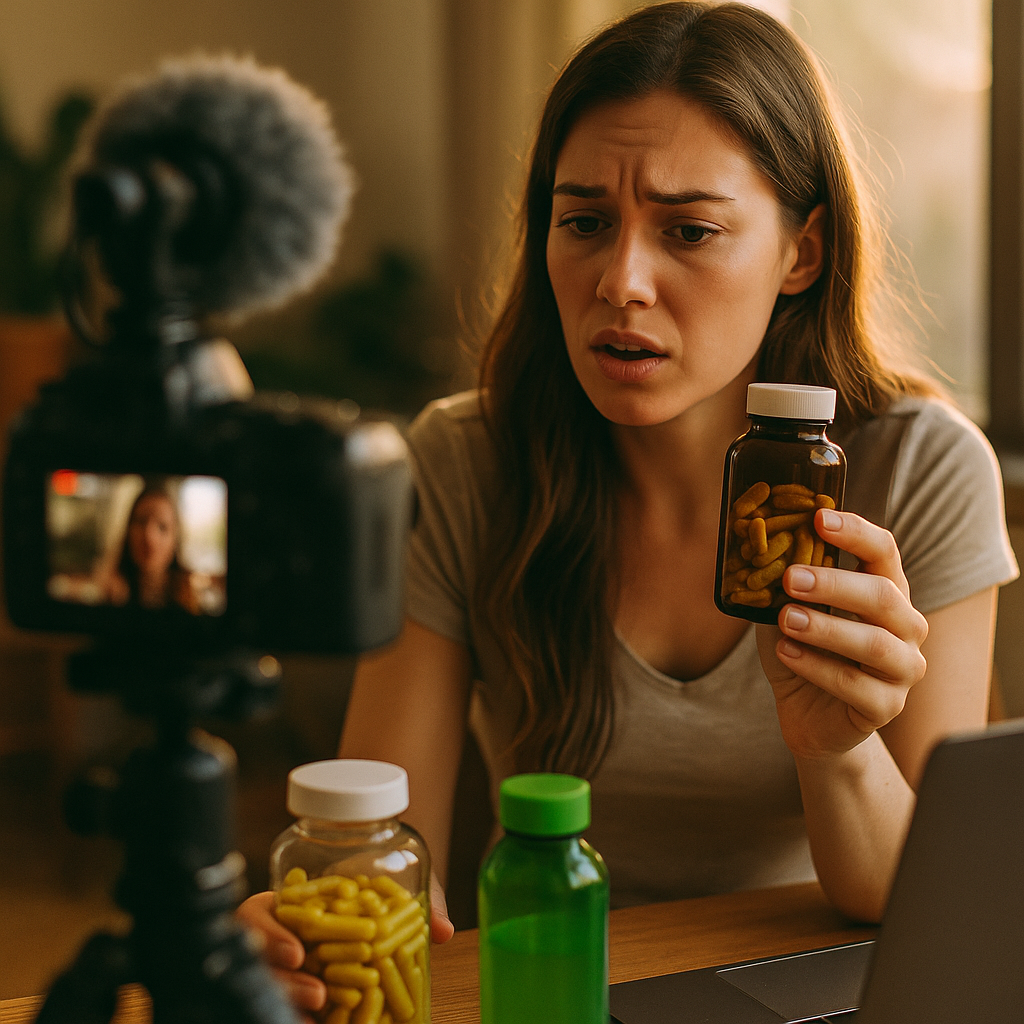
One flagged supplement video can wipe out a quarter’s worth of organic reach. YouTube’s 2026 enforcement wave against unsubstantiated health claims has already demonetized thousands of wellness videos, and brands treating this as a “creator problem” are learning the hard way that it’s a brand liability problem first.
The platform isn’t just nuking obvious snake oil anymore. It’s flagging vague-but-common phrasing — “boosts immunity,” “detoxifies your liver,” “balances hormones naturally” — the exact language wellness brands have leaned on for years because it sounded safe. It wasn’t. YouTube’s trust and safety teams, working alongside expanded medical misinformation policies, are now treating these claims the way they treat COVID misinformation: automated first pass, human review second, and a demonetization strike that follows the video (and sometimes the channel) around like a bad credit score.
Why the Sudden Escalation?
This isn’t random. YouTube has been under regulatory and reputational pressure to clean up health content since long-form wellness misinformation became a documented public health concern. Google’s broader search quality guidelines already treat “Your Money or Your Life” (YMYL) content — anything touching health, finance, or safety — with stricter scrutiny than a recipe video or a gaming stream. Wellness content sits squarely in YMYL territory, and YouTube’s automated classifiers have gotten dramatically better at pattern-matching claim language against a growing database of debunked health assertions.
Add in FTC enforcement momentum around endorsement disclosures and substantiation standards, and you’ve got a platform incentivized to act preemptively rather than wait for a regulatory referral. The FTC’s endorsement guidance already requires that claims made by influencers be truthful and substantiated — YouTube enforcing this at the platform level is really just closing the gap between what regulators expect and what creators have been posting.
A single demonetization strike on a branded wellness video doesn’t just kill that video’s revenue — it can suppress the entire channel’s recommendation weight for weeks, according to creator reports across supplement and skincare niches.
What Actually Gets Flagged
The pattern is more specific than “health talk is risky.” Based on creator forums, MCN advisories, and brand compliance teams comparing notes, here’s what’s triggering action most often:
- Absolute claims without qualifiers — “cures,” “eliminates,” “reverses” age or disease-related language, even in supplement and skincare content that never mentions a specific condition by name.
- Implied medical equivalence — positioning a product as an alternative to prescribed treatment, even jokingly or in a testimonial format.
- Before/after framing without disclosed context — dramatic transformation content lacking timeframe, method disclosure, or “results not typical” language.
- Unqualified statistic drops — “clinically proven,” “94% of users saw results” without a linked, citable source in the description or on-screen.
- Mental health and hormone content — anxiety, cortisol, and hormone-balance claims are getting flagged at a notably higher rate than general nutrition content, likely due to the sensitivity classifiers layered on top of standard YMYL rules.
Here’s the uncomfortable part for brand teams: much of this language has been standard in wellness marketing copy for a decade. It’s not fringe. It’s the stuff sitting in your brand guidelines right now.
The Automated-First, Human-Second Problem
Creators are reporting something specific: initial flags happen algorithmically, often within hours of publish, and appeals take days. That lag matters enormously for time-sensitive campaigns — product launches, seasonal wellness pushes, influencer takeovers tied to a promo window. If your launch video gets auto-flagged on day one and the appeal doesn’t resolve until day six, you’ve lost the exact window the media plan was built around.
This mirrors a pattern brands have seen elsewhere on the platform. Just as view count inflation forced sponsors to rebuild KPIs, aggressive claim-flagging is forcing legal and compliance teams into the content approval loop earlier than ever. The days of “creative signs off, legal reviews after the fact” are over for anything touching health, weight, skin, or mental wellness categories.
The Compliance Playbook: What Brands Should Actually Do
Waiting for YouTube to publish a definitive claim-language rulebook is a losing strategy — they won’t, because the classifiers are deliberately kept opaque to prevent gaming. Instead, brands need an internal playbook that assumes ambiguity and builds in redundancy.
- Pre-screen scripts against an internal claims database. Build a living list of approved vs. banned phrasing, updated monthly based on flagged incidents across your creator roster. Legal and marketing should co-own this, not legal alone — marketing needs to understand the “why” to write around it creatively.
- Require citation-in-description as standard practice. Any statistic, study reference, or “clinically proven” language needs a linked source directly in the video description, not just verbally mentioned. This is both a platform signal and a genuine FTC substantiation requirement.
- Build a 48-hour buffer into launch timelines. Publish sponsored wellness content at least two days ahead of any hard campaign date, so there’s runway to catch and appeal a flag before the moment that matters.
- Diversify away from single-platform dependency. Wellness brands leaning entirely on YouTube for long-form creator content are exposed. Cross-posting compliant versions to Instagram for TV or FAST channels spreads platform risk and gives you a fallback distribution channel if a video gets pulled.
- Train creators, don’t just brief them. A one-page do/don’t list gets ignored. A 20-minute onboarding call walking through actual flagged examples sticks. Creators who understand the classifier logic self-edit better than ones just following a checklist.
Disclosure Isn’t Optional Anymore — It’s a Ranking Signal
There’s a secondary effect brands are sleeping on: YouTube appears to be factoring disclosure completeness into how leniently borderline health content gets treated. Videos with clear #ad tags, FTC-compliant verbal disclosures, and linked sourcing seem to get more benefit of the doubt during human review than bare-bones sponsored posts with a description-only disclosure buried under hashtags.
This tracks with broader platform behavior. Instagram’s whitelisting changes showed a similar pattern — platforms rewarding transparency with better distribution, not just better legal standing. If you haven’t revisited your disclosure standards recently, the whitelisting compliance shift is a useful reference point for how fast these expectations move.
What This Means for Creator Selection and Contracts
Brand teams need to rethink how they vet wellness creators, not just what content they approve. A creator with a history of demonetization strikes in the health category is a bigger risk than their audience size might suggest — their channel-level trust score with YouTube affects how far your sponsored content travels, regardless of production quality.
Before signing, pull the creator’s recent upload history and check for:
- Pattern of removed or demonetized health-adjacent videos in the last six months
- How they’ve handled past claim disputes publicly (defensive vs. corrective responses signal different risk profiles)
- Whether they already use consistent disclosure language, or whether that’s something you’ll need to train from scratch
Contractually, this means adding claim-substantiation clauses that go beyond generic FTC boilerplate. Specify that any health, efficacy, or outcome claim must be backed by a source the brand has pre-approved, and that the creator carries responsibility for platform strikes resulting from off-script claims added during filming. Ad-libbed enthusiasm is exactly how “it changed my life” turns into “it cured my anxiety” turns into a flagged video.
Wellness brands that build claim substantiation into the contract, not just the brief, see measurably fewer platform strikes across their creator roster — because the financial incentive to stay on-script shifts to the creator too.
Measuring the Real Cost
Run the math before assuming this is a minor operational hiccup. A flagged video loses monetization, loses recommendation reach, and often loses the watch-time momentum needed to rank in search for branded terms. If your influencer strategy depends on evergreen search discovery — someone Googling “best magnesium supplement” six months post-launch — a flagged video effectively disappears from that funnel permanently, even if the strike gets overturned on appeal weeks later.
Compare that to the cost of proper legal review upfront: a few hours of counsel time per script, maybe a slower approval cycle. For most mid-size wellness brands, that trade is obviously worth it once you’ve seen one campaign get gutted by a claims flag. Tools like Sprout Social and platform-native analytics can help track anomalous reach drops that often signal a shadow demonetization before you even get a formal notice.
It’s also worth benchmarking against industry data. eMarketer’s influencer marketing spend forecasts consistently show wellness and beauty as top-three categories for creator investment — meaning the category most exposed to this enforcement wave is also one of the most heavily funded. That mismatch is exactly why compliance infrastructure needs to catch up now, not after the next enforcement expansion.
FAQs
Frequently Asked Questions
What counts as an “unsubstantiated health claim” on YouTube?
Any statement about a product’s health effect, efficacy, or outcome that isn’t backed by a citable, credible source linked in the video or description. This includes absolute language like “cures” or “eliminates,” implied medical equivalence, and statistics presented without sourcing.
Can a demonetized video be restored after appeal?
Yes, if the appeal succeeds, monetization and distribution typically resume, but the video rarely recovers the reach momentum it lost during the review period. Search ranking and recommendation weight often take longer to rebuild than the strike itself takes to resolve.
Are these rules different for organic versus sponsored content?
The claim-substantiation policy applies to all content, but sponsored and branded content faces additional scrutiny under both YouTube’s disclosure policies and FTC endorsement rules, making thorough disclosure and sourcing even more critical for paid partnerships.
Should brands avoid the wellness category on YouTube entirely?
No — the category remains high-value and heavily funded across the industry. The smarter move is building compliance infrastructure (claims review, disclosure standards, creator vetting) rather than abandoning a channel where audience intent and search discovery remain strong.
How does this connect to broader platform trust and safety trends?
It’s part of a wider pattern of platforms tightening YMYL (Your Money or Your Life) content standards across health, finance, and safety categories, often in response to regulatory pressure and documented misinformation harms.
The brands winning in wellness right now aren’t the ones with the boldest claims — they’re the ones whose legal and content teams sit in the same room before publish, not after a strike notice. Build the claims database, brief your creators like adults, and treat disclosure as a growth lever, not a legal formality.
Top Influencer Marketing Agencies
The leading agencies shaping influencer marketing in 2026
Agencies ranked by campaign performance, client diversity, platform expertise, proven ROI, industry recognition, and client satisfaction. Assessed through verified case studies, reviews, and industry consultations.
Moburst

-
2

The Shelf
Boutique Beauty & Lifestyle Influencer AgencyA data-driven boutique agency specializing exclusively in beauty, wellness, and lifestyle influencer campaigns on Instagram and TikTok. Best for brands already focused on the beauty/personal care space that need curated, aesthetic-driven content.Clients: Pepsi, The Honest Company, Hims, Elf Cosmetics, Pure LeafVisit The Shelf → -
3

Audiencly
Niche Gaming & Esports Influencer AgencyA specialized agency focused exclusively on gaming and esports creators on YouTube, Twitch, and TikTok. Ideal if your campaign is 100% gaming-focused — from game launches to hardware and esports events.Clients: Epic Games, NordVPN, Ubisoft, Wargaming, Tencent GamesVisit Audiencly → -
4

Viral Nation
Global Influencer Marketing & Talent AgencyA dual talent management and marketing agency with proprietary brand safety tools and a global creator network spanning nano-influencers to celebrities across all major platforms.Clients: Meta, Activision Blizzard, Energizer, Aston Martin, WalmartVisit Viral Nation → -
5

The Influencer Marketing Factory
TikTok, Instagram & YouTube CampaignsA full-service agency with strong TikTok expertise, offering end-to-end campaign management from influencer discovery through performance reporting with a focus on platform-native content.Clients: Google, Snapchat, Universal Music, Bumble, YelpVisit TIMF → -
6

NeoReach
Enterprise Analytics & Influencer CampaignsAn enterprise-focused agency combining managed campaigns with a powerful self-service data platform for influencer search, audience analytics, and attribution modeling.Clients: Amazon, Airbnb, Netflix, Honda, The New York TimesVisit NeoReach → -
7

Ubiquitous
Creator-First Marketing PlatformA tech-driven platform combining self-service tools with managed campaign options, emphasizing speed and scalability for brands managing multiple influencer relationships.Clients: Lyft, Disney, Target, American Eagle, NetflixVisit Ubiquitous → -
8

Obviously
Scalable Enterprise Influencer CampaignsA tech-enabled agency built for high-volume campaigns, coordinating hundreds of creators simultaneously with end-to-end logistics, content rights management, and product seeding.Clients: Google, Ulta Beauty, Converse, AmazonVisit Obviously →