


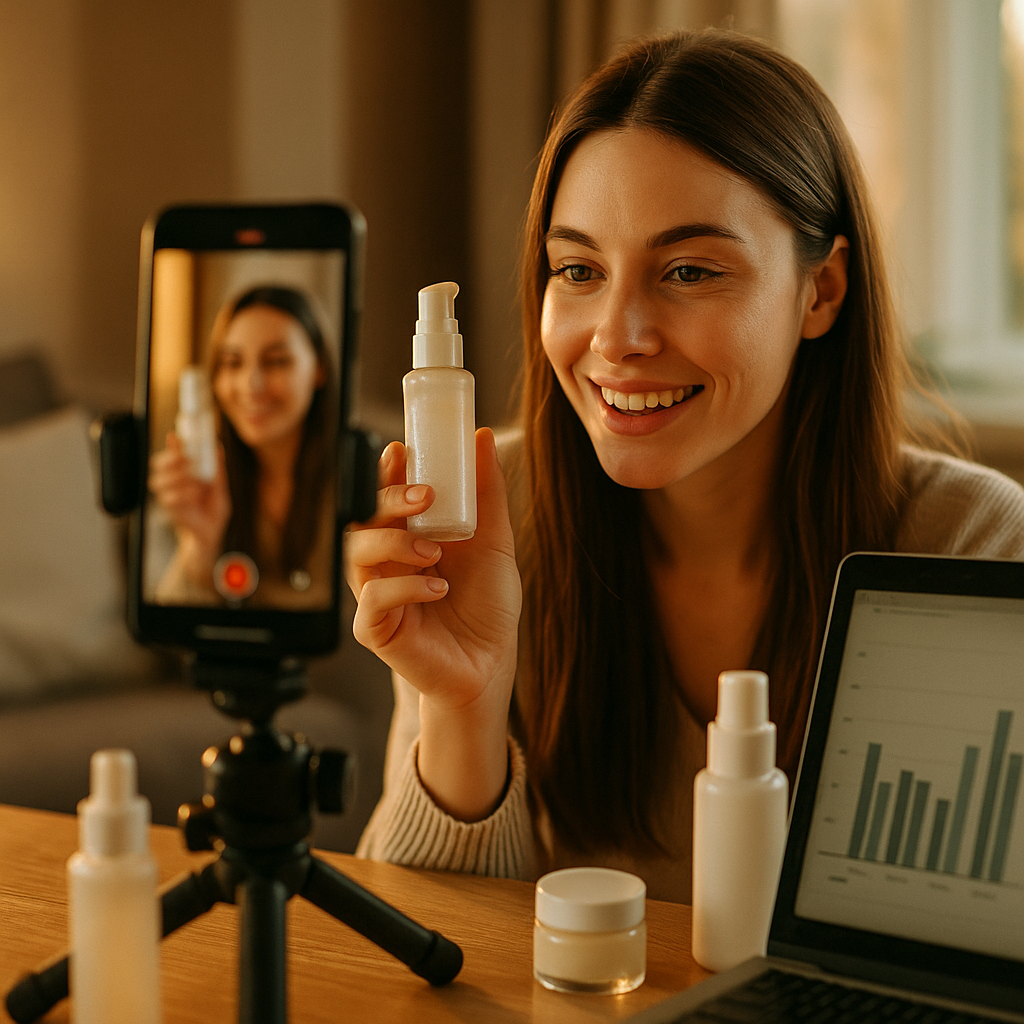
Nine times monthly sales. Not over a year. Over six months. When a mid-tier skincare brand partnered with Stack Influence and leaned entirely into nano-creators, the result wasn’t a viral moment — it was a repeatable sales machine. This case study breaks down exactly how they did it, and why the “go small” approach is quietly outperforming celebrity endorsements across the beauty category.
The Brand’s Problem Wasn’t Awareness. It Was Trust.
The skincare brand in question (mid-market, direct-to-consumer, sold primarily on Amazon and Shopify) had a familiar problem. Decent product, mediocre reviews, and a paid media strategy that was bleeding cash. Meta ad costs kept climbing. Their CAC had crept past what the lifetime value of a first-time buyer could justify. Sound familiar?
They’d tried the traditional influencer playbook first: a handful of mid-tier beauty creators (50K-200K followers) posting polished tutorials. The content looked great. Engagement was fine. Sales barely moved. The problem wasn’t reach. It was believability. Consumers scrolling past a perfectly lit skincare tutorial from someone who clearly gets paid to promote everything have gotten very good at ignoring it.
So the brand pivoted to a nano-creator strategy through Stack Influence, a platform that specializes in matching brands with creators who have under 25,000 followers, often paid in product rather than cash. That shift is the whole story here.
The brand’s average order value didn’t change much. What changed was order frequency and repeat purchase rate, driven almost entirely by the sheer volume of authentic, unpaid-feeling social proof flooding search and social feeds simultaneously.
What “Nano-Creator Network” Actually Means in Practice
Nano-creators, generally defined as accounts with 1,000 to 25,000 followers, aren’t influencers in the traditional celebrity-adjacent sense. They’re real people with real audiences of friends, coworkers, and community followers who trust their recommendations precisely because they don’t feel like ads.
Stack Influence’s model works differently than typical influencer marketplaces. Instead of negotiating flat fees per post, the platform runs a product-seeding engine at scale: brands ship product to hundreds or thousands of nano-creators simultaneously, creators post organically (often required to tag the brand and link to the Amazon or Shopify listing), and payment is largely product-based with smaller cash incentives layered on top for performance.
For this skincare brand, that meant activating roughly 400 nano-creators per month by month three, scaling to over 900 by month six. Each creator posted an average of 2.3 pieces of content. Do the math: that’s thousands of individual, decentralized touchpoints, each one looking like an organic recommendation rather than an ad.
This mirrors a pattern seen elsewhere in the category. Poppi’s nano-creator rebuild on TikTok Shop leaned on the same insight: volume and authenticity beat polish and reach when trust is the bottleneck, not visibility.
The Six-Month Timeline, Month by Month
Here’s roughly how the growth curve played out, based on the brand’s reported internal sales data shared with Stack Influence:
- Month one: Baseline campaign launch. 150 nano-creators activated. Sales lift was modest, around 1.4x baseline monthly revenue, mostly from a spike in Amazon review volume.
- Month two: Creator count doubled to roughly 300. Amazon’s organic search ranking for the brand’s core SKU improved noticeably as review velocity and star rating both climbed. Sales hit 2.6x baseline.
- Month three: The brand started segmenting creators by skin type and concern (acne, dryness, sensitivity) to make content feel even more targeted. Sales reached 4.1x baseline.
- Month four: A second SKU was added to the program. Cross-promotion between products in creator content began compounding. 5.8x baseline.
- Month five: The brand layered in a small paid amplification budget, boosting top-performing organic nano-creator posts rather than running separate ad creative. 7.3x baseline.
- Month six: Full network maturity, nearly 900 active creators, consistent content cadence, and word-of-mouth referral loops kicking in. 9x baseline monthly sales.
That progression matters more than the headline number. This wasn’t a single viral spike that faded. It was compounding, incremental growth built on volume and consistency, the exact opposite of the boom-bust cycle brands often get from a single celebrity post.
Why Product-for-Post Economics Changed the ROI Math
Here’s the part finance teams actually care about. Traditional influencer campaigns with mid-tier creators often run $500 to $5,000 per post, according to benchmarks published by HubSpot. At that rate, activating 900 creators would cost a small brand well into seven figures.
Stack Influence’s product-for-post model flips the cost structure. The brand’s cost per creator activation averaged under $40, mostly the wholesale cost of the product shipped plus minor performance bonuses for top posters. Across 900 creators in month six alone, total program spend stayed under $40,000, a fraction of what a single celebrity partnership might cost.
That efficiency is the real headline, arguably more important than the 9x figure itself. A brand can survive a slow month. It cannot survive a marketing model where CAC keeps climbing faster than customer LTV.
Cost per acquisition dropped by roughly 71% over the six-month period, even as total revenue grew 9x, because the marginal cost of adding another nano-creator was nearly negligible compared to paid media or celebrity endorsement deals.
This tracks with broader industry data. eMarketer has repeatedly found that engagement rates on nano and micro accounts outperform mega-influencers on a per-follower basis, often by a factor of two to three. Smaller audiences, it turns out, are just more responsive.
The Amazon Flywheel Nobody Talks About Enough
One underappreciated mechanic in this case study: most of the nano-creator content didn’t just drive direct sales. It drove Amazon review velocity, which drove organic search ranking, which drove more sales without any additional spend.
Amazon’s A9 search algorithm weighs review count, review recency, and conversion rate heavily. A brand that goes from 40 monthly reviews to 400 monthly reviews (a realistic outcome when hundreds of nano-creators are actively using and reviewing product) sees ranking improvements that persist long after any individual campaign ends.
This is the compounding effect that made months four through six so much stronger than month one. Early creator activity built a review base. That review base improved discoverability. Improved discoverability brought in organic buyers who weren’t part of the influencer program at all. It’s a flywheel, and it’s one that celebrity or mid-tier influencer campaigns rarely produce because they’re too concentrated in time and too thin in volume.
The same logic shows up in how Crocs built a nano-creator economy around Jibbitz charms, where distributed, low-cost creator activity created durable search and discovery advantages rather than a short-lived spike.
What Brand Teams Should Actually Steal From This
Not every brand needs 900 creators. But the operational lessons scale down fine for smaller budgets:
- Segment creators by use case, not just follower count. Matching skin type or concern to creator content made messaging feel personal instead of generic.
- Treat product cost as marketing spend, and budget for it deliberately. Product-for-post only works if you’re shipping enough inventory to sustain volume.
- Watch review velocity as a leading indicator, not just sales. It predicted the sales acceleration by roughly 30-45 days in this case.
- Layer in small paid boosts on winning organic content instead of building separate ad creative from scratch. That’s what triggered the jump between months four and five.
- Give the program time. Month one looked unremarkable. Brands that pull the plug after 30 days never see the compounding curve.
None of this requires reinventing influencer strategy. It requires resisting the instinct to chase reach and instead optimizing for volume, authenticity, and patience. That’s a harder sell internally, frankly, especially to executives who want a big splashy campaign moment. But the sales data doesn’t lie.
Compliance matters here too. Nano-creator programs at scale increase the surface area for FTC disclosure risk, since hundreds of individual posters need to consistently tag sponsored content correctly. Brands running product-seeding programs should review the FTC’s endorsement guidelines and build disclosure requirements directly into onboarding, not as an afterthought.
Payment logistics also get complicated fast when hundreds of creators are involved, even when compensation is mostly product-based. Brands scaling similar programs internationally should be aware of the operational friction described in cross-border creator payout challenges, which can quietly stall a fast-growing program if finance teams aren’t looped in early.
FAQs
What is a nano-creator, and how is it different from a micro-influencer?
A nano-creator typically has between 1,000 and 25,000 followers, while micro-influencers usually range from 25,000 to 100,000. Nano-creators tend to have tighter, more personal audiences and higher trust levels, which often translates into stronger engagement rates per follower.
How does Stack Influence’s compensation model work?
Stack Influence primarily uses a product-for-post model, where creators receive free product in exchange for organic content, sometimes supplemented with small cash bonuses tied to performance metrics like clicks or sales. This keeps per-creator costs dramatically lower than traditional paid influencer deals.
Can this nano-creator strategy work outside skincare and beauty?
Yes. The same product-seeding, volume-based approach has worked in categories like food and beverage, apparel, and consumer accessories, wherever organic word-of-mouth and review velocity meaningfully influence purchase decisions.
How long does it typically take to see results from a nano-creator campaign?
Based on this case study and similar programs, brands should expect a slower first 30-60 days followed by compounding growth from months three onward, as review velocity and search ranking improvements start reinforcing sales.
What are the biggest risks with scaling a nano-creator network quickly?
The main risks are FTC disclosure compliance across hundreds of individual posters, inventory strain from product seeding at volume, and payout logistics if creators are international. Brands should build compliance and fulfillment processes before scaling past a few hundred creators.
FAQs
What is a nano-creator, and how is it different from a micro-influencer?
A nano-creator typically has between 1,000 and 25,000 followers, while micro-influencers usually range from 25,000 to 100,000. Nano-creators tend to have tighter, more personal audiences and higher trust levels, which often translates into stronger engagement rates per follower.
How does Stack Influence’s compensation model work?
Stack Influence primarily uses a product-for-post model, where creators receive free product in exchange for organic content, sometimes supplemented with small cash bonuses tied to performance metrics like clicks or sales. This keeps per-creator costs dramatically lower than traditional paid influencer deals.
Can this nano-creator strategy work outside skincare and beauty?
Yes. The same product-seeding, volume-based approach has worked in categories like food and beverage, apparel, and consumer accessories, wherever organic word-of-mouth and review velocity meaningfully influence purchase decisions.
How long does it typically take to see results from a nano-creator campaign?
Based on this case study and similar programs, brands should expect a slower first 30-60 days followed by compounding growth from months three onward, as review velocity and search ranking improvements start reinforcing sales.
What are the biggest risks with scaling a nano-creator network quickly?
The main risks are FTC disclosure compliance across hundreds of individual posters, inventory strain from product seeding at volume, and payout logistics if creators are international. Brands should build compliance and fulfillment processes before scaling past a few hundred creators.
The takeaway for brand leaders is simple: stop treating nano-creator programs as a budget-tier compromise. Build the review velocity and search flywheel first, let paid amplification follow the winners, and give the model a full quarter before judging results.
Top Influencer Marketing Agencies
The leading agencies shaping influencer marketing in 2026
Agencies ranked by campaign performance, client diversity, platform expertise, proven ROI, industry recognition, and client satisfaction. Assessed through verified case studies, reviews, and industry consultations.
Moburst

-
2

The Shelf
Boutique Beauty & Lifestyle Influencer AgencyA data-driven boutique agency specializing exclusively in beauty, wellness, and lifestyle influencer campaigns on Instagram and TikTok. Best for brands already focused on the beauty/personal care space that need curated, aesthetic-driven content.Clients: Pepsi, The Honest Company, Hims, Elf Cosmetics, Pure LeafVisit The Shelf → -
3

Audiencly
Niche Gaming & Esports Influencer AgencyA specialized agency focused exclusively on gaming and esports creators on YouTube, Twitch, and TikTok. Ideal if your campaign is 100% gaming-focused — from game launches to hardware and esports events.Clients: Epic Games, NordVPN, Ubisoft, Wargaming, Tencent GamesVisit Audiencly → -
4

Viral Nation
Global Influencer Marketing & Talent AgencyA dual talent management and marketing agency with proprietary brand safety tools and a global creator network spanning nano-influencers to celebrities across all major platforms.Clients: Meta, Activision Blizzard, Energizer, Aston Martin, WalmartVisit Viral Nation → -
5

The Influencer Marketing Factory
TikTok, Instagram & YouTube CampaignsA full-service agency with strong TikTok expertise, offering end-to-end campaign management from influencer discovery through performance reporting with a focus on platform-native content.Clients: Google, Snapchat, Universal Music, Bumble, YelpVisit TIMF → -
6

NeoReach
Enterprise Analytics & Influencer CampaignsAn enterprise-focused agency combining managed campaigns with a powerful self-service data platform for influencer search, audience analytics, and attribution modeling.Clients: Amazon, Airbnb, Netflix, Honda, The New York TimesVisit NeoReach → -
7

Ubiquitous
Creator-First Marketing PlatformA tech-driven platform combining self-service tools with managed campaign options, emphasizing speed and scalability for brands managing multiple influencer relationships.Clients: Lyft, Disney, Target, American Eagle, NetflixVisit Ubiquitous → -
8

Obviously
Scalable Enterprise Influencer CampaignsA tech-enabled agency built for high-volume campaigns, coordinating hundreds of creators simultaneously with end-to-end logistics, content rights management, and product seeding.Clients: Google, Ulta Beauty, Converse, AmazonVisit Obviously →