


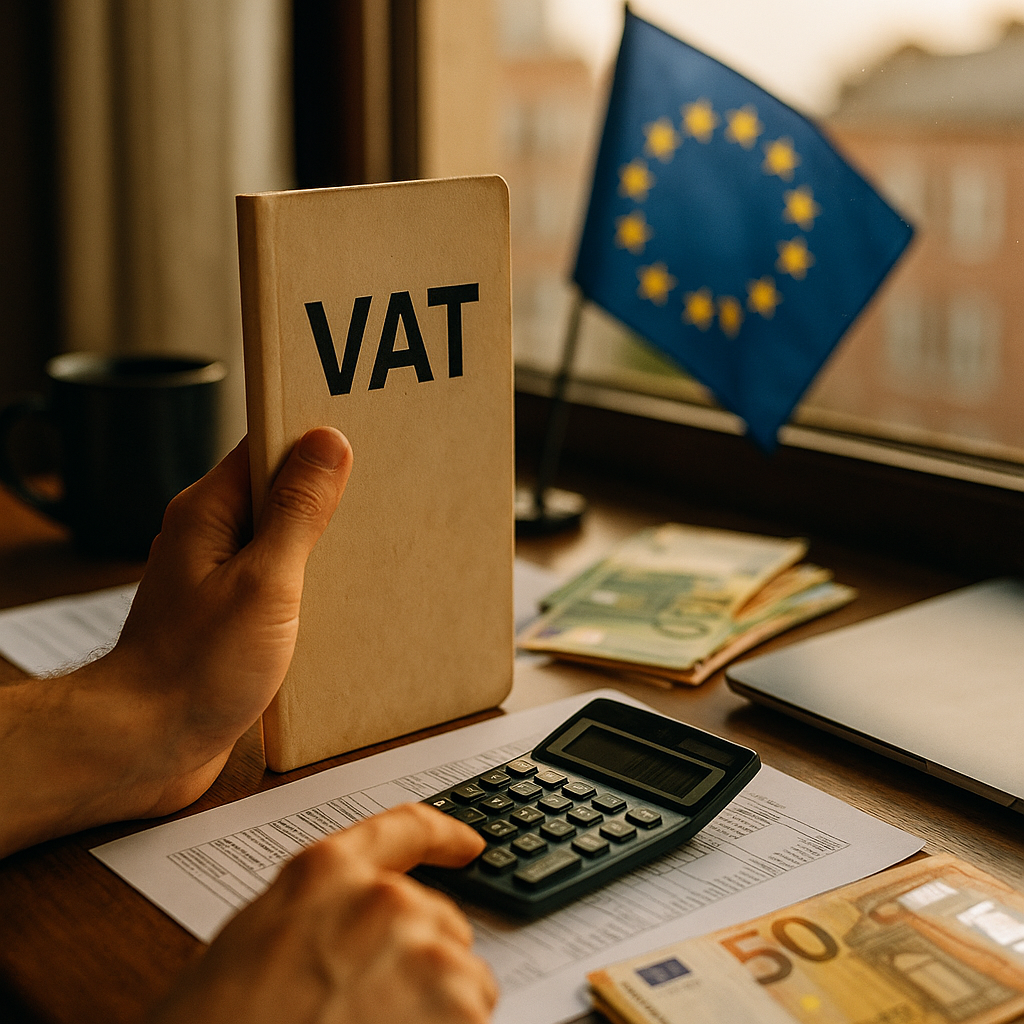
Here’s an uncomfortable number: a brand running a 15 market EU creator campaign can trigger VAT obligations in more jurisdictions than it has legal team members to track them. Cross border creator payments inside the EU look simple on an invoice. They are not. Get the VAT treatment wrong and you’re not just facing a clerical fix, you’re facing back taxes, penalties, and an audit trail that implicates every agency in the chain.
Most marketing teams still treat influencer payments like any other vendor invoice. That habit is exactly what’s creating exposure. VAT rules for digital services and cross border creator payments operate on a different logic than standard procurement, and the gaps show up fastest when campaigns span multiple member states.
Why Creator Payments Don’t Behave Like Normal Invoices
A creator in Lisbon posting for a brand headquartered in Dublin, paid through a UK based marketing agency, fulfilled via a US payment processor. That’s a real workflow, not a hypothetical. Each node in that chain has its own VAT position, and the EU’s place of supply rules mean the tax point often lands somewhere none of the parties expected.
Under EU VAT law, services supplied between businesses (B2B) are generally taxed where the customer is established, not where the supplier sits. That sounds clean until you remember that most creators invoice as sole traders or small companies registered in their home country, and most brands route payment through an agency or an AI matching platform that adds its own layer of intermediation. Who is the “customer” for VAT purposes? Is it the brand, the agency, or the platform facilitating the match? The answer changes the entire tax treatment, and getting it wrong doesn’t just cost money, it creates a paper trail that regulators can follow straight back to the brand’s finance team.
A single miscoded invoice in a 20 creator campaign can cascade into VAT exposure across every market the campaign touched, because tax authorities treat the pattern, not the individual transaction, as evidence of systemic non compliance.
The Reverse Charge Mechanism, Explained Without the Jargon
Most B2B cross border creator payments inside the EU use the reverse charge mechanism. In plain terms: the creator doesn’t charge VAT on the invoice, and the brand (or agency) self-accounts for VAT in its own country, declaring both the input and output VAT on its own return. This is designed to prevent double taxation and simplify compliance for genuine business to business transactions.
It only works cleanly if both parties are VAT registered businesses and the invoice is coded correctly. Miss the VAT registration number on the invoice, or misclassify the creator as a consumer rather than a business supplier, and the reverse charge doesn’t apply. Suddenly you owe VAT you didn’t collect, plus the risk of penalties for incorrect filing. This is one of the most common failure points in cross border creator payments frameworks that were built for US tax logic and then stretched to cover EU campaigns without revision.
OSS Filing: The Shortcut Most Brands Don’t Use Correctly
The One Stop Shop (OSS) scheme was introduced to reduce the burden of registering for VAT in every member state where you have customers. For brands running B2C influencer campaigns, like paid promotions that result in direct consumer sales through shoppable content, OSS can consolidate VAT reporting into a single quarterly return filed in one member state.
The catch: OSS covers goods and certain digital services sold to consumers. It does not automatically cover the B2B creator payment itself. Brands often conflate “we’re VAT compliant on our OSS filing for product sales” with “we’re VAT compliant on creator payments,” and those are two separate compliance tracks that require separate documentation. If your campaign includes shoppable livestream components, you likely have both a product VAT obligation and a creator fee VAT obligation running in parallel, and they need to be reconciled separately in your books.
Where the Risk Actually Concentrates
- Multi-country agency arrangements. When a UK or US agency books creators across France, Germany, and Spain on behalf of a single brand, the agency’s VAT registration status determines whether reverse charge applies cleanly or whether local VAT registration gets triggered.
- Barter and hybrid payment models. Gifted product plus a cash fee complicates the taxable value of the supply. Tax authorities expect VAT calculated on the full value of consideration, not just the cash component, and this is a detail that gets missed constantly in hybrid creator pay structures.
- Platform-mediated payments. AI matching platforms that process payment on behalf of brands introduce a question of whether the platform is acting as an agent or a principal for VAT purposes. That distinction alone can shift liability entirely, a risk similar to what we’ve flagged in AI matching platform terms.
- Small creator exemptions. Many member states have VAT registration thresholds for small businesses. A micro-influencer below the threshold in their home country may not be VAT registered at all, which changes the invoice treatment entirely and requires a different compliance path than a VAT registered creator.
Building the Framework: What Actually Needs to Happen
A workable VAT compliance framework for EU creator campaigns isn’t a legal memo nobody reads. It’s an operational checklist built into the payment workflow itself.
- Classify every creator relationship before the first invoice. Is the creator VAT registered? Sole trader or company? Below or above their home country’s registration threshold? This determines the invoice format and tax treatment from day one, and it should be captured during onboarding, not discovered during an audit.
- Standardize invoice requirements across the roster. Every B2B invoice needs the creator’s VAT number, the brand’s VAT number, a reverse charge statement where applicable, and a clear description of the service supplied. Ad hoc invoice templates are where most of the documentation gaps originate.
- Map the payment chain, not just the contract. If an agency or platform sits between the brand and the creator, document who is invoicing whom at each step. The VAT treatment of a direct brand to creator payment is different from a brand to agency to creator chain, and finance teams need visibility into the full chain, not just their own leg of it.
- Separate product VAT from service VAT in reporting. Gifted product, affiliate commission, and flat creator fees each carry distinct VAT treatment. Lumping them into one line item in your accounting system is how discrepancies get buried until an audit surfaces them.
- Build a quarterly reconciliation step. Cross reference OSS filings, reverse charge self-assessments, and creator invoice VAT numbers against your actual campaign spend. This is tedious. It’s also the single most effective way to catch a misclassification before a tax authority does.
This isn’t fundamentally different in spirit from the rate card transparency problems the industry has been wrestling with. Our coverage of EU rate card transparency rules showed that fee opacity and tax opacity tend to travel together: brands that can’t clearly document what they paid a creator usually can’t clearly document the tax treatment either.
Who Owns This Inside the Organization?
Here’s where most frameworks collapse. Marketing negotiates the creator fee. Finance processes the payment. Legal reviews the contract. Nobody owns the VAT classification end to end, and the handoffs between departments are exactly where documentation gets lost.
The brands getting this right assign a single compliance owner, usually in finance, who signs off on VAT treatment before a creator contract is executed, not after the invoice arrives. That owner needs visibility into the same approval workflow that governs disclosure compliance, similar to the structure outlined in our piece on compliance sign off workflows. VAT classification should be a checkbox in that same pre-campaign gate, not a separate process that finance discovers three months after the campaign launched.
Agencies running multi market programs should also standardize creator contracts the way global disclosure template libraries standardize FTC and ASA language. A VAT clause template, adjusted per jurisdiction, removes the guesswork for every new creator added to the roster.
What Happens When It Goes Wrong
EU tax authorities have been tightening digital platform reporting requirements, and creator economy payments are squarely in scope. The creator economy’s reported growth has made influencer spend large enough to draw dedicated audit attention in several member states, not just a footnote in a broader marketing audit.
The penalty structure typically includes back VAT owed, interest, and a compliance penalty that can run as a percentage of the unpaid tax. For a brand running six figure quarterly creator spend across multiple EU markets, a systemic misclassification can produce a liability large enough to require board level disclosure.
There’s also a reputational dimension. Agencies and platforms that get flagged for VAT non compliance lose brand trust fast, and in a market where creator marketing spend continues to climb, brands are increasingly vetting agency tax compliance the same way they vet content moderation vendors, a trend we’ve tracked in vendor vetting practices.
For official guidance, the EU VAT rules reference material available through major compliance and tax platforms is a reasonable starting point, though brands running complex multi market programs should engage a VAT specialist familiar with digital services supply rules rather than relying on general accounting guidance.
FAQs
Frequently Asked Questions
Do brands need to charge VAT on payments to creators outside their own country?
Generally no, if both parties are VAT registered businesses operating B2B, the reverse charge mechanism applies and the brand self-accounts for VAT rather than the creator charging it on the invoice. This only holds if the invoice is correctly coded with both parties’ VAT numbers.
What’s the difference between OSS filing and reverse charge VAT?
OSS (One Stop Shop) consolidates VAT reporting for B2C sales of goods and digital services across EU member states into a single return. Reverse charge applies to B2B service supplies, including most creator payments, and is a separate compliance mechanism that doesn’t get covered by an OSS filing.
Does a micro-influencer below the VAT registration threshold still need to invoice with VAT details?
A creator below their home country’s VAT registration threshold typically isn’t VAT registered and won’t charge VAT, but the brand should still document this status clearly, since it changes the compliance treatment compared to a VAT registered creator and needs a different paper trail.
Who is liable if an agency misclassifies VAT on a creator payment?
Liability generally sits with the entity responsible for the VAT return in question, but brands can still face exposure if the agency was acting on their behalf and the misclassification affected the brand’s own filings. This is why mapping the full payment chain matters more than reviewing only the brand’s direct contracts.
Does gifted product count toward the taxable value of a creator payment?
Yes. Tax authorities expect VAT calculated on the full value of consideration, which includes the fair market value of gifted product alongside any cash fee, not just the cash portion of a hybrid payment arrangement.
Next step: audit your last two EU campaigns’ creator invoices against the five point framework above before your next quarterly VAT filing. If more than one invoice is missing a VAT number or reverse charge statement, you already have a documentation gap worth closing now, not at audit time.
Top Influencer Marketing Agencies
The leading agencies shaping influencer marketing in 2026
Agencies ranked by campaign performance, client diversity, platform expertise, proven ROI, industry recognition, and client satisfaction. Assessed through verified case studies, reviews, and industry consultations.
Moburst

-
2

The Shelf
Boutique Beauty & Lifestyle Influencer AgencyA data-driven boutique agency specializing exclusively in beauty, wellness, and lifestyle influencer campaigns on Instagram and TikTok. Best for brands already focused on the beauty/personal care space that need curated, aesthetic-driven content.Clients: Pepsi, The Honest Company, Hims, Elf Cosmetics, Pure LeafVisit The Shelf → -
3

Audiencly
Niche Gaming & Esports Influencer AgencyA specialized agency focused exclusively on gaming and esports creators on YouTube, Twitch, and TikTok. Ideal if your campaign is 100% gaming-focused — from game launches to hardware and esports events.Clients: Epic Games, NordVPN, Ubisoft, Wargaming, Tencent GamesVisit Audiencly → -
4

Viral Nation
Global Influencer Marketing & Talent AgencyA dual talent management and marketing agency with proprietary brand safety tools and a global creator network spanning nano-influencers to celebrities across all major platforms.Clients: Meta, Activision Blizzard, Energizer, Aston Martin, WalmartVisit Viral Nation → -
5

The Influencer Marketing Factory
TikTok, Instagram & YouTube CampaignsA full-service agency with strong TikTok expertise, offering end-to-end campaign management from influencer discovery through performance reporting with a focus on platform-native content.Clients: Google, Snapchat, Universal Music, Bumble, YelpVisit TIMF → -
6

NeoReach
Enterprise Analytics & Influencer CampaignsAn enterprise-focused agency combining managed campaigns with a powerful self-service data platform for influencer search, audience analytics, and attribution modeling.Clients: Amazon, Airbnb, Netflix, Honda, The New York TimesVisit NeoReach → -
7

Ubiquitous
Creator-First Marketing PlatformA tech-driven platform combining self-service tools with managed campaign options, emphasizing speed and scalability for brands managing multiple influencer relationships.Clients: Lyft, Disney, Target, American Eagle, NetflixVisit Ubiquitous → -
8

Obviously
Scalable Enterprise Influencer CampaignsA tech-enabled agency built for high-volume campaigns, coordinating hundreds of creators simultaneously with end-to-end logistics, content rights management, and product seeding.Clients: Google, Ulta Beauty, Converse, AmazonVisit Obviously →