


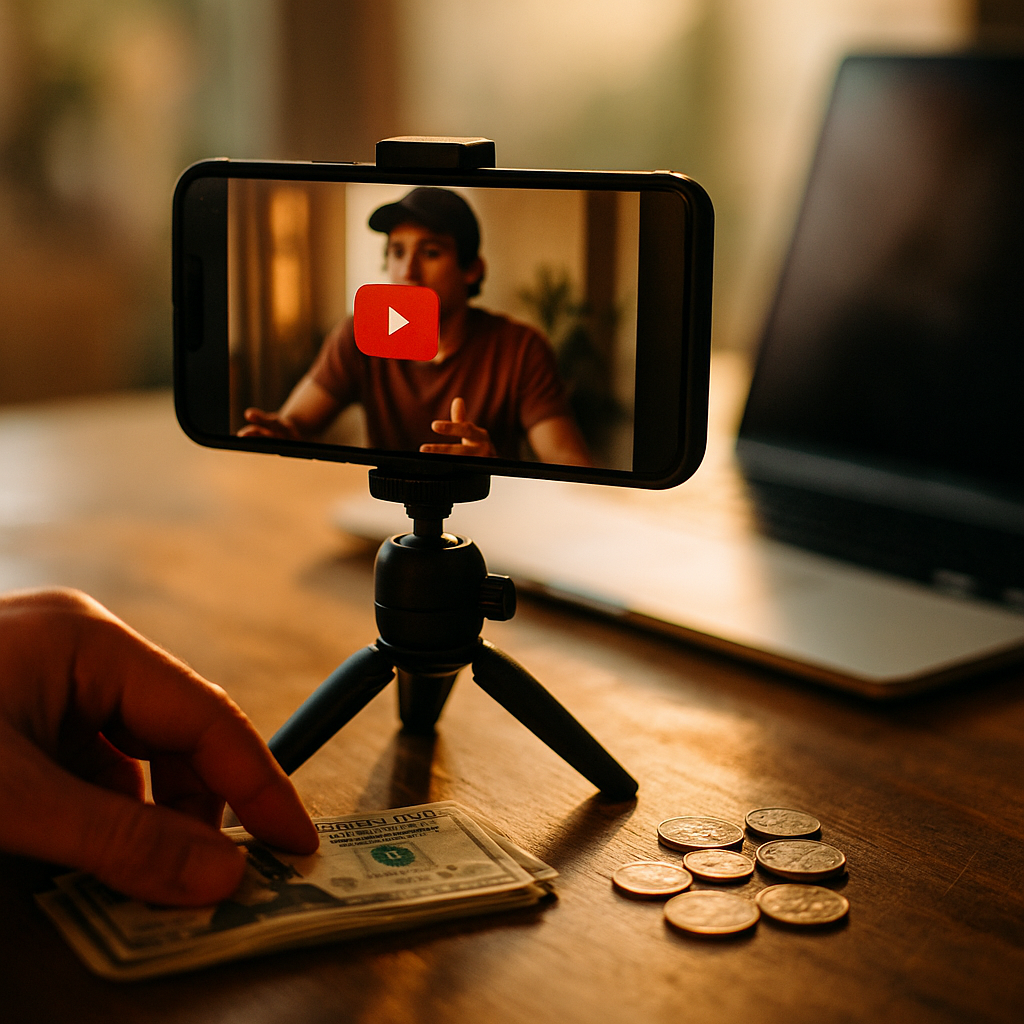
YouTube’s Partner Program threshold changes just made nano-creators a smarter buy for brands willing to structure deals correctly. Here’s the uncomfortable truth: most brands still negotiate with 8,000-subscriber channels the same way they did three years ago, ignoring how monetization eligibility now shapes creator behavior, availability, and leverage. A proper nano-creator monetization strategy isn’t optional anymore — it’s the difference between locking in undervalued talent and getting outbid by creators who suddenly have new income options.
Get this wrong and you’ll overpay for reach that doesn’t convert, or worse, lose reliable creator relationships to platforms offering faster payouts. Get it right and nano-creators become your most efficient acquisition channel this year.
What Actually Changed With YouTube’s Thresholds
YouTube lowered its Partner Program entry requirements, opening monetization to channels with far fewer subscribers than the old 1,000-subscriber, 4,000-watch-hour bar required. Shorts monetization criteria shifted too, rewarding view velocity over raw subscriber counts. The practical effect: a wave of previously “too small to monetize” creators suddenly has direct ad revenue flowing in, alongside brand deals.
That changes their negotiating posture entirely. A creator who used to depend on brand sponsorships for 100% of their income now has a baseline revenue stream from AdSense. They don’t need your deal as desperately. They can say no. They can ask for more. And frankly, many of them should.
Nano-creators with active ad monetization now treat brand deals as supplemental income, not survival income — which fundamentally shifts who holds leverage in rate negotiations.
We covered the mechanics of this shift in detail in our breakdown of how ad revenue sharing changes brand budgets, and the pattern is consistent across categories: beauty, gaming, finance, home goods. Smaller channels are behaving less like desperate freelancers and more like small businesses with diversified revenue.
Why This Matters More Than Subscriber Count Ever Did
Brands have obsessed over subscriber thresholds for a decade. Ten thousand subscribers meant one rate card. A hundred thousand meant another. That math is breaking down. A 15,000-subscriber creator with strong Shorts monetization and a loyal, high-intent audience can outperform a 200,000-subscriber channel padded with inactive followers and low completion rates.
Our earlier reporting on how monetization changes reshape nano-creator deals flagged this early: audience quality and monetization status now matter more than audience size. If your media buying team still sorts creators by follower tier alone, you’re leaving efficiency on the table.
Structuring Deals: The New Playbook
So how should brands actually structure nano-creator agreements now? Five principles, based on what’s working across current campaigns.
- Pay for usage rights, not just posting. Nano-creators with monetized channels increasingly negotiate like agencies. Build usage rights into the base rate rather than treating them as a pricey add-on. We detailed this shift in usage rights pricing over subscriber count, and it applies doubly at the nano tier now.
- Offer performance kickers, not just flat fees. Since these creators already have a revenue floor from AdSense, a flat fee alone won’t excite them. Structure a base rate plus a bonus tied to view thresholds, click-throughs, or conversions.
- Shorten contract cycles. Monetized nano-creators experiment more. Locking them into 12-month exclusivity clauses at 2023-era rates is a fast way to create resentment. Quarterly renewals with rate re-evaluation keep both sides honest.
- Bundle Shorts and long-form. Many nano-channels are now monetizing Shorts separately from long-form video. A single deal that spans both formats, paid appropriately for each, gets you more surface area for the same relationship-management overhead.
- Build in content usage windows tied to whitelisting. If you plan to run nano-creator content as paid social, negotiate that upfront. It’s cheaper than renegotiating after the fact.
The Math: What Nano Deals Should Actually Cost Now
Rate cards are shifting fast enough that anything printed six months ago is stale. As a working benchmark, expect nano-creators (typically defined as 1,000 to 50,000 subscribers) with active monetization to command 15-30% more than they did before threshold changes, particularly in finance, tech, and beauty verticals where AdSense RPMs run higher.
That said, “more expensive” doesn’t mean “worse ROI.” Industry benchmarking from eMarketer continues to show nano and micro creators outperforming macro influencers on engagement rate by a wide margin, often 2-3x. If a nano-creator now costs 20% more but still delivers engagement rates macro creators can’t touch, the unit economics still favor the smaller channel.
Look at it the way you’d evaluate any media buy: cost per meaningful engagement, not cost per follower. Our analysis of creator rate benchmarks and ROI leverage on TikTok showed a similar dynamic — smaller creators, priced correctly, deliver outsized returns relative to spend. YouTube’s nano tier is following the same curve now that monetization gives creators more pricing confidence.
A Quick Framework for Budget Allocation
Don’t just shift your entire budget to nano-creators because they’re trendy. Structure a portfolio:
- Allocate 40-50% of influencer budget to a broad bench of monetized nano-creators for testing and always-on presence.
- Reserve 30% for a smaller group of proven mid-tier creators who deliver consistent conversion data.
- Keep 15-20% flexible for rapid response to trending formats or emerging creators who haven’t hit monetization thresholds yet but show strong early signals.
This mirrors the testing logic we outlined in multi-creator testing before paid spend: build a wide funnel of smaller bets before concentrating budget on proven performers.
Compliance Doesn’t Get Easier at Smaller Scale
Here’s a mistake brands keep making: assuming nano-creators need less compliance oversight because the deals are smaller. Wrong. The FTC’s endorsement guidelines apply identically whether a creator has 2,000 subscribers or 2 million. A poorly disclosed nano deal carries the same regulatory risk as a poorly disclosed celebrity partnership, and enforcement has if anything gotten more aggressive at scale, because there are simply more nano-creators to monitor.
Build disclosure requirements into your contract template from day one. Don’t rely on creators to know the rules; many nano-creators are new to brand deals entirely and haven’t been through formal disclosure training. A short compliance checklist attached to your brief prevents 90% of issues before they happen.
Smaller deal size does not mean smaller regulatory exposure. Treat nano-creator contracts with the same disclosure rigor as your largest partnerships.
Operational Efficiency: The Real Bottleneck
The math on nano-creator ROI works. The operational lift doesn’t always. Managing 50 individual nano-creator relationships takes vastly more coordination than managing five macro deals of equivalent total spend. This is where brands actually lose money, not on rate cards, but on account management overhead.
Three fixes worth considering:
- Use creator marketplace platforms that handle contracting, payment, and usage rights tracking at scale, rather than manual spreadsheet management.
- Standardize briefs ruthlessly. A tight, repeatable brief template cuts back-and-forth revisions significantly, especially for creators newer to sponsored content.
- Batch outreach and negotiation. Set standard rate bands by tier and stick to them; endless individual negotiation is the single biggest time sink in nano-creator programs.
If you’re running nano-creator programs alongside other platform strategies, it’s worth reviewing how funnel stage affects format choice — our piece on dedicated video versus integration by funnel stage is directly relevant when deciding what nano-creators should actually produce for you.
Data quality matters here too. YouTube’s own view-counting methodology has come under scrutiny, and brands relying on raw view counts to evaluate nano-creator performance are working with skewed numbers. Our coverage of inflated view counts forcing KPI rebuilds is essential reading before you finalize performance-based bonus structures. Tie bonuses to metrics you can actually verify, like link clicks, promo code usage, or platform-reported watch time from YouTube’s official analytics tools, not raw view counts alone.
What This Means for Next Quarter
Nano-creator monetization thresholds will likely keep shifting as YouTube tunes its Partner Program. Brands that build flexible, quarterly-reviewed contracts will adapt faster than those locked into annual rate agreements negotiated under old assumptions. Treat your nano-creator roster the way you’d treat a testing budget: always evaluating, always adjusting, never static.
Start now: audit your current nano-creator contracts for outdated rate assumptions, add performance-based bonus structures tied to verifiable metrics, and shorten renewal cycles to quarterly so your rates keep pace with a monetization landscape that isn’t done changing.
Frequently Asked Questions
What counts as a nano-creator on YouTube now?
Most brands define nano-creators as channels with roughly 1,000 to 50,000 subscribers, though engagement rate and monetization status matter more than the subscriber count itself when evaluating deal value.
How much should brands pay nano-creators after the threshold changes?
Expect rates 15-30% higher than pre-threshold-change benchmarks, particularly in high-RPM categories like finance and tech. Structure pay as a base fee plus performance bonuses rather than a flat rate alone.
Do nano-creators still need FTC disclosure on sponsored content?
Yes. FTC endorsement guidelines apply regardless of channel size. Brands should build disclosure requirements directly into contracts rather than assuming smaller creators already know the rules.
Is it more efficient to work with fewer larger creators instead?
Not necessarily. Nano-creators typically deliver higher engagement rates per dollar spent, but they require more operational management. The efficiency gap closes when brands standardize briefs and use marketplace tools to manage contracting at scale.
Should performance bonuses be tied to view counts?
Avoid tying bonuses solely to raw view counts, since YouTube’s view-counting methodology has faced scrutiny. Use verifiable metrics like link clicks, promo code redemptions, or official watch-time analytics instead.
Top Influencer Marketing Agencies
The leading agencies shaping influencer marketing in 2026
Agencies ranked by campaign performance, client diversity, platform expertise, proven ROI, industry recognition, and client satisfaction. Assessed through verified case studies, reviews, and industry consultations.
Moburst

-
2

The Shelf
Boutique Beauty & Lifestyle Influencer AgencyA data-driven boutique agency specializing exclusively in beauty, wellness, and lifestyle influencer campaigns on Instagram and TikTok. Best for brands already focused on the beauty/personal care space that need curated, aesthetic-driven content.Clients: Pepsi, The Honest Company, Hims, Elf Cosmetics, Pure LeafVisit The Shelf → -
3

Audiencly
Niche Gaming & Esports Influencer AgencyA specialized agency focused exclusively on gaming and esports creators on YouTube, Twitch, and TikTok. Ideal if your campaign is 100% gaming-focused — from game launches to hardware and esports events.Clients: Epic Games, NordVPN, Ubisoft, Wargaming, Tencent GamesVisit Audiencly → -
4

Viral Nation
Global Influencer Marketing & Talent AgencyA dual talent management and marketing agency with proprietary brand safety tools and a global creator network spanning nano-influencers to celebrities across all major platforms.Clients: Meta, Activision Blizzard, Energizer, Aston Martin, WalmartVisit Viral Nation → -
5

The Influencer Marketing Factory
TikTok, Instagram & YouTube CampaignsA full-service agency with strong TikTok expertise, offering end-to-end campaign management from influencer discovery through performance reporting with a focus on platform-native content.Clients: Google, Snapchat, Universal Music, Bumble, YelpVisit TIMF → -
6

NeoReach
Enterprise Analytics & Influencer CampaignsAn enterprise-focused agency combining managed campaigns with a powerful self-service data platform for influencer search, audience analytics, and attribution modeling.Clients: Amazon, Airbnb, Netflix, Honda, The New York TimesVisit NeoReach → -
7

Ubiquitous
Creator-First Marketing PlatformA tech-driven platform combining self-service tools with managed campaign options, emphasizing speed and scalability for brands managing multiple influencer relationships.Clients: Lyft, Disney, Target, American Eagle, NetflixVisit Ubiquitous → -
8

Obviously
Scalable Enterprise Influencer CampaignsA tech-enabled agency built for high-volume campaigns, coordinating hundreds of creators simultaneously with end-to-end logistics, content rights management, and product seeding.Clients: Google, Ulta Beauty, Converse, AmazonVisit Obviously →