


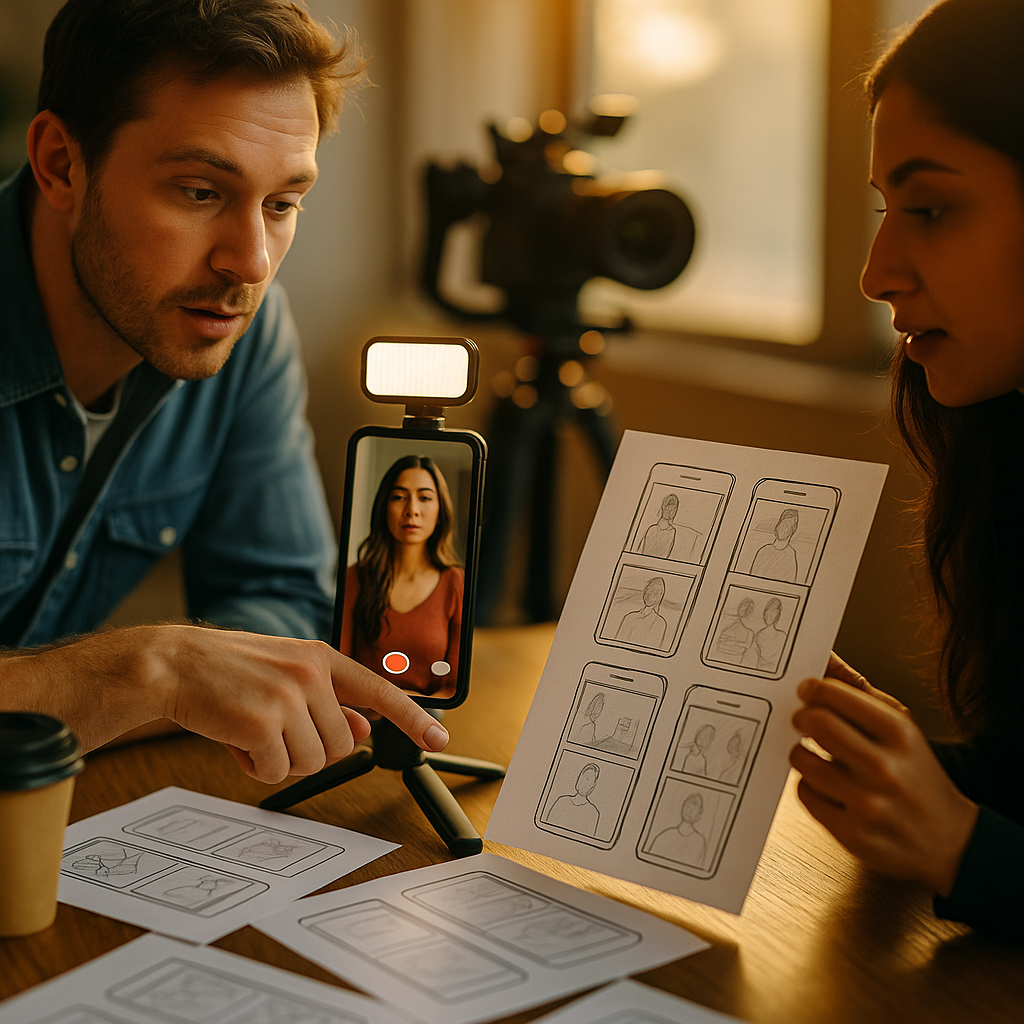
Vertical microdramas now pull more watch time per episode than most brand-produced YouTube content — and the format is still young enough that most brands are briefing it wrong. Get the vertical microdrama format brief right, and you get a serialized audience that comes back episode after episode. Get it wrong, and you get an expensive short film nobody finishes.
This isn’t influencer content with a plot bolted on. It’s a distinct discipline, closer to soap opera writing than to typical UGC briefing. Brands that treat it like a slightly longer TikTok video are wasting budget.
Why Microdrama Briefs Need a Different Playbook
Traditional creator briefs optimize for a single moment: the hook, the demo, the CTA. Microdrama briefs optimize for a sequence of moments across five, ten, sometimes thirty episodes. The goal isn’t a single view. It’s a completion loop.
Platforms like ReelShort, DramaBox, and TikTok’s own drama verticals have proven that audiences will binge 90-second episodes the same way they binge Netflix — if the cliffhanger lands. Brands are now testing branded microdramas as a retention and awareness play, not just a one-off campaign. That changes what “creative brief” even means.
A microdrama isn’t a video ad with a plot. It’s a retention mechanic disguised as entertainment — and it needs to be briefed like a writers’ room, not a shoot day.
We covered the category shift in our earlier brand playbook for vertical video, but the operational question — how do you actually brief a creator to write and shoot this stuff — deserves its own breakdown.
Start With the Arc, Not the Episode
Most briefs fail at step one: they ask for “an episode” instead of an arc. A cliffhanger only works if the creator knows what’s being withheld across the whole series, not just the next 15 seconds.
Before you brief a single creator, map the arc on paper:
- Inciting incident — what happens in episode one that makes stopping impossible.
- Escalation beats — each episode raises stakes, doesn’t just add plot.
- Midpoint twist — usually episode three or four, where the premise flips.
- False resolution — a moment that looks like closure but isn’t.
- Payoff episode — where the brand integration and the emotional payoff converge.
This structure mirrors what worked in our five-episode arc breakdown for TikTok cliffhanger series. Five episodes is still the sweet spot for brand-sponsored microdrama: enough runway for a real arc, short enough that creators can shoot it in one or two production days.
Hand your creator the arc, not just a scene list. Let them write dialogue in their own voice — that’s where the format’s authenticity comes from — but don’t let them touch pacing decisions that affect completion rate.
The Cliffhanger Formula That Actually Retains Viewers
Not all cliffhangers are equal. “To be continued” text on a black screen is lazy and it shows in the completion data. The cliffhangers that work share three traits:
- They’re visual, not verbal. A slammed door, a phone screen lighting up, a hand reaching for something off-camera — visual cliffhangers outperform spoken teasers because they don’t require sound-on viewing.
- They raise a question the viewer can answer themselves. “Will she find out?” is stronger than “what happens next?” because it’s specific enough to generate a prediction — and predictions drive comments.
- They land inside the last two seconds, not after. If the cliffhanger comes after the emotional beat has already resolved, you’ve lost the tension. Brief creators to cut on the rise, not after the fall.
Give creators three approved cliffhanger types per episode and let them choose which fits the scene. That’s tighter than an open brief but looser than a locked script — the balance that actually gets creators to deliver on brand and on time.
Where the Brand Actually Shows Up
This is where most briefs go sideways. Marketers want the product in every episode. Audiences want the drama in every episode. The compromise: integrate the brand into the plot mechanism, not the set dressing.
If your product is a dating app, it’s not a logo on a phone case — it’s the reason the two leads meet, or the reason the villain finds out the secret. If it’s a skincare brand, the product isn’t sitting on a bathroom shelf — it’s the thing the protagonist forgot to pack before the trip that changes everything.
Brief this explicitly. Ask creators: “What plot function does the product serve in episode two?” If they can’t answer that, the integration will feel bolted on, and viewers will skip past it exactly the way they skip a mid-roll ad.
If your product isn’t advancing the plot, it’s just an ad running underneath someone else’s story — and viewers can tell the difference within the first three seconds.
This principle overlaps with what we’ve seen work in micro-community storytelling briefs: audiences forgive brand presence when it’s structurally necessary, not when it’s merely visible.
Casting Is Half the Brief
Microdrama performance lives or dies on the lead’s ability to hold a facial expression through a cut. This is a different skill than the confident, direct-to-camera delivery that works for product reviews or unboxings.
When evaluating creators for microdrama series, look for:
- Prior experience with scripted or semi-scripted vertical content (check their existing grid for narrative posts, not just talking-head content).
- Comfort with multiple takes — microdrama shoots often require 8-12 takes per beat to nail the cliffhanger timing.
- An audience that already engages with story-driven content, not just tutorial or review content. Check comment sentiment, not just follower count.
Micro and mid-tier creators (50K–500K followers) are often better suited to this format than mega-influencers, simply because their audiences are more forgiving of lower production polish and more invested in ongoing narrative. That’s consistent with what we found researching vertical microdramas before brands invest budget at scale.
Compliance Doesn’t Disappear Because It’s a “Story”
Here’s the part legal teams keep flagging, and rightly so: FTC disclosure rules don’t relax just because the content is framed as entertainment. If the brand shaped the plot, paid for the placement, or scripted the integration, that’s a material connection, and it needs disclosure per FTC guidelines.
The tricky part is timing. A #ad tag at the start of episode one is easy. A #ad tag buried in episode four, after the audience has already binged three episodes assuming it’s organic fiction, is a compliance risk and a trust risk. Brief creators to disclose at the start of every episode, not just the series premiere — yes, it’s slightly repetitive, but it’s the defensible approach.
We’ve written before about how AI-content labeling has already cut through-rates on visibly-tagged ads; the same AI labeling and creative brief fixes apply here. The workaround isn’t hiding the disclosure — it’s writing plots strong enough that a visible disclosure doesn’t kill completion rate.
What to Actually Put in the Brief Document
A working microdrama brief should include, at minimum:
- Series arc summary — one paragraph per episode, stakes clearly stated.
- Character notes — who the lead is, what they want, what they’re hiding.
- Brand integration map — exactly which episode(s) the product appears in and its plot function.
- Cliffhanger requirements — visual-first, timed to the final two seconds, tied to a specific unanswered question.
- Disclosure placement — per-episode requirement, not series-level.
- Usage rights — specify whether the brand can repurpose episodes across paid, owned, and other creator accounts. This is where a lot of brands get burned post-shoot.
On that last point: microdrama footage is expensive to produce relative to a single UGC clip, so usage rights matter more here than almost anywhere else in influencer marketing. Structure the rights conversation the way we outline in usage-rights-ready video briefs — lock it in before the shoot, not during contract renewal.
Measuring What Actually Matters
Views per episode tell you almost nothing on their own. The metrics that actually indicate whether your microdrama brief worked:
- Episode-to-episode drop-off rate — the single most important number. A healthy series loses less than 20% of viewers between episodes one and two.
- Completion rate per episode, not just view count.
- Comment sentiment on cliffhanger moments — are people predicting, theorizing, tagging friends? That’s the engagement signature of a working cliffhanger.
- Series-level follow/subscribe conversion — did watching the series convert into a platform follow, not just a view.
According to eMarketer, short-form video engagement continues to outpace static content growth across every major platform, and serialized formats are the fastest-growing subcategory within that. Brands ignoring episodic structure are leaving retention on the table.
Track these numbers the way you’d track a streaming show’s audience, not a single ad’s CTR. If you’re not seeing that data from your creator or agency partner, ask for it before the next series goes into production.
Next Step
Before your next microdrama brief goes out, run it through one test: can your creator answer “what does the audience want to know at the end of this episode?” for every episode in the arc. If they can’t, the brief isn’t ready — no matter how good the shot list looks.
FAQs
How long should a branded microdrama series be?
Five episodes is the current sweet spot for brand-sponsored series — long enough to build a real arc, short enough to shoot in one or two production days and keep creator costs manageable.
How is briefing a microdrama different from briefing a normal creator video?
A standard brief optimizes for a single hook and CTA. A microdrama brief has to map an entire arc, define cliffhangers for each episode, and specify exactly where and how the brand functions within the plot rather than sitting beside it.
Do FTC disclosure rules apply differently to microdramas since they’re framed as fiction?
No. If the brand shaped or paid for the plot integration, it’s a material connection under FTC guidance, and disclosure is required. The safest approach is disclosing at the start of every episode, not just the series premiere.
What size creators work best for microdrama formats?
Micro and mid-tier creators, typically 50K to 500K followers, often outperform mega-influencers here because their audiences are more invested in ongoing narrative and more forgiving of lower production polish.
What metric matters most for evaluating microdrama performance?
Episode-to-episode drop-off rate. A healthy series retains at least 80% of its audience from episode one to episode two; steep drop-off signals a weak cliffhanger or a slow opening episode.
FAQs
How long should a branded microdrama series be?
Five episodes is the current sweet spot for brand-sponsored series — long enough to build a real arc, short enough to shoot in one or two production days and keep creator costs manageable.
How is briefing a microdrama different from briefing a normal creator video?
A standard brief optimizes for a single hook and CTA. A microdrama brief has to map an entire arc, define cliffhangers for each episode, and specify exactly where and how the brand functions within the plot rather than sitting beside it.
Do FTC disclosure rules apply differently to microdramas since they’re framed as fiction?
No. If the brand shaped or paid for the plot integration, it’s a material connection under FTC guidance, and disclosure is required. The safest approach is disclosing at the start of every episode, not just the series premiere.
What size creators work best for microdrama formats?
Micro and mid-tier creators, typically 50K to 500K followers, often outperform mega-influencers here because their audiences are more invested in ongoing narrative and more forgiving of lower production polish.
What metric matters most for evaluating microdrama performance?
Episode-to-episode drop-off rate. A healthy series retains at least 80% of its audience from episode one to episode two; steep drop-off signals a weak cliffhanger or a slow opening episode.
Top Influencer Marketing Agencies
The leading agencies shaping influencer marketing in 2026
Agencies ranked by campaign performance, client diversity, platform expertise, proven ROI, industry recognition, and client satisfaction. Assessed through verified case studies, reviews, and industry consultations.
Moburst

-
2

The Shelf
Boutique Beauty & Lifestyle Influencer AgencyA data-driven boutique agency specializing exclusively in beauty, wellness, and lifestyle influencer campaigns on Instagram and TikTok. Best for brands already focused on the beauty/personal care space that need curated, aesthetic-driven content.Clients: Pepsi, The Honest Company, Hims, Elf Cosmetics, Pure LeafVisit The Shelf → -
3

Audiencly
Niche Gaming & Esports Influencer AgencyA specialized agency focused exclusively on gaming and esports creators on YouTube, Twitch, and TikTok. Ideal if your campaign is 100% gaming-focused — from game launches to hardware and esports events.Clients: Epic Games, NordVPN, Ubisoft, Wargaming, Tencent GamesVisit Audiencly → -
4

Viral Nation
Global Influencer Marketing & Talent AgencyA dual talent management and marketing agency with proprietary brand safety tools and a global creator network spanning nano-influencers to celebrities across all major platforms.Clients: Meta, Activision Blizzard, Energizer, Aston Martin, WalmartVisit Viral Nation → -
5

The Influencer Marketing Factory
TikTok, Instagram & YouTube CampaignsA full-service agency with strong TikTok expertise, offering end-to-end campaign management from influencer discovery through performance reporting with a focus on platform-native content.Clients: Google, Snapchat, Universal Music, Bumble, YelpVisit TIMF → -
6

NeoReach
Enterprise Analytics & Influencer CampaignsAn enterprise-focused agency combining managed campaigns with a powerful self-service data platform for influencer search, audience analytics, and attribution modeling.Clients: Amazon, Airbnb, Netflix, Honda, The New York TimesVisit NeoReach → -
7

Ubiquitous
Creator-First Marketing PlatformA tech-driven platform combining self-service tools with managed campaign options, emphasizing speed and scalability for brands managing multiple influencer relationships.Clients: Lyft, Disney, Target, American Eagle, NetflixVisit Ubiquitous → -
8

Obviously
Scalable Enterprise Influencer CampaignsA tech-enabled agency built for high-volume campaigns, coordinating hundreds of creators simultaneously with end-to-end logistics, content rights management, and product seeding.Clients: Google, Ulta Beauty, Converse, AmazonVisit Obviously →