


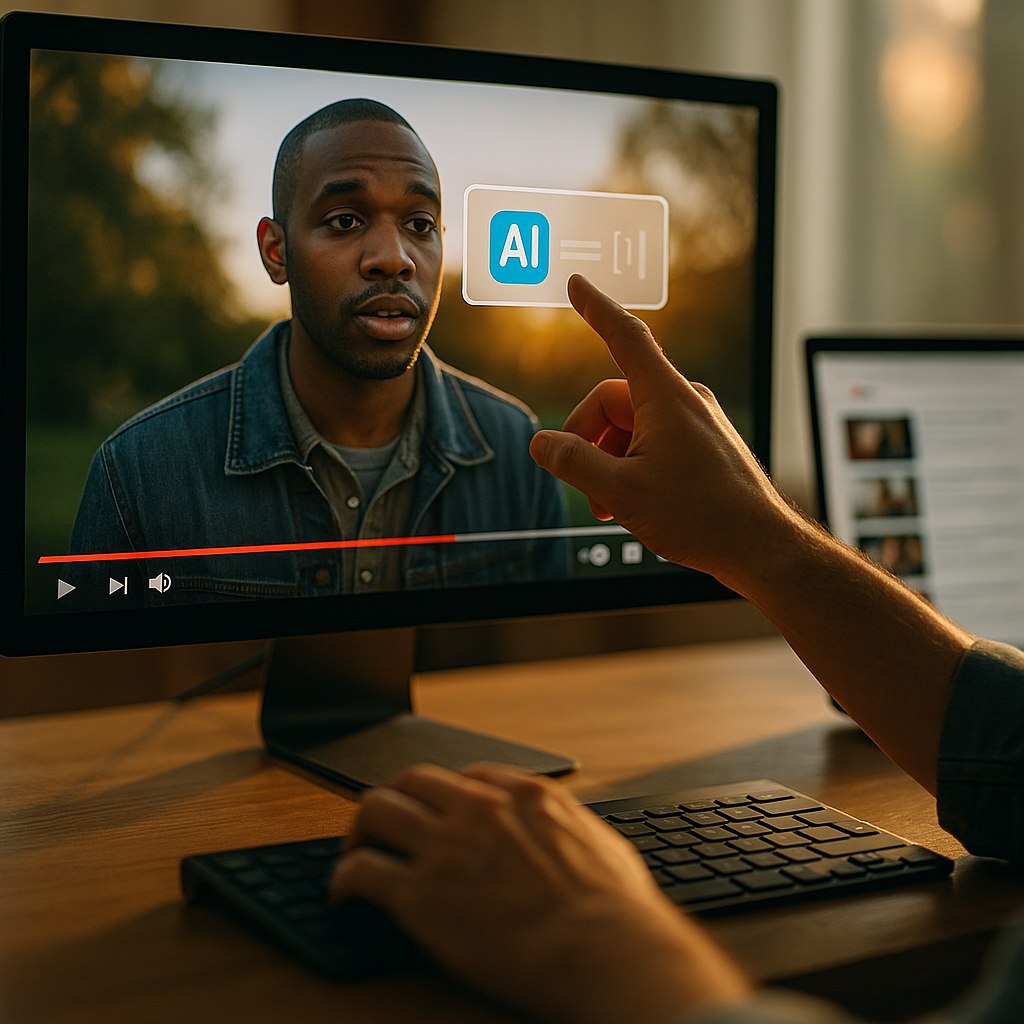
Google’s AI Overviews now cite video sources in roughly 40% of video-related queries, and that number is climbing fast. If your video content isn’t structured to earn a citation, it’s effectively invisible to a growing share of searchers. That’s the blunt reality behind AI overlay citation rules, and it’s forcing marketing teams to rethink video distribution from the ground up.
The old video SEO playbook was simple: optimize titles, write good descriptions, get watch time, rank in search. That playbook still matters. But it’s no longer sufficient. AI overlays — the summarized answers sitting above traditional results in Google, and the conversational citations inside ChatGPT, Perplexity, and Gemini — now decide which video sources get surfaced before a user ever clicks through to YouTube, Vimeo, or a brand’s owned player.
What Are AI Overlay Citation Rules, Exactly?
AI overlay citation rules are the (largely undocumented) criteria search engines and LLM-powered assistants use to decide which video sources get named, linked, or excerpted inside an AI-generated answer. Think of it as a second ranking system layered on top of traditional SEO — one that rewards structured data, transcript clarity, and topical authority over raw engagement metrics.
Google hasn’t published a formal rulebook. Neither has OpenAI. But pattern analysis across thousands of AI Overview results shows consistent signals: videos with accurate closed captions, schema markup (VideoObject, Clip, SeekToAction), and clear chaptering get cited disproportionately more than videos without them — even when the uncited video has higher view counts.
Engagement metrics used to be the whole game. Now they’re table stakes. Citation eligibility is the new battleground, and it runs on structured metadata, not vanity numbers.
This mirrors what’s already happened in text-based search. Our earlier coverage on fixing your AI search strategy laid out how citation logic diverges between Google and ChatGPT. Video is following the same trajectory, just a step behind.
Why This Matters for Brand and Agency Budgets
Here’s the uncomfortable math. If AI overlays are answering queries directly, click-through rates to the underlying video drop. Ahrefs and similar research firms have documented CTR declines of 15-25% on queries where AI Overviews appear. For video-heavy content strategies, that’s a direct hit to top-of-funnel traffic that brand teams have historically justified with view counts and watch time.
But there’s a flip side. Getting cited inside an AI overlay is arguably more valuable than a standard organic ranking, because it puts your brand name directly inside the answer a user consumes — often without them ever leaving the search results page. It’s a visibility play, not just a traffic play.
That distinction matters when you’re building a business case for video production budget. If your CFO is asking “why are we spending on video SEO if traffic is flat,” the answer is: traffic isn’t the only metric that counts anymore. Citation frequency, brand mention share inside AI answers, and share-of-voice within overlays are becoming the new KPIs. This is the same shift we’ve tracked in how brands win citations in both AI Overviews and conversational assistants.
The Compliance Angle Nobody’s Talking About
There’s a risk dimension here too. When an AI overlay pulls a clip, timestamp, or transcript excerpt from your video and presents it as a direct answer, you lose control over context. A product claim made in passing, at minute six of a twelve-minute video, can get lifted and presented as a standalone fact. For regulated industries — finance, health, supplements — this is a genuine compliance exposure. We saw a version of this problem play out in 97% of supplement sites appearing in AI Overviews, where citation visibility outpaced brands’ ability to audit what was actually being surfaced.
Legal and compliance teams need to be looped into video SEO strategy now, not after an overlay misquotes a claim. That’s a new operational line item most marketing orgs haven’t budgeted for.
The Technical Rewrite: What Actually Needs to Change
Let’s get tactical. If you’re managing video distribution across YouTube, owned domains, and syndicated placements, here’s where the effort needs to go.
Structured data first. VideoObject schema is no longer optional. Google’s own documentation on video schema markup spells out the required fields — name, description, thumbnailUrl, uploadDate, duration. Missing fields don’t just hurt rankings; they can disqualify you from citation eligibility entirely.
Transcripts need to be exact, not auto-generated garbage. AI systems parse transcripts to extract quotable, citable segments. If your auto-captions mangle brand names, product terms, or technical language, you’re handing the AI bad source material — or worse, it skips your video for a competitor’s cleaner transcript.
Chapter markers matter more than ever. Timestamped chapters let AI overlays cite a specific moment rather than the whole video, which increases the odds of a precise, contextually appropriate citation. Videos without chapters get summarized crudely, or ignored.
- Add VideoObject and Clip schema to every hosted video page
- Audit auto-generated captions monthly for accuracy on brand and product terms
- Build chapter markers for anything over three minutes
- Publish a text-based transcript alongside the video, not buried in a collapsed accordion
- Ensure canonical video URLs are consistent across syndication partners
None of this is exotic. It’s disciplined execution of things most teams have been treating as nice-to-haves.
Distribution Strategy Has to Split in Two
Here’s where it gets interesting for teams managing multi-platform video programs. You now need two distinct distribution logics running in parallel.
One track optimizes for human discovery — the algorithmic feed logic of YouTube, TikTok, and Instagram Reels, where watch time, completion rate, and social signals still drive reach. The other optimizes for machine citation — clean metadata, transcript accuracy, schema completeness, designed to earn a mention inside an AI-generated answer.
These two goals don’t always align. A punchy, fast-cut short-form video optimized for TikTok’s algorithm might be nearly impossible for an AI system to parse into a coherent, citable answer. Meanwhile, a slower, more explanatory long-form video with clear verbal structure might underperform on social engagement but overperform on citation frequency.
You can’t optimize a single video asset for both feed algorithms and AI citation logic at the same time. Smart teams are now producing two versions of the same core content — one built for scroll, one built for search.
This isn’t unlike the shift documented in AI-enhanced UGC production, where speed and volume needs pushed teams toward parallel production tracks rather than one-size-fits-all assets. Video citation strategy is heading the same direction: bifurcated production pipelines, not universal templates.
For agencies managing this at scale, the operational complexity is real. You’re no longer briefing one video edit — you’re briefing two, with different scripting, pacing, and metadata requirements. That has direct implications for production budgets and timelines that clients need to understand upfront.
Measuring What Actually Happened
Attribution gets messier here, not simpler. If a user sees your video cited inside an AI Overview, reads the summary, and never clicks through, standard analytics shows nothing. No pageview, no watch time, no conversion event. But brand exposure happened. A share-of-voice impression happened.
This is the same measurement gap we’ve flagged around probabilistic attribution models tracking AI search purchases. Teams need to start treating AI citation frequency as its own tracked metric, separate from traditional traffic analytics, and separate from social engagement. Tools like Semrush and Ahrefs have begun rolling out AI Overview tracking features specifically because clients are asking for this visibility. If your analytics stack doesn’t yet distinguish “cited in AI overlay” from “ranked in organic results,” that’s a gap worth closing this quarter.
Platforms like HubSpot and Semrush are moving toward citation-tracking dashboards, but the category is young. Expect fragmentation and inconsistent methodology for at least another year before standardized reporting emerges.
What This Means for Creator Partnerships
There’s a creator economy angle here too, and it’s underdiscussed. Branded content produced with creators — especially long-form YouTube integrations and tutorial-style content — is exactly the format AI overlays favor for citation. Clear speech, structured explanation, product demonstration: this is citation-friendly by nature.
That gives brands a reason to renegotiate creator briefs. Instead of just asking for engagement-optimized content, ask creators to structure videos with clear verbal chapter transitions, accurate product naming (no nicknames or slang that confuses transcription), and explicit statements of claims rather than implied ones. It’s a small brief adjustment with outsized downstream SEO value.
Agencies running influencer programs should treat this as a compliance and SEO checkpoint simultaneously — reviewing creator video scripts not just for brand safety, but for citation readiness. Reference points from sentiment-driven content distribution apply directly here: trust and clarity signals now carry as much weight as reach.
FAQs
Frequently Asked Questions
What are AI overlay citation rules in the context of video SEO?
They’re the criteria — largely inferred from pattern analysis rather than official documentation — that determine whether an AI-generated search answer cites, links to, or excerpts a specific video source. Key factors include schema markup accuracy, transcript quality, and chapter structuring.
Do AI Overviews reduce traffic to video content?
Often, yes, in terms of raw click-through rate. But citation inside an AI Overview can increase brand visibility even without a click, which is why teams need new metrics beyond pageviews to measure impact.
Is VideoObject schema still necessary if I already rank well organically?
Yes. Organic ranking and AI citation eligibility are increasingly separate systems. A video can rank on page one and still get skipped for citation if its structured data is incomplete.
How does this affect creator and influencer video content specifically?
Creator content with clear verbal structure, accurate product naming, and explicit claims performs better for citation purposes than fast-cut, jargon-heavy edits. Brands should update creator briefs accordingly.
What’s the compliance risk with AI-cited video content?
AI overlays can pull isolated statements out of context, presenting them as standalone facts. This is a real concern for regulated categories like finance, health, and supplements, and it warrants legal review of video scripts before publication.
Should brands produce separate videos for social feeds and for AI citation?
Increasingly, yes. Feed algorithms reward fast-paced, high-engagement editing, while AI citation systems favor clear, structured, slower-paced explanation. Producing both versions from the same core content is becoming standard practice.
The teams winning this shift aren’t chasing view counts anymore — they’re auditing schema, cleaning transcripts, and briefing creators for citation clarity as rigorously as they brief for brand voice. Start with a schema audit on your top ten video assets this week; it’s the fastest way to see where you’re losing citation eligibility right now.
Top Influencer Marketing Agencies
The leading agencies shaping influencer marketing in 2026
Agencies ranked by campaign performance, client diversity, platform expertise, proven ROI, industry recognition, and client satisfaction. Assessed through verified case studies, reviews, and industry consultations.
Moburst

-
2

The Shelf
Boutique Beauty & Lifestyle Influencer AgencyA data-driven boutique agency specializing exclusively in beauty, wellness, and lifestyle influencer campaigns on Instagram and TikTok. Best for brands already focused on the beauty/personal care space that need curated, aesthetic-driven content.Clients: Pepsi, The Honest Company, Hims, Elf Cosmetics, Pure LeafVisit The Shelf → -
3

Audiencly
Niche Gaming & Esports Influencer AgencyA specialized agency focused exclusively on gaming and esports creators on YouTube, Twitch, and TikTok. Ideal if your campaign is 100% gaming-focused — from game launches to hardware and esports events.Clients: Epic Games, NordVPN, Ubisoft, Wargaming, Tencent GamesVisit Audiencly → -
4

Viral Nation
Global Influencer Marketing & Talent AgencyA dual talent management and marketing agency with proprietary brand safety tools and a global creator network spanning nano-influencers to celebrities across all major platforms.Clients: Meta, Activision Blizzard, Energizer, Aston Martin, WalmartVisit Viral Nation → -
5

The Influencer Marketing Factory
TikTok, Instagram & YouTube CampaignsA full-service agency with strong TikTok expertise, offering end-to-end campaign management from influencer discovery through performance reporting with a focus on platform-native content.Clients: Google, Snapchat, Universal Music, Bumble, YelpVisit TIMF → -
6

NeoReach
Enterprise Analytics & Influencer CampaignsAn enterprise-focused agency combining managed campaigns with a powerful self-service data platform for influencer search, audience analytics, and attribution modeling.Clients: Amazon, Airbnb, Netflix, Honda, The New York TimesVisit NeoReach → -
7

Ubiquitous
Creator-First Marketing PlatformA tech-driven platform combining self-service tools with managed campaign options, emphasizing speed and scalability for brands managing multiple influencer relationships.Clients: Lyft, Disney, Target, American Eagle, NetflixVisit Ubiquitous → -
8

Obviously
Scalable Enterprise Influencer CampaignsA tech-enabled agency built for high-volume campaigns, coordinating hundreds of creators simultaneously with end-to-end logistics, content rights management, and product seeding.Clients: Google, Ulta Beauty, Converse, AmazonVisit Obviously →