


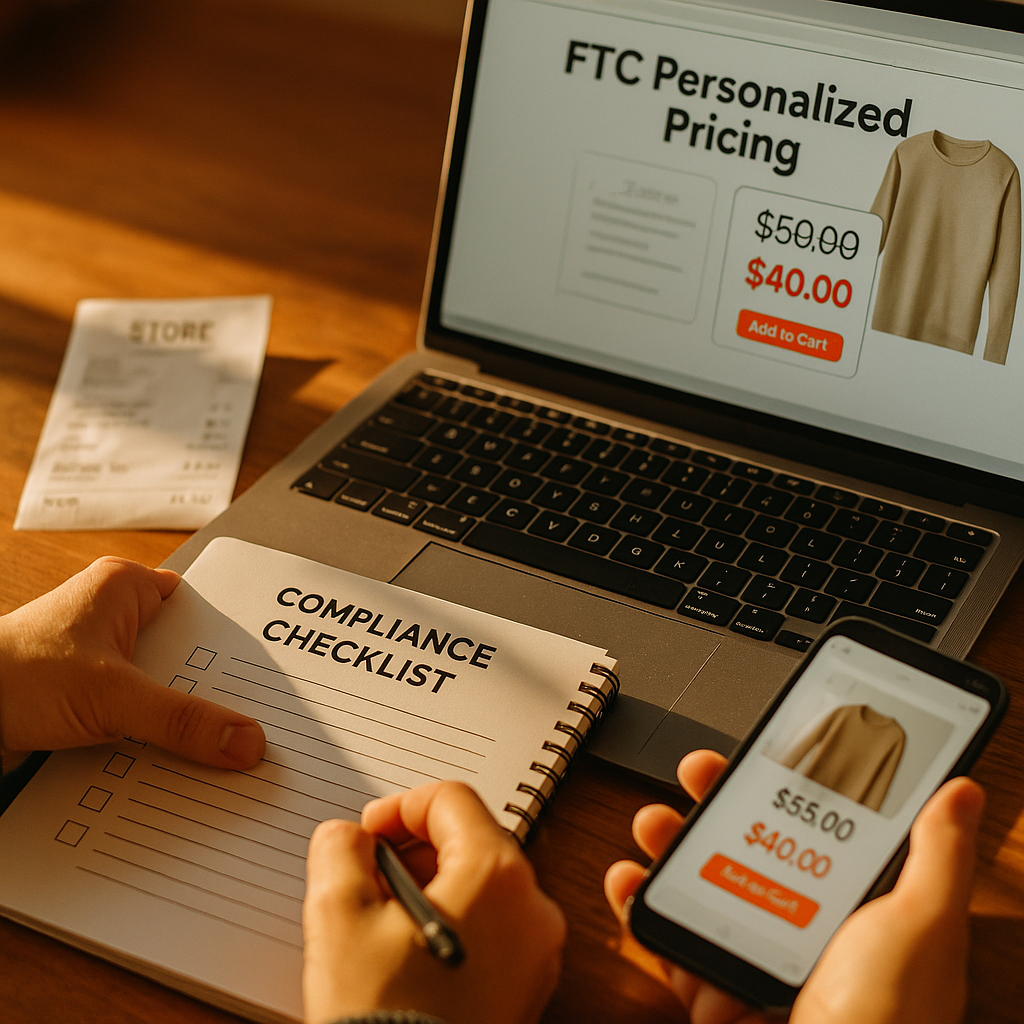
Ninety-one percent of consumers believe they’ve been shown a different price than someone else for the same product, according to recent consumer sentiment surveys. The FTC is finally catching up to that suspicion. Brands that wait until the rulemaking finalizes to build a compliance checklist for personalized pricing enforcement are gambling with a rule that already has teeth. The comment period is your last real chance to shape the guardrails, or at least prepare for them.
This isn’t a theoretical exercise for legal teams to file away. Personalized pricing touches loyalty tiers, geo-targeted promotions, browser-based discounting, app-exclusive offers, and algorithmic dynamic pricing engines that most retail and DTC brands already run. If your pricing stack uses any behavioral or demographic signal to vary what a customer pays, you’re in scope.
Why the Comment Period Actually Matters to Your Brand
Rulemaking comment periods feel bureaucratic. They’re not. The FTC uses this window to gauge industry pushback, refine definitions, and decide where enforcement discretion will land first. Brands that submit comments, or at minimum align internal practices to the draft language now, get a head start on whichever version of the rule survives.
Skip it, and you inherit whatever definition of “personalized pricing” the final rule adopts, with zero input and a compressed timeline to comply. The agency has already signaled aggressive intent through its ongoing scrutiny of surveillance pricing practices, a topic covered in depth in our surveillance pricing disclosure breakdown. This isn’t a first offense situation. It’s a continuation of a multi-year enforcement arc.
The FTC’s draft framework treats “personalized pricing” broadly enough to capture loyalty discounts, geo-based promotions, and algorithmic markups, meaning most retail and DTC pricing stacks are already inside the perimeter.
What the Draft Rule Actually Covers
Strip away the legal language and the draft policy targets three behaviors: using personal data to set individualized prices, failing to disclose when pricing is personalized, and using dark-pattern countdowns or scarcity claims to pressure purchase decisions at a price point the consumer wouldn’t otherwise accept. Each of these maps to existing FTC Section 5 authority around unfair and deceptive practices, but the 2026 framework adds specificity that prior guidance lacked.
Retailers running TikTok Shop storefronts should pay particular attention here. Our TikTok Shop pricing framework guide walks through how algorithmic discounting on social commerce platforms creates unique documentation burdens, since price variance often happens at the platform level, not the brand’s own checkout.
Countdown timers and “only 3 left” banners deserve a second look too. If those scarcity signals coincide with price changes tied to browsing history or purchase intent scoring, you’re stacking two enforcement risks into one UI element. We’ve documented this exact overlap in our piece on deceptive scarcity tactics in livestream commerce.
Build the Checklist in Layers, Not One Master Document
A single sprawling compliance document sounds efficient. It isn’t. Legal, marketing ops, and data science teams need different views of the same requirements. Structure your checklist in four layers instead:
- Data inventory layer: Catalog every data point feeding a pricing decision, including loyalty status, device type, location, browsing history, cart abandonment signals, and third-party audience segments.
- Disclosure layer: Document where and how customers are told pricing may vary, and whether that disclosure appears before the point of purchase or buried in terms of service.
- Vendor and platform layer: Identify every ad tech, retail media, or CRM vendor with a role in setting or displaying price, and confirm their data flows are documented in your contracts.
- Escalation layer: Define who reviews a pricing algorithm change before launch, and who has authority to pause a promotion if it triggers a compliance flag.
This layered approach mirrors what we recommended in our retail readiness checklist, but the comment period adds urgency: whatever gaps you find now are gaps regulators will find later, except with penalties attached.
The Escalation Protocol Nobody Has Written Yet
Here’s the uncomfortable truth: most brands have a pricing engine but no escalation protocol for when that engine does something legally risky. Marketing sets a promo. Data science tunes the algorithm. Nobody owns the compliance sign-off.
Fix that before the rule finalizes, not after an investigation starts. Our detailed walkthrough on how to build an escalation protocol lays out a practical model: a named compliance owner, a 48-hour review window for any pricing logic change, and a kill-switch process if a promotion is flagged mid-campaign.
Cross-functional friction is the real obstacle here, not legal complexity. Marketing wants speed. Data science wants flexibility. Legal wants documentation. A checklist that doesn’t account for that tension will get ignored the first time a Black Friday deadline collides with a compliance review.
Don’t Forget the Influencer and Creator Layer
Personalized pricing enforcement doesn’t stop at your own checkout page. If creators promote exclusive discount codes that vary by audience segment, follower tier, or even by which platform the code appears on, that’s personalized pricing by another name. Brands running affiliate or creator commerce programs need the same data inventory and disclosure discipline applied to influencer-driven promo codes as they apply to on-site dynamic pricing.
This is where the FTC’s personalized pricing enforcement work starts to overlap with existing influencer disclosure obligations. Our coverage of enforcement signals for TikTok Shop is a useful companion read if your creator program runs through social commerce.
Documentation the FTC Will Actually Ask For
Investigators don’t want your marketing deck. They want evidence trails. Based on prior FTC actions around data-driven pricing and dark patterns, expect requests for:
- Algorithm change logs showing when pricing logic was modified and by whom
- A/B test records showing which customer segments saw which price points
- Consumer complaint logs and how they were resolved
- Vendor contracts specifying what customer data feeds into third-party pricing tools
- Screenshots or archived versions of disclosure language at the time of purchase
If any of these don’t currently exist in retrievable form, that’s your first action item. Not next quarter. Now, while the rule is still in draft form and enforcement priorities are still being calibrated.
Investigators build cases from data trails, not intentions. A brand with sloppy but honest pricing logic and no documentation is often worse off than one with imperfect practices and a clean audit trail.
Submitting Comments: A Strategic Move, Not Just a Legal Formality
Trade associations will submit comments. So will consumer advocacy groups. Individual brands rarely do, and that’s a missed opportunity. A well-drafted comment from a mid-size retailer carries real weight, particularly if it highlights operational realities the FTC hasn’t considered, like how loyalty program tiering differs functionally from surveillance-based price discrimination.
Coordinate with your legal counsel and industry groups to identify where the draft rule’s definitions are too broad or too vague. Vagueness cuts both ways: it can mean lighter enforcement short-term, but it also means brands can’t predict what’s compliant. Precision benefits everyone operating in good faith.
Where This Intersects With Broader Data Privacy Obligations
Personalized pricing compliance doesn’t exist in a vacuum. It sits alongside identity resolution practices, state consent laws, and platform-level data sharing agreements. If your brand already built an audit framework for identity resolution compliance, extend it to cover pricing decisions specifically. The data feeding your CDP for personalization purposes is very likely the same data feeding your pricing algorithm.
Retail media networks add another wrinkle. If you’re buying placements or running promotions through Amazon Ads, Walmart Connect, or similar platforms, confirm how those networks segment audiences for price-sensitive offers. According to eMarketer research on retail media growth, ad-funded commerce platforms increasingly rely on first-party behavioral data, which is exactly the kind of signal the FTC’s draft rule targets.
For a broader view of how regulatory bodies are treating consumer data generally, the FTC’s official rulemaking docket is worth monitoring directly rather than relying solely on secondhand summaries. The UK’s Information Commissioner’s Office has also published parallel guidance on automated decision-making that offers a useful comparative lens, even though it isn’t binding on US brands.
A Realistic Timeline for Getting Ready
You don’t need to boil the ocean. A focused 60-day sprint covers the essentials: data inventory in the first two weeks, disclosure audit in weeks three and four, vendor contract review in weeks five and six, and escalation protocol drafting in the final stretch. Legal should review the full checklist before it’s operationalized, and marketing ops should own ongoing maintenance once the rule finalizes.
According to HubSpot’s research on marketing operations maturity, teams with documented compliance workflows resolve regulatory inquiries significantly faster than those improvising in real time. That gap only widens once formal enforcement begins.
Frequently Asked Questions
FAQs
What counts as “personalized pricing” under the FTC’s draft policy?
Any pricing decision influenced by personal data, browsing behavior, device type, location, loyalty status, or algorithmic segmentation likely qualifies. The draft framework is intentionally broad, covering both explicit price discrimination and algorithmically generated price variance.
Does this rule apply to loyalty program discounts?
Potentially, yes, if the discount tiering relies on behavioral or demographic data rather than simple opt-in membership status. Brands should document the logic behind loyalty pricing separately from other personalization to clarify intent.
What should a brand do before the comment period closes?
Conduct a data inventory of every input feeding pricing decisions, audit existing disclosure language, review vendor contracts for data-sharing terms, and consider submitting formal comments highlighting operational concerns with the draft rule’s definitions.
Who inside the organization should own this compliance checklist?
Ownership should be cross-functional, with legal setting requirements, marketing ops maintaining documentation, and a named compliance lead holding authority to pause pricing promotions that trigger review flags.
How does this connect to influencer and creator marketing programs?
Creator-distributed discount codes that vary by audience segment or platform function as a form of personalized pricing. Brands running affiliate or social commerce programs need the same documentation standards applied to creator promo codes as they apply to on-site pricing.
What documentation will investigators likely request first?
Expect requests for algorithm change logs, A/B test segment data, consumer complaint records, vendor data-sharing contracts, and archived disclosure language shown at the point of purchase.
The comment period closes on a fixed date, but your exposure to enforcement risk doesn’t. Start the data inventory this week, assign a compliance owner today, and treat the draft rule as the floor for your documentation standard, not the ceiling.
Top Influencer Marketing Agencies
The leading agencies shaping influencer marketing in 2026
Agencies ranked by campaign performance, client diversity, platform expertise, proven ROI, industry recognition, and client satisfaction. Assessed through verified case studies, reviews, and industry consultations.
Moburst

-
2

The Shelf
Boutique Beauty & Lifestyle Influencer AgencyA data-driven boutique agency specializing exclusively in beauty, wellness, and lifestyle influencer campaigns on Instagram and TikTok. Best for brands already focused on the beauty/personal care space that need curated, aesthetic-driven content.Clients: Pepsi, The Honest Company, Hims, Elf Cosmetics, Pure LeafVisit The Shelf → -
3

Audiencly
Niche Gaming & Esports Influencer AgencyA specialized agency focused exclusively on gaming and esports creators on YouTube, Twitch, and TikTok. Ideal if your campaign is 100% gaming-focused — from game launches to hardware and esports events.Clients: Epic Games, NordVPN, Ubisoft, Wargaming, Tencent GamesVisit Audiencly → -
4

Viral Nation
Global Influencer Marketing & Talent AgencyA dual talent management and marketing agency with proprietary brand safety tools and a global creator network spanning nano-influencers to celebrities across all major platforms.Clients: Meta, Activision Blizzard, Energizer, Aston Martin, WalmartVisit Viral Nation → -
5

The Influencer Marketing Factory
TikTok, Instagram & YouTube CampaignsA full-service agency with strong TikTok expertise, offering end-to-end campaign management from influencer discovery through performance reporting with a focus on platform-native content.Clients: Google, Snapchat, Universal Music, Bumble, YelpVisit TIMF → -
6

NeoReach
Enterprise Analytics & Influencer CampaignsAn enterprise-focused agency combining managed campaigns with a powerful self-service data platform for influencer search, audience analytics, and attribution modeling.Clients: Amazon, Airbnb, Netflix, Honda, The New York TimesVisit NeoReach → -
7

Ubiquitous
Creator-First Marketing PlatformA tech-driven platform combining self-service tools with managed campaign options, emphasizing speed and scalability for brands managing multiple influencer relationships.Clients: Lyft, Disney, Target, American Eagle, NetflixVisit Ubiquitous → -
8

Obviously
Scalable Enterprise Influencer CampaignsA tech-enabled agency built for high-volume campaigns, coordinating hundreds of creators simultaneously with end-to-end logistics, content rights management, and product seeding.Clients: Google, Ulta Beauty, Converse, AmazonVisit Obviously →