


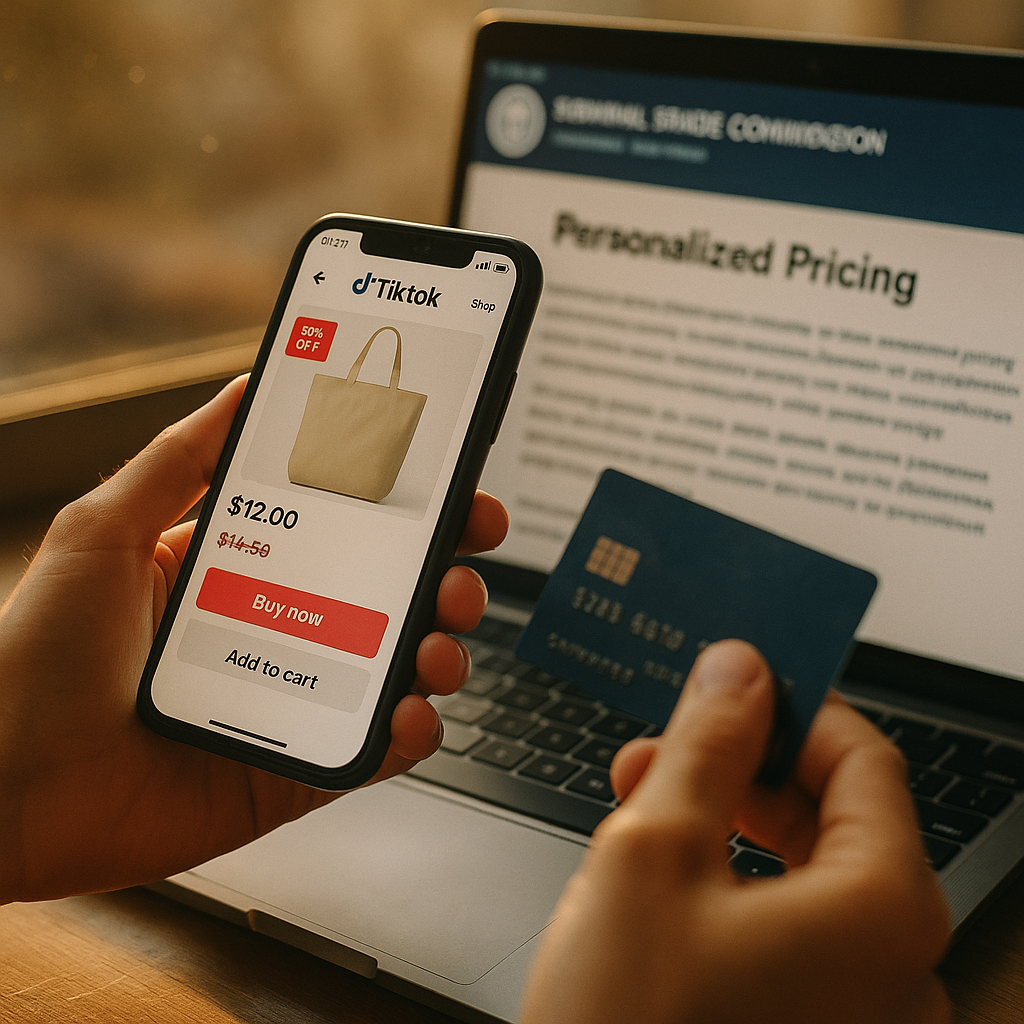
Seventy-six percent of retailers already use some form of algorithmic pricing, and TikTok Shop’s creator-driven checkout is a petri dish for it. So here’s the uncomfortable question: if the FTC’s new personalized pricing enforcement statement becomes the blueprint for 2027 rulemaking, how many brands running TikTok Shop campaigns right now are quietly building a liability file?
The FTC didn’t pass a rule. It issued a policy statement — a signal of enforcement priorities, not binding law. But smart compliance teams know policy statements are often the rough draft of rulemaking. Treating this one as a dress rehearsal, rather than a footnote, is the difference between adapting now and scrambling later.
What the FTC Actually Said
The Commission’s statement makes clear that pricing decisions driven by consumer surveillance data — browsing history, purchase patterns, device fingerprints, even the speed at which someone scrolls past a product — can constitute an unfair or deceptive practice when consumers have no visibility into how the price in front of them was generated. That’s the core theory. It doesn’t ban dynamic pricing outright. It targets the opacity around it.
For TikTok Shop specifically, this matters because the platform’s entire commerce engine is built on behavioral signals. The For You feed already personalizes content based on watch time, likes, and shares. Layering personalized pricing on top of that — through creator codes, limited-time drops, or algorithmically surfaced “deals” — creates exactly the kind of surveillance-to-price pipeline the FTC is scrutinizing.
If your TikTok Shop pricing engine uses any behavioral or device-level signal to vary the price a shopper sees, you are now operating inside the FTC’s stated enforcement zone — whether or not a final rule exists yet.
Read the FTC personalized pricing policy breakdown for the full mechanics of how the agency defines “surveillance pricing” versus ordinary A/B testing or loyalty discounts. The distinction matters more than most brand teams realize.
Why 2027 Rulemaking Changes the Calculus
Policy statements are guidance. Rules are enforceable. The FTC has signaled it intends to move toward formal rulemaking by 2027, and the agency rarely reverses course once it publishes a policy statement of this specificity. Brands that wait for the final rule to start compliance work will be retrofitting systems under a hard deadline, likely with less negotiating room on enforcement discretion.
Compare this to the GDPR rollout: companies that started consent infrastructure work 18 months before enforcement had smoother launches than those who waited for the compliance deadline. The same pattern is likely here. Our FTC enforcement timeline for brands lays out the expected milestones between now and the rulemaking conclusion, including comment periods where brands and trade groups can still shape the final language.
TikTok Shop’s Surveillance Pricing Problem, Specifically
TikTok Shop sits at an uncomfortable intersection: it’s simultaneously a media platform, a data broker of sorts, and a checkout system. Three pricing mechanisms on the platform are especially exposed under the FTC’s framework:
- Creator affiliate codes with dynamic discount tiers — where the discount a shopper receives can vary based on their engagement history with that creator, not just a flat promo code.
- Livestream flash pricing — where “limited time” price drops are triggered by real-time viewer behavior data rather than fixed inventory or time windows.
- Algorithmically surfaced bundle offers — where the bundle price a user sees is assembled based on predicted willingness to pay, inferred from browsing and purchase signals.
None of these are inherently illegal. The problem is disclosure — or the lack of it. Most brands running these mechanics today have no consumer-facing language explaining that the price shown is personalized. That’s precisely the gap the FTC statement targets.
Our TikTok Shop creator codes and pricing rules guide walks through how affiliate discount structures specifically trigger this exposure, and what disclosure language actually satisfies the FTC’s stated standard versus what merely looks like it does.
Livestream Commerce Adds Another Layer
Livestream shopping compounds the risk because prices change in real time, often based on viewer count, chat engagement, or purchase velocity — all surveillance-adjacent signals. A host announcing “price drops as more of you join” is, functionally, disclosing a form of personalized or crowd-triggered pricing. But most brands haven’t audited whether that disclosure meets the specificity the FTC expects, or whether it’s just marketing flourish that happens to sound transparent.
The livestream shopping price claims guide covers substantiation requirements that overlap directly with personalized pricing disclosure — if you’re making a claim about why the price is what it is, you need the receipts to back it up.
Building a Disclosure Framework Before the Rule Lands
Here’s where brand and agency teams can actually get ahead. Rather than waiting for final rule text, build disclosure infrastructure now around three pillars:
- Plain-language pricing notices. A short, visible statement at checkout or on the product page noting that the price shown may reflect personalized factors. Not buried in a privacy policy nobody reads — visible at the point of transaction.
- Data-use mapping. Document exactly which signals feed into any pricing variation: geolocation, browsing history, past purchases, device type, engagement with specific creators. If you can’t map it, you can’t disclose it accurately, and vague disclosures are arguably worse than none under the FTC’s deception standard.
- Vendor and creator DPAs. Any third-party tool or creator partnership that touches pricing logic needs contractual language requiring disclosure cooperation. If your affiliate platform vendor changes its algorithm without telling you, you’re still on the hook for the disclosure gap.
For the data-mapping piece, the data-use disclosure template for algorithm-driven offers is a solid starting scaffold — it forces teams to itemize every signal touching a pricing decision, which is exactly the documentation the FTC will expect in any investigation.
On the contractual side, brands negotiating TikTok Shop vendor and creator agreements should be building personalized pricing language into their data processing addendums now, not after a complaint lands. The TikTok Shop DPA drafting guide covers the specific clauses that hold up under scrutiny — allocation of disclosure responsibility, audit rights, and breach notification timelines tied to pricing algorithm changes.
A disclosure that’s technically true but practically invisible to the average shopper won’t satisfy the FTC’s standard — the agency has been explicit that “reasonably conspicuous” is the bar, not “technically present.”
The Compliance-Marketing Tension Nobody Wants to Name
Let’s be honest about the internal friction this creates. Personalization is the entire value proposition marketing teams sell to leadership — higher conversion, better margins, tighter targeting. Compliance teams are now being asked to add friction to that exact mechanism in the form of disclosure. That’s a real tension, not a paperwork exercise.
The brands handling this well aren’t treating disclosure as a tax on personalization. They’re treating it as a trust signal. A 2024 eMarketer survey found a majority of consumers say they’d trust a brand more, not less, if it explained why they were seeing a specific price. Transparency, framed correctly, can be a conversion lever rather than a drag on it.
This isn’t dissimilar to the ground already covered in influencer disclosure compliance. The FTC has spent years refining what counts as adequate material connection disclosure in sponsored content — our TikTok AI labels and material connection guide shows how those same “clear and conspicuous” standards are migrating into pricing disclosure. The regulatory logic is consistent: if AI or data shaped what the consumer is seeing, say so, plainly, where they’ll actually notice.
What Happens If Brands Do Nothing
Inaction has a cost curve. Early movers who build disclosure frameworks now will have operational muscle memory before enforcement tightens. Late movers face three compounding risks: FTC investigation exposure, state-level AG actions (several states are drafting parallel pricing transparency statutes independent of federal rulemaking), and reputational fallout if a journalist or watchdog group publishes a “gotcha” piece on surveillance pricing — which, given current media appetite for platform accountability stories, is not a hypothetical.
TikTok Shop brands already absorbed one hard lesson here. The platform’s $400M privacy settlement showed how quickly data-handling gaps become nine-figure liabilities once regulators decide to act. Personalized pricing is the next front in that same enforcement pattern, and the TikTok Shop compliance checklist built after that settlement is a useful template for how fast internal audits need to move once the FTC picks a target.
A Practical Starting Checklist
If you’re a brand or agency running TikTok Shop programs right now, here’s the minimum viable action list before the 2027 rulemaking window closes:
- Audit every pricing mechanism — creator codes, livestream drops, bundles — for behavioral data inputs.
- Draft or update consumer-facing disclosure language and place it at the point of price display, not just in policy documents.
- Update creator and vendor DPAs to require pricing-algorithm transparency and disclosure cooperation.
- Build an internal escalation path so legal is looped in before a new pricing mechanic launches, not after a complaint arrives — a pattern worth mirroring from the compliance escalation matrix used for advertising substantiation disputes.
- Use a standing template for disclosure language so every campaign doesn’t start from scratch. The personalized pricing disclosure template is built specifically for this.
None of this requires waiting for the final rule. The FTC’s public guidance already gives enough signal to start, and agencies that build frameworks now will spend the 2027 comment period lobbying for workable standards instead of scrambling to retrofit their tech stack.
FAQs
Is the FTC’s personalized pricing statement legally binding right now?
No. It’s a policy statement outlining enforcement priorities, not a final rule. However, the FTC can still bring enforcement actions under existing unfair and deceptive practices authority using this framework as its interpretive guide.
Does TikTok Shop’s creator affiliate system count as personalized pricing?
It can, if the discount or price a shopper sees varies based on behavioral signals like engagement history rather than a flat, universally applied code. Brands should audit their affiliate structures specifically for this variation.
What counts as adequate disclosure under the FTC’s standard?
Disclosure needs to be clear and conspicuous at the point where the consumer sees the price, not buried in a privacy policy. Vague or generic language about “personalization” likely won’t satisfy the standard once formal rulemaking concludes.
Will state laws move faster than the federal rulemaking process?
Likely yes. Several states are already drafting pricing transparency statutes independent of the FTC’s timeline, meaning brands could face compliance obligations before 2027 federal rulemaking concludes.
Should brands pause dynamic pricing on TikTok Shop until the rule finalizes?
Not necessarily. The more sustainable approach is building disclosure infrastructure now so pricing mechanics continue while transparency requirements are met, avoiding a disruptive shutdown-and-restart cycle later.
The brands that treat this policy statement as a rough draft, not background noise, will spend 2027 shaping the final rule instead of reacting to it. Start with a pricing-mechanism audit this quarter — it’s the one step every other compliance action depends on.
Top Influencer Marketing Agencies
The leading agencies shaping influencer marketing in 2026
Agencies ranked by campaign performance, client diversity, platform expertise, proven ROI, industry recognition, and client satisfaction. Assessed through verified case studies, reviews, and industry consultations.
Moburst

-
2

The Shelf
Boutique Beauty & Lifestyle Influencer AgencyA data-driven boutique agency specializing exclusively in beauty, wellness, and lifestyle influencer campaigns on Instagram and TikTok. Best for brands already focused on the beauty/personal care space that need curated, aesthetic-driven content.Clients: Pepsi, The Honest Company, Hims, Elf Cosmetics, Pure LeafVisit The Shelf → -
3

Audiencly
Niche Gaming & Esports Influencer AgencyA specialized agency focused exclusively on gaming and esports creators on YouTube, Twitch, and TikTok. Ideal if your campaign is 100% gaming-focused — from game launches to hardware and esports events.Clients: Epic Games, NordVPN, Ubisoft, Wargaming, Tencent GamesVisit Audiencly → -
4

Viral Nation
Global Influencer Marketing & Talent AgencyA dual talent management and marketing agency with proprietary brand safety tools and a global creator network spanning nano-influencers to celebrities across all major platforms.Clients: Meta, Activision Blizzard, Energizer, Aston Martin, WalmartVisit Viral Nation → -
5

The Influencer Marketing Factory
TikTok, Instagram & YouTube CampaignsA full-service agency with strong TikTok expertise, offering end-to-end campaign management from influencer discovery through performance reporting with a focus on platform-native content.Clients: Google, Snapchat, Universal Music, Bumble, YelpVisit TIMF → -
6

NeoReach
Enterprise Analytics & Influencer CampaignsAn enterprise-focused agency combining managed campaigns with a powerful self-service data platform for influencer search, audience analytics, and attribution modeling.Clients: Amazon, Airbnb, Netflix, Honda, The New York TimesVisit NeoReach → -
7

Ubiquitous
Creator-First Marketing PlatformA tech-driven platform combining self-service tools with managed campaign options, emphasizing speed and scalability for brands managing multiple influencer relationships.Clients: Lyft, Disney, Target, American Eagle, NetflixVisit Ubiquitous → -
8

Obviously
Scalable Enterprise Influencer CampaignsA tech-enabled agency built for high-volume campaigns, coordinating hundreds of creators simultaneously with end-to-end logistics, content rights management, and product seeding.Clients: Google, Ulta Beauty, Converse, AmazonVisit Obviously →