


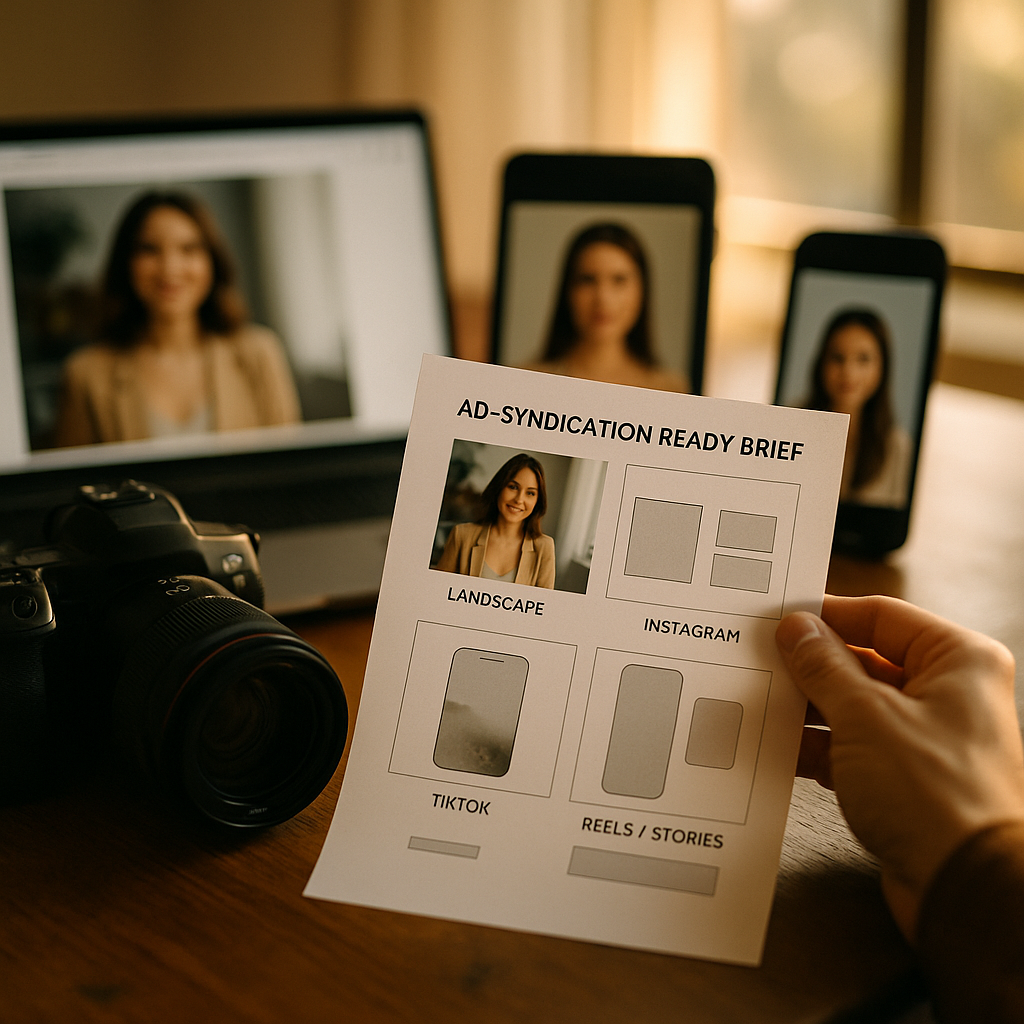
Brands waste an estimated 30 to 40 percent of creator production budgets reshooting near-identical content for different platforms. An ad-syndication ready asset fixes that by design, not by accident. One shoot, one creator, three native placements, zero redundant spend. If your team is still briefing separate videos for TikTok, Instagram, and YouTube, you’re paying a repurposing tax you don’t have to pay.
What “Ad-Syndication Ready” Actually Means
The term gets thrown around loosely, so let’s define it. An ad-syndication ready asset is a single piece of creator content engineered from the brief stage to run as paid media across multiple platforms without looking like a cross-post. That last part matters. A video that screams “recycled” tanks engagement and trips platform-native detection that deprioritizes duplicate-feeling content.
This isn’t about shooting one video and cropping it three ways in the edit bay. That approach is exactly what caused the waste problem in the first place. True syndication readiness happens at the brief and shoot level, before a single frame is captured.
The cost of a creator video isn’t the day rate. It’s the multiplied production overhead when three platform teams each demand a “custom” version of the same idea.
Why Platform-Native Still Beats One-Size-Fits-All
Meta, TikTok, and YouTube each optimize for different viewing behavior. TikTok rewards immediate hook density and vertical full-bleed framing. Instagram Reels favors a slightly more polished pace with room for on-screen text and sticker overlays. YouTube Shorts and in-stream placements tolerate longer setup and benefit from a stronger verbal CTA because viewers are often watching with sound on by default.
Run the same 9×16 crop everywhere and you’ll underperform on at least two of the three. But shoot with all three destinations in mind from the start, and you can build in the flexibility without triple the budget. This is the entire premise behind modular storyboard design, and it’s the foundation this brief format builds on.
The Core Brief Structure
A syndication-ready brief needs five components most single-platform briefs skip entirely:
- Framing safety zones: Shoot in 9×16 but keep critical action and text inside a 4×5 center-safe zone, so the same footage crops cleanly for Instagram feed and YouTube’s 16×9 without losing the subject.
- Modular hook variants: Direct the creator to deliver two or three different opening lines in the same take sequence. Platform algorithms reward native-feeling hooks, and a TikTok hook rarely lands the same way on YouTube.
- Silent-first and sound-on cuts: Build captions and visual cues that carry the message without audio for Facebook and Instagram’s muted-autoplay crowd, while preserving a full sound-on version for TikTok and YouTube.
- CTA flexibility windows: Leave a clean 3 to 5 second buffer near the end where platform-specific CTA text, swipe-up prompts, or end cards can be dropped in without reshooting.
- Compliance tagging built in: Disclosure language (“#ad,” paid partnership tags) needs to be scripted into the creator’s verbal or on-screen delivery once, in a way that satisfies FTC disclosure guidelines regardless of which platform’s native ad tools ultimately wrap the post.
Shooting for Three Feeds Without Tripling the Shoot Day
Here’s where operational discipline pays off. A well-run shoot day for a syndication-ready asset typically runs 20 to 30 percent longer than a single-platform shoot, not three times longer. The extra time goes into capturing hook variants and B-roll coverage, not re-staging the entire scene.
Practically, that means briefing your creator (or your production lead, if you’re working with an ugc-to-ad-inventory pipeline) to treat the shoot like a modular kit of parts: one core demonstration or story beat, filmed clean and stable, plus a handful of interchangeable openers, closers, and text-safe cutaways. Editors then assemble platform-specific versions from that shared footage pool.
This is functionally similar to the coverage strategy discussed in multi-angle shot generation, where a single scene gets captured with enough variation to serve multiple downstream uses. The difference here is you’re optimizing for platform destination rather than product catalog scale.
What Goes Wrong Without a Syndication Brief
Most repurposing failures trace back to one of three mistakes:
- Aspect ratio as an afterthought. Shooting horizontal and cropping vertical later loses the subject, forces awkward reframes, and often clips on-screen text.
- One hook for all platforms. A hook written for TikTok’s scroll-past culture often reads as too aggressive or gimmicky on YouTube, where viewers arrived with more intent.
- Disclosure bolted on in post. Adding “#ad” as a text overlay after the fact, rather than scripting it into the creator’s natural delivery, creates a jarring disconnect that both viewers and regulators notice. For a deeper look at building compliance into the script itself, see FTC-safe video briefs.
If your compliance language feels bolted on, it probably was. Disclosure that’s scripted into the creator’s natural delivery outperforms overlay text on every trust metric that matters.
Budget and Approval: The Part Finance Actually Cares About
Here’s the business case in plain terms. A traditional three-platform creator campaign often runs three separate briefs, three separate shoot days (or at minimum, three separate edit passes), and three rounds of legal review. A syndication-ready asset consolidates that into one brief, one shoot day, and one legal review pass with platform-specific CTA and disclosure variants attached as addenda.
According to eMarketer data on creator economy spend, brands are under increasing pressure to prove efficiency per creator dollar as budgets scale. Reducing redundant production isn’t a nice-to-have anymore, it’s how mid-market brands compete with larger ad budgets on cost per acquisition. The same efficiency logic shows up in creator collab cost reduction, where consolidating deliverables directly moves CPA in the right direction.
Legal review also moves faster when disclosure and claims language is unified once rather than checked three separate times for three separate cuts. If your team has struggled with review bottlenecks, the structure in short-form briefs built for fast legal review pairs well with a syndication-ready shoot plan.
Choosing the Right Creator for a Multi-Platform Asset
Not every creator can deliver hook variants and tonal flexibility in a single session. Look for creators with demonstrated cross-platform fluency, meaning they already post native content on at least two of your three target platforms and understand the pacing differences intuitively. This is worth vetting during casting rather than discovering during editing.
Agencies using platforms like TikTok’s creator marketplace or Meta’s Meta Business Suite partner tools can filter for creators with cross-posting history, which is a reasonable proxy for this skill.
A Sample Brief Skeleton
Here’s a condensed version of what a production team should hand a creator before the shoot:
- Core message and single product claim (one sentence, legally cleared)
- Framing spec: vertical primary, center-safe zone marked
- Three hook variants to record back-to-back (curiosity, direct benefit, relatable problem)
- Disclosure line scripted into dialogue, not overlay-dependent
- CTA buffer window (3 to 5 seconds, no burned-in text)
- B-roll shot list for platform-specific cutaway needs
Teams already running multi-creator testing waves can layer this skeleton directly into their existing testing brief template rather than building a new document from scratch.
Get this brief right once, and it becomes a reusable template. Every subsequent creator video costs less to produce and performs better across all three feeds, because the operational discipline is baked into the process instead of patched on after the fact.
Frequently Asked Questions
What is an ad-syndication ready asset in influencer marketing?
It’s a single creator video produced with a brief and shoot plan that allows it to run natively as paid media across multiple platforms (typically TikTok, Instagram, and YouTube) without reshoots or awkward cross-posting.
How much does producing one syndication-ready video save compared to three separate shoots?
Costs vary by production scale, but most teams report reducing redundant production spend by 30 to 40 percent by consolidating brief, shoot, and legal review into a single pass rather than three.
Does a syndication-ready video hurt platform-native performance?
Not if the brief accounts for platform differences upfront. The key is building in modular hooks, safe framing zones, and flexible CTA windows so each platform-specific cut still feels native, not recycled.
Where should disclosure language go in a multi-platform creator video?
Disclosure should be scripted into the creator’s spoken or on-screen delivery during the shoot, not added as an overlay afterward. This keeps the video compliant across all three platforms without a jarring visual patch.
What creator qualities matter most for this format?
Look for creators with proven cross-platform posting history and comfort delivering multiple hook variants in a single session. That fluency is the difference between a genuinely native asset and a stiff, over-directed one.
Frequently Asked Questions
What is an ad-syndication ready asset in influencer marketing?
It’s a single creator video produced with a brief and shoot plan that allows it to run natively as paid media across multiple platforms (typically TikTok, Instagram, and YouTube) without reshoots or awkward cross-posting.
How much does producing one syndication-ready video save compared to three separate shoots?
Costs vary by production scale, but most teams report reducing redundant production spend by 30 to 40 percent by consolidating brief, shoot, and legal review into a single pass rather than three.
Does a syndication-ready video hurt platform-native performance?
Not if the brief accounts for platform differences upfront. The key is building in modular hooks, safe framing zones, and flexible CTA windows so each platform-specific cut still feels native, not recycled.
Where should disclosure language go in a multi-platform creator video?
Disclosure should be scripted into the creator’s spoken or on-screen delivery during the shoot, not added as an overlay afterward. This keeps the video compliant across all three platforms without a jarring visual patch.
What creator qualities matter most for this format?
Look for creators with proven cross-platform posting history and comfort delivering multiple hook variants in a single session. That fluency is the difference between a genuinely native asset and a stiff, over-directed one.
Start with one campaign, build the syndication-ready brief template above, and track the production hours saved against your next three-platform launch. That single comparison will make the budget case for you.
Top Influencer Marketing Agencies
The leading agencies shaping influencer marketing in 2026
Agencies ranked by campaign performance, client diversity, platform expertise, proven ROI, industry recognition, and client satisfaction. Assessed through verified case studies, reviews, and industry consultations.
Moburst

-
2

The Shelf
Boutique Beauty & Lifestyle Influencer AgencyA data-driven boutique agency specializing exclusively in beauty, wellness, and lifestyle influencer campaigns on Instagram and TikTok. Best for brands already focused on the beauty/personal care space that need curated, aesthetic-driven content.Clients: Pepsi, The Honest Company, Hims, Elf Cosmetics, Pure LeafVisit The Shelf → -
3

Audiencly
Niche Gaming & Esports Influencer AgencyA specialized agency focused exclusively on gaming and esports creators on YouTube, Twitch, and TikTok. Ideal if your campaign is 100% gaming-focused — from game launches to hardware and esports events.Clients: Epic Games, NordVPN, Ubisoft, Wargaming, Tencent GamesVisit Audiencly → -
4

Viral Nation
Global Influencer Marketing & Talent AgencyA dual talent management and marketing agency with proprietary brand safety tools and a global creator network spanning nano-influencers to celebrities across all major platforms.Clients: Meta, Activision Blizzard, Energizer, Aston Martin, WalmartVisit Viral Nation → -
5

The Influencer Marketing Factory
TikTok, Instagram & YouTube CampaignsA full-service agency with strong TikTok expertise, offering end-to-end campaign management from influencer discovery through performance reporting with a focus on platform-native content.Clients: Google, Snapchat, Universal Music, Bumble, YelpVisit TIMF → -
6

NeoReach
Enterprise Analytics & Influencer CampaignsAn enterprise-focused agency combining managed campaigns with a powerful self-service data platform for influencer search, audience analytics, and attribution modeling.Clients: Amazon, Airbnb, Netflix, Honda, The New York TimesVisit NeoReach → -
7

Ubiquitous
Creator-First Marketing PlatformA tech-driven platform combining self-service tools with managed campaign options, emphasizing speed and scalability for brands managing multiple influencer relationships.Clients: Lyft, Disney, Target, American Eagle, NetflixVisit Ubiquitous → -
8

Obviously
Scalable Enterprise Influencer CampaignsA tech-enabled agency built for high-volume campaigns, coordinating hundreds of creators simultaneously with end-to-end logistics, content rights management, and product seeding.Clients: Google, Ulta Beauty, Converse, AmazonVisit Obviously →