


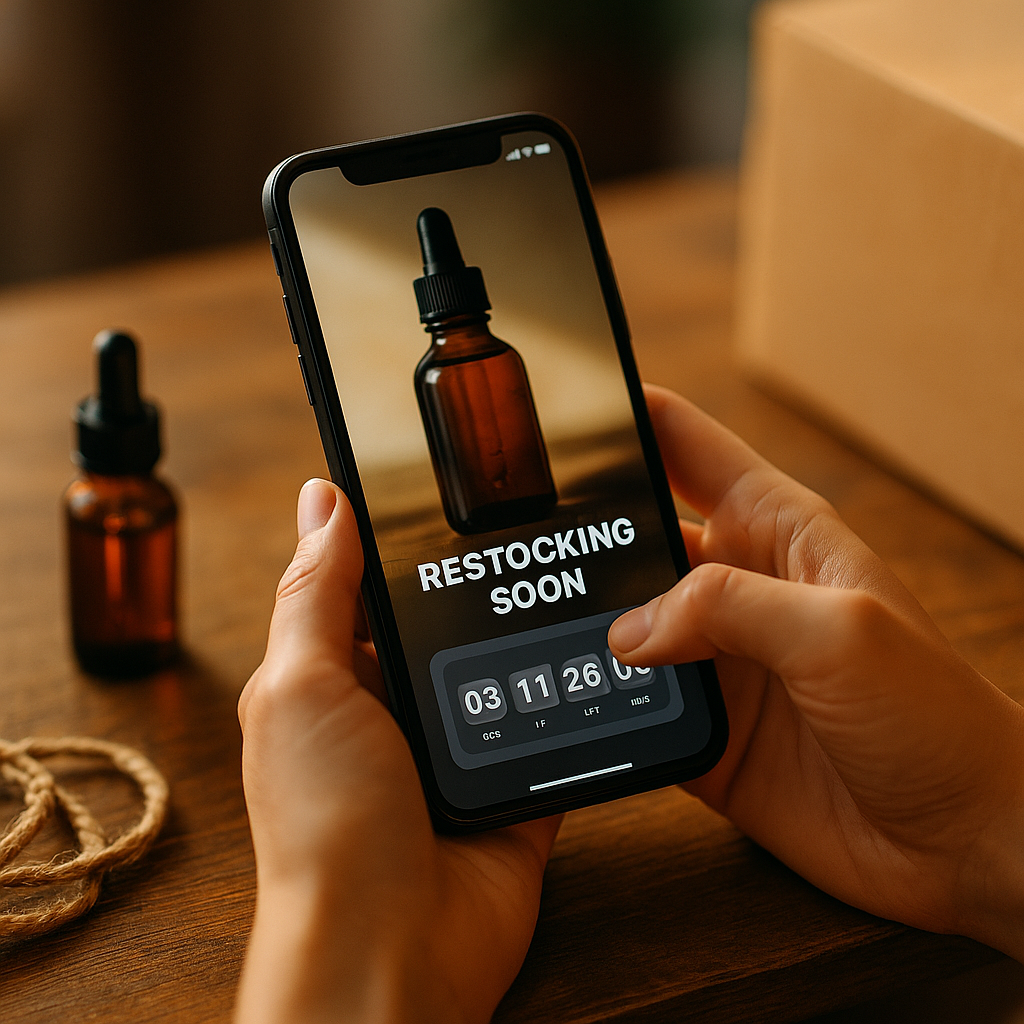
Limited drops sell out in minutes. But the campaigns behind them often unravel in weeks, once the FTC starts asking why every creator claimed “almost gone” on a product that restocked twice. The restock-countdown format is the fix: a structured, multi-day teaser sequence that builds real urgency without manufacturing fake scarcity. Get the sequencing right, and you turn a single drop into a week of compounding demand.
Why the Old “3 Left in Stock” Trick Stopped Working
Scarcity messaging is one of the oldest levers in direct response marketing. It still works, when it’s true. The problem is that brands got lazy with it. Countdown stickers that reset. “Selling fast” captions on SKUs sitting in a warehouse. Creators repeating claims they never verified. Regulators noticed, and so did consumers.
The FTC’s endorsement guidance is explicit about material claims: if a creator says something is almost sold out, that has to be verifiably true at the moment of posting, not aspirational copywriting. Brands that treat scarcity language as a creative flourish rather than a factual statement are building a liability into every teaser post.
A countdown that isn’t tied to real inventory data isn’t urgency marketing. It’s a compliance exposure with a nice font.
That’s the gap the restock-countdown format closes. Instead of one creator making one unverifiable claim, you structure a sequence across multiple creators and multiple days, each post anchored to a specific, disclosed, and true inventory milestone.
What the Restock-Countdown Format Actually Looks Like
Think of it less as a single ad and more as a mini editorial calendar. A typical sequence runs four to seven days and layers different creator roles at different urgency stages:
- Day 1-2, the tease: Creators post “this is coming back” content, no countdown numbers yet, just anticipation and product context.
- Day 3-4, the confirm: Restock date and quantity are announced, ideally sourced directly from the brand’s inventory system, not guessed.
- Day 5-6, the count: Creators reference real, brand-supplied stock figures (“last batch was 400 units, this one’s smaller”) with a link to a live inventory page.
- Drop day, the close: Real-time or near-real-time updates as stock actually depletes, ideally pulled from the same backend that powers the checkout page.
Each stage needs its own brief, its own disclosure language, and its own approval checkpoint. This isn’t a “send the same talking points to twelve creators” situation. It’s sequenced, and the sequencing is the strategy.
For brands already running live drop content, this pairs naturally with live inventory countdown overlays on the product page itself, so the creator narrative and the on-site experience tell the same, verifiable story.
Building the Brief: Facts First, Feelings Second
Most influencer briefs open with tone and vibe. For a restock-countdown sequence, open with data. Creators need to know, in writing, exactly what they’re allowed to claim and when that claim expires.
A workable brief structure includes:
- The exact inventory number at time of posting, refreshed no more than 24 hours before publish.
- A hard rule against rounding up or dramatizing (“a handful left” when there are 80 units is a no).
- Mandatory disclosure placement (#ad or #sponsored, not buried in a hashtag pile).
- A kill switch: if stock changes materially before the post goes live, the creator pulls or edits the claim.
This last point trips up a lot of teams. Inventory is dynamic. A creator’s post scheduled for 9am might reference a number that’s already wrong by 9:15. Build buffer time into your approval workflow, and give creators a same-day update channel (a shared Slack thread or a simple form) so numbers can be corrected before publish, not after a screenshot circulates.
If your legal team is already nervous about influencer scarcity language generally, borrow structure from short-form sales briefs that pass legal review fast. The same discipline, clear claims, documented sourcing, timestamped approvals, applies directly to countdown content.
Sequencing Creators, Not Just Content
Here’s a mistake brands make constantly: they send the identical brief to every creator in the campaign, regardless of where that creator sits in the funnel. A macro-influencer with two million followers and a nano-creator with three thousand engaged fans should not be saying the same thing on the same day.
Macro and mid-tier creators are better suited to the early tease, because their reach builds broad awareness before urgency is even relevant. Nano and micro-creators, who typically post closer to purchase intent, work better in the count and close stages, where their audience trusts a specific, personal “I just checked, it’s almost gone” update more than a polished announcement.
This staggering also solves a practical problem: it spreads your inventory-verification workload across days instead of forcing every creator to pull numbers on the same morning. Learn from campaigns that already stagger creator waves deliberately, like the approach outlined in multi-creator testing waves, and apply the same wave logic to urgency messaging instead of product testing.
Staggering creator tiers across the countdown isn’t just a compliance safeguard, it’s what makes the sequence feel like a real event instead of a coordinated ad blast.
Disclosure Is Not Optional, and It’s Not a One-Liner
A common assumption is that a single #ad tag covers a multi-day sequence. It doesn’t. Each individual post, story, and live update needs its own clear disclosure, because each one is a separate piece of sponsored content under FTC rules. If a creator posts a teaser Monday, a confirm Wednesday, and a live countdown Friday, all three need disclosure, not just the first.
Platforms have made this easier with built-in paid partnership labels, but labels alone don’t satisfy the requirement if the underlying claim is misleading. A creator can tag “Paid Partnership” and still violate guidance if they say “only 5 left” while the brand’s own dashboard shows 200. Compliance lives in the accuracy of the claim, not just the presence of a tag.
For teams building disclosure language into repeatable formats, the structure used in time-boxed challenge briefs translates well here. Time-boxing and stock-boxing rely on the same principle: give creators a genuine constraint, disclose it clearly, and let the real deadline do the persuasive work instead of exaggerated language.
Measuring What Actually Moved Units
Urgency campaigns tend to get measured on vanity engagement, views, likes, comment volume. None of that tells you whether the countdown sequence drove the restock to sell through faster than a flat announcement would have. Tie each creator’s post to a unique tracking link or discount code, and map conversion timestamps against the actual inventory depletion curve.
According to eMarketer, urgency and scarcity messaging continues to outperform generic promotional content on conversion rate, but the gap narrows sharply when audiences suspect the scarcity isn’t genuine. That’s the commercial argument for compliance, not just the legal one: fake urgency doesn’t just risk a fine, it actively erodes conversion lift over repeated campaigns as audiences get wise to it.
Track these metrics specifically:
- Click-through rate by sequence stage (tease vs. confirm vs. count vs. close).
- Time-to-sellout compared against previous, non-sequenced drops.
- Return visits to the product page between teaser posts, a strong signal of building intent.
- Post-purchase sentiment or reviews mentioning the countdown experience specifically.
Tools like Sprout Social or a basic UTM structure through HubSpot can handle the attribution layer without needing custom dev work, and platforms like TikTok Ads Manager now support direct product tagging that ties creator content to real-time catalog stock, which removes a lot of the manual reconciliation brands used to do by hand.
Where This Format Breaks (and How to Patch It)
The most common failure point isn’t creator behavior, it’s internal handoff. Marketing schedules the sequence, but operations doesn’t update inventory numbers on the same cadence, so creators end up working from stale data through no fault of their own. Fix this with a single shared dashboard, updated at fixed intervals, that both teams pull from. No spreadsheets emailed at 5pm the night before.
The second failure point is creative fatigue. Five straight days of “it’s almost gone” content from different creators can start to feel like spam if the tone isn’t varied. Rotate content formats, unboxing, live Q&A, behind-the-scenes restock footage, borrowing structure from formats like turning one livestream into a week of content, so the urgency thread runs through varied formats instead of repeating the same static graphic five times.
The third: creators who genuinely believe the hype and start improvising claims beyond the brief. This is why the brief needs explicit language limits, not just talking points. If a creator wants to say something the brand hasn’t verified, the answer is no, every time, no exceptions for “big names.”
Run one sequenced restock-countdown campaign, measure it against your last flat announcement drop, and let the sellout speed and compliance record decide whether this becomes your default playbook.
Frequently Asked Questions
What is the restock-countdown format in influencer marketing?
It’s a structured, multi-day creator content sequence that builds urgency around a limited product drop using real, verified inventory data at each stage, rather than a single unverified scarcity claim.
How does this format stay compliant with FTC guidelines?
Every claim made by a creator, including stock levels, must be factually accurate at the time of posting and clearly disclosed as sponsored content, per FTC endorsement guidance. Each post in the sequence needs its own disclosure.
How many creators should be involved in one restock-countdown sequence?
There’s no fixed number, but effective sequences typically mix macro or mid-tier creators for early awareness with micro or nano-creators for the close, staggering posting across the countdown window rather than publishing everything on one day.
What happens if inventory numbers change after a creator posts?
The brief should include a kill switch requiring creators to correct or remove posts if stock figures change materially before or shortly after publishing, to avoid making a claim that’s no longer accurate.
Does a single disclosure tag cover a whole multi-day campaign?
No. Each individual post, story, or live update is treated as separate sponsored content and requires its own clear disclosure, not just a one-time tag at the start of the sequence.
Top Influencer Marketing Agencies
The leading agencies shaping influencer marketing in 2026
Agencies ranked by campaign performance, client diversity, platform expertise, proven ROI, industry recognition, and client satisfaction. Assessed through verified case studies, reviews, and industry consultations.
Moburst

-
2

The Shelf
Boutique Beauty & Lifestyle Influencer AgencyA data-driven boutique agency specializing exclusively in beauty, wellness, and lifestyle influencer campaigns on Instagram and TikTok. Best for brands already focused on the beauty/personal care space that need curated, aesthetic-driven content.Clients: Pepsi, The Honest Company, Hims, Elf Cosmetics, Pure LeafVisit The Shelf → -
3

Audiencly
Niche Gaming & Esports Influencer AgencyA specialized agency focused exclusively on gaming and esports creators on YouTube, Twitch, and TikTok. Ideal if your campaign is 100% gaming-focused — from game launches to hardware and esports events.Clients: Epic Games, NordVPN, Ubisoft, Wargaming, Tencent GamesVisit Audiencly → -
4

Viral Nation
Global Influencer Marketing & Talent AgencyA dual talent management and marketing agency with proprietary brand safety tools and a global creator network spanning nano-influencers to celebrities across all major platforms.Clients: Meta, Activision Blizzard, Energizer, Aston Martin, WalmartVisit Viral Nation → -
5

The Influencer Marketing Factory
TikTok, Instagram & YouTube CampaignsA full-service agency with strong TikTok expertise, offering end-to-end campaign management from influencer discovery through performance reporting with a focus on platform-native content.Clients: Google, Snapchat, Universal Music, Bumble, YelpVisit TIMF → -
6

NeoReach
Enterprise Analytics & Influencer CampaignsAn enterprise-focused agency combining managed campaigns with a powerful self-service data platform for influencer search, audience analytics, and attribution modeling.Clients: Amazon, Airbnb, Netflix, Honda, The New York TimesVisit NeoReach → -
7

Ubiquitous
Creator-First Marketing PlatformA tech-driven platform combining self-service tools with managed campaign options, emphasizing speed and scalability for brands managing multiple influencer relationships.Clients: Lyft, Disney, Target, American Eagle, NetflixVisit Ubiquitous → -
8

Obviously
Scalable Enterprise Influencer CampaignsA tech-enabled agency built for high-volume campaigns, coordinating hundreds of creators simultaneously with end-to-end logistics, content rights management, and product seeding.Clients: Google, Ulta Beauty, Converse, AmazonVisit Obviously →