


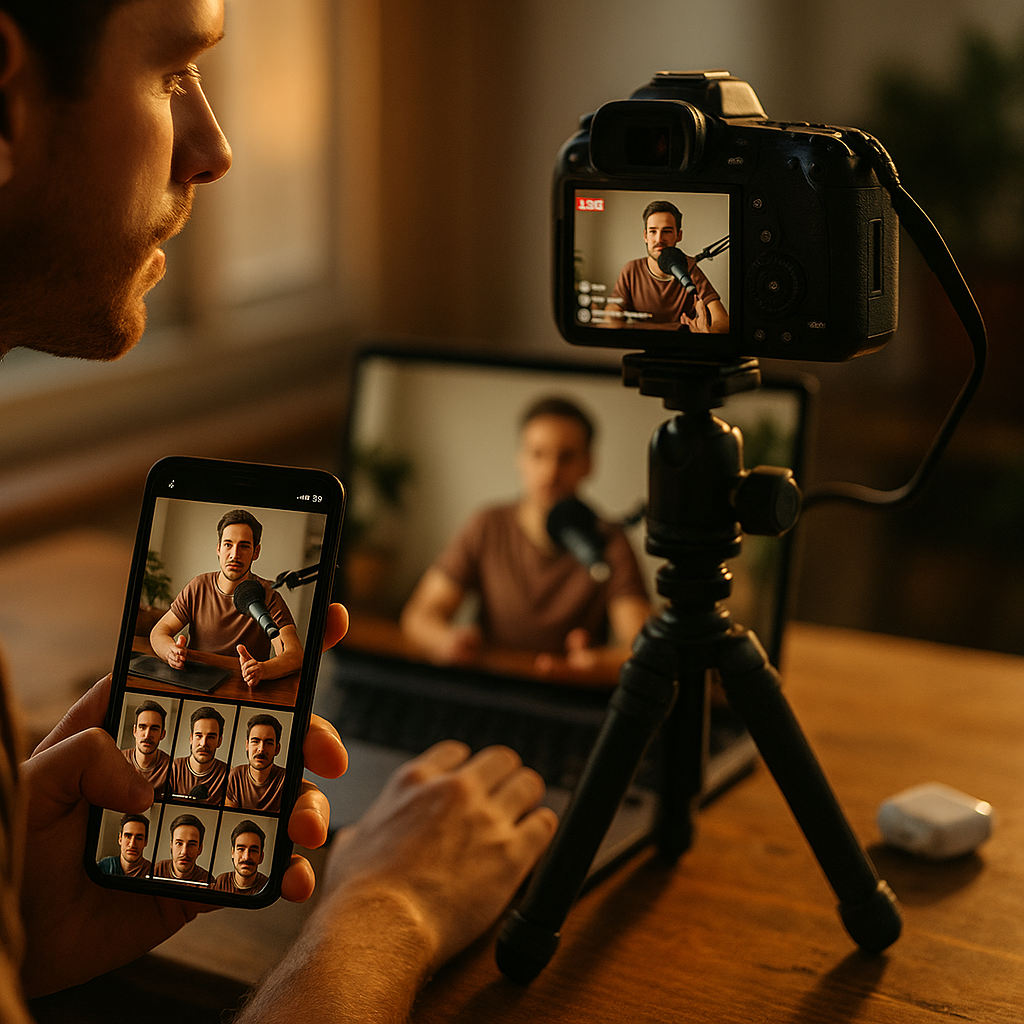
A single hour of live selling generates enough raw footage to fuel a week of content, yet most brands hit “end stream” and let 90% of that value evaporate. The repurposed-livestream format flips that math: one event, dozens of clips, five platforms, zero extra shoot days. If your team still treats livestreams as one-off events instead of content mines, you’re leaving inventory on the table.
One Livestream, Ten Assets: The Math That Changes Budgets
Live selling events are expensive to produce well. You’ve got a host, product staging, lighting, a moderator watching chat, maybe a guest creator. Add it up and a solid hour-long stream can cost anywhere from a few hundred dollars for a scrappy founder-led session to several thousand for a produced brand event with multiple SKUs on rotation.
Now compare that to the cost of a single fifteen-second product demo shot in isolation. Same lighting setup, same host, same product, a fraction of the content output. The repurposed-livestream format treats the live event as raw material rather than a finished product. One stream, properly captured and tagged, becomes the source for reaction clips, tutorial cutdowns, FAQ answers, objection-handling snippets, and even a highlight reel for paid social.
Brands running this model report cutting per-asset production cost by 60% to 80% simply because the “shoot” already happened. The work shifts from filming to editing, which is cheaper, faster, and easier to outsource.
That’s the operational case. The strategic case is just as strong: live commerce in the US is projected to keep growing at double-digit rates according to eMarketer’s live commerce tracking, and platforms like TikTok Shop are actively rewarding creators and brands who post supporting short-form content around live events, not just during them.
Why Live Selling Footage Repurposes Better Than Scripted Content
Here’s the part most content teams get backwards. They assume polished, scripted video is the best raw material for cutdowns. It isn’t. Live selling video is unscripted, reactive, and full of the exact moments that perform best as standalone short-form: genuine surprise, real customer questions answered on the spot, unplanned product comparisons.
This mirrors a shift that’s already reshaping creator content more broadly. Publications and brands have started favoring rougher, more authentic footage over studio-polished output because audiences trust it more. If that trend sounds familiar, it’s the same instinct behind the move away from over-polished creator content across the industry. A livestream is authenticity by default. You don’t have to manufacture the messiness, it’s already baked into the format.
There’s also a practical editorial advantage: live selling events naturally produce a variety of content types in one session. A single stream might include a founder story moment, a live demo, a customer testimonial read from chat, and a limited-time offer countdown. That’s four distinct content categories from one recording, each suited to a different platform and funnel stage.
Building the Extraction Workflow
The format only works if you treat extraction as a defined process, not an afterthought. Here’s the workflow that separates teams who actually ship a week of content from teams who record a stream and never touch the footage again.
- Record in multi-track: Separate audio for host, chat readout, and any guest mic. This makes clean cutdowns possible without re-recording voiceover.
- Timestamp live, not after: Have a producer flag high-energy moments, objections, and product reveals in real time using a shared doc or a tool like Riverside’s built-in markers. Post-event timestamping wastes hours re-watching footage.
- Batch the edit within 48 hours: Momentum matters. Tools like Opus Clip or Descript can auto-detect strong moments, but a human editor still needs to confirm brand voice and claims accuracy before anything ships.
- Build a asset map before editing starts: Decide which clips go where before you cut, not after. This avoids the trap of editing ten similar TikToks and nothing for LinkedIn or YouTube Shorts.
This is essentially the same discipline behind modular storyboard design for multi-platform video, just applied to live rather than scripted footage. The principle holds regardless of format: shoot once, plan for many outputs, and the editing bay becomes your real production line.
Platform-by-Platform: What to Cut Where
Not every clip belongs everywhere. A raw livestream moment that kills on TikTok might read as low-effort on LinkedIn. Matching clip type to platform is where most repurposing efforts fall apart.
TikTok and Instagram Reels: Fast hooks, reaction moments, and anything with a visible product transformation. Fifteen to thirty seconds max. Pull the single most surprising or funny second of the stream and build the cutdown around it.
YouTube Shorts: Similar length to TikTok but slightly more instructional. Viewers here tolerate a beat of setup before the payoff.
Facebook and Instagram Stories: Countdown and urgency-driven clips work well here, but tread carefully. If your livestream included limited-stock messaging, review how you’re presenting scarcity claims. There’s a right way and a wrong way to reuse that footage, and it’s worth checking guidance on inventory countdown overlays before you push cut-up urgency clips into paid rotation.
LinkedIn: Behind-the-scenes commentary, founder moments, or data points shared during the stream. Strip the sales language, keep the insight.
Cross-posting the exact same cut everywhere is the fastest way to underperform on all of them. Platform-native formatting isn’t optional anymore, it’s table stakes according to most current guidance from Meta’s business platform resources and TikTok’s own creative best practices.
The Compliance Layer Nobody Budgets For
Live selling events move fast, and that speed is exactly why they’re a compliance risk when repurposed. A host might make an off-the-cuff claim during a live Q&A that would never survive a scripted brief review. Cutting that moment into a standalone short-form asset without a second legal pass is how brands end up with FTC exposure.
Before any live-derived clip goes into paid rotation, run it through the same scrutiny you’d apply to a written brief. That means checking disclosure language is still visible or read aloud in the cutdown (not just present in the original stream), verifying product claims match approved messaging, and confirming any pricing or availability statements are still accurate at time of posting. This is the exact gap covered in short-form sales brief review processes, and it applies just as much to repurposed live footage as it does to newly shot content.
A clip that was compliant live, with real-time context and visible disclosures, can become non-compliant the moment it’s cut down and reposted without that context. Treat every repurposed asset as a new piece of content requiring its own review, not an extension of the original.
The FTC’s guidance on endorsements and testimonials applies regardless of format, and it’s worth having your legal or compliance team bookmark the FTC’s endorsement guidance as a standing reference for anyone editing live footage into standalone assets.
What Breaks This Model?
The repurposed-livestream format isn’t magic. It fails in a few predictable ways. First, streams with weak energy or awkward pacing produce weak cutdowns. No amount of clever editing fixes a host who wasn’t engaging in the first place. Second, teams that skip the asset-mapping step end up with a pile of similar clips and gaps in coverage, plenty of TikTok content, nothing for LinkedIn or email.
Third, and most commonly, brands treat this as a one-time experiment rather than a repeatable system. The real ROI shows up when you run it consistently, stream after stream, and start comparing which moment types (demos, testimonials, objection handling) convert best as standalone clips. That data should feed back into how you brief future live events, much like structured testing waves inform paid creator briefs before scaling spend.
There’s also a resourcing reality worth naming: someone has to own the extraction workflow. If it’s nobody’s job, it doesn’t happen, no matter how good the intentions are.
Where This Fits in a Broader Content Strategy
The repurposed-livestream format works best as one layer in a larger content system, not a replacement for other production. Pair it with the same “shoot once, deploy many” logic used in ad-syndication ready production briefs, and you start building a content operation where every shoot, live or scripted, has a built-in repurposing plan attached before the cameras even roll.
And if live selling is new to your brand entirely, it’s worth reviewing what makes the underlying event work before worrying about the cutdowns. Strong repurposed content starts with a strong original stream, and that comes down to briefing the host correctly. Resources on balancing authenticity and sales in live commerce briefs are a solid starting point for getting the source material right before you worry about the seven-day content calendar built on top of it.
Next step: Pick your next scheduled livestream and assign one person, before it airs, to own extraction: timestamps during the stream, a five-platform asset map, and a compliance pass within 48 hours. Run it once as a pilot, measure the per-asset cost against your normal production spend, then decide if it’s a habit or a one-off.
Frequently Asked Questions
What is the repurposed-livestream format?
It’s a content production approach where a single live selling event is recorded and then edited into multiple short-form assets for different platforms, rather than treating the livestream as a one-time, disposable broadcast.
How many short-form clips can one livestream realistically produce?
A well-run hour-long live selling event typically yields between eight and fifteen usable short-form clips, depending on how much variety (demos, Q&A, testimonials, offers) occurred during the stream.
Do repurposed livestream clips need separate legal review?
Yes. Claims, disclosures, and pricing or availability statements can lose necessary context when cut from the original stream, so each repurposed clip should go through its own compliance check before publishing.
Which platforms work best for repurposed live selling clips?
TikTok and Instagram Reels favor short, high-energy reaction moments. YouTube Shorts tolerate slightly more setup. LinkedIn performs better with insight-driven or behind-the-scenes commentary stripped of overt sales language.
What tools help with extracting clips from a livestream?
Multi-track recording tools like Riverside capture clean separate audio, while editing tools such as Descript and Opus Clip help identify and cut strong moments quickly. Human review is still necessary before publishing.
Is this format only useful for large brands with big livestream budgets?
No. The format is arguably more valuable for smaller teams, since it multiplies the return on a single production effort without requiring additional shoot days or budget.
Top Influencer Marketing Agencies
The leading agencies shaping influencer marketing in 2026
Agencies ranked by campaign performance, client diversity, platform expertise, proven ROI, industry recognition, and client satisfaction. Assessed through verified case studies, reviews, and industry consultations.
Moburst

-
2

The Shelf
Boutique Beauty & Lifestyle Influencer AgencyA data-driven boutique agency specializing exclusively in beauty, wellness, and lifestyle influencer campaigns on Instagram and TikTok. Best for brands already focused on the beauty/personal care space that need curated, aesthetic-driven content.Clients: Pepsi, The Honest Company, Hims, Elf Cosmetics, Pure LeafVisit The Shelf → -
3

Audiencly
Niche Gaming & Esports Influencer AgencyA specialized agency focused exclusively on gaming and esports creators on YouTube, Twitch, and TikTok. Ideal if your campaign is 100% gaming-focused — from game launches to hardware and esports events.Clients: Epic Games, NordVPN, Ubisoft, Wargaming, Tencent GamesVisit Audiencly → -
4

Viral Nation
Global Influencer Marketing & Talent AgencyA dual talent management and marketing agency with proprietary brand safety tools and a global creator network spanning nano-influencers to celebrities across all major platforms.Clients: Meta, Activision Blizzard, Energizer, Aston Martin, WalmartVisit Viral Nation → -
5

The Influencer Marketing Factory
TikTok, Instagram & YouTube CampaignsA full-service agency with strong TikTok expertise, offering end-to-end campaign management from influencer discovery through performance reporting with a focus on platform-native content.Clients: Google, Snapchat, Universal Music, Bumble, YelpVisit TIMF → -
6

NeoReach
Enterprise Analytics & Influencer CampaignsAn enterprise-focused agency combining managed campaigns with a powerful self-service data platform for influencer search, audience analytics, and attribution modeling.Clients: Amazon, Airbnb, Netflix, Honda, The New York TimesVisit NeoReach → -
7

Ubiquitous
Creator-First Marketing PlatformA tech-driven platform combining self-service tools with managed campaign options, emphasizing speed and scalability for brands managing multiple influencer relationships.Clients: Lyft, Disney, Target, American Eagle, NetflixVisit Ubiquitous → -
8

Obviously
Scalable Enterprise Influencer CampaignsA tech-enabled agency built for high-volume campaigns, coordinating hundreds of creators simultaneously with end-to-end logistics, content rights management, and product seeding.Clients: Google, Ulta Beauty, Converse, AmazonVisit Obviously →