


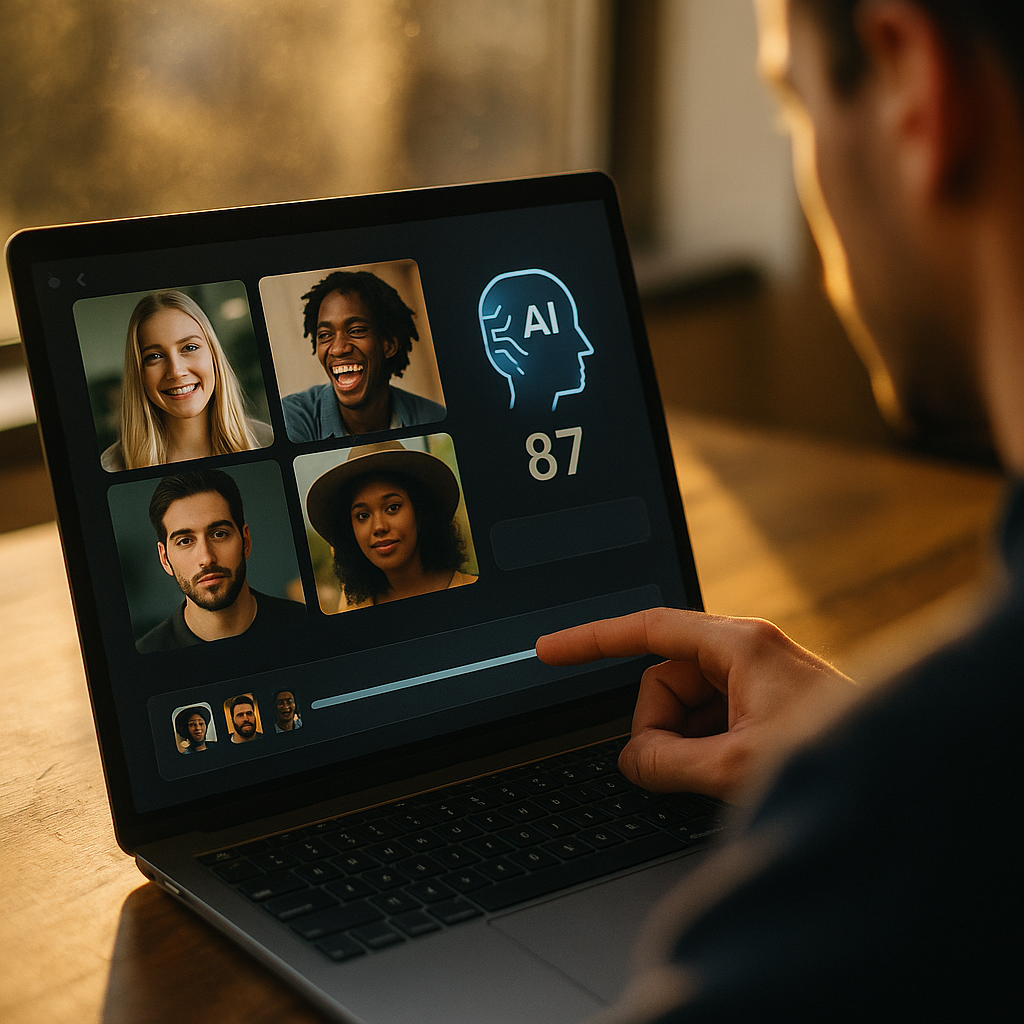
A creator with 2 million followers converted at 0.3%. One with 40,000 converted at 6%. That gap is why AI creator-brand matching platforms are quietly rewriting how brands find talent in 2026. Follower count told you reach. It never told you fit. Machine learning affinity scores are finally answering the question marketers actually care about: will this creator’s audience buy from us?
The Follower-Count Filter Is Dead
For a decade, discovery tools worked like blunt sorting hats. Type in a niche, set a follower range, filter by engagement rate, and hope for the best. It was efficient. It was also lazy math dressed up as strategy.
The problem: engagement rate and follower count are vanity proxies. They tell you a creator is active, not that their audience resembles your customer. A fitness creator with 500,000 followers might have an audience skewing 70% male teenagers, useless for a brand selling postpartum recovery supplements. Follower filters can’t catch that mismatch. Affinity scores can.
Platforms like CreatorIQ, Grin, Upfluence, and newer entrants such as Modash and Favikon have spent the last two cycles retraining their discovery engines around behavioral and semantic signals instead of raw audience size. The shift mirrors what happened in programmatic advertising a decade ago: brands stopped buying impressions and started buying intent.
What Is an Affinity Score, Exactly?
An affinity score is a composite number, usually 0 to 100, generated by a machine learning model that estimates how well a creator’s content, audience, and history align with a specific brand or campaign. It’s not one metric. It’s a blend.
- Audience overlap: comparing a creator’s follower demographic and interest graph against a brand’s actual customer data (often pulled from CRM or pixel data, not guesswork).
- Content semantics: natural language processing that reads captions, video transcripts, and comment sentiment to detect thematic alignment, not just keyword matches.
- Historical conversion patterns: how creators with similar content signatures have performed on past campaigns in the same vertical.
- Brand safety signals: a rolling risk score based on controversy history, comment toxicity, and platform policy flags.
Run those through a model trained on thousands of past campaigns, and you get a single score that says, essentially, “this creator is likely to move your specific customer, not just anyone’s.” That’s a fundamentally different discovery experience than sorting by follower tiers.
Affinity scoring doesn’t ask “how big is this audience?” It asks “how much of this audience already looks like our buyer?” That reframing is the whole story.
Why This Matters More Than It Sounds Like It Should
Budgets are tighter. CFOs want attribution, not vibes. According to eMarketer, influencer marketing spend continues climbing even as overall marketing budgets flatten, which means every dollar in this channel is under more scrutiny than ever. Brands can’t afford to book a creator based on a big number and a good feeling.
Affinity scoring also solves a scaling problem. A mid-tier brand running fifty micro-influencer partnerships a quarter cannot manually vet each one for audience fit. Machine learning does that triage in seconds, surfacing the twenty creators worth a human’s time instead of two thousand that merely fit a follower range. This is the same operational logic behind predictive creative performance scoring, where models forecast outcomes before spend goes out the door instead of after the campaign report lands.
There’s a compliance angle too. Affinity models that incorporate brand safety and historical policy flags reduce the odds of a partnership blowing up publicly. That’s not a nice-to-have anymore. Regulators are watching disclosure practices closely, and the FTC’s endorsement guidance makes clear that brands share liability for a creator’s conduct in sponsored content.
How the Models Actually Learn Fit
Here’s the part most vendor decks skip: where does the training data come from? Good affinity models are trained on closed-loop outcome data, meaning actual campaign results (clicks, conversions, revenue) fed back into the model, not just engagement metrics scraped from public profiles.
This is why identity resolution matters so much right now. A platform can’t accurately score audience overlap if it can’t match a creator’s follower base to real customer profiles across devices and channels. That’s the same infrastructure challenge covered in identity resolution for personalization. Without clean identity data underneath, an affinity score is just a fancier guess wearing a lab coat.
Vendors that lean on first-party data partnerships (think Klaviyo-style CRM syncs, or Meta Conversions API feeds) tend to produce more reliable scores than those relying purely on public social graph scraping. Ask any vendor demoing an “AI-powered match” what data trains the model. If the answer is vague, be skeptical.
Where the Signals Actually Come From
- First-party CRM and purchase data matched against creator audience exports
- Pixel and conversion API data from past sponsored posts
- Natural language sentiment analysis on comments and replies
- Cross-platform audience graphs (a creator’s TikTok following mapped against their YouTube and newsletter subscribers)
The Risk Side Nobody Puts in the Pitch Deck
Affinity scores are a big improvement. They are not infallible. A model trained mostly on beauty and fashion campaigns won’t score B2B SaaS creator partnerships well, because the training data simply doesn’t exist in comparable volume. Ask your vendor which verticals their model has real historical depth in, not just theoretical coverage.
There’s also a black box problem. If a platform can’t explain why a creator scored 87 instead of 62, your team can’t defend that budget decision internally, and you definitely can’t explain it to a client. This is the same governance issue raised in evaluating agentic AI campaign managers: automation without explainability is a liability wearing a convenience costume.
And data quality still breaks everything. Garbage in, garbage out applies here just as much as it does anywhere else in the AI marketing stack. The same failure pattern shows up across the industry: nearly half of AI marketing agents underperform because of broken data foundations, and matching platforms are not immune to that math.
Choosing a Platform: What Actually Deserves Scrutiny
Not all “AI-powered” discovery tools are equal. Some are still follower filters with a machine learning label slapped on the marketing page. Here’s what separates a genuine affinity engine from a rebrand.
- Data provenance. Does the score draw from your actual first-party conversion data, or generic public engagement stats?
- Score transparency. Can the platform break down why a creator scored the way they did, factor by factor?
- Vertical depth. How much historical campaign data exists in your specific category?
- Refresh cadence. Audiences shift. A score calculated six months ago on stale follower data is close to useless.
- Brand safety integration. Is risk scoring baked into the match, or is it a bolt-on report you have to pull separately?
Platforms including Traackr and Aspire have pushed hard on transparency dashboards precisely because clients kept asking “why this creator?” and needed an answer beyond “the algorithm said so.” That question is fair, and if your vendor can’t answer it, that’s a red flag worth escalating before signing a renewal.
It’s also worth checking whether the vendor’s underlying model is proprietary or a wrapper around a general-purpose LLM with light fine-tuning, a distinction covered well in how to check before renewal. The difference affects both accuracy and your negotiating leverage on price.
What Good Looks Like in Practice
A mid-size skincare brand running a relaunch campaign doesn’t need the creator with the most followers in “clean beauty.” It needs the creator whose audience already skews toward existing customer lookalikes, has low return-purchase churn signals, and hasn’t been flagged for engagement pods in the last two quarters. That’s three data points a follower filter cannot surface and an affinity model can, in one query.
Teams pairing this with structured research workflows are moving faster too. Brands using AI research tools that compress planning cycles are pairing discovery scores with faster brief turnaround, shrinking the whole creator selection process from weeks to days without sacrificing rigor.
Industry benchmarking from Sprout Social and HubSpot both point to the same trend line: marketers are demanding measurable audience relevance over raw reach when justifying influencer budgets to finance teams. Affinity scoring is the mechanism making that justification possible with actual numbers instead of hunches.
Where This Goes Next
Expect affinity scoring to merge with agentic workflows soon, where the discovery engine doesn’t just rank creators but auto-drafts outreach, negotiates rate ranges within guardrails, and flags contract risk before a human even opens the platform. That’s the direction agentic media buying and campaign management tools are already heading, and discovery is the natural next layer to absorb. The brands getting ahead of this aren’t waiting for perfection. They’re testing affinity-based shortlists against their old follower-filtered picks, side by side, and measuring which approach actually drives revenue.
Next step: Pull your last three influencer campaigns, compare the creators you picked by follower tier against what an affinity model would have surfaced using your own conversion data, and let that gap decide your next platform contract.
FAQs
What is an AI creator-brand matching platform?
It’s a discovery tool that uses machine learning to score how well a creator’s audience, content, and history align with a specific brand’s customer base, rather than ranking creators primarily by follower count or engagement rate.
How is an affinity score different from an engagement rate?
Engagement rate measures how active a creator’s existing audience is. An affinity score measures how closely that audience, and the creator’s content themes, match a brand’s actual customer profile and past conversion patterns.
Can affinity scoring replace human vetting entirely?
No. It narrows a large creator pool down to a shortlist worth human review. Brand fit, tone, contract terms, and brand safety judgment calls still require a person, especially for higher-budget partnerships.
Do these platforms need my first-party customer data to work well?
Generally, yes. Affinity models trained only on public social data produce weaker matches than those that can compare a creator’s audience against your actual CRM or pixel-based customer data.
Are smaller creators at a disadvantage with affinity scoring?
Not necessarily. Micro and mid-tier creators often score higher on affinity than mega-influencers because their audiences tend to be more niche and closely aligned with specific interests, which is exactly what these models reward.
Top Influencer Marketing Agencies
The leading agencies shaping influencer marketing in 2026
Agencies ranked by campaign performance, client diversity, platform expertise, proven ROI, industry recognition, and client satisfaction. Assessed through verified case studies, reviews, and industry consultations.
Moburst

-
2

The Shelf
Boutique Beauty & Lifestyle Influencer AgencyA data-driven boutique agency specializing exclusively in beauty, wellness, and lifestyle influencer campaigns on Instagram and TikTok. Best for brands already focused on the beauty/personal care space that need curated, aesthetic-driven content.Clients: Pepsi, The Honest Company, Hims, Elf Cosmetics, Pure LeafVisit The Shelf → -
3

Audiencly
Niche Gaming & Esports Influencer AgencyA specialized agency focused exclusively on gaming and esports creators on YouTube, Twitch, and TikTok. Ideal if your campaign is 100% gaming-focused — from game launches to hardware and esports events.Clients: Epic Games, NordVPN, Ubisoft, Wargaming, Tencent GamesVisit Audiencly → -
4

Viral Nation
Global Influencer Marketing & Talent AgencyA dual talent management and marketing agency with proprietary brand safety tools and a global creator network spanning nano-influencers to celebrities across all major platforms.Clients: Meta, Activision Blizzard, Energizer, Aston Martin, WalmartVisit Viral Nation → -
5

The Influencer Marketing Factory
TikTok, Instagram & YouTube CampaignsA full-service agency with strong TikTok expertise, offering end-to-end campaign management from influencer discovery through performance reporting with a focus on platform-native content.Clients: Google, Snapchat, Universal Music, Bumble, YelpVisit TIMF → -
6

NeoReach
Enterprise Analytics & Influencer CampaignsAn enterprise-focused agency combining managed campaigns with a powerful self-service data platform for influencer search, audience analytics, and attribution modeling.Clients: Amazon, Airbnb, Netflix, Honda, The New York TimesVisit NeoReach → -
7

Ubiquitous
Creator-First Marketing PlatformA tech-driven platform combining self-service tools with managed campaign options, emphasizing speed and scalability for brands managing multiple influencer relationships.Clients: Lyft, Disney, Target, American Eagle, NetflixVisit Ubiquitous → -
8

Obviously
Scalable Enterprise Influencer CampaignsA tech-enabled agency built for high-volume campaigns, coordinating hundreds of creators simultaneously with end-to-end logistics, content rights management, and product seeding.Clients: Google, Ulta Beauty, Converse, AmazonVisit Obviously →