


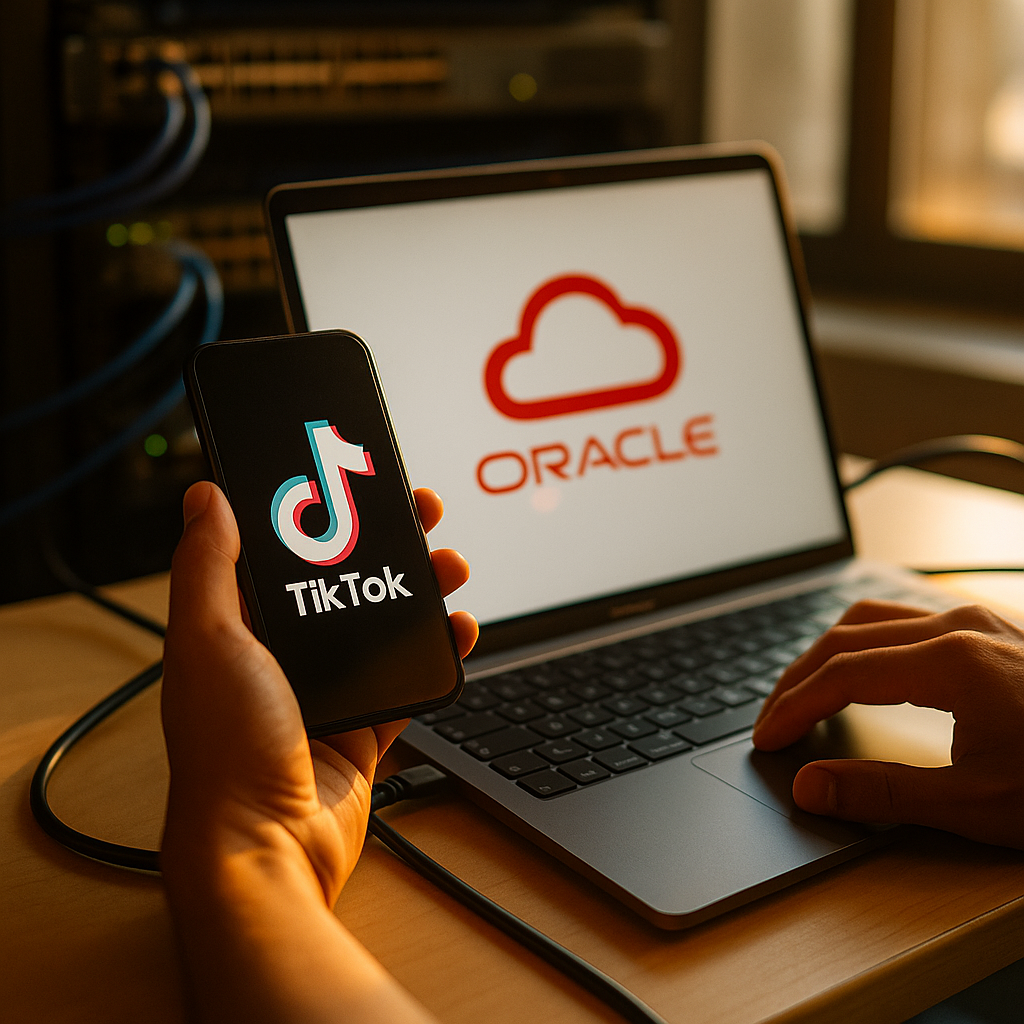
Roughly 170 million US TikTok users are now being served content by a recommendation engine trained on infrastructure their feed has never touched before. The TikTok recommendation engine running on Oracle Cloud is not a cosmetic update. It’s a structural rebuild of the signal pipeline that decides which videos get pushed to the For You Page, and brands that treat it like business as usual are going to misread their own performance data for months.
The Divestiture Backstory, Briefly
The joint venture arrangement that separated TikTok’s US operations from ByteDance’s global infrastructure required more than a new ownership chart. It required a new technical foundation. Oracle Cloud now hosts the US recommendation model, the training data pipeline, and the content moderation stack that governs American users. That means the algorithm is no longer pulling from the same unified global signal pool it once was. It’s being retrained, largely from scratch, on a US-only data set.
For brand teams, this is the part that matters: the model making delivery decisions today is not the same model that shaped your Q3 performance benchmarks. It’s a sibling, not a twin.
A retrained model on new infrastructure doesn’t inherit your account’s history the way you’d assume. Watch history, completion rates, and niche-audience signals are being rebuilt in real time, not carried over wholesale.
Why a Retrained Model Changes What Gets Rewarded
Recommendation engines are only as good as the data they’re trained on, and a narrower US-only data set behaves differently than a global one. Content that previously benefited from cross-border trend spillover (a sound or format blowing up in Southeast Asia before hitting the US) may now take longer to surface, or may not surface the same way at all. Niche categories that relied on smaller international pockets of engagement to reach critical mass could see slower discovery cycles.
There’s also the moderation layer to consider. Oracle’s involvement was framed publicly around data security and oversight, but content moderation and ranking are deeply intertwined in any recommendation system. A new compliance and safety review layer, built for a US regulatory environment, changes what content clears the first filter before it’s even eligible for wide distribution.
This connects directly to the shifts brands have already been adjusting to around watch time weighting and completion-rate signals. If the underlying training data has changed, the weight given to those signals may have changed too, even if TikTok hasn’t announced it publicly.
What Brands Should Actually Be Monitoring
Waiting for an official TikTok announcement before adjusting strategy is a losing move. The company rarely confirms algorithm mechanics in detail, and by the time it does, competitors will have already adapted. Here’s the practical monitoring checklist marketing teams should run weekly, not quarterly:
- For You Page delivery velocity: Track how long it takes new posts to hit meaningful view thresholds compared to your historical baseline. A slowdown of more than 20 to 30 percent across multiple posts suggests a ranking shift, not a content quality problem.
- Audience geography shifts: If your analytics show a sudden concentration of US-only reach where you previously had international spillover, that’s a direct signal the data pool has narrowed.
- Completion rate sensitivity: Watch whether shorter or longer videos are being rewarded differently than before. Retrained models often recalibrate around different optimal watch times.
- Hashtag and sound discovery lag: Trends that used to hit the US feed within 24 to 48 hours of international traction may now take longer, or may originate domestically instead.
- Shop-linked content performance: Since TikTok Shop relies on the same recommendation backbone, monitor whether product-tagged videos are getting the same organic lift they did before the infrastructure change.
None of this requires guesswork. Pull your last 90 days of posting data, segment it by pre- and post-transition timestamps, and look for statistically meaningful deltas in reach and completion rate. If you’re not already doing this kind of cohort comparison, now is the time to build the habit.
Is This a Repeat of the Algorithm Settlement Fallout?
Brands who lived through the operational chaos following TikTok’s prior algorithm-related settlement will recognize the pattern here. Regulatory and structural pressure forces a technical change, TikTok doesn’t fully explain the mechanics, and brands are left reverse-engineering the new rules through trial and error. The difference this time is scale. A settlement affects policy and disclosure practices. A full infrastructure migration to Oracle Cloud affects the actual math behind content ranking.
That’s a materially bigger shift, and it’s one reason agencies running paid and organic TikTok programs in parallel need to separate their diagnostics. If organic reach dips but paid delivery through TikTok Ads Manager stays stable, that tells you the change is hitting the recommendation layer specifically, not the ad auction. That’s a useful signal for deciding whether to shift budget toward paid amplification while the organic model stabilizes.
Data Localization Isn’t Just a Compliance Talking Point
The Oracle Cloud arrangement was sold to regulators and the public primarily as a data security fix: US user data stored and processed domestically, with US-based oversight of the algorithm. From a brand risk standpoint, this actually reduces some exposure. Cross-border data transfer concerns that made legal and compliance teams nervous about influencer campaigns tied to TikTok Shop become less pressing when the infrastructure sits on US soil.
But don’t mistake infrastructure compliance for content compliance. FTC disclosure requirements, endorsement guidelines, and platform-specific labeling rules haven’t changed because the servers moved. Brands running influencer campaigns still need airtight disclosure practices, and that’s especially true for anything touching TikTok Shop ad syndication, where content gets repurposed across multiple paid placements. Review your FTC compliance guidelines as part of this transition, not as a separate workstream.
Infrastructure migration reduces certain data-transfer risks, but it does nothing to relax disclosure obligations. Treat them as two separate compliance tracks.
TikTok Shop and Creator Payouts: The Second-Order Effects
Recommendation engine changes ripple into commerce performance fast. TikTok Shop’s discovery mechanics depend heavily on the same ranking signals that govern the main feed, so any recalibration in how content gets surfaced will show up in conversion data before it shows up in any official platform statement. Brands running livestream commerce or affiliate-driven Shop campaigns should watch GMV per view and click-through rate as leading indicators, the same way teams adapted after shifts covered in TikTok Shop’s trust-weighted algorithm update.
Creator payouts are the other pressure point. If discovery patterns shift and certain content categories see slower organic reach, creator rate cards built around historical view guarantees become unreliable almost overnight. Agencies negotiating creator contracts right now should build in performance review clauses tied to actual delivery data rather than locking in flat rates based on last quarter’s benchmarks. This is a good moment to revisit cross-platform budget allocation more broadly, since a temporary dip in TikTok organic reach might justify shifting mid-funnel content toward YouTube Shorts or Instagram Reels while the new model stabilizes.
How Long Does a Retrained Model Take to Stabilize?
There’s no official timeline, and TikTok has strong incentive to avoid publicly confirming a performance dip during a politically sensitive transition. Based on how comparable platform migrations have played out (Meta’s various ranking overhauls being the closest analogue), expect a stabilization window of roughly two to four months before delivery patterns settle into a new, more predictable baseline. Data from eMarketer on prior platform algorithm transitions suggests brands that keep posting consistently through the volatility window recover faster than those who pull back and wait it out.
The practical implication: don’t panic-cut your TikTok content calendar because reach dipped for three weeks. Do panic-cut it if the dip persists past two full months with no recovery trend, because at that point you’re optimizing for a model that may have permanently deprioritized your content category.
Where This Leaves Your Q1 Planning
Build a 90-day comparison dashboard now, tagging every post as pre-transition or post-transition, and review it biweekly rather than monthly. Treat any TikTok performance data from the migration window as provisional, and hold a portion of Q1 budget flexible enough to shift toward paid amplification or other platforms if organic recovery stalls past the eight-week mark.
Frequently Asked Questions
What is the TikTok recommendation engine on Oracle Cloud?
It’s the retrained version of TikTok’s US content ranking system, now hosted and processed on Oracle’s cloud infrastructure as part of the platform’s divestiture arrangement, separating US user data and algorithm training from ByteDance’s global systems.
Why did TikTok move its algorithm to Oracle Cloud?
The move was driven primarily by data security and regulatory requirements tied to the US divestiture deal, giving US-based oversight over how American user data trains the recommendation model.
Will my TikTok organic reach change because of this?
Possibly. Because the model is training on a narrower, US-only data set, discovery velocity, trend spillover, and completion-rate weighting may behave differently than before. Monitor your reach and completion metrics against a pre-transition baseline to spot real shifts.
Does this affect TikTok Shop performance?
Yes. TikTok Shop’s discovery mechanics rely on the same recommendation backbone as the main feed, so changes in ranking signals can affect product-tagged video reach, livestream discovery, and affiliate conversion rates.
Should brands pause TikTok campaigns during this transition?
Generally no. Pulling back content during algorithm volatility tends to slow recovery further. A better approach is maintaining consistent posting while closely tracking performance data and holding budget flexibility for reallocation if needed.
How long will the algorithm take to stabilize?
There’s no confirmed timeline from TikTok, but comparable platform migrations suggest a stabilization window of roughly two to four months before delivery patterns settle into a predictable pattern.
Top Influencer Marketing Agencies
The leading agencies shaping influencer marketing in 2026
Agencies ranked by campaign performance, client diversity, platform expertise, proven ROI, industry recognition, and client satisfaction. Assessed through verified case studies, reviews, and industry consultations.
Moburst

-
2

The Shelf
Boutique Beauty & Lifestyle Influencer AgencyA data-driven boutique agency specializing exclusively in beauty, wellness, and lifestyle influencer campaigns on Instagram and TikTok. Best for brands already focused on the beauty/personal care space that need curated, aesthetic-driven content.Clients: Pepsi, The Honest Company, Hims, Elf Cosmetics, Pure LeafVisit The Shelf → -
3

Audiencly
Niche Gaming & Esports Influencer AgencyA specialized agency focused exclusively on gaming and esports creators on YouTube, Twitch, and TikTok. Ideal if your campaign is 100% gaming-focused — from game launches to hardware and esports events.Clients: Epic Games, NordVPN, Ubisoft, Wargaming, Tencent GamesVisit Audiencly → -
4

Viral Nation
Global Influencer Marketing & Talent AgencyA dual talent management and marketing agency with proprietary brand safety tools and a global creator network spanning nano-influencers to celebrities across all major platforms.Clients: Meta, Activision Blizzard, Energizer, Aston Martin, WalmartVisit Viral Nation → -
5

The Influencer Marketing Factory
TikTok, Instagram & YouTube CampaignsA full-service agency with strong TikTok expertise, offering end-to-end campaign management from influencer discovery through performance reporting with a focus on platform-native content.Clients: Google, Snapchat, Universal Music, Bumble, YelpVisit TIMF → -
6

NeoReach
Enterprise Analytics & Influencer CampaignsAn enterprise-focused agency combining managed campaigns with a powerful self-service data platform for influencer search, audience analytics, and attribution modeling.Clients: Amazon, Airbnb, Netflix, Honda, The New York TimesVisit NeoReach → -
7

Ubiquitous
Creator-First Marketing PlatformA tech-driven platform combining self-service tools with managed campaign options, emphasizing speed and scalability for brands managing multiple influencer relationships.Clients: Lyft, Disney, Target, American Eagle, NetflixVisit Ubiquitous → -
8

Obviously
Scalable Enterprise Influencer CampaignsA tech-enabled agency built for high-volume campaigns, coordinating hundreds of creators simultaneously with end-to-end logistics, content rights management, and product seeding.Clients: Google, Ulta Beauty, Converse, AmazonVisit Obviously →