


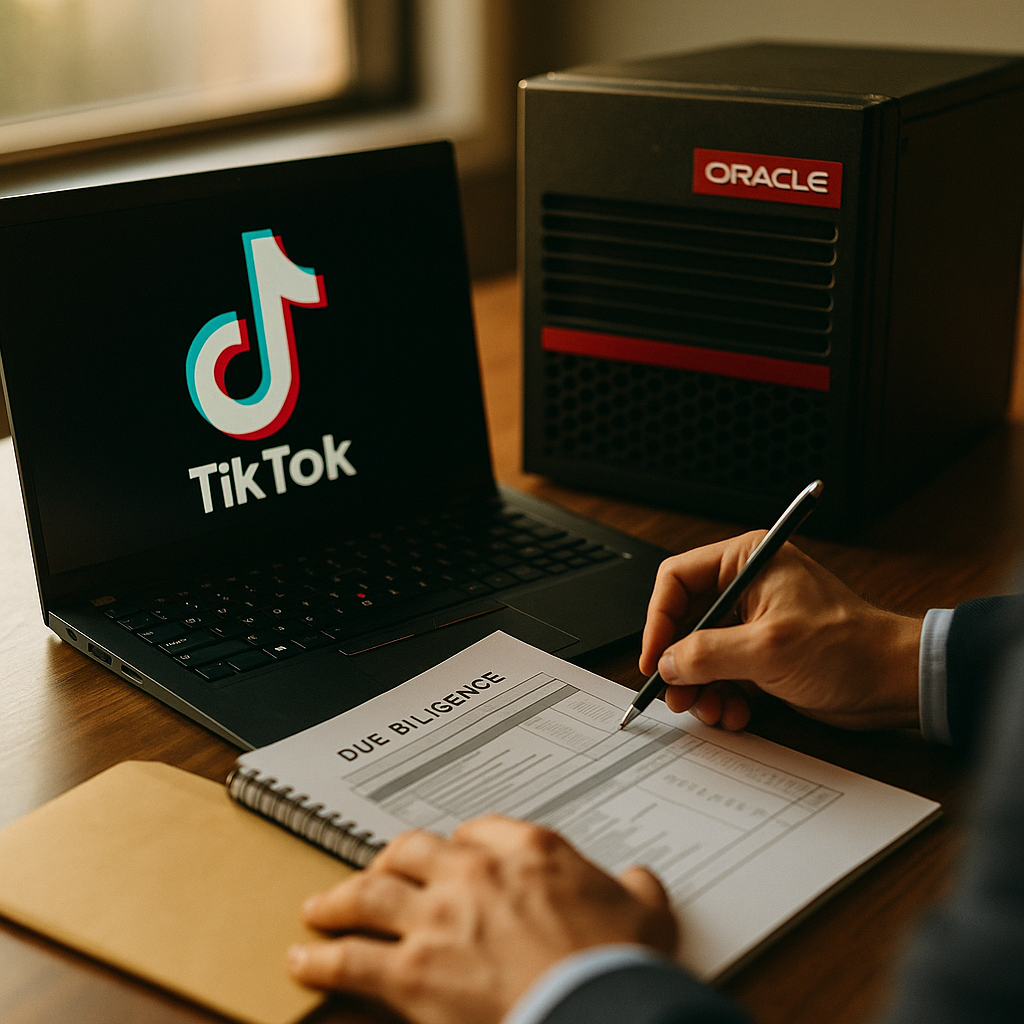
Roughly 170 million US TikTok users now have their data flowing through servers Oracle operates on American soil, yet fewer than a third of brands running influencer campaigns on the platform have updated their vendor contracts to reflect it. That gap is the story. The TikTok US data residency requirement under the Oracle joint venture was supposed to resolve national security anxieties. It did not resolve brand risk. If anything, it just moved the risk somewhere brands haven’t looked yet.
What the Oracle JV Actually Changed (and Didn’t)
The arrangement is straightforward on paper. US TikTok user data now lives in Oracle Cloud Infrastructure, with Oracle providing security review and infrastructure oversight rather than ByteDance engineers having unrestricted access. That’s a meaningful architectural shift. It is not, however, a full severance from the global TikTok ecosystem.
Algorithm logic, content moderation tooling, and significant portions of the ad tech stack still involve coordination with the broader TikTok organization. Data residency addresses where the data physically sits. It says nothing about who can query it, how creator-side vendors handle exports, or what happens when a third-party measurement partner pulls campaign data into its own systems that sit entirely outside the Oracle perimeter.
Data residency is a location control, not a governance control. Brands that treat the Oracle JV as a compliance finish line are confusing where data lives with who can actually touch it.
That distinction matters more than most marketing leaders realize, because it’s precisely the gap that vendor contracts are supposed to close. And most vendor contracts written before this year simply don’t mention it.
Why Vendor Due Diligence Has to Change, Not Just Platform Policy
Here’s the uncomfortable part. Your brand’s exposure on TikTok was never really about ByteDance’s servers in Beijing. It was, and still is, about the sprawl of third-party vendors that touch creator and campaign data once it leaves the platform: influencer marketing platforms, AI-driven creator matching tools, analytics dashboards, payment processors, and clean room providers.
Every one of those vendors makes its own decisions about where it stores exported TikTok data, how long it retains it, and whether it re-shares it with subprocessors you’ve never heard of. The Oracle JV governs TikTok’s own infrastructure. It does nothing to govern the martech stack your agency plugged into the TikTok API three years ago and hasn’t audited since.
According to eMarketer’s creator economy tracking, influencer marketing platform spend has consolidated around a handful of AI-matching and measurement vendors over the past two years. Consolidation sounds efficient. It also means a single vendor’s data handling failure now has blast radius across dozens of brand accounts simultaneously.
The Question Every CMO Should Be Asking Their Legal Team
Not “is our TikTok data secure?” but “which of our vendors export TikTok data outside the Oracle-controlled environment, and under what contractual terms?” That’s a different question, and most legal teams haven’t been asked it yet.
The Due Diligence Gap Brands Keep Overlooking
Brand compliance teams have spent the past two years focused almost entirely on platform-level policy: age verification, ad disclosure labels, youth safety settings. Worthy work, but it’s created a blind spot. Vendor-level data handling has gotten comparatively little scrutiny, largely because it’s less visible and harder to audit than a platform’s public terms of service.
Consider the typical influencer campaign stack in 2026. A brand works with an AI creator-matching platform to identify talent, a separate measurement vendor to track conversion, and a payment processor to handle creator payouts, often across borders. Each of these vendors ingests TikTok data through official APIs or brand-supplied exports. Each one has its own data residency posture, and it’s rarely the same as TikTok’s.
This is exactly the pattern our earlier coverage flagged in cross-border creator payment flows, where payout processors routinely move creator financial and identity data through jurisdictions that have nothing to do with where the campaign ran. The Oracle JV doesn’t touch that problem at all.
If your vendor contract was signed before the Oracle JV took effect, assume it does not address current data residency reality. Re-papering isn’t optional anymore, it’s the baseline.
A Practical Vendor Due Diligence Checklist for the Year Ahead
Brand legal and marketing ops teams need a concrete, repeatable review process rather than a one-time audit. Here’s what that should include at minimum:
- Data flow mapping: Document exactly which vendors touch TikTok-sourced creator, campaign, or consumer data, and where each vendor’s servers physically sit.
- Subprocessor disclosure clauses: Require vendors to disclose and update, not just permit, their list of subprocessors that touch TikTok-derived data.
- Residency representation and warranty language: Add explicit contract language requiring vendors to represent where data is stored and processed, with breach notification tied to any change.
- Right-to-audit provisions: Negotiate audit rights, even limited ones, into every AI matching or measurement vendor contract renewed this cycle.
- Data minimization commitments: Push vendors to justify why they need full data exports rather than aggregated or anonymized equivalents.
- Deletion and retention SLAs: Specify retention windows and enforceable deletion timelines once a campaign ends or a vendor relationship terminates.
This isn’t theoretical housekeeping. It’s the same rigor data processing addendum frameworks for AI affinity scoring already demand, and TikTok vendors should be held to no lower a standard simply because the platform itself made headlines for fixing its own infrastructure.
Where AI Matching Platforms Add Extra Risk
AI-driven creator discovery tools are particularly exposed here because they ingest enormous volumes of TikTok engagement and audience data to build affinity models. Many of these platforms train models on aggregated data across their entire client base, not just your brand’s campaigns. That means your TikTok data may inform decisions for competitors using the same vendor. It’s worth reviewing how these platforms handle indemnification, a topic covered in depth in our look at indemnification language for AI matching tools. If your current vendor agreement is silent on this, that silence is itself a risk signal.
How This Connects to Broader Platform Compliance Pressure
The Oracle JV didn’t happen in isolation. It’s part of a broader regulatory tightening around TikTok that’s already forced brand compliance teams to revisit multiple workstreams this year, from the COPPA settlement fallout to real IP verification requirements in TikTok Shop. Treating data residency as a standalone issue misses how interconnected these obligations have become.
Brands running TikTok Shop programs in particular need to think about vendor due diligence and identity resolution together. Our earlier piece on identity resolution contracts and clean room reconciliation lays out how hashing practices can quietly undermine residency protections if a vendor’s clean room sits outside the jurisdiction you assumed it did. The Oracle JV secures TikTok’s front door. It says nothing about the side doors your vendors installed.
Industry benchmarking from Statista shows influencer marketing spend continuing to climb even as platform scrutiny intensifies, which tells you brands aren’t slowing down deployment while they wait for legal clarity. That’s a reasonable business call, but it raises the stakes on getting vendor paperwork right now rather than after an incident forces the issue.
What Happens If You Skip This
Regulators haven’t ignored the vendor layer, even if brands have. The FTC has shown increasing willingness to scrutinize data sharing arrangements across the marketing supply chain, not just the platforms themselves. A brand that can demonstrate documented vendor due diligence, updated contracts, and audit trails is in a fundamentally different position during an investigation than one that can’t produce anything beyond a platform-level assurance.
There’s also a simpler business risk. Agencies and platforms that can’t answer basic residency questions about their own subprocessors are increasingly getting dropped from RFPs, according to buyer sentiment tracked by Sprout Social’s industry research. Procurement teams have started asking these questions even when legal hasn’t mandated it yet. That’s a signal worth acting on before it becomes a requirement.
The next step is concrete: pull every active TikTok-adjacent vendor contract this quarter, map where the data actually goes, and require residency representations before renewal. Brands that wait for a breach to force the audit will be negotiating from a much weaker position than those who did it on their own timeline.
Frequently Asked Questions
Does the Oracle JV mean TikTok user data is now fully protected from foreign access?
No. The Oracle joint venture governs where US TikTok data is hosted and adds infrastructure oversight, but it doesn’t eliminate all coordination with the broader TikTok organization, and it has no bearing on how third-party vendors handle data once it’s exported from the platform.
Do brands need to update vendor contracts specifically because of the data residency change?
Yes. Any contract signed before the Oracle JV took effect should be reviewed, since most legacy agreements don’t include residency representations, subprocessor disclosure requirements, or audit rights tied to the new infrastructure arrangement.
Which vendors pose the highest data residency risk for TikTok-based campaigns?
AI creator matching platforms, cross-border payment processors, and third-party measurement or clean room providers typically carry the highest risk, since they routinely export and store TikTok-derived data outside the platform’s own infrastructure.
What contract language should brands prioritize when renegotiating with TikTok-adjacent vendors?
Prioritize data residency representations and warranties, subprocessor disclosure obligations, right-to-audit clauses, retention and deletion SLAs, and clear breach notification triggers tied to any change in where data is stored or processed.
How does this affect TikTok Shop specifically?
TikTok Shop programs add extra complexity because they involve payment data, identity verification, and pricing systems on top of standard campaign data, meaning brands need to extend due diligence beyond content and analytics vendors to commerce infrastructure providers as well.
Top Influencer Marketing Agencies
The leading agencies shaping influencer marketing in 2026
Agencies ranked by campaign performance, client diversity, platform expertise, proven ROI, industry recognition, and client satisfaction. Assessed through verified case studies, reviews, and industry consultations.
Moburst

-
2

The Shelf
Boutique Beauty & Lifestyle Influencer AgencyA data-driven boutique agency specializing exclusively in beauty, wellness, and lifestyle influencer campaigns on Instagram and TikTok. Best for brands already focused on the beauty/personal care space that need curated, aesthetic-driven content.Clients: Pepsi, The Honest Company, Hims, Elf Cosmetics, Pure LeafVisit The Shelf → -
3

Audiencly
Niche Gaming & Esports Influencer AgencyA specialized agency focused exclusively on gaming and esports creators on YouTube, Twitch, and TikTok. Ideal if your campaign is 100% gaming-focused — from game launches to hardware and esports events.Clients: Epic Games, NordVPN, Ubisoft, Wargaming, Tencent GamesVisit Audiencly → -
4

Viral Nation
Global Influencer Marketing & Talent AgencyA dual talent management and marketing agency with proprietary brand safety tools and a global creator network spanning nano-influencers to celebrities across all major platforms.Clients: Meta, Activision Blizzard, Energizer, Aston Martin, WalmartVisit Viral Nation → -
5

The Influencer Marketing Factory
TikTok, Instagram & YouTube CampaignsA full-service agency with strong TikTok expertise, offering end-to-end campaign management from influencer discovery through performance reporting with a focus on platform-native content.Clients: Google, Snapchat, Universal Music, Bumble, YelpVisit TIMF → -
6

NeoReach
Enterprise Analytics & Influencer CampaignsAn enterprise-focused agency combining managed campaigns with a powerful self-service data platform for influencer search, audience analytics, and attribution modeling.Clients: Amazon, Airbnb, Netflix, Honda, The New York TimesVisit NeoReach → -
7

Ubiquitous
Creator-First Marketing PlatformA tech-driven platform combining self-service tools with managed campaign options, emphasizing speed and scalability for brands managing multiple influencer relationships.Clients: Lyft, Disney, Target, American Eagle, NetflixVisit Ubiquitous → -
8

Obviously
Scalable Enterprise Influencer CampaignsA tech-enabled agency built for high-volume campaigns, coordinating hundreds of creators simultaneously with end-to-end logistics, content rights management, and product seeding.Clients: Google, Ulta Beauty, Converse, AmazonVisit Obviously →