


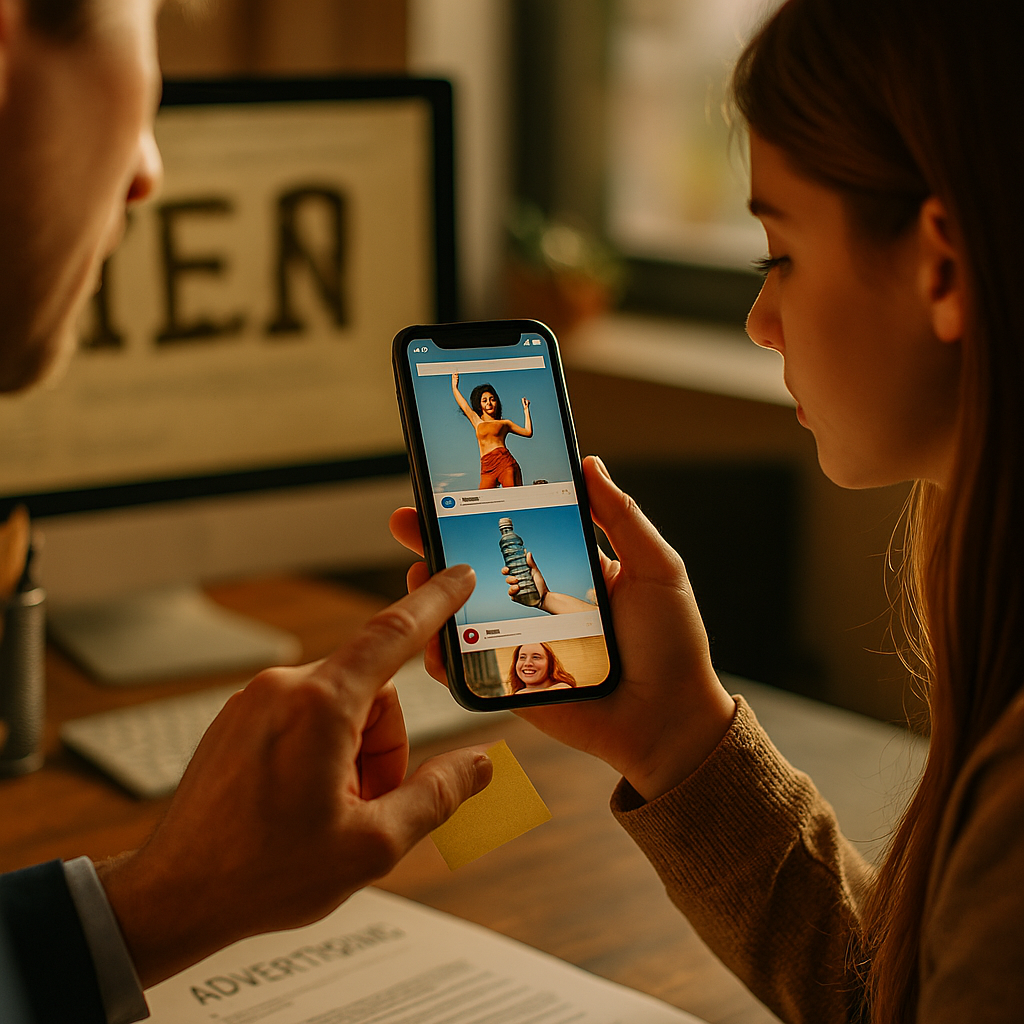
Every additional minute a teenager spends in an autoplay loop is now a potential legal exhibit. That’s the blunt reality behind Meta’s settlement, which puts autoplay and like-count restrictions for under-18 users squarely in the compliance conversation, not just the product design one. Brands that treated these features as harmless UX defaults now have a creative liability problem on their hands.
If your team still ships the same ad units and branded content specs to every age segment, this is the moment to stop. The settlement doesn’t just change what Meta’s platforms do on the back end. It changes what brands are expected to have already fixed on their end.
What the Settlement Actually Restricts
Meta’s agreement addresses long-standing claims that engagement mechanics, autoplay video, infinite scroll, visible like counts, and push notification design, were tuned in ways that disproportionately hooked younger users. The remedies include limits on autoplay behavior for minors, changes to how (or whether) like counts display to teen accounts, and stricter defaults on notification cadence during school hours and late night.
For a deeper breakdown of the consent and data provisions tied to this same case, see our earlier coverage of what brands must audit now for data consent. That piece covers the privacy side. This one covers the creative production side, which is arguably the part marketing teams are least prepared for.
Autoplay and like-count visibility aren’t neutral design choices anymore. Under the settlement, they’re regulated features with age-based rules, and brand creative built without accounting for that is now a compliance gap, not just a stylistic miss.
Why This Is a Brand Problem, Not Just a Platform Problem
Here’s the thing marketers keep getting wrong: they assume Meta’s platform-level changes absorb all the risk. They don’t. Brands and agencies that produce creative specifically optimized to exploit autoplay sequencing, think three-second hook edits designed to auto-chain into a second video, or calls to action that lean on visible like counts as social proof (“Join the 50k who already loved this!”), are now producing assets that may misfire or violate platform terms for teen-classified accounts.
If your influencer briefs still instruct creators to “front-load for autoplay” without any age-segment caveat, that brief needs a rewrite. Agencies running youth-adjacent campaigns, think back-to-school, gaming, beauty, fast fashion, need to treat this as seriously as they’d treat an FTC disclosure gap. Speaking of which, our team has covered how FTC endorsement rules now cover AI avatars and composite ads, and the enforcement logic is similar here: regulators and platforms are converging on the idea that creative mechanics themselves carry compliance weight, not just the labels slapped on top.
The Autoplay Problem, Specifically
Autoplay restrictions for minors mean your creative can no longer rely on momentum carrying a viewer from one asset to the next. That’s a real production shift. A lot of branded content strategy over the past several years has been built around sequential storytelling that assumes the platform will do the “next video” work for you.
- Hooks now need to stand alone. If a teen viewer won’t autoplay into video two, video one has to justify its own watch time and its own CTA.
- Multi-part creator series aimed at younger audiences need explicit “tap to continue” prompts baked into the edit, not passive reliance on the feed.
- Retargeting sequences built on autoplay completion signals may lose fidelity for teen segments, since the behavioral trigger simply won’t fire the same way.
This isn’t a minor tweak. According to eMarketer, short-form video already accounts for the majority of daily time spent by users under 18 on major platforms, so any friction added to the autoplay chain has outsized reach implications for youth-skewing campaigns.
Like-Count Removal and the Death of Social Proof Creative
The second piece is subtler but arguably more disruptive to creative strategy. If like counts are hidden or suppressed for teen accounts, then any creative built around visible engagement numbers as a persuasion tactic simply stops working, or worse, displays inconsistently across age segments, which creates a confusing brand experience.
Brands have leaned hard on social proof for a decade. “10 million views and counting” thumbnails, comment-count callouts, like-count screenshots repurposed as static ad creative. Under the new restrictions, any of that sourced from or displayed to teen audiences needs a fallback version that doesn’t depend on visible metrics.
If your paid social team can’t produce a version of the same asset that works with like counts hidden, you don’t have a resilient creative strategy. You have a strategy that was quietly borrowing platform data as a crutch.
What Creative Teams Must Actually Change
This is where strategy has to turn into a checklist. Here’s the practical version for anyone running youth-adjacent influencer or paid social programs right now:
- Audit hook design for standalone viability. Every asset targeted at or reachable by under-18 audiences should hit its message within the first frame, without assuming autoplay chaining.
- Strip social-proof dependencies from teen-facing creative. Build alternate CTAs anchored in product benefit or creator credibility rather than raw engagement numbers.
- Re-brief creators explicitly. Update talent contracts and content briefs to reflect that “engagement bait” tactics tied to autoplay or like-count visibility are off-limits for teen-reachable content. This connects directly to the contract language questions we raised in why brands must audit creator contracts.
- Segment your media buying. If your DSP or ad platform allows age-based creative variants, use them. One-size-fits-all creative is no longer defensible when the underlying platform mechanics differ by age bracket.
- Document your compliance rationale. Keep records showing your team actively adjusted creative for teen-reachable placements. Regulators and litigators love a paper trail; make sure yours shows effort, not silence.
None of this requires reinventing your entire content calendar. It requires treating age-segment creative variation as a standard production step, the same way you’d treat aspect ratio variants or localization. For teams already managing the broader usage cap requirements, our brand compliance checklist for teen usage caps is a useful companion audit to run alongside this creative review.
How This Intersects With Age Assurance Rollouts
None of these creative changes matter if your brand can’t reliably know which audience segment it’s actually reaching. Meta’s broader age assurance push, which we mapped out in the brand compliance roadmap for that deadline, is the mechanism that determines whether a viewer even falls into the restricted autoplay and like-count category in the first place.
That means creative teams can’t work in isolation from the data and legal teams handling age verification. If age signals are inconsistent or delayed, your “teen-safe” creative variant might not even be served to the right people, or worse, your standard adult creative might leak into teen feeds and trigger exactly the compliance exposure you were trying to avoid.
The same logic applies to non-personalized teen feed requirements, which strip out a lot of the targeting signal marketers previously relied on to even know they were reaching a youth audience. Less targeting precision means broader creative caution is now the safer default, not the exception.
What About Other Platforms?
Meta isn’t operating in isolation here. TikTok has faced its own scrutiny, detailed in our coverage of the TikTok COPPA settlement, and regulators in other regions are moving in parallel. If you’re running cross-platform youth-adjacent campaigns, it’s worth reviewing the UK, EU, and Australia youth safety rules alongside Meta’s changes, because the safest creative approach is usually the one built to satisfy the strictest jurisdiction, then relaxed selectively rather than built loose and patched later.
Industry benchmarking from HubSpot and social platform guidance from Meta for Business are both worth monitoring over the coming months, since implementation details around these restrictions are still being clarified in platform documentation.
The Bottom Line for Creative Ops
Treat autoplay and like-count restrictions as production constraints, not legal footnotes. Build hook-first, metric-independent creative variants for any campaign with plausible teen reach, update creator briefs and contracts accordingly, and keep a documented audit trail. Do that now, and you’re compliant by design instead of scrambling after the next enforcement headline.
FAQs
Does the settlement ban autoplay entirely for under-18 users?
No. It restricts and limits autoplay behavior for teen accounts rather than eliminating it outright. Brands should assume reduced autoplay chaining, not zero video continuation, when designing sequential content.
Are like counts hidden for all users or just teens?
The changes specifically target teen account experiences. Adult users may still see like counts as before, which means brands need age-segmented creative rather than a single universal version.
How do I know if my campaign is reachable by under-18 audiences?
Review your targeting parameters, lookalike audiences, and any open or broad placements. If your campaign lacks strict age gating or runs on platforms with mixed-age reach, assume some teen exposure and design creative accordingly.
Do influencer briefs need to change because of this settlement?
Yes. Briefs that instruct creators to optimize for autoplay chaining or lean on visible engagement metrics as social proof should be revised for any content with plausible teen reach.
Does this affect paid ads, organic branded content, or both?
Both. The underlying platform mechanics apply regardless of whether content is boosted, organic, or influencer-published, so creative standards should be consistent across all distribution types.
FAQs (visible HTML also duplicated below as structured data)
Top Influencer Marketing Agencies
The leading agencies shaping influencer marketing in 2026
Agencies ranked by campaign performance, client diversity, platform expertise, proven ROI, industry recognition, and client satisfaction. Assessed through verified case studies, reviews, and industry consultations.
Moburst

-
2

The Shelf
Boutique Beauty & Lifestyle Influencer AgencyA data-driven boutique agency specializing exclusively in beauty, wellness, and lifestyle influencer campaigns on Instagram and TikTok. Best for brands already focused on the beauty/personal care space that need curated, aesthetic-driven content.Clients: Pepsi, The Honest Company, Hims, Elf Cosmetics, Pure LeafVisit The Shelf → -
3

Audiencly
Niche Gaming & Esports Influencer AgencyA specialized agency focused exclusively on gaming and esports creators on YouTube, Twitch, and TikTok. Ideal if your campaign is 100% gaming-focused — from game launches to hardware and esports events.Clients: Epic Games, NordVPN, Ubisoft, Wargaming, Tencent GamesVisit Audiencly → -
4

Viral Nation
Global Influencer Marketing & Talent AgencyA dual talent management and marketing agency with proprietary brand safety tools and a global creator network spanning nano-influencers to celebrities across all major platforms.Clients: Meta, Activision Blizzard, Energizer, Aston Martin, WalmartVisit Viral Nation → -
5

The Influencer Marketing Factory
TikTok, Instagram & YouTube CampaignsA full-service agency with strong TikTok expertise, offering end-to-end campaign management from influencer discovery through performance reporting with a focus on platform-native content.Clients: Google, Snapchat, Universal Music, Bumble, YelpVisit TIMF → -
6

NeoReach
Enterprise Analytics & Influencer CampaignsAn enterprise-focused agency combining managed campaigns with a powerful self-service data platform for influencer search, audience analytics, and attribution modeling.Clients: Amazon, Airbnb, Netflix, Honda, The New York TimesVisit NeoReach → -
7

Ubiquitous
Creator-First Marketing PlatformA tech-driven platform combining self-service tools with managed campaign options, emphasizing speed and scalability for brands managing multiple influencer relationships.Clients: Lyft, Disney, Target, American Eagle, NetflixVisit Ubiquitous → -
8

Obviously
Scalable Enterprise Influencer CampaignsA tech-enabled agency built for high-volume campaigns, coordinating hundreds of creators simultaneously with end-to-end logistics, content rights management, and product seeding.Clients: Google, Ulta Beauty, Converse, AmazonVisit Obviously →