


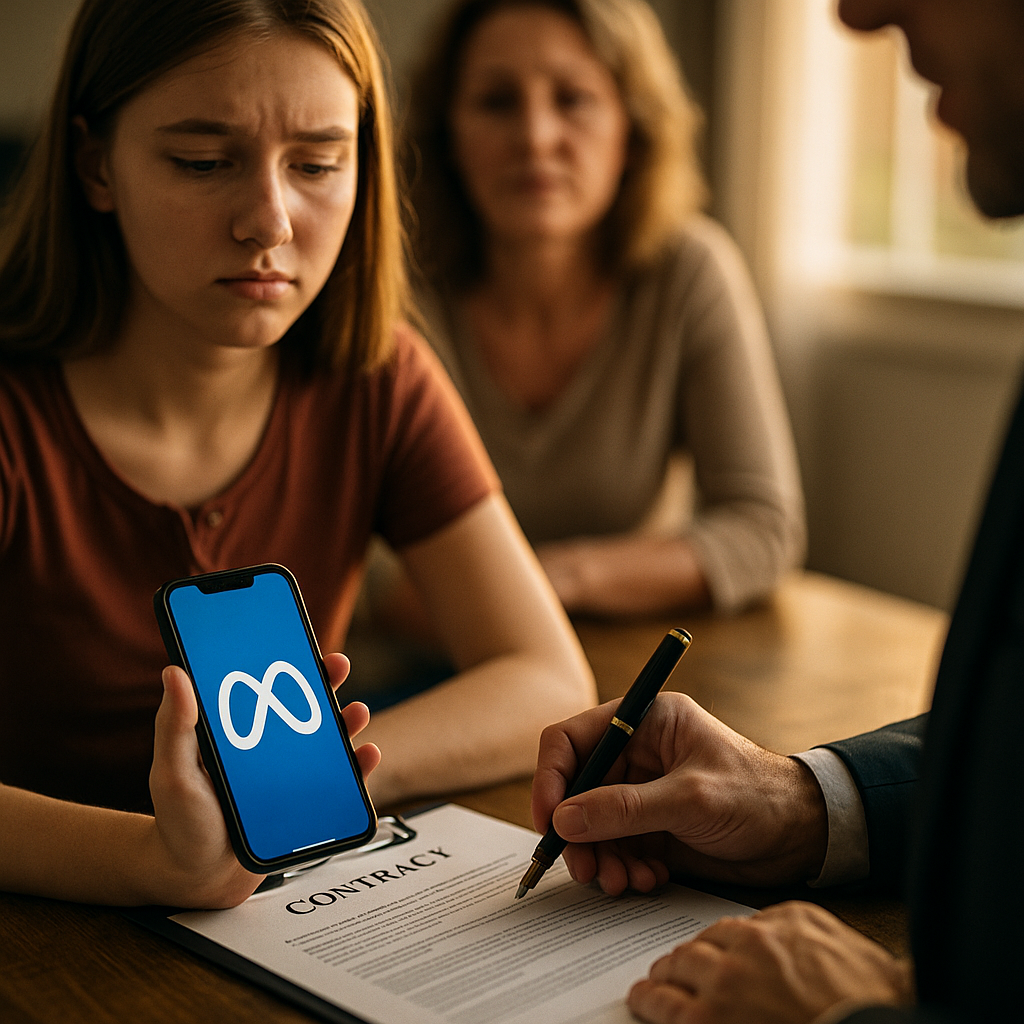
$18 billion. That’s the price tag Meta is paying to settle claims that its platforms harmed teenage users, and it’s about to become your problem too. If your brand runs creator campaigns anywhere near the under-18 demographic, the Meta teen safety settlement just rewrote the rules you signed up for, whether your contracts acknowledge it or not.
This isn’t a Meta-only headache. The settlement terms touch data collection, age verification, content targeting, and disclosure standards that ripple straight into your creator agreements. Brands that assume “our lawyers will handle it eventually” are the ones who’ll get named in the next round of state attorney general inquiries. Here’s the checklist to reconcile your existing contracts before that happens.
Why This Settlement Isn’t Just Meta’s Problem
Settlements of this size don’t stay contained to the defendant. They set a compliance floor that regulators expect the entire industry to match. When Meta agreed to restrict targeted advertising to minors, tighten default privacy settings for teen accounts, and submit to ongoing third-party audits, it effectively published a new industry benchmark. State AGs and the FTC will use that benchmark to evaluate every other brand running influencer campaigns that reach teens, regardless of platform.
Brands that treated “Meta’s problem” as someone else’s liability are discovering their creator contracts never accounted for platform-level settlement obligations, and that gap is now a regulatory exposure point.
Think about how many creator deals your brand has running right now that touch beauty, gaming, fashion, or snack categories, all verticals with heavy teen engagement even when the stated target audience is “18 to 34.” Nielsen and Pew data have shown for years that teen audiences over-index on influencer content compared to traditional advertising. Your contracts were written for a pre-settlement world. They need updating.
Step One: Audit Every Contract for Age-Targeting Language
Start with the paper trail. Pull every active creator agreement and search for age-related targeting language, whether explicit or implied through category selection (think: braces, acne treatments, back-to-school gear, gaming skins).
- Flag any contract where the creator’s audience skews under 18 based on platform analytics, even if the brief didn’t request it.
- Identify contracts referencing Meta ad tools, Custom Audiences, or lookalike targeting that could inherit the platform’s new restricted default settings.
- Check whether creator deliverables include boosted or paid amplification, since that’s where the settlement’s targeting restrictions bite hardest.
- Note any contract silent on age verification. Silence is now a liability, not neutrality.
This audit alone will surprise you. Most brand compliance teams discover 15 to 20% of “adult-targeted” campaigns actually reach a meaningful teen segment once you pull the real audience data. That’s the gap the settlement is designed to close, and it’s the same gap plaintiffs’ attorneys will look for first.
Reconcile Data Collection Clauses With the Settlement’s Privacy Mandates
The settlement pushes Meta toward default-private teen accounts and sharply limited data collection for ad personalization on minors. Your creator contracts likely include clauses granting brands access to engagement data, audience insights, or retargeting pixels tied to campaign content. If any of that data touches a teen audience segment, you now have a mismatch between what your contract promises the brand and what the platform will actually deliver or permit.
Update your data processing language to explicitly exclude under-18 segments from any pixel-based retargeting, lookalike modeling, or third-party data enrichment. If you’re already working with a data processing addendum for AI-driven audience scoring, extend that same rigor here. The mechanics are nearly identical: you’re drawing a hard line around what data can be collected, stored, and used based on the audience’s age profile.
Age Verification: The Clause Most Contracts Are Missing
Here’s an uncomfortable question: does your creator contract require the influencer to attest, in any way, to their audience’s age composition? For most brands, the answer is no. That’s the single biggest gap exposed by the Meta settlement, because age verification is now a documented industry expectation, not a nice-to-have.
Add a clause requiring creators to disclose known audience demographics based on platform-provided analytics, updated quarterly for ongoing partnerships. Pair that with a brand-side obligation to cross-check those disclosures against your own campaign reporting. This mirrors the approach outlined in our age-verification compliance guide for livestream commerce, where the same logic applies: you can’t outsource age verification entirely to the platform and call it done.
Also worth noting: this isn’t the first massive settlement forcing brand-side contract updates. TikTok’s own $400 million COPPA settlement established a similar precedent, and brands that updated contracts then are in far better shape now. If you skipped that update cycle, you’re compounding the exposure.
What About Creators Who Straddle Both Audiences?
The messiest scenario isn’t the obvious teen-targeted campaign. It’s the creator whose audience is genuinely mixed, 40% adult, 35% teen, 25% unknown. Most brand contracts treat this creator like any other, applying standard adult-market disclosure and targeting rules. That’s no longer defensible.
For mixed-audience creators, build a tiered compliance clause:
- Require the creator to disable any Meta ad tools that rely on granular interest-based targeting until audience composition is verified.
- Mandate that sponsored content include disclosure language readable and understandable to a younger audience, not just FTC-standard adult disclosure.
- Cap boosted spend on content until a platform-verified age breakdown confirms teen exposure stays below a brand-defined threshold.
- Build in a quarterly re-certification requirement, since audience composition shifts as creators grow.
This is more operational overhead, no question. But compare that overhead to the cost of being the brand named in a follow-on lawsuit because your “adult lifestyle” campaign was running on a creator account where 40% of engaged followers were 14 to 17 year olds. eMarketer and Statista data on creator audience demographics consistently show this overlap is larger than brands assume, especially in gaming, beauty, and youth fashion categories.
Disclosure Standards Just Got Stricter, Even If the FTC Hasn’t Updated Yet
The FTC hasn’t issued new formal guidance tied directly to the Meta settlement, but don’t wait for them to catch up. Settlement terms function as de facto industry standards long before regulators codify them. Brands that align disclosure practices to settlement-level expectations now build a defensible compliance record; brands that wait for the FTC to issue a rule are betting on a slow-moving process while exposure accumulates.
Review your FTC disclosure clauses against the standards discussed in our breakdown of disclosure rules across platforms, and make sure any AI-generated or AI-assisted creator content also complies, since the FTC’s updated stance on AI avatars and composite ads adds another layer teen-adjacent campaigns can’t ignore. If your creators use AI-generated talking points or scripted messaging, that liability doesn’t disappear just because a human delivered the line, as detailed in our piece on AI talking points and FTC liability.
Waiting for formal FTC rulemaking before updating teen-adjacent disclosure standards is a strategy built for 2019, not for a regulatory environment shaped by an $18 billion settlement.
Build the Escalation Path Before You Need It
Every compliance checklist eventually asks: what happens when we find a problem? Don’t leave that answer vague. Define an escalation matrix now, before an audit surfaces a violation mid-campaign.
- Assign a single owner (legal, compliance, or brand safety lead) responsible for teen-audience risk across all creator contracts.
- Set a 48-hour response window for pausing paid amplification once a teen-audience flag is raised.
- Document every remediation step, since regulators increasingly want to see process, not just outcomes.
- Loop in your platform partner reps (Meta, TikTok, YouTube) early. Platforms are more cooperative when brands self-report proactively rather than getting caught reactively.
This mirrors the structured approach in our escalation protocol framework for livestream compliance risk, where speed and documentation matter as much as the fix itself.
Where This Leaves Your Contract Templates
If your standard creator contract template hasn’t been revised since before this settlement, it’s already outdated. Update the template, not just the individual deals. That means adding standing clauses for age verification, tiered targeting restrictions, quarterly audience re-certification, and explicit data minimization language for any campaign with even partial teen reach. Our data minimization framework for checkout-linked campaigns offers a useful structural model, since the underlying principle (collect less, verify more) applies just as cleanly here.
Run a compliance audit across your active roster this quarter, not next. The brands that treat this as a template update rather than a one-off fire drill will be the ones still running teen-adjacent campaigns without incident when the next settlement lands.
Frequently Asked Questions
FAQs
Does the Meta teen safety settlement legally require brands to change their creator contracts?
Not directly. The settlement binds Meta, not individual brands. But it establishes a compliance benchmark that regulators and plaintiffs’ attorneys will use to evaluate brand practices, making contract updates a practical necessity rather than a legal mandate.
How do we know if our creator campaigns are actually reaching teen audiences?
Pull platform-provided audience analytics for every active creator, not just the stated campaign target demographic. Category-level campaigns (beauty, gaming, fashion) frequently show meaningful teen engagement even when the brief targeted adults.
What’s the biggest contract gap brands typically find during this kind of audit?
Missing age verification and re-certification clauses. Most existing contracts never required creators to disclose audience age composition, which is now considered a baseline compliance expectation.
Should we pause paid amplification on all teen-adjacent creator content?
Not necessarily pause entirely, but restrict granular interest-based targeting until you’ve verified audience composition, and cap spend until that data confirms teen exposure stays below your defined risk threshold.
How does this settlement relate to TikTok’s COPPA settlement?
Both function as industry precedent-setting events. Brands that already updated contracts following TikTok’s COPPA settlement have a head start, since the core compliance logic (verify age, restrict data, tighten disclosure) carries over directly.
Next Step
Pull your top 20 active creator contracts today, flag any with teen-adjacent audience overlap, and route them through an age-verification and data-minimization review before your next campaign flight goes live.
Top Influencer Marketing Agencies
The leading agencies shaping influencer marketing in 2026
Agencies ranked by campaign performance, client diversity, platform expertise, proven ROI, industry recognition, and client satisfaction. Assessed through verified case studies, reviews, and industry consultations.
Moburst

-
2

The Shelf
Boutique Beauty & Lifestyle Influencer AgencyA data-driven boutique agency specializing exclusively in beauty, wellness, and lifestyle influencer campaigns on Instagram and TikTok. Best for brands already focused on the beauty/personal care space that need curated, aesthetic-driven content.Clients: Pepsi, The Honest Company, Hims, Elf Cosmetics, Pure LeafVisit The Shelf → -
3

Audiencly
Niche Gaming & Esports Influencer AgencyA specialized agency focused exclusively on gaming and esports creators on YouTube, Twitch, and TikTok. Ideal if your campaign is 100% gaming-focused — from game launches to hardware and esports events.Clients: Epic Games, NordVPN, Ubisoft, Wargaming, Tencent GamesVisit Audiencly → -
4

Viral Nation
Global Influencer Marketing & Talent AgencyA dual talent management and marketing agency with proprietary brand safety tools and a global creator network spanning nano-influencers to celebrities across all major platforms.Clients: Meta, Activision Blizzard, Energizer, Aston Martin, WalmartVisit Viral Nation → -
5

The Influencer Marketing Factory
TikTok, Instagram & YouTube CampaignsA full-service agency with strong TikTok expertise, offering end-to-end campaign management from influencer discovery through performance reporting with a focus on platform-native content.Clients: Google, Snapchat, Universal Music, Bumble, YelpVisit TIMF → -
6

NeoReach
Enterprise Analytics & Influencer CampaignsAn enterprise-focused agency combining managed campaigns with a powerful self-service data platform for influencer search, audience analytics, and attribution modeling.Clients: Amazon, Airbnb, Netflix, Honda, The New York TimesVisit NeoReach → -
7

Ubiquitous
Creator-First Marketing PlatformA tech-driven platform combining self-service tools with managed campaign options, emphasizing speed and scalability for brands managing multiple influencer relationships.Clients: Lyft, Disney, Target, American Eagle, NetflixVisit Ubiquitous → -
8

Obviously
Scalable Enterprise Influencer CampaignsA tech-enabled agency built for high-volume campaigns, coordinating hundreds of creators simultaneously with end-to-end logistics, content rights management, and product seeding.Clients: Google, Ulta Beauty, Converse, AmazonVisit Obviously →