


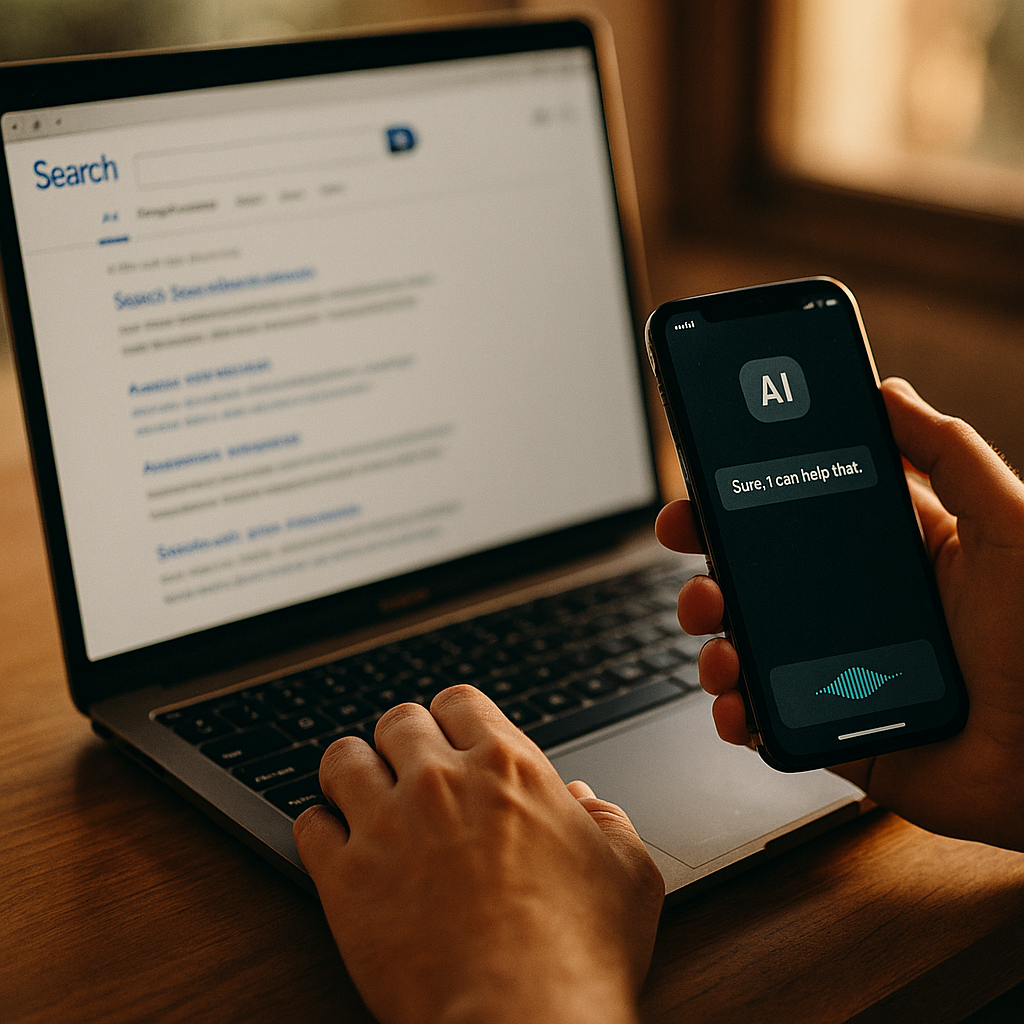
Zero organic clicks. That’s what a growing share of your best-performing content is generating right now, even as it gets cited, summarized, and recommended by ChatGPT, Gemini, and Perplexity thousands of times a day. The zero-click funnel isn’t a future threat to search marketing strategy. It’s the current operating environment, and most brand teams are still measuring success with metrics built for a web that no longer works that way.
The Referral Has Replaced the Result
For two decades, search marketing meant one thing: rank high enough on a results page to earn a click. That model assumed a human scanning ten blue links and picking one. AI agents don’t scan. They synthesize. When a user asks ChatGPT “what’s the best running shoe for flat feet under $150,” the agent reads dozens of sources, extracts the relevant claims, and delivers a single conversational answer, often with a product mention or a brand name baked in. No click required. No results page. Just a referral, spoken in the agent’s own words.
This shift matters because it changes what “winning” looks like. You’re no longer optimizing to be chosen from a list. You’re optimizing to be the source an AI system trusts enough to paraphrase confidently. That’s a different discipline entirely, closer to reputation management and structured data engineering than traditional keyword targeting.
In a zero-click funnel, your brand doesn’t win a ranking. It wins a mention inside someone else’s sentence, and you have far less control over the wording than you did over a meta description.
How Big Is the Zero-Click Problem, Really?
Industry estimates on AI Overviews and chatbot-driven searches vary, but the direction is consistent: a meaningful and growing share of informational queries now resolve without a single click to a publisher or brand site. eMarketer’s research on search behavior has tracked declining click-through rates on traditional organic listings as AI-generated summaries absorb more query intent. Meanwhile, Statista’s data on search engine usage shows conversational AI tools capturing a rising share of research-stage queries, particularly for product comparisons and how-to content, the exact territory brand marketers used to own with blog content and SEO landing pages.
The practical effect: your analytics dashboard shows fewer sessions from organic search, but your brand is being discussed, recommended, and sometimes misrepresented in conversations you can’t see and can’t measure with a pixel. That’s not a traffic decline. It’s an attribution blind spot, and it’s expanding faster than most martech stacks can adapt.
Why Your Analytics Team Keeps Underreporting Impact
Most attribution models still credit a conversion to the last click before purchase. If an AI agent recommended your brand during research but the user later typed your name directly into a browser, that referral gets logged as “direct traffic,” erasing the agent’s actual influence. Teams working through server-side attribution models are starting to catch some of this, but conversational referral tracking is still immature across the industry. Finance teams asking “what drove this lift” deserve a better answer than “we’re not sure, it might be AI.”
Rebuilding Search Strategy Around Structured Trust, Not Just Rankings
If agents are the new gatekeepers, the question becomes: what do agents actually reward? Three things, consistently.
- Machine-readable structure. Schema markup, clean product data, and consistent pricing feeds give agents something reliable to cite. Brands publishing machine-readable pricing APIs are already seeing better visibility in AI shopping agent recommendations, because the agent doesn’t have to guess or scrape unreliable HTML.
- Verifiable claims. Agents increasingly ground their answers in retrieval systems that check facts against source material. If your content contains vague or unverifiable product claims, don’t be surprised when the agent skips you for a competitor with cleaner documentation. This is the same discipline covered in RAG-based claim verification work happening on the creator content side.
- Consistent third-party corroboration. A single brand statement carries less weight than the same claim echoed across reviews, creator content, and independent publications. Agents cross-reference. If your only source of “best in class” is your own homepage, that’s a weak signal.
Google has published guidance for structured data that helps its own AI systems parse content accurately, and Google’s structured data documentation is a reasonable starting point even if you’re optimizing for multiple agent ecosystems, not just Google’s. The overlap between “what helps traditional SEO” and “what helps agent visibility” is bigger than most teams assume, but it’s not identical, and treating them as the same discipline is where strategies stall out.
Where the Structured Data Spec Actually Lives
There’s a growing body of work on exactly what schema and metadata combinations increase the odds of an AI agent surfacing your brand accurately. Teams building for AI Mode background agents are finding that FAQ schema, product schema, and organization-level entity data compound in effectiveness when they’re consistent across every page, not just your homepage. Fragmented or contradictory structured data across a site is one of the most common reasons brands get skipped in agent responses even when their content is genuinely strong.
Creator Content Is Becoming an Agent Training Signal
Here’s something most search teams haven’t fully connected yet: influencer and creator content increasingly functions as a trust signal for AI agents, not just for human audiences. When a creator’s product review contains specific, verifiable claims (ingredient lists, pricing, comparison data), that content becomes citable material for retrieval-augmented systems. Sloppy or hallucinated claims in creator briefs don’t just risk FTC scrutiny anymore, they risk poisoning the exact data pool that AI agents pull from when representing your brand. That’s why verification workflows for creator briefs have shifted from a nice-to-have compliance step to a core visibility strategy.
Brands running influencer programs at scale should treat every piece of creator content as potential training or retrieval material for the AI ecosystem their future customers are querying. That reframes brief accuracy, disclosure compliance, and fact-checking as SEO infrastructure, not just legal risk management.
The Compliance Layer Nobody’s Budgeting For
Regulatory bodies haven’t caught up to conversational referrals yet, but they will. The FTC’s endorsement guidelines already require clear disclosure in influencer content, and it’s reasonable to expect scrutiny to extend to how AI agents represent sponsored recommendations, especially once agents start executing purchases autonomously on a user’s behalf. Brands relying on governed AI frameworks for their martech stack are better positioned here, because audit trails and data provenance become the difference between defensible attribution and a compliance headache.
If you can’t show which source fed an AI agent’s recommendation, you can’t defend a claim, a budget allocation, or a compliance position when someone asks. Provenance is no longer optional.
What This Means for Budget Allocation
CMOs are already asking the uncomfortable question: if organic clicks are dropping but brand visibility inside AI conversations is rising, where should budget go? A few practical shifts worth making now.
- Redirect a portion of traditional link-building spend toward structured data cleanup and entity consistency across every owned property.
- Fund creator partnerships that generate specific, fact-checked comparison content rather than generic lifestyle placements, since specificity is what retrieval systems reward.
- Invest in monitoring tools that track brand mentions inside AI-generated answers, not just SERP rankings. This category is immature, but early movers using social listening platforms like Sprout Social are adapting existing mention-tracking infrastructure to catch some of this signal.
- Train content and SEO teams on the skills gap that’s already showing up. Research on AI adoption outpacing marketing skills confirms most teams have the tools but not the operational literacy to use them for agent-facing optimization.
None of this means traditional SEO dies. Rankings still matter for the queries that remain click-based, and a strong organic presence still feeds the retrieval systems agents draw from. But treating agent visibility as a bolt-on to your existing SEO strategy, rather than a distinct discipline with its own metrics and inputs, is how brands end up invisible in the exact conversations where purchase decisions now happen.
A Practical Next Step
Audit one high-intent product page this week. Ask an AI agent the question that page is supposed to answer, and see whether your brand gets mentioned, misquoted, or skipped entirely. That single test will tell you more about your zero-click funnel readiness than a month of ranking reports.
Frequently Asked Questions
What is a zero-click funnel in search marketing?
A zero-click funnel describes the buyer journey where users get answers, comparisons, and recommendations directly from AI agents or search summaries without ever clicking through to a brand’s website. Visibility and influence still happen, but traditional traffic metrics don’t capture it.
How do AI agents decide which brands to mention?
Agents typically weigh structured data quality, the specificity and verifiability of claims, and how consistently a brand is corroborated across independent sources like reviews and creator content. Vague marketing language performs worse than specific, documented claims.
Does traditional SEO still matter if AI agents are replacing clicks?
Yes. Strong organic content still feeds the retrieval systems many AI agents rely on. The difference is that ranking well no longer guarantees a click, so brands need to optimize for accurate representation inside agent answers as a separate, complementary goal.
How can brands track mentions inside AI-generated answers?
This tracking category is still maturing. Some teams are adapting social listening and brand monitoring tools to catch AI mention data, while others are manually auditing high-intent queries against major AI platforms on a regular schedule.
What compliance risks come with conversational AI referrals?
If an AI agent misrepresents a sponsored recommendation or repeats an unverified product claim originally sourced from creator content, brands could face the same disclosure and accuracy scrutiny that applies to traditional influencer marketing, just with less visibility into how the claim spread.
Top Influencer Marketing Agencies
The leading agencies shaping influencer marketing in 2026
Agencies ranked by campaign performance, client diversity, platform expertise, proven ROI, industry recognition, and client satisfaction. Assessed through verified case studies, reviews, and industry consultations.
Moburst

-
2

The Shelf
Boutique Beauty & Lifestyle Influencer AgencyA data-driven boutique agency specializing exclusively in beauty, wellness, and lifestyle influencer campaigns on Instagram and TikTok. Best for brands already focused on the beauty/personal care space that need curated, aesthetic-driven content.Clients: Pepsi, The Honest Company, Hims, Elf Cosmetics, Pure LeafVisit The Shelf → -
3

Audiencly
Niche Gaming & Esports Influencer AgencyA specialized agency focused exclusively on gaming and esports creators on YouTube, Twitch, and TikTok. Ideal if your campaign is 100% gaming-focused — from game launches to hardware and esports events.Clients: Epic Games, NordVPN, Ubisoft, Wargaming, Tencent GamesVisit Audiencly → -
4

Viral Nation
Global Influencer Marketing & Talent AgencyA dual talent management and marketing agency with proprietary brand safety tools and a global creator network spanning nano-influencers to celebrities across all major platforms.Clients: Meta, Activision Blizzard, Energizer, Aston Martin, WalmartVisit Viral Nation → -
5

The Influencer Marketing Factory
TikTok, Instagram & YouTube CampaignsA full-service agency with strong TikTok expertise, offering end-to-end campaign management from influencer discovery through performance reporting with a focus on platform-native content.Clients: Google, Snapchat, Universal Music, Bumble, YelpVisit TIMF → -
6

NeoReach
Enterprise Analytics & Influencer CampaignsAn enterprise-focused agency combining managed campaigns with a powerful self-service data platform for influencer search, audience analytics, and attribution modeling.Clients: Amazon, Airbnb, Netflix, Honda, The New York TimesVisit NeoReach → -
7

Ubiquitous
Creator-First Marketing PlatformA tech-driven platform combining self-service tools with managed campaign options, emphasizing speed and scalability for brands managing multiple influencer relationships.Clients: Lyft, Disney, Target, American Eagle, NetflixVisit Ubiquitous → -
8

Obviously
Scalable Enterprise Influencer CampaignsA tech-enabled agency built for high-volume campaigns, coordinating hundreds of creators simultaneously with end-to-end logistics, content rights management, and product seeding.Clients: Google, Ulta Beauty, Converse, AmazonVisit Obviously →