


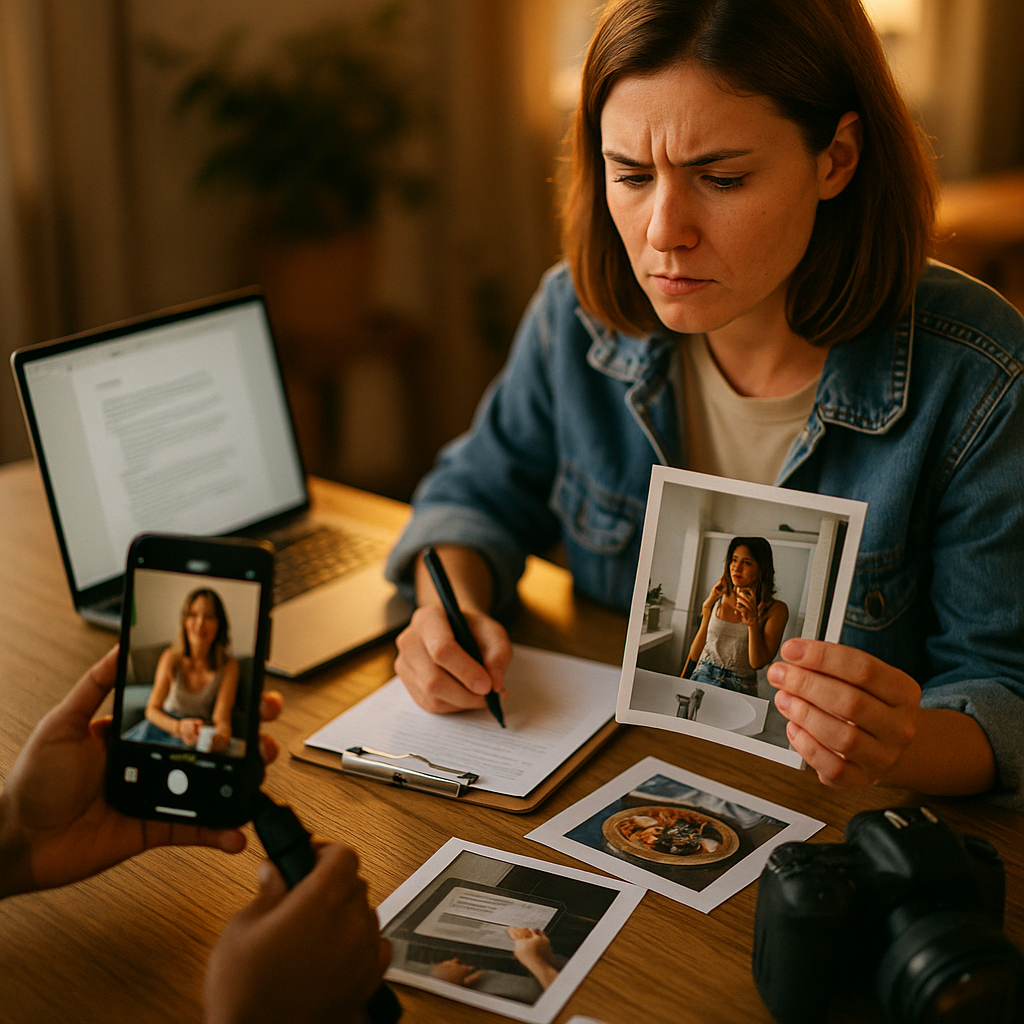
A polished 4K product shot now reads as an ad in the first half second, and thumbs keep scrolling. Meta’s own creative benchmarking has pushed brands toward native-feeling formats for years, but most briefs still ask creators to act like a studio crew. If you’re not briefing for intentionally imperfect content, you’re paying premium rates for footage that performs like an ad, because it looks like one.
The uncomfortable truth: messiness isn’t the absence of a brief. It’s the result of a very specific one.
Why “Bad” Footage Is Outperforming Good Footage
Scroll through any high-performing TikTok or Reels feed and you’ll notice a pattern. The top organic-feeling ads have shaky handheld angles, blown-out lighting, awkward pauses, and captions that look like they were typed with a thumb. That’s not an accident. Creators and brands have figured out that feeds are pattern-matching machines: viewers have trained themselves to skip anything that smells like a commercial.
Vogue’s own content strategy shift is instructive here. As covered in our piece on Vogue’s messy creator content shift, even legacy fashion media is trading glossy editorial polish for rawer, creator-shot formats because audiences respond to it. If a 130-year-old fashion authority is loosening its visual standards, that should tell you something about where consumer attention has moved.
The goal isn’t to look cheap. The goal is to look unsponsored, and unsponsored content earns attention that ads can’t buy.
The performance data backs this up directionally. Marketers tracking short-form video consistently report that native-style UGC outperforms studio-produced ads on watch time and cost-per-result, a trend eMarketer has tracked across platforms as ad loads increase and consumer ad-blindness deepens. When everything in the feed looks the same, the outlier wins.
What “Intentionally Imperfect” Actually Means
Let’s be precise, because “just make it look messy” is not a brief, it’s a shrug. Intentional imperfection means engineering specific, controllable elements that signal authenticity while still protecting brand safety and message clarity. It is not the same as low effort.
Think of it as a checklist of native signals you deliberately request:
- Camera work: handheld, slightly uneven framing, occasional refocus instead of locked tripod shots.
- Audio: room tone, ambient noise, natural pauses instead of a scripted VO track.
- Pacing: real reaction beats, including the “wait, let me try that again” moment left in.
- Visuals: phone-native aspect ratios, unretouched skin, real rooms instead of white backdrops.
- Language: creator’s actual vocabulary, not brand copy read aloud.
Each of these is a variable you can name in a brief. That’s the shift: you’re not removing direction, you’re redirecting it away from polish and toward believability.
Building the Brief: Structure, Not Chaos
Here’s where most marketing teams get nervous. If you tell a creator “keep it messy,” you’ll get inconsistent results, some genuinely great, some genuinely unusable. The fix isn’t more polish, it’s a tighter brief around imperfection.
A working structure looks like this:
- Hook constraint, not hook script. Give the creator a problem or emotional beat to open with (confusion, mild frustration, curiosity) rather than a scripted line. Reference formats like our watch time first creative briefs guide for pacing logic that still applies even in raw formats.
- One non-negotiable message. Every messy video still needs a single claim or takeaway the brand needs communicated clearly, usually stated in the creator’s own words near the middle third.
- Explicit “keep it in” list. Tell creators which imperfections are welcome: stumbles, re-takes, background noise, unfiltered reactions. This gives permission and removes the guesswork.
- Explicit “cut it” list. Compliance language, competitor mentions, off-brand claims, anything legally risky. Messy footage still needs guardrails, especially around disclosure requirements outlined by the FTC’s endorsement guidelines.
- Format reference, not script. Send two or three example videos (ideally from other creators, not brand ads) that hit the tone you want. Creators mimic tone far better from examples than from adjectives like “authentic.”
This is essentially the same operational discipline behind our trust-first unboxing brief, where the win comes from removing scripted reaction while keeping message discipline tight.
The Flaw as a Feature
Some of the strongest-performing native content doesn’t just tolerate imperfection, it foregrounds it. Our breakdown of the manufacturing defect reveal format shows brands actively pointing out product flaws on camera because it builds more trust than pretending everything is flawless. Consumers have gotten good at detecting spin. When a brand or creator names the imperfection first, it disarms skepticism before it forms.
The same logic applies to the employee discount reveal format, which works precisely because it feels like an insider leak rather than a campaign. Both formats prove the same point: friction, honestly presented, converts better than a frictionless pitch.
How Do You Brief for Messiness Without Losing Brand Safety?
This is the question every legal and compliance team asks the moment “intentionally imperfect” hits a deck. Fair. Here’s how to keep it clean operationally.
First, separate creative looseness from message looseness. You can let camera work, pacing, and delivery be loose while keeping the actual claims tightly controlled. Build a short list of approved claims the creator can pull from verbatim, and require those specific lines regardless of how casual the surrounding footage feels.
Second, use a lightweight approval checkpoint, not a full script review. Reviewing a rough cut for compliance flags (unapproved claims, competitor mentions, missing disclosure) takes minutes. Reviewing and rewriting a script defeats the entire purpose of the format.
Third, standardize disclosure placement even in raw content. A visible “#ad” or platform-native paid partnership tag doesn’t undercut authenticity, viewers have normalized it. What undercuts trust is discovering an undisclosed relationship, which is both a regulatory risk and a credibility killer.
Messy content still needs a compliance spine. The rawness is in the delivery, never in the disclosure.
If you’re running this at scale across multiple creators, borrow the risk controls from our restock countdown campaigns without FTC risk piece, the same review cadence works well for any high-volume, low-polish program.
Where This Format Wins (and Where It Doesn’t)
Intentionally imperfect briefs aren’t universal. They’re extremely effective for top-of-funnel discovery, retention-driven short video, and categories where trust is the primary barrier (supplements, skincare, financial products, anything with skepticism baked in). They’re less effective for high-consideration purchases where buyers actively want polished proof points, think enterprise software demos or luxury goods where craftsmanship is the selling point.
For funnel-spanning campaigns, pair the raw top-of-funnel asset with more structured mid-funnel content. Our discovery to conversion content ladder framework shows how to brief one shoot day for both extremes without contradicting the tone in either direction.
Budget-wise, this format is also a quiet efficiency play. Raw, native content typically costs less to produce than polished studio work, and it often outperforms it on CPM. Our analysis of creative briefs that lower CPMs found that native-feeling assets frequently beat polished counterparts on cost efficiency in saturated feeds, a double win for teams under budget pressure. That’s a rare case where the cheaper option is also the better-performing one, which is worth flagging to any finance stakeholder skeptical of “just let them wing it” creative direction.
Next Step
Don’t rewrite your entire brief template overnight. Pick one upcoming shoot, apply the five-part structure above (hook constraint, one message, keep-it-in list, cut-it list, format reference), and run it against your current polished-ad control. Compare watch time and CPM after two weeks. The data will make the case for you.
Frequently Asked Questions
What does “intentionally imperfect” content mean in influencer marketing?
It refers to creator content that deliberately includes native-feeling imperfections, shaky camera work, ambient audio, unscripted pacing, to signal authenticity and avoid triggering the audience’s ad-blindness, while still delivering a controlled brand message.
Does messier content actually perform better than polished ads?
In most short-form and social feed contexts, yes. Native-feeling content consistently earns higher watch time and lower cost-per-result because it doesn’t read as an ad in the first few seconds, which is when most viewers decide to scroll past or keep watching.
How do you keep messy creator content brand safe?
Separate creative looseness from message control. Let delivery, pacing, and camera work stay raw, but require specific approved claims verbatim, review rough cuts for compliance flags, and standardize disclosure placement per FTC guidelines.
Is intentionally imperfect content right for every brand or product?
No. It works best for trust-sensitive categories and top-of-funnel discovery content. High-consideration purchases and craftsmanship-driven categories often still benefit from more polished proof points further down the funnel.
How much direction should a brief give if the goal is a raw, unscripted feel?
More structure than you’d think. Provide a hook constraint, a single non-negotiable message, explicit lists of what imperfections to keep and what to cut, and reference examples, then let the creator handle delivery in their own voice.
Frequently Asked Questions
What does “intentionally imperfect” content mean in influencer marketing?
It refers to creator content that deliberately includes native-feeling imperfections, shaky camera work, ambient audio, unscripted pacing, to signal authenticity and avoid triggering the audience’s ad-blindness, while still delivering a controlled brand message.
Does messier content actually perform better than polished ads?
In most short-form and social feed contexts, yes. Native-feeling content consistently earns higher watch time and lower cost-per-result because it doesn’t read as an ad in the first few seconds, which is when most viewers decide to scroll past or keep watching.
How do you keep messy creator content brand safe?
Separate creative looseness from message control. Let delivery, pacing, and camera work stay raw, but require specific approved claims verbatim, review rough cuts for compliance flags, and standardize disclosure placement per FTC guidelines.
Is intentionally imperfect content right for every brand or product?
No. It works best for trust-sensitive categories and top-of-funnel discovery content. High-consideration purchases and craftsmanship-driven categories often still benefit from more polished proof points further down the funnel.
How much direction should a brief give if the goal is a raw, unscripted feel?
More structure than you’d think. Provide a hook constraint, a single non-negotiable message, explicit lists of what imperfections to keep and what to cut, and reference examples, then let the creator handle delivery in their own voice.
Top Influencer Marketing Agencies
The leading agencies shaping influencer marketing in 2026
Agencies ranked by campaign performance, client diversity, platform expertise, proven ROI, industry recognition, and client satisfaction. Assessed through verified case studies, reviews, and industry consultations.
Moburst

-
2

The Shelf
Boutique Beauty & Lifestyle Influencer AgencyA data-driven boutique agency specializing exclusively in beauty, wellness, and lifestyle influencer campaigns on Instagram and TikTok. Best for brands already focused on the beauty/personal care space that need curated, aesthetic-driven content.Clients: Pepsi, The Honest Company, Hims, Elf Cosmetics, Pure LeafVisit The Shelf → -
3

Audiencly
Niche Gaming & Esports Influencer AgencyA specialized agency focused exclusively on gaming and esports creators on YouTube, Twitch, and TikTok. Ideal if your campaign is 100% gaming-focused — from game launches to hardware and esports events.Clients: Epic Games, NordVPN, Ubisoft, Wargaming, Tencent GamesVisit Audiencly → -
4

Viral Nation
Global Influencer Marketing & Talent AgencyA dual talent management and marketing agency with proprietary brand safety tools and a global creator network spanning nano-influencers to celebrities across all major platforms.Clients: Meta, Activision Blizzard, Energizer, Aston Martin, WalmartVisit Viral Nation → -
5

The Influencer Marketing Factory
TikTok, Instagram & YouTube CampaignsA full-service agency with strong TikTok expertise, offering end-to-end campaign management from influencer discovery through performance reporting with a focus on platform-native content.Clients: Google, Snapchat, Universal Music, Bumble, YelpVisit TIMF → -
6

NeoReach
Enterprise Analytics & Influencer CampaignsAn enterprise-focused agency combining managed campaigns with a powerful self-service data platform for influencer search, audience analytics, and attribution modeling.Clients: Amazon, Airbnb, Netflix, Honda, The New York TimesVisit NeoReach → -
7

Ubiquitous
Creator-First Marketing PlatformA tech-driven platform combining self-service tools with managed campaign options, emphasizing speed and scalability for brands managing multiple influencer relationships.Clients: Lyft, Disney, Target, American Eagle, NetflixVisit Ubiquitous → -
8

Obviously
Scalable Enterprise Influencer CampaignsA tech-enabled agency built for high-volume campaigns, coordinating hundreds of creators simultaneously with end-to-end logistics, content rights management, and product seeding.Clients: Google, Ulta Beauty, Converse, AmazonVisit Obviously →