


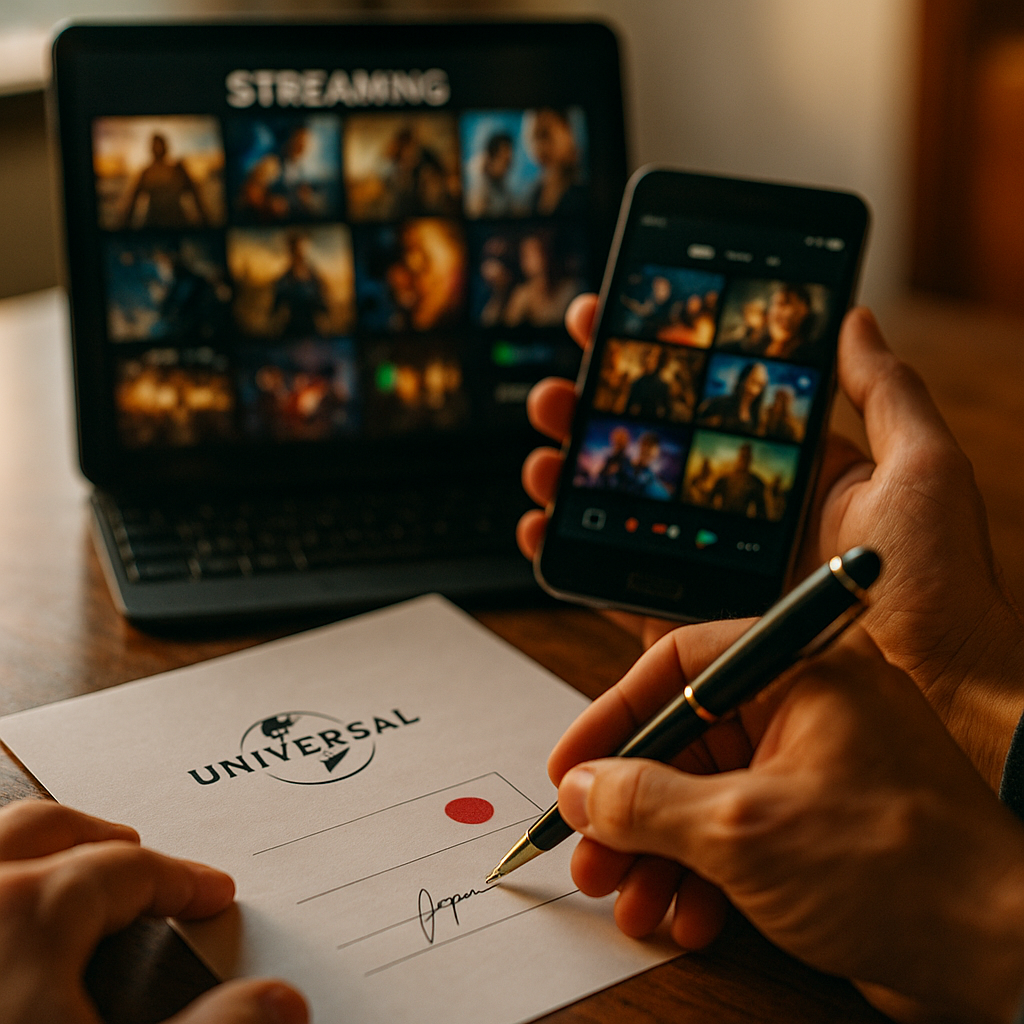
One clause. That’s often the difference between a streaming platform creator partnership that scales cleanly across borders and one that lands legal teams in front of a regulator. The Universal+ Japan creator partnership, still being unpacked by agencies and rights-management teams months after launch, has become a working case study in how streaming deals quietly expose contract gaps that generic influencer agreements were never built to close.
Why This Deal Matters Beyond Japan
Streaming platforms are no longer just distribution channels. They’re becoming co-producers, paying creators for exclusive content, licensing back-catalog remix rights, and bundling creator IP into subscription tiers. Universal+ Japan’s structure, part licensing agreement, part talent partnership, part revenue share, forced brands and agencies working alongside the platform to confront questions that standard influencer contracts don’t answer well: who owns derivative cuts, how disclosure obligations travel across territories, and what happens when a creator’s content gets repackaged into a different market’s content library.
For marketers running influencer programs that touch streaming, OTT, or hybrid subscription models, this isn’t a niche concern. eMarketer and Statista have both tracked accelerating creator monetization through platform-native deals rather than one-off brand sponsorships, meaning more contracts are being written between platforms and talent, with brands sitting adjacent to terms they didn’t negotiate but are still exposed to.
When a platform relicenses creator content into a new territory without re-triggering disclosure and consent obligations, the brand attached to that content inherits the compliance risk, not just the platform.
The Contract Gaps the Partnership Exposed
Three issues surfaced repeatedly as agencies reviewed the Universal+ Japan structure and similar streaming deals in the region.
- Territorial disclosure drift. Content produced for a Japan-first release, cleared under local disclosure norms, doesn’t automatically satisfy FTC endorsement guidance if it gets pushed into a US or EU feed later. Contracts rarely specified who was responsible for re-clearing disclosure language on re-release.
- Undefined derivative rights. Streaming platforms routinely clip, dub, subtitle, and remix creator content for regional catalogs. Original agreements often left “derivative use” vague, which meant creators (and the brands sponsoring their original content) had no real veto or compensation mechanism when a clip resurfaced in a monetized context months later.
- Payment and currency exposure. Revenue-share terms denominated in yen, paid out through intermediary processors, created reconciliation headaches for international creators and for brands tracking cost-per-engagement across markets.
None of these are exotic problems. They’re the same categories of risk agencies have been fighting with cross-border creator payments for years, just compressed into a faster-moving, higher-stakes streaming context. If your team has already built playbooks around cross-border creator payments, most of that logic transfers directly to streaming deals, with one addition: content licensing terms now sit alongside payment terms in the same contract, and they need to be negotiated together, not sequentially.
Disclosure Obligations Don’t Stay Put
Here’s the uncomfortable truth: a piece of sponsored content doesn’t respect borders once it’s uploaded to a platform with global distribution ambitions. The FTC’s endorsement guidance applies wherever US audiences can view the content, regardless of where it was originally produced or cleared. Streaming platforms operating across Japan, the US, and the EU are effectively creating a disclosure minefield for any brand whose sponsored content gets swept into a broader catalog.
Brands that have already had to navigate this for other markets know the drill. The lessons from youth safety rules across multiple territories apply almost directly here: you can’t rely on a single disclosure standard baked into the original contract. You need a clause that requires the platform (or the creator, depending on who controls redistribution) to flag any re-release into a new territory, triggering a compliance review before it goes live.
Practically, this means adding a “redistribution notice” clause to any streaming creator agreement. It should require:
- Advance notice (30 to 60 days is reasonable) before content is relicensed into a new market
- A named compliance contact on both sides responsible for confirming disclosure adequacy
- The right to require re-editing or re-tagging before release, at the platform’s cost
Who Owns the Remix?
Streaming platforms love derivative content. Clips, highlight reels, dubbed versions, algorithmic recap montages, they all drive engagement and justify subscription pricing. But every one of those derivatives is a new asset with its own rights question attached.
The Universal+ Japan structure reportedly handled this through a broad “platform improvement rights” clause, language that’s common in tech contracts but rarely scrutinized in creator agreements until something goes wrong. Broad improvement rights clauses can grant a platform sweeping rights to reuse, remix, and relicense creator content without additional compensation or approval, which creates two downstream risks for brands:
- Your sponsored content could resurface in a context you never approved, potentially alongside competitor placements or in a market where your product isn’t even sold.
- If the derivative use triggers a dispute between the platform and the creator, your brand’s name is attached to content caught in the middle of that fight.
This is functionally the same problem brands have faced with algorithm-driven redistribution of creator content, just with a licensing layer added on top. The fix is the same instinct: narrow the grant of rights, require approval for monetized derivative use, and build in an indemnification backstop so the brand isn’t left holding liability for a remix it never saw.
Payment Terms: The Quiet Compliance Risk
Nobody gets excited about payment reconciliation clauses. That’s exactly why they get underwritten. Streaming platform deals frequently route creator payments through regional processors, currency conversion happens at the platform level, and revenue-share calculations can lag by weeks or months depending on subscriber attribution windows.
For brands running co-branded campaigns tied to a streaming partnership, this creates two practical problems. First, cost-per-engagement or cost-per-view reporting becomes unreliable if payment timing and content performance data aren’t synced. Second, and more seriously, murky payment structures can obscure whether a creator is being compensated in a way that itself needs disclosure (think: undisclosed material connection through delayed or bundled payments).
Brands already auditing this territory for AI-driven matching and clipping networks have a head start. The frameworks used in data processing addendums for clipping networks are a reasonable template for structuring payment transparency clauses in streaming creator deals too, since both involve third-party intermediaries handling creator compensation data.
If your finance team can’t reconcile creator payments to specific content performance within a single reporting cycle, your legal team probably can’t defend the disclosure adequacy of that content either.
Building a Streaming Deal Compliance Checklist
Agencies advising brands into streaming-adjacent creator partnerships should be running every contract through a checklist that goes beyond standard influencer agreement terms. At minimum:
- Define “territory” explicitly, and require re-clearance for any expansion beyond the originally licensed markets
- Cap derivative and remix rights, with monetary triggers for any commercial reuse
- Require a named compliance liaison from the platform, not just a legal notice address
- Build indemnification language that covers platform-initiated redistribution, not just creator-initiated breach
- Set payment reconciliation windows that match your reporting cadence, not the platform’s default cycle
Indemnification is worth dwelling on. Standard influencer contract indemnification clauses were written for a world where the brand and creator were the only two parties with skin in the game. Streaming deals add a third party (the platform) with its own commercial interests, and generic indemnification language often doesn’t account for that. The approach outlined in indemnification language for creator matching platforms is a useful starting point precisely because it was built for multi-party structures where the platform itself is an active commercial actor, not a passive host.
It’s also worth building in an audit right. If your brand is paying into a revenue-share or sponsorship structure tied to a streaming partnership, you should have contractual access to performance and payment data on a recurring basis, not just a year-end summary. Sprout Social’s and HubSpot’s reporting frameworks offer reasonable benchmarks for what “adequate” performance transparency looks like if you need language to point to during negotiation.
What Happens If You Skip This
Skipping this review doesn’t just risk a fine, though FTC enforcement risk is real and growing. It risks something more corrosive: a slow erosion of trust between brand, creator, and platform when nobody can agree on who was supposed to catch the redistribution or payment issue in the first place. Contracts exist to answer that question before it becomes a dispute. Streaming deals like Universal+ Japan are forcing brands to write better answers, faster, because the distribution moves faster than the old review cycles ever anticipated.
Next Step
Before signing your next streaming platform creator agreement, run it past your legal team specifically for territorial redistribution and derivative rights language, since those are the two clauses most likely to be underwritten in a contract template built for single-market influencer work.
Frequently Asked Questions
What is a streaming platform creator deal?
It’s a contractual arrangement where a streaming or OTT platform pays, licenses, or partners with a creator for exclusive content, often combining elements of talent management, content licensing, and revenue-sharing that go beyond a standard brand sponsorship agreement.
Why did the Universal+ Japan partnership raise compliance concerns?
The deal structure combined licensing, talent partnership, and revenue-share terms in ways that left gaps around territorial disclosure requirements, derivative content rights, and cross-border payment reconciliation, issues that standard influencer contracts typically don’t address.
Do FTC disclosure rules apply to content produced for a foreign streaming platform?
Yes, if that content becomes viewable by US audiences. Disclosure adequacy is tied to audience reach, not the market where the content was originally produced or cleared, which means redistribution into a new territory can trigger fresh compliance obligations.
What should brands ask for in derivative content rights clauses?
Brands should push for narrow, defined derivative use rights rather than broad “platform improvement” language, plus an approval requirement and compensation trigger for any commercial reuse of sponsored content in clips, dubs, or remixes.
How does payment structure create compliance risk in streaming creator deals?
Delayed or bundled payment structures routed through third-party processors can obscure whether a creator’s compensation constitutes an undisclosed material connection, and can make it harder for brands to reconcile spend against actual content performance.
Top Influencer Marketing Agencies
The leading agencies shaping influencer marketing in 2026
Agencies ranked by campaign performance, client diversity, platform expertise, proven ROI, industry recognition, and client satisfaction. Assessed through verified case studies, reviews, and industry consultations.
Moburst

-
2

The Shelf
Boutique Beauty & Lifestyle Influencer AgencyA data-driven boutique agency specializing exclusively in beauty, wellness, and lifestyle influencer campaigns on Instagram and TikTok. Best for brands already focused on the beauty/personal care space that need curated, aesthetic-driven content.Clients: Pepsi, The Honest Company, Hims, Elf Cosmetics, Pure LeafVisit The Shelf → -
3

Audiencly
Niche Gaming & Esports Influencer AgencyA specialized agency focused exclusively on gaming and esports creators on YouTube, Twitch, and TikTok. Ideal if your campaign is 100% gaming-focused — from game launches to hardware and esports events.Clients: Epic Games, NordVPN, Ubisoft, Wargaming, Tencent GamesVisit Audiencly → -
4

Viral Nation
Global Influencer Marketing & Talent AgencyA dual talent management and marketing agency with proprietary brand safety tools and a global creator network spanning nano-influencers to celebrities across all major platforms.Clients: Meta, Activision Blizzard, Energizer, Aston Martin, WalmartVisit Viral Nation → -
5

The Influencer Marketing Factory
TikTok, Instagram & YouTube CampaignsA full-service agency with strong TikTok expertise, offering end-to-end campaign management from influencer discovery through performance reporting with a focus on platform-native content.Clients: Google, Snapchat, Universal Music, Bumble, YelpVisit TIMF → -
6

NeoReach
Enterprise Analytics & Influencer CampaignsAn enterprise-focused agency combining managed campaigns with a powerful self-service data platform for influencer search, audience analytics, and attribution modeling.Clients: Amazon, Airbnb, Netflix, Honda, The New York TimesVisit NeoReach → -
7

Ubiquitous
Creator-First Marketing PlatformA tech-driven platform combining self-service tools with managed campaign options, emphasizing speed and scalability for brands managing multiple influencer relationships.Clients: Lyft, Disney, Target, American Eagle, NetflixVisit Ubiquitous → -
8

Obviously
Scalable Enterprise Influencer CampaignsA tech-enabled agency built for high-volume campaigns, coordinating hundreds of creators simultaneously with end-to-end logistics, content rights management, and product seeding.Clients: Google, Ulta Beauty, Converse, AmazonVisit Obviously →