


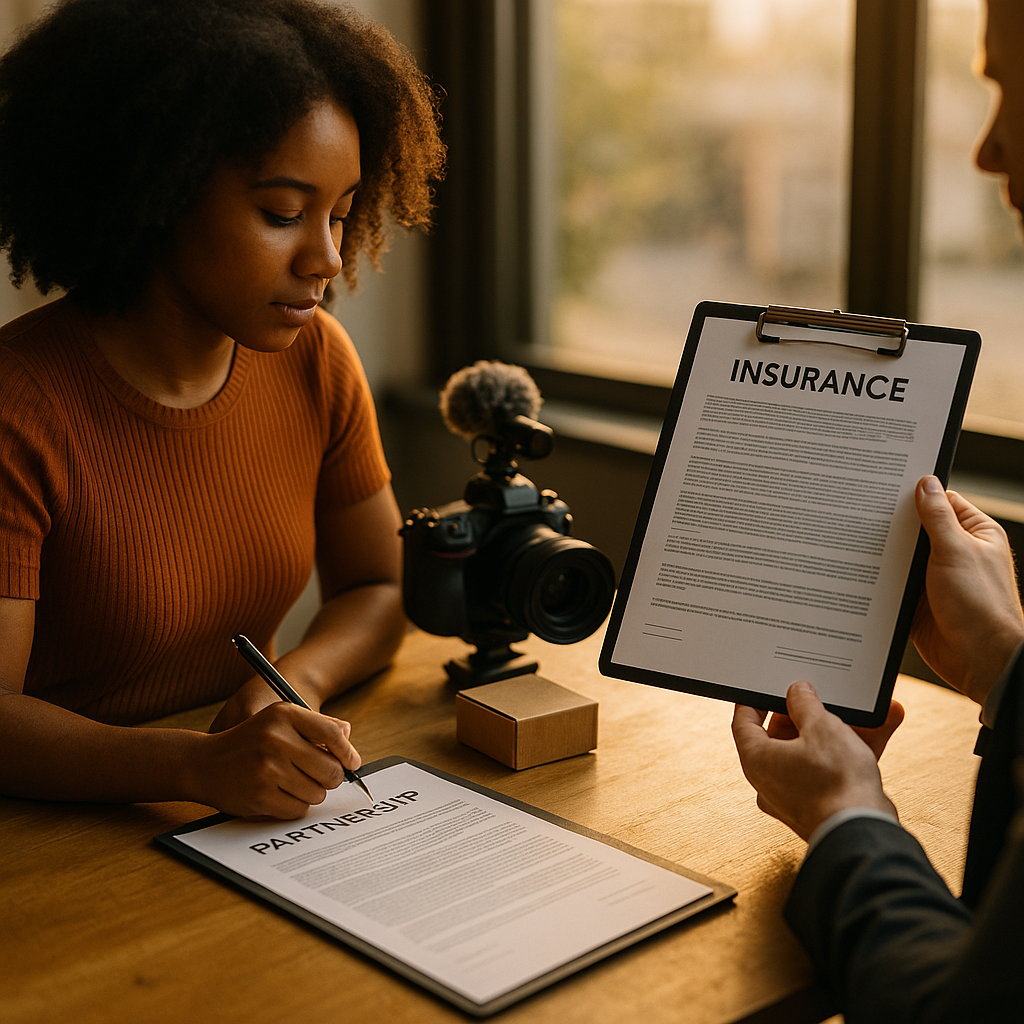
One unscripted brand mention, one deepfake accusation, one creator who posts something defamatory while wearing your logo, and a scaling influencer program can turn into a six-figure legal bill overnight. Insurance for creator partnerships isn’t a back-office afterthought anymore. It’s the difference between a program that survives a bad week and one that doesn’t.
Marketing teams love to talk about reach, engagement, and creator fit. Legal and risk teams talk about something else entirely: exposure. As brands move from a handful of nano-influencer gifting deals to multi-tier programs spanning hundreds of creators, ambassador networks, and AI-generated content, the risk surface expands fast. Most CMOs don’t realize their standard general liability policy wasn’t built for any of this.
Why Creator Programs Outgrow Standard Business Insurance
Traditional commercial insurance was designed for a world of employees, physical premises, and predictable media output. Creator partnerships blow that model apart. You’ve got independent contractors publishing unscripted content, sometimes with AI tools in the mix, across platforms your legal team barely has visibility into. A general liability (GL) policy typically covers bodily injury and property damage. It does almost nothing for the risks that actually sink influencer programs: defamation, copyright infringement, undisclosed material connections, or a creator’s account getting hacked and posting something that tanks your brand reputation.
A single FTC enforcement action or defamation lawsuit tied to an influencer post can cost more than an entire year’s creator marketing budget, yet most brands still insure creator programs like they’re running a print ad campaign.
The math gets worse at scale. Ten creator partnerships is a manageable risk. Two hundred creator partnerships, several agencies, a clipping network, and an AI-matching platform sourcing talent automatically? That’s an operational risk profile closer to a media company than a marketing department. And most brands haven’t updated their coverage to match.
The Core Policies Every Scaling Program Needs
Media Liability / Advertising Injury Coverage
This is the foundational policy for anyone publishing content at volume. Media liability (sometimes bundled as “advertising injury” inside a broader policy) covers claims like defamation, libel, slander, invasion of privacy, and copyright or trademark infringement arising from published content. If a creator you’ve partnered with posts a claim about a competitor that turns out to be false, or uses copyrighted music without clearance, this is the policy that responds. Standard GL policies routinely exclude “advertising injury” for anything published online by a third party, which is exactly the gap creator programs live in.
Errors and Omissions (E&O) for Marketing Services
E&O coverage protects against claims that your marketing services caused financial harm through negligence, mistakes, or failure to deliver as promised. If your agency or in-house team is running the creator program and a campaign misfires (say, an AI-generated script makes an unsubstantiated product claim that a regulator flags), E&O is what covers the legal defense and settlement costs. This matters even more now that AI creator scripts are entering production pipelines faster than legal teams can review them.
Cyber Liability Insurance
Creator programs generate and store data: contact information, payment details, performance analytics, sometimes biometric data for virtual influencer likeness rights. A breach involving creator or consumer data triggers notification obligations, regulatory scrutiny, and potential class action exposure. Cyber liability covers breach response costs, credit monitoring, regulatory fines where insurable, and third-party liability. This is non-negotiable once you’re working with clipping networks or AI matching platforms that touch personal data under state privacy laws.
Employment Practices Liability (EPLI), Even for Contractors
Most creators are classified as independent contractors, not employees, which leads brands to assume EPLI doesn’t apply. Wrong assumption. Misclassification claims, harassment allegations involving talent managers, and discrimination claims in creator selection processes have all become live risks as programs scale into the hundreds of partners. An EPLI policy with contractor-inclusive language closes that gap.
Intellectual Property (IP) Infringement Coverage
Every piece of user-generated content a creator produces potentially touches someone else’s IP: music, footage, brand assets, even AI training data. As virtual influencers and AI-generated creator content become mainstream, IP exposure multiplies. Brands dealing with biometric privacy laws and virtual influencer contracts are already seeing this play out in real disputes over likeness rights and synthetic media ownership.
What About Platform and Algorithm Risk?
Here’s a risk category most insurance brokers still don’t fully understand: what happens when a platform changes its algorithm, revokes API access, or bans a creator’s account mid-campaign, and your brand loses paid promotion, committed reach, or contracted deliverables as a result? Traditional business interruption insurance rarely contemplates platform-dependent revenue loss. This is why more sophisticated brands are pushing contractual protection through algorithm change indemnification clauses rather than relying on insurance alone. Insurance and contract language need to work together here, not one instead of the other.
The same logic applies to platform-specific compliance shifts. When TikTok tightens age verification or Meta rolls out new teen safety requirements, a brand caught flat-footed faces both regulatory exposure and campaign disruption. Programs that treat platform verification requirements as a compliance checklist rather than a one-time setup task are the ones that avoid surprise claims.
FTC Compliance Risk Deserves Its Own Line Item
Regulatory risk sits in an odd spot with insurance. Fines themselves are often uninsurable as a matter of public policy, but the legal defense costs, investigation expenses, and settlement negotiations around an FTC action absolutely are coverable under the right E&O or media liability endorsement. Given that the FTC has continued sharpening its stance on influencer disclosure and native advertising, brands running high-volume creator programs should assume regulatory scrutiny is a “when,” not an “if.”
This is particularly acute for AI-driven creative. As covered in our piece on AI visibility claims and the FTC native advertising line, the line between disclosed sponsorship and deceptive AI-assisted content is getting blurrier, not clearer. Insurance underwriters are starting to ask pointed questions during renewal about whether brands have human review workflows for AI-generated creator ads. Expect that question to become standard within the next underwriting cycle.
If your underwriter hasn’t asked about your AI content review process yet, they will at your next renewal. Brands that can point to a documented approval workflow negotiate better premiums.
Contract Language Is Half the Insurance Strategy
Insurance doesn’t operate in a vacuum. Every policy has exclusions, and the fastest way to discover an exclusion is after a claim gets denied. That’s why the strongest risk-mitigation strategy pairs insurance with airtight creator contracts. Indemnification clauses, data processing addendums, and liability caps in your creator agreements determine whether a claim even reaches your insurer or gets resolved contractually first.
Brands working with AI-powered creator matching platforms in particular need to nail down indemnification language for AI creator matching platforms before scaling volume. Same goes for data flows: if you’re sourcing creators or audience data through third-party platforms, a proper data processing addendum under state privacy laws should be in place before the first contract is signed, not retrofitted after a regulator comes calling.
A Practical Sequencing Checklist for Scaling Brands
- Under 20 active creators: Media liability endorsement added to existing GL policy, basic contractor agreements with indemnification clauses.
- 20 to 100 creators: Standalone media liability policy, E&O for marketing services, cyber liability if you’re collecting creator or customer data directly.
- 100+ creators or multi-agency programs: Full stack including EPLI with contractor language, IP infringement coverage, and a dedicated risk review of AI tools in your content pipeline.
- Any program using AI-generated content or virtual influencers: IP and likeness coverage reviewed specifically for synthetic media, plus updated contract templates addressing biometric and likeness rights.
Run this sequencing past your broker annually, not once at program launch. Creator programs evolve fast, and yesterday’s coverage gap is next quarter’s denied claim.
How Much Should Brands Budget for This?
There’s no universal number, since premiums depend on program size, industry vertical, and claims history, but industry data from sources like eMarketer shows influencer marketing budgets continuing to climb year over year, which means insurance line items need to scale proportionally rather than stay flat. A reasonable planning heuristic: budget insurance costs as a percentage of total creator program spend, reviewed at each renewal cycle, rather than as a fixed dollar figure set once and forgotten. Brands that treat insurance as a variable cost tied to program complexity, not a static overhead line, tend to avoid the coverage gaps that show up right when a program scales fastest.
It’s also worth benchmarking against general marketing operations data. Platforms like Sprout Social and resources from HubSpot regularly publish creator economy spend trends that help risk and marketing teams justify insurance budget increases to finance stakeholders who might otherwise see it as an unnecessary expense.
The Real Cost of Skipping This Step
Brands that scale creator partnerships without updating insurance coverage are effectively self-insuring against risks they haven’t even mapped. That’s fine until the first claim lands. Then it’s a scramble: outside counsel on retainer, a brand reputation crisis running in parallel, and a finance team asking why nobody flagged this before the program tripled in size.
The brands getting this right aren’t necessarily the biggest spenders. They’re the ones who treat insurance review as a standing agenda item alongside creator vetting, contract review, and platform compliance audits, not a one-time setup task from three years ago.
Before your next budget cycle, put insurance coverage review on the same calendar as your creator contract audit. If your broker can’t answer specific questions about AI-generated content liability or platform-dependent business interruption, that’s a sign it’s time to find one who can.
FAQs
What insurance does a brand need before starting an influencer marketing program?
At minimum, brands should have media liability coverage (or an advertising injury endorsement on their general liability policy) and contractor agreements with clear indemnification language. As programs grow past a handful of creators, errors and omissions coverage and cyber liability become necessary additions.
Does general liability insurance cover influencer marketing risks?
Usually not fully. Standard general liability policies often exclude advertising injury claims arising from content published online by third parties, which is precisely the risk creator partnerships generate. Brands typically need a media liability endorsement or standalone policy to close that gap.
Is FTC enforcement risk insurable?
Fines themselves are generally uninsurable as a matter of public policy, but legal defense costs, investigation expenses, and related settlement negotiations can often be covered under errors and omissions or media liability policies with the right endorsements.
Do brands need separate insurance for AI-generated creator content?
Increasingly, yes. Underwriters are starting to ask about AI content review workflows during renewal, and IP infringement coverage needs specific review for synthetic media, virtual influencers, and AI-generated scripts to ensure claims involving those assets aren’t excluded.
How often should brands review their creator program insurance coverage?
At minimum annually, and ideally at every major program milestone (crossing 50 or 100 active creators, adding a new platform, or introducing AI tools into the content pipeline). Risk profiles shift faster than most renewal cycles account for.
Are independent contractors covered under employment practices liability insurance?
Not automatically. Standard EPLI policies are written with employees in mind, so brands need to confirm their policy includes contractor-inclusive language to cover misclassification or discrimination claims tied to creator selection and management.
FAQs
Top Influencer Marketing Agencies
The leading agencies shaping influencer marketing in 2026
Agencies ranked by campaign performance, client diversity, platform expertise, proven ROI, industry recognition, and client satisfaction. Assessed through verified case studies, reviews, and industry consultations.
Moburst

-
2

The Shelf
Boutique Beauty & Lifestyle Influencer AgencyA data-driven boutique agency specializing exclusively in beauty, wellness, and lifestyle influencer campaigns on Instagram and TikTok. Best for brands already focused on the beauty/personal care space that need curated, aesthetic-driven content.Clients: Pepsi, The Honest Company, Hims, Elf Cosmetics, Pure LeafVisit The Shelf → -
3

Audiencly
Niche Gaming & Esports Influencer AgencyA specialized agency focused exclusively on gaming and esports creators on YouTube, Twitch, and TikTok. Ideal if your campaign is 100% gaming-focused — from game launches to hardware and esports events.Clients: Epic Games, NordVPN, Ubisoft, Wargaming, Tencent GamesVisit Audiencly → -
4

Viral Nation
Global Influencer Marketing & Talent AgencyA dual talent management and marketing agency with proprietary brand safety tools and a global creator network spanning nano-influencers to celebrities across all major platforms.Clients: Meta, Activision Blizzard, Energizer, Aston Martin, WalmartVisit Viral Nation → -
5

The Influencer Marketing Factory
TikTok, Instagram & YouTube CampaignsA full-service agency with strong TikTok expertise, offering end-to-end campaign management from influencer discovery through performance reporting with a focus on platform-native content.Clients: Google, Snapchat, Universal Music, Bumble, YelpVisit TIMF → -
6

NeoReach
Enterprise Analytics & Influencer CampaignsAn enterprise-focused agency combining managed campaigns with a powerful self-service data platform for influencer search, audience analytics, and attribution modeling.Clients: Amazon, Airbnb, Netflix, Honda, The New York TimesVisit NeoReach → -
7

Ubiquitous
Creator-First Marketing PlatformA tech-driven platform combining self-service tools with managed campaign options, emphasizing speed and scalability for brands managing multiple influencer relationships.Clients: Lyft, Disney, Target, American Eagle, NetflixVisit Ubiquitous → -
8

Obviously
Scalable Enterprise Influencer CampaignsA tech-enabled agency built for high-volume campaigns, coordinating hundreds of creators simultaneously with end-to-end logistics, content rights management, and product seeding.Clients: Google, Ulta Beauty, Converse, AmazonVisit Obviously →