


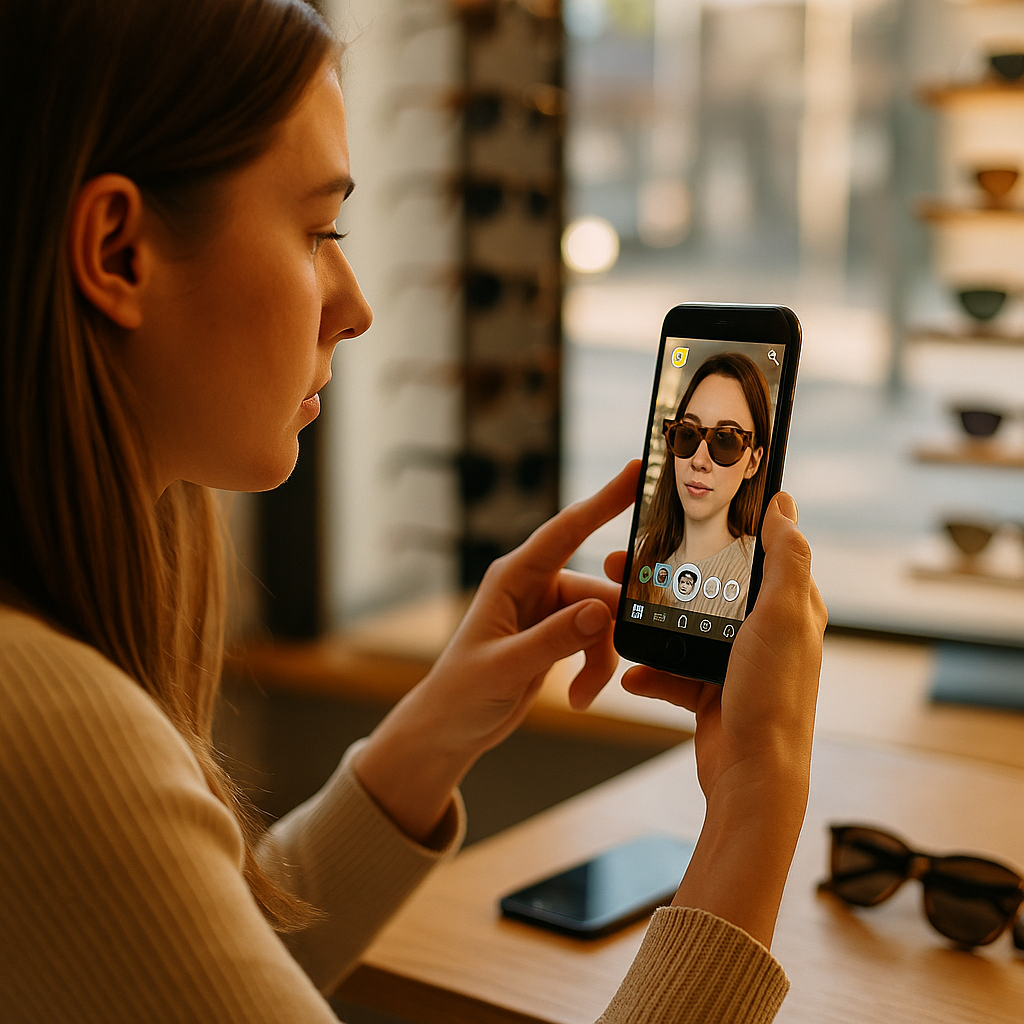
Snapchat drives 300 million-plus daily users through camera-first experiences, and its AR try-on lenses convert at rates most product detail pages can only dream about. Yet most brand teams still treat Snapchat AR as a novelty add-on rather than a conversion channel. That’s a mistake, and the window to own this space is closing fast as TikTok builds out its own AR try-on infrastructure.
This playbook breaks down how brand and agency teams should actually build, deploy, and measure Snapchat AR lenses for product try-on, with an eye on locking in first-mover advantage before the competitive landscape shifts.
Why Snapchat AR Try-On Is Undervalued Right Now
Snapchat built its entire product around the camera. That’s not marketing copy, it’s structural. Unlike TikTok or Instagram, where AR effects live as a secondary feature layered onto a video feed, Snapchat’s Lens Studio ecosystem was designed from day one for face and world tracking. Beauty brands figured this out years ago. Fashion, eyewear, and footwear brands are catching up now, and the ROI data backs the shift.
Snap’s own advertiser data has repeatedly shown that AR-enabled shopping experiences lift purchase intent and time-spent metrics well beyond static product ads. When a shopper can see how a lipstick shade looks on their own face, or how a pair of sunglasses sits on their nose, the psychological distance between browsing and buying collapses. There’s less guesswork, fewer returns, and a faster path to checkout.
Brands running Snapchat try-on lenses for beauty and eyewear categories have reported conversion lift multiples that outperform standard carousel ads, largely because AR removes the single biggest friction point in online shopping: uncertainty about fit and appearance.
Compare that to TikTok, which is still iterating on its AR effects platform and has yet to ship a mature, brand-ready try-on infrastructure comparable to Lens Studio. TikTok’s strength is discovery and virality. Snapchat’s strength, quietly, is commerce-grade AR tooling that’s been refined for the better part of a decade. That gap won’t stay open forever, but right now it’s a real advantage for brands willing to build.
Building the Lens: What Actually Drives Conversion
Not all AR lenses are created equal. A poorly built try-on lens with laggy tracking or unrealistic rendering will tank trust faster than no AR at all. Here’s what separates lenses that convert from lenses that just look cool in a demo reel.
- Accurate segmentation and tracking. For apparel and accessories, this means precise body or face mapping so the product doesn’t float, jitter, or clip through the user’s features.
- Realistic material rendering. Fabric texture, metallic finishes, and lighting response matter more than most brands budget for. Cheap-looking renders undermine the entire value proposition of try-on.
- Instant add-to-cart integration. The lens should link directly into Snapchat’s native shopping flow or a brand’s product catalog via the Snap Pixel and Shopping API, not bounce users out to a separate app.
- Fast load times. Snap’s Lens Studio has gotten better at optimizing asset weight, but bloated 3D models still cause abandonment before the lens even opens.
- Social sharing hooks. Built-in prompts to share the try-on result (with the brand tag intact) turn every user into a micro-distribution channel.
Brands working with Snap’s Lens Studio should budget for a proper 3D asset pipeline, not a rushed afterthought. If your product team already has 3D models from manufacturing or e-commerce photography, that’s a head start. If not, expect the asset creation cost to be the single largest line item in your first AR lens budget, often exceeding the media spend itself.
The Creator Layer: Why You Need Real Faces, Not Just Filters
Here’s where the “creator” in AR lens creator playbook actually matters. A brand-built lens sitting alone in Snapchat’s lens carousel gets a fraction of the reach it needs. Creators are the distribution engine. Partnering with Snap Star creators or mid-tier beauty and fashion voices to demo the lens, react to their own try-on results, and push it into their Snap Stories does more for discovery than paid placement alone.
The mechanics look like this: brand builds the lens, creator gets early access, creator posts a genuine reaction video using the lens (not a scripted ad read), and that content becomes the organic proof point that drives other users to open the lens themselves. This mirrors what’s worked on TikTok Shop with affiliate-driven product demos, where optimal payout structures for creators have become a science of their own. Snapchat hasn’t built an affiliate marketplace with the same maturity, so brands need to negotiate creator deals directly or through agencies with existing Snap Star relationships.
One nuance worth flagging: Snapchat’s audience skews younger than TikTok’s core demo in some regions, but older in others depending on market. Brief creators accordingly, and don’t assume a TikTok-style script will land the same way on Snapchat. The platform’s intimacy (closer friend groups, less public performance) means creator content needs to feel more personal and less produced.
Measuring What Matters: KPIs Beyond Impressions
Impressions and lens opens are vanity metrics if you stop there. The KPIs that actually tie to revenue are:
- Try-on to cart rate. The percentage of users who open the lens and then tap through to add the item to cart.
- Cart to purchase rate, segmented by lens traffic. This isolates whether AR-driven traffic converts differently than standard ad traffic.
- Average session duration within the lens. Longer engagement generally correlates with higher purchase intent, but watch for lenses that are engaging without converting, which usually signals a broken cart flow.
- Share rate. How many users post their try-on result. This is your organic distribution multiplier and a leading indicator of viral reach.
- Return rate on AR-influenced purchases. This is the metric that proves ROI to finance teams. If AR try-on genuinely reduces size and fit uncertainty, returns on those SKUs should drop measurably compared to non-AR purchases.
Set up proper attribution before launch, not after. Snap’s ad manager supports pixel-based tracking, but brands need to make sure their e-commerce platform is passing lens-specific UTM parameters or Snap’s own tracking tags cleanly through checkout. Sloppy tracking is the number one reason brand teams undersell their own AR results to leadership.
For teams also running AI-driven shopping discovery, it’s worth cross-referencing how AI shopping carousels are reshaping product discovery upstream of the AR experience. AR try-on works best as the conversion layer after a shopper has already been surfaced the product through search, social, or AI-driven recommendation.
Compliance and Disclosure: Don’t Skip This
Sponsored AR lenses fall under the same disclosure requirements as any other paid partnership. If a creator is compensated to use or promote a branded lens, that relationship needs clear disclosure under FTC guidance, and brands operating in the UK or EU should review equivalent requirements from the ICO. This isn’t optional legal boilerplate, it’s a real risk given how much scrutiny influencer disclosure has faced across platforms recently.
Brands that have already navigated disclosure complexity on other platforms, like the sequencing challenges covered in our piece on shoppable overlay disclosure timing, should apply the same rigor here. Snapchat’s ephemeral content format (stories disappearing after 24 hours) doesn’t exempt brands from disclosure obligations, and regulators have made that explicit in past enforcement actions.
Also worth noting: data privacy around facial tracking is a heightened concern with AR lenses specifically, since the technology inherently processes biometric-adjacent data to map faces for try-on. Brands should confirm Snap’s data handling policies align with their own privacy commitments before greenlighting a campaign, particularly for markets with strict biometric data laws.
The TikTok Catch-Up Clock: How Much Time Do You Actually Have?
TikTok isn’t ignoring AR. The platform has been investing in its Effect House tooling and has shown clear ambition to close the gap with Snapchat’s Lens Studio maturity. Industry estimates from firms like eMarketer suggest AR commerce spend across social platforms will keep climbing as more brands see hard conversion data, and TikTok’s massive Shop infrastructure gives it a distribution advantage Snapchat doesn’t have.
But infrastructure maturity doesn’t happen overnight. Snap has had roughly a decade’s head start on the AR creator tooling side, and that shows in asset fidelity, tracking accuracy, and developer documentation. Brands that build Snapchat AR competency now, meaning actual in-house or agency expertise in Lens Studio production, get two things TikTok latecomers won’t have when the platform does catch up: proven creative templates and a track record of what converts for their specific category.
Think of it like the early days of TikTok Shop itself. Brands that moved fast on affiliate structures and livestream formats, similar to the shifts covered in our TikTok Symphony whitelisting playbook, built compounding advantages that late entrants struggled to replicate. The same dynamic is playing out with Snapchat AR right now, just on a different platform and a different technology stack.
For brands already running Snapchat commerce plays, it’s worth reviewing how the My AI sponsored recommendations playbook pairs with AR try-on to create a fuller funnel, since Snap’s AI chat surface can prime users toward a product before they ever open the lens.
Getting Started: A Realistic Rollout Timeline
Brands new to Snapchat AR shouldn’t try to launch a full try-on catalog in one push. Start narrow.
- Weeks one through four: Build and test a single hero product lens with a small creator cohort. Validate tracking accuracy and cart integration before scaling.
- Weeks five through eight: Expand creator partnerships, layer in paid amplification behind top-performing organic lens content, and start segmenting conversion data by traffic source.
- Weeks nine through twelve: Scale to a broader product catalog, refine based on return rate and cart data, and formalize a creator brief template for ongoing lens launches.
Budget realistically. Expect asset production to cost more than initial media spend, and treat the first cycle as a learning investment rather than a guaranteed ROI win. The brands seeing the best long-term results are the ones who iterate on lens quality every cycle instead of shipping once and walking away.
FAQs
Frequently Asked Questions
What makes Snapchat AR lenses different from Instagram or TikTok AR filters?
Snapchat’s Lens Studio was purpose-built for commerce-grade face and body tracking years before competitors invested in similar tooling, giving brands more precise try-on rendering and deeper native shopping integration.
How much does it cost to build a branded try-on lens?
Costs vary widely by product complexity, but 3D asset production typically exceeds the initial media spend, especially for apparel or footwear requiring accurate material and fit rendering.
Do I need influencer partnerships for an AR lens to succeed?
Not strictly, but organic reach for a standalone brand lens is limited. Creator-driven demo content is the primary distribution engine that pushes lenses beyond the immediate Snapchat carousel.
What’s the most important metric for proving AR try-on ROI?
Return rate reduction on AR-influenced purchases tends to carry the most weight with finance stakeholders, since it directly ties AR investment to cost savings, not just conversion lift.
Is TikTok close to matching Snapchat’s AR try-on capability?
TikTok is investing in Effect House and closing the gap, but Snapchat’s decade-long head start in Lens Studio tooling still gives it an edge in tracking accuracy and asset fidelity.
Do sponsored AR lenses require FTC disclosure?
Yes. Any paid creator partnership promoting a branded lens must follow standard disclosure rules, regardless of the content’s ephemeral format.
Start with one hero product, one creator cohort, and one clean attribution setup. Prove the return rate reduction, then scale the catalog, because the brands that build Snapchat AR muscle memory now will be the ones setting the category benchmark once TikTok’s tooling matures.
Top Influencer Marketing Agencies
The leading agencies shaping influencer marketing in 2026
Agencies ranked by campaign performance, client diversity, platform expertise, proven ROI, industry recognition, and client satisfaction. Assessed through verified case studies, reviews, and industry consultations.
Moburst

-
2

The Shelf
Boutique Beauty & Lifestyle Influencer AgencyA data-driven boutique agency specializing exclusively in beauty, wellness, and lifestyle influencer campaigns on Instagram and TikTok. Best for brands already focused on the beauty/personal care space that need curated, aesthetic-driven content.Clients: Pepsi, The Honest Company, Hims, Elf Cosmetics, Pure LeafVisit The Shelf → -
3

Audiencly
Niche Gaming & Esports Influencer AgencyA specialized agency focused exclusively on gaming and esports creators on YouTube, Twitch, and TikTok. Ideal if your campaign is 100% gaming-focused — from game launches to hardware and esports events.Clients: Epic Games, NordVPN, Ubisoft, Wargaming, Tencent GamesVisit Audiencly → -
4

Viral Nation
Global Influencer Marketing & Talent AgencyA dual talent management and marketing agency with proprietary brand safety tools and a global creator network spanning nano-influencers to celebrities across all major platforms.Clients: Meta, Activision Blizzard, Energizer, Aston Martin, WalmartVisit Viral Nation → -
5

The Influencer Marketing Factory
TikTok, Instagram & YouTube CampaignsA full-service agency with strong TikTok expertise, offering end-to-end campaign management from influencer discovery through performance reporting with a focus on platform-native content.Clients: Google, Snapchat, Universal Music, Bumble, YelpVisit TIMF → -
6

NeoReach
Enterprise Analytics & Influencer CampaignsAn enterprise-focused agency combining managed campaigns with a powerful self-service data platform for influencer search, audience analytics, and attribution modeling.Clients: Amazon, Airbnb, Netflix, Honda, The New York TimesVisit NeoReach → -
7

Ubiquitous
Creator-First Marketing PlatformA tech-driven platform combining self-service tools with managed campaign options, emphasizing speed and scalability for brands managing multiple influencer relationships.Clients: Lyft, Disney, Target, American Eagle, NetflixVisit Ubiquitous → -
8

Obviously
Scalable Enterprise Influencer CampaignsA tech-enabled agency built for high-volume campaigns, coordinating hundreds of creators simultaneously with end-to-end logistics, content rights management, and product seeding.Clients: Google, Ulta Beauty, Converse, AmazonVisit Obviously →