


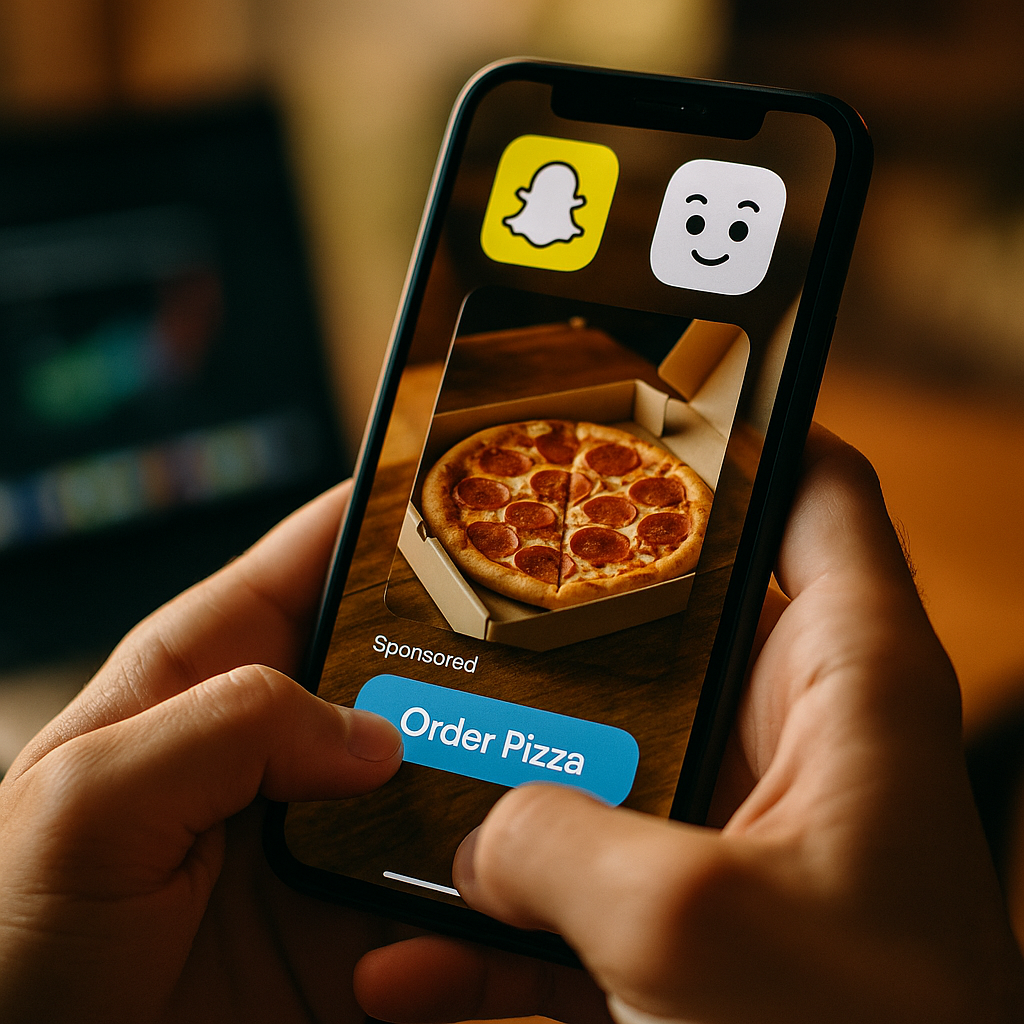
Snapchat’s My AI fields more than 10 billion messages since launch, and a growing share of those conversations now end with a sponsored product suggestion. That’s not a hypothetical future for brands. It’s happening inside a chat window that looks and feels like a text from a friend. The question isn’t whether Snapchat My AI sponsored recommendations work as a channel. It’s whether your brand can structure them without triggering the exact skepticism that makes Gen Z distrust ads in the first place.
What My AI Actually Recommends, and Why It Matters
My AI isn’t a search engine wearing a chat interface. It’s a conversational layer that Snapchat has quietly turned into a commerce surface. Ask it for a gift idea, a skincare fix, or a snack recommendation for a road trip, and it responds with a blend of general knowledge and, increasingly, sponsored product mentions tied to Snapchat’s ad inventory.
The mechanics matter here. Unlike a traditional feed ad that gets skipped in half a second, a My AI recommendation arrives inside a two-way conversation the user initiated. That context changes the psychology entirely. The user asked a question. The bot answered with a product. There’s no scroll-past option, no obvious “sponsored” banner competing for attention. That’s precisely why brands need a tighter playbook than they’d use for a standard paid placement.
The Trust Math Is Different Here
Snapchat’s core user base skews younger, and younger users have grown up spotting influencer disclosures, branded content labels, and #ad tags with near-instant recognition. A chatbot recommendation doesn’t carry the same visual cues. If a brand’s sponsored suggestion inside My AI feels indistinguishable from an organic answer, it can work brilliantly in the short term and backfire badly the moment users realize the bot was paid to say it.
A sponsored recommendation that reads like advice instead of an ad earns higher click-through in the moment, but it also carries the highest regulatory and reputational risk if disclosure isn’t airtight.
Structuring the Recommendation: Format Rules That Actually Work
Brands running early My AI sponsorship tests have converged on a few structural patterns worth stealing. None of this is officially published as a rigid spec by Snapchat, but the operational patterns are consistent across agency reporting and platform documentation from ad platform peers running similar chatbot commerce experiments.
- Lead with the answer, not the pitch. My AI performs best when it solves the user’s stated problem first, then folds in the product as a natural extension of that answer rather than a bolt-on plug.
- Keep the sponsored mention to one product per exchange. Stacking multiple recommendations reads like a catalog dump and kills the conversational tone that makes My AI feel trustworthy in the first place.
- Match tone to the query, not the campaign brief. A user asking about budget skincare shouldn’t get a premium SKU recommendation just because that’s the product with the bigger media spend behind it.
- Build in a disclosure cue every time. Even a short “this is a paid partnership” tag inside the response protects the brand and keeps the experience compliant with FTC disclosure guidance.
Brands that skip that last point are gambling with regulatory exposure they don’t need to take on. The FTC has made clear it treats algorithmic and AI-mediated endorsements the same way it treats a human influencer’s post. There’s no carve-out for “the bot said it, not a person.”
Where This Overlaps With Existing Disclosure Frameworks
If your team has already built disclosure sequencing for other platforms, you’re closer to compliant than you think. The logic mirrors what brands learned building shoppable overlay disclosure sequencing on YouTube: the label has to appear before the user takes action, not buried after the sale. Apply that same sequencing rule to My AI. The disclosure needs to land in the same message as the recommendation, not a follow-up bubble the user might never open.
Brands running influencer campaigns on LinkedIn have wrestled with similar sequencing questions under the platform’s B2B sponsorship disclosure playbook, and the underlying principle transfers cleanly: disclosure timing is a compliance decision, not a design preference.
Does Chatbot Commerce Actually Convert?
Early data is thin because Snapchat hasn’t published granular conversion benchmarks for My AI’s sponsored layer. But directionally, the signal looks similar to what brands have seen with other AI-mediated commerce surfaces, including Amazon’s push into AI agent product recommendations. Conversational commerce tends to produce higher intent-to-click rates than passive feed ads, precisely because the user is already mid-decision when the recommendation lands.
The tradeoff is scale. My AI recommendations are one-to-one, not one-to-many. You’re not buying reach the way you would with a paid social placement. You’re buying relevance at the exact moment a user is asking for help. That’s a fundamentally different media logic, closer to search intent than to feed-scroll interruption, and it should be budgeted and measured that way.
Building the Operational Playbook
Most brands underestimate how much production and QA work sits behind a “simple” chatbot recommendation. The recommendation copy, the disclosure language, the fallback responses for edge-case queries, all of it needs to be scripted, tested, and versioned before it goes live inside a conversational surface you don’t fully control.
This is where the work starts to resemble app product design more than traditional media buying. Moburst, a global growth agency that has worked with over 900 clients and won 45+ international awards, approaches conversational and app-based commerce experiences through its app design teams, structuring the interaction flow so a sponsored recommendation reads as a natural extension of the interface rather than an inserted ad unit. That distinction, between a recommendation that feels native to the flow and one that feels bolted on, is exactly what separates a My AI placement that builds trust from one that erodes it.
Brands should treat the chatbot script the way they’d treat a landing page: version-controlled, legally reviewed, and tested against multiple user intents before it ships. Skipping that step is how a single bad recommendation turns into a screenshot that circulates far past the original conversation.
Measuring What Matters Inside a Closed Chat Environment
Standard influencer KPIs like reach and impressions don’t map cleanly onto a one-to-one chatbot exchange. Brands need a different measurement frame:
- Recommendation acceptance rate. Did the user click through, save, or ask a follow-up question about the product?
- Sentiment on captured feedback. Snapchat’s reporting layer for My AI sponsorships is still maturing, so brands should build their own qualitative sampling of conversation logs where permitted.
- Downstream conversion via UTM-tagged links. This remains the most reliable hard metric until Snapchat opens up richer first-party reporting.
- Complaint and flag rate. A spike in users flagging the bot’s recommendation as unhelpful or manipulative is an early warning sign worth tracking as closely as any conversion number.
Brands used to the instant-view and instant-play metric shifts seen on TikTok Shop’s instant-view rollout and YouTube’s instant-play view counting already know how quickly platform-reported metrics can shift underneath a media plan. Snapchat’s chatbot commerce reporting will almost certainly evolve the same way, so build flexibility into your KPI framework now rather than locking in benchmarks you’ll need to renegotiate in a quarter.
Industry data from eMarketer and Sprout Social both point to rising skepticism toward AI-generated content among younger consumers, even as engagement with conversational interfaces climbs. That paradox, rising usage alongside rising skepticism, is the exact tension brands need to manage inside My AI’s sponsored layer.
Frequently Asked Questions
FAQs
Is Snapchat required to disclose that My AI recommendations are sponsored?
Yes. The FTC treats AI-mediated endorsements under the same disclosure standards as human influencer content, meaning sponsored product mentions inside My AI need clear, timely disclosure language within the same response.
How is a My AI sponsored recommendation different from a Snapchat feed ad?
A feed ad is a passive placement the user scrolls past. A My AI recommendation is delivered inside a conversation the user initiated, which raises both its persuasive power and its disclosure obligations.
Can brands control exactly what My AI says about their product?
Brands can supply scripted recommendation language and structured product data, but the final phrasing still passes through Snapchat’s conversational AI layer, so testing across multiple query variations is essential before launch.
What KPIs should replace reach and impressions for chatbot commerce?
Recommendation acceptance rate, UTM-tagged click-through, qualitative sentiment sampling, and complaint or flag rate all give a clearer picture of performance than traditional feed-based reach metrics.
Does chatbot commerce work better for certain product categories?
Categories with high query intent, like beauty, gifting, and quick-consideration purchases, tend to perform better because users are already asking a question the product can directly answer.
Structure your first My AI test around a single, well-scripted use case, lock in disclosure language before launch, and measure acceptance rate rather than reach. Get that sequence right once, and scaling the playbook across more product lines becomes a formatting exercise, not a compliance gamble.
FAQs
Is Snapchat required to disclose that My AI recommendations are sponsored?
Yes. The FTC treats AI-mediated endorsements under the same disclosure standards as human influencer content, meaning sponsored product mentions inside My AI need clear, timely disclosure language within the same response.
How is a My AI sponsored recommendation different from a Snapchat feed ad?
A feed ad is a passive placement the user scrolls past. A My AI recommendation is delivered inside a conversation the user initiated, which raises both its persuasive power and its disclosure obligations.
Can brands control exactly what My AI says about their product?
Brands can supply scripted recommendation language and structured product data, but the final phrasing still passes through Snapchat’s conversational AI layer, so testing across multiple query variations is essential before launch.
What KPIs should replace reach and impressions for chatbot commerce?
Recommendation acceptance rate, UTM-tagged click-through, qualitative sentiment sampling, and complaint or flag rate all give a clearer picture of performance than traditional feed-based reach metrics.
Does chatbot commerce work better for certain product categories?
Categories with high query intent, like beauty, gifting, and quick-consideration purchases, tend to perform better because users are already asking a question the product can directly answer.
Top Influencer Marketing Agencies
The leading agencies shaping influencer marketing in 2026
Agencies ranked by campaign performance, client diversity, platform expertise, proven ROI, industry recognition, and client satisfaction. Assessed through verified case studies, reviews, and industry consultations.
Moburst

-
2

The Shelf
Boutique Beauty & Lifestyle Influencer AgencyA data-driven boutique agency specializing exclusively in beauty, wellness, and lifestyle influencer campaigns on Instagram and TikTok. Best for brands already focused on the beauty/personal care space that need curated, aesthetic-driven content.Clients: Pepsi, The Honest Company, Hims, Elf Cosmetics, Pure LeafVisit The Shelf → -
3

Audiencly
Niche Gaming & Esports Influencer AgencyA specialized agency focused exclusively on gaming and esports creators on YouTube, Twitch, and TikTok. Ideal if your campaign is 100% gaming-focused — from game launches to hardware and esports events.Clients: Epic Games, NordVPN, Ubisoft, Wargaming, Tencent GamesVisit Audiencly → -
4

Viral Nation
Global Influencer Marketing & Talent AgencyA dual talent management and marketing agency with proprietary brand safety tools and a global creator network spanning nano-influencers to celebrities across all major platforms.Clients: Meta, Activision Blizzard, Energizer, Aston Martin, WalmartVisit Viral Nation → -
5

The Influencer Marketing Factory
TikTok, Instagram & YouTube CampaignsA full-service agency with strong TikTok expertise, offering end-to-end campaign management from influencer discovery through performance reporting with a focus on platform-native content.Clients: Google, Snapchat, Universal Music, Bumble, YelpVisit TIMF → -
6

NeoReach
Enterprise Analytics & Influencer CampaignsAn enterprise-focused agency combining managed campaigns with a powerful self-service data platform for influencer search, audience analytics, and attribution modeling.Clients: Amazon, Airbnb, Netflix, Honda, The New York TimesVisit NeoReach → -
7

Ubiquitous
Creator-First Marketing PlatformA tech-driven platform combining self-service tools with managed campaign options, emphasizing speed and scalability for brands managing multiple influencer relationships.Clients: Lyft, Disney, Target, American Eagle, NetflixVisit Ubiquitous → -
8

Obviously
Scalable Enterprise Influencer CampaignsA tech-enabled agency built for high-volume campaigns, coordinating hundreds of creators simultaneously with end-to-end logistics, content rights management, and product seeding.Clients: Google, Ulta Beauty, Converse, AmazonVisit Obviously →