


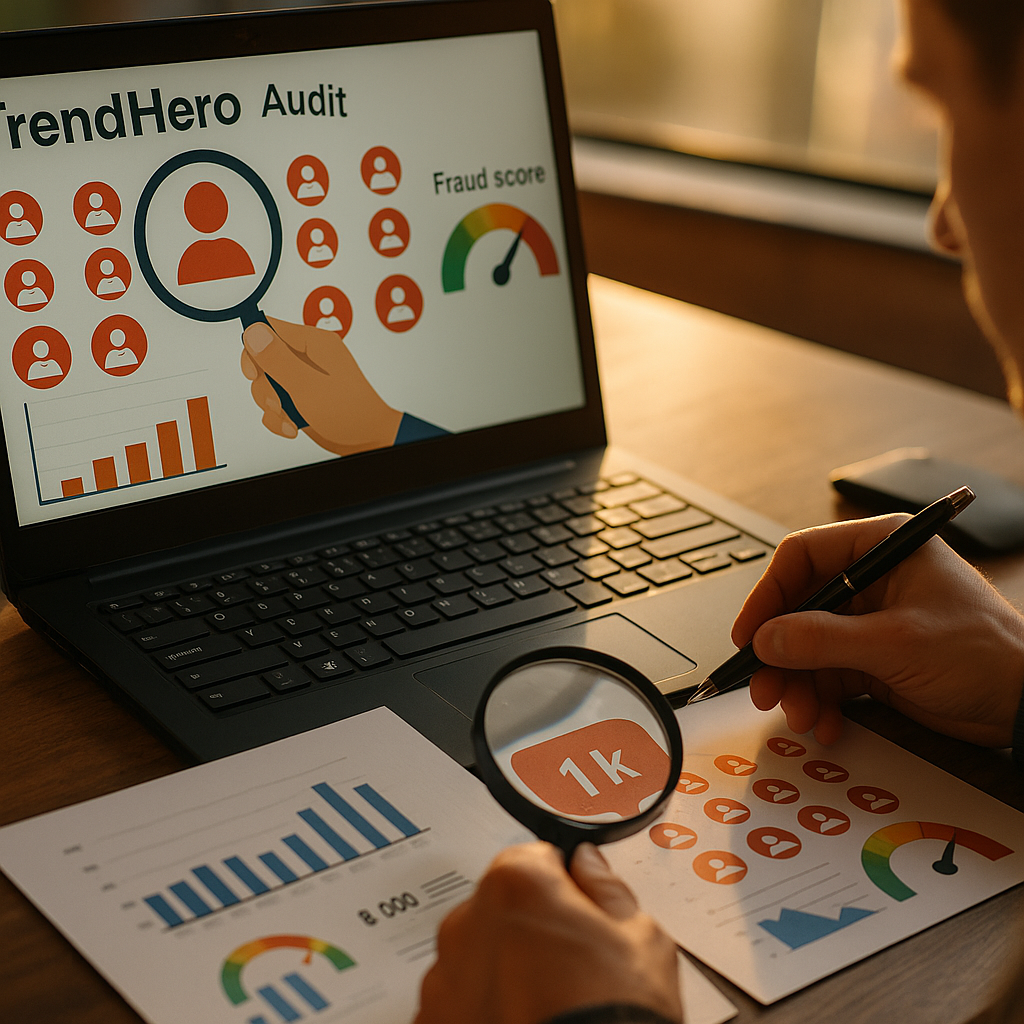
One in four Instagram accounts with over 100,000 followers shows signs of purchased engagement, according to fraud researchers. If your influencer budget runs into six figures, that stat should keep you up at night. This TrendHero review breaks down whether its 110 million creator database actually catches fake followers before you sign the contract, or whether it’s just another dashboard promising certainty it can’t deliver.
What TrendHero Actually Does
TrendHero is an audience analysis tool built for one job: telling you whether a creator’s following is real. It scans Instagram, YouTube, and TikTok profiles, cross-referencing follower growth patterns, engagement ratios, and audience geography against a database of roughly 110 million profiles. The pitch is simple. Paste a handle, get a fraud score, decide whether to proceed.
That sounds a lot like every other audit tool on the market, and in some ways it is. But TrendHero differentiates itself with granular breakdowns: follower type categorization (real, suspicious, mass followers, influencers), engagement quality scoring, and audience demographic overlap with your target market. For brands running performance-based influencer programs, that last piece matters more than the fraud score itself.
A fraud score tells you if followers are fake. A demographic overlap report tells you if real followers are even your customer. Most brands only check the first and skip the second, which is how campaigns hit reach targets but miss revenue targets.
Why Fake Follower Detection Still Matters in 2026
You’d think bot farms would have gotten easier to spot by now. They haven’t. Fraudsters have gotten better at mimicking organic growth curves, spreading fake engagement across time zones, and using AI-generated comments that pass casual human review. The FTC has increased scrutiny on undisclosed paid partnerships and inflated metrics, which means brands carry compliance exposure when they pay for reach that doesn’t exist.
There’s also a budget argument. Marketers report that influencer fraud costs the industry billions annually in wasted ad and partnership spend, a figure that’s only grown as creator budgets have scaled. If you’re negotiating rates off follower count, as many brands still do, you’re paying a premium for numbers that may not convert to a single sale.
This is where tools like TrendHero earn their subscription fee. A five-minute audit before contract signing can save a five-figure campaign line item. That math is hard to argue with, assuming the tool’s data holds up.
How Accurate Is the Fraud Scoring?
No audit tool is perfect, and TrendHero is no exception. Its scoring relies on statistical modeling, flagging accounts with suspiciously fast follower spikes, low engagement-to-follower ratios, or audiences concentrated in known bot farming regions. In practice, this catches the obvious cases well: accounts that bought 50,000 followers overnight or micro-influencers with 2% engagement padded by comment pods.
Where it gets murkier is the middle tier. Creators who run occasional giveaways, use engagement groups lightly, or have naturally volatile reach (common on TikTok) can trigger false flags. Treat the TrendHero score as a starting point for a conversation with the creator, not a final verdict. Ask for platform-native insights to cross-check anything that looks borderline.
Database Size: Does 110 Million Creators Actually Help?
A bigger database sounds impressive on a landing page, but size alone doesn’t guarantee relevance. What matters is coverage depth in the platforms and niches you actually work in. TrendHero’s strength is Instagram and YouTube coverage, which is solid for lifestyle, beauty, and fitness verticals. TikTok coverage has improved but still lags behind dedicated TikTok-first discovery tools.
For brands running multi-platform programs, that’s a real consideration. You may need to pair TrendHero’s audit function with a broader influencer martech stack rather than expecting one tool to do discovery, vetting, and reporting end to end. Nobody’s built that unicorn yet, despite what the sales decks claim.
- Instagram: Deep historical data, reliable fraud flagging, strong demographic breakdowns.
- YouTube: Solid subscriber authenticity checks, view velocity analysis.
- TikTok: Improving, but engagement volatility makes false positives more common.
Pricing and Where It Fits in Your Workflow
TrendHero operates on a tiered subscription model priced for agencies and mid-market brands running regular vetting at volume. Entry tiers cover a limited number of monthly report generations, which works fine if you’re vetting a handful of partnerships per quarter. Scale up to dozens of creators a month, and the cost per audit starts looking less like a line item and more like a dedicated headcount expense.
The real question isn’t whether TrendHero works. It’s whether it’s the right tool for your program’s size. A brand testing five creators a quarter doesn’t need the same infrastructure as one managing a 300-creator ambassador network. If you’re operating at that larger scale, the fraud detection conversation shifts entirely, as we covered in our breakdown of nano creator network fraud and ROI at scale.
Manual Audits vs. Platform-Native Tools
Some brands still rely on manual spot checks: scrolling through a creator’s followers, eyeballing comment quality, checking for suspiciously generic usernames. It’s free, but it doesn’t scale and it’s prone to human bias. Others lean entirely on platform-native insights from Meta or TikTok’s business suites, which show real engagement data but won’t flag third-party fraud patterns the way a dedicated audit tool does.
TrendHero sits in the middle: more rigorous than a manual scroll, less integrated than a full creator management platform like CreatorIQ’s creator intelligence suite. For brands that need fast, standalone fraud checks without committing to an enterprise platform, that middle position is actually the appeal.
The brands getting burned aren’t the ones skipping audits entirely. They’re the ones running one audit at the start of a relationship and never again. Fraud patterns shift mid-campaign too.
Where TrendHero Falls Short
No tool solves attribution. TrendHero tells you whether a follower base is real, but it says nothing about whether those real followers actually convert. That’s a separate problem, and one brands consistently underweight. You can pass a fraud audit with flying colors and still see zero revenue lift if the creator’s audience doesn’t match your buyer profile.
For the conversion side of the equation, brands typically need to pair audience audits with tracking infrastructure further down the funnel, whether that’s promo codes versus affiliate links or server-side tracking that reconciles platform claims against actual sales. Fraud detection and revenue attribution are two different disciplines that too many teams conflate into one line item.
There’s also a transparency gap. TrendHero doesn’t always explain exactly why an account scored low, which makes it harder to have a productive conversation with a creator who disputes the flag. If you’re going to use audit data to renegotiate rates or walk away from a deal, you need backup you can show the other side, not just a red score with no context.
Is It Worth Adding to Your Stack?
For brands spending real money on influencer partnerships, meaning anything beyond occasional gifting campaigns, a dedicated audit layer isn’t optional anymore. It’s risk management. TrendHero does that job competently for Instagram and YouTube-heavy programs, with TikTok coverage trailing behind. It won’t replace your attribution stack, and it won’t catch every edge case, but it will catch the obvious fraud before you wire payment, which is where most of the damage happens anyway.
Industry benchmarks from sources like eMarketer and Statista continue to show influencer spend climbing year over year, which means the fraud surface area is growing too. The tools that catch fake engagement today won’t be sufficient in two years. Budget for ongoing vetting, not a one-time check.
FAQs
What is TrendHero used for?
TrendHero is an audience audit tool that checks Instagram, YouTube, and TikTok creator profiles for fake followers, engagement fraud, and audience demographic mismatches before brands commit to a partnership.
How accurate is TrendHero’s fake follower detection?
It reliably catches obvious fraud patterns like sudden follower spikes and low engagement ratios, but mid-tier creators with naturally volatile engagement can trigger false positives, so results should be treated as a starting point for further review.
Does TrendHero cover TikTok as well as Instagram?
Instagram and YouTube coverage is the strongest part of the database. TikTok coverage has improved but still lags due to the platform’s naturally higher engagement volatility.
Is TrendHero enough on its own for influencer vetting?
No. TrendHero checks audience authenticity but doesn’t track conversion or revenue attribution, so brands typically need to pair it with separate tracking tools to measure actual campaign ROI.
How often should brands re-run audience audits on creators?
Audits shouldn’t be a one-time check at the start of a partnership. Fraud patterns can shift mid-campaign, so re-auditing creators in longer-term or recurring partnerships reduces risk over time.
Visible FAQs HTML (duplicate for schema requirement)
Frequently Asked Questions
What is TrendHero used for?
TrendHero is an audience audit tool that checks Instagram, YouTube, and TikTok creator profiles for fake followers, engagement fraud, and audience demographic mismatches before brands commit to a partnership.
How accurate is TrendHero’s fake follower detection?
It reliably catches obvious fraud patterns like sudden follower spikes and low engagement ratios, but mid-tier creators with naturally volatile engagement can trigger false positives, so results should be treated as a starting point for further review.
Does TrendHero cover TikTok as well as Instagram?
Instagram and YouTube coverage is the strongest part of the database. TikTok coverage has improved but still lags due to the platform’s naturally higher engagement volatility.
Is TrendHero enough on its own for influencer vetting?
No. TrendHero checks audience authenticity but doesn’t track conversion or revenue attribution, so brands typically need to pair it with separate tracking tools to measure actual campaign ROI.
How often should brands re-run audience audits on creators?
Audits shouldn’t be a one-time check at the start of a partnership. Fraud patterns can shift mid-campaign, so re-auditing creators in longer-term or recurring partnerships reduces risk over time.
Run TrendHero as your first filter, not your last word: flag the obvious fraud, then validate borderline creators against platform-native data and real conversion tracking before any contract gets signed.
Top Influencer Marketing Agencies
The leading agencies shaping influencer marketing in 2026
Agencies ranked by campaign performance, client diversity, platform expertise, proven ROI, industry recognition, and client satisfaction. Assessed through verified case studies, reviews, and industry consultations.
Moburst

-
2

The Shelf
Boutique Beauty & Lifestyle Influencer AgencyA data-driven boutique agency specializing exclusively in beauty, wellness, and lifestyle influencer campaigns on Instagram and TikTok. Best for brands already focused on the beauty/personal care space that need curated, aesthetic-driven content.Clients: Pepsi, The Honest Company, Hims, Elf Cosmetics, Pure LeafVisit The Shelf → -
3

Audiencly
Niche Gaming & Esports Influencer AgencyA specialized agency focused exclusively on gaming and esports creators on YouTube, Twitch, and TikTok. Ideal if your campaign is 100% gaming-focused — from game launches to hardware and esports events.Clients: Epic Games, NordVPN, Ubisoft, Wargaming, Tencent GamesVisit Audiencly → -
4

Viral Nation
Global Influencer Marketing & Talent AgencyA dual talent management and marketing agency with proprietary brand safety tools and a global creator network spanning nano-influencers to celebrities across all major platforms.Clients: Meta, Activision Blizzard, Energizer, Aston Martin, WalmartVisit Viral Nation → -
5

The Influencer Marketing Factory
TikTok, Instagram & YouTube CampaignsA full-service agency with strong TikTok expertise, offering end-to-end campaign management from influencer discovery through performance reporting with a focus on platform-native content.Clients: Google, Snapchat, Universal Music, Bumble, YelpVisit TIMF → -
6

NeoReach
Enterprise Analytics & Influencer CampaignsAn enterprise-focused agency combining managed campaigns with a powerful self-service data platform for influencer search, audience analytics, and attribution modeling.Clients: Amazon, Airbnb, Netflix, Honda, The New York TimesVisit NeoReach → -
7

Ubiquitous
Creator-First Marketing PlatformA tech-driven platform combining self-service tools with managed campaign options, emphasizing speed and scalability for brands managing multiple influencer relationships.Clients: Lyft, Disney, Target, American Eagle, NetflixVisit Ubiquitous → -
8

Obviously
Scalable Enterprise Influencer CampaignsA tech-enabled agency built for high-volume campaigns, coordinating hundreds of creators simultaneously with end-to-end logistics, content rights management, and product seeding.Clients: Google, Ulta Beauty, Converse, AmazonVisit Obviously →