


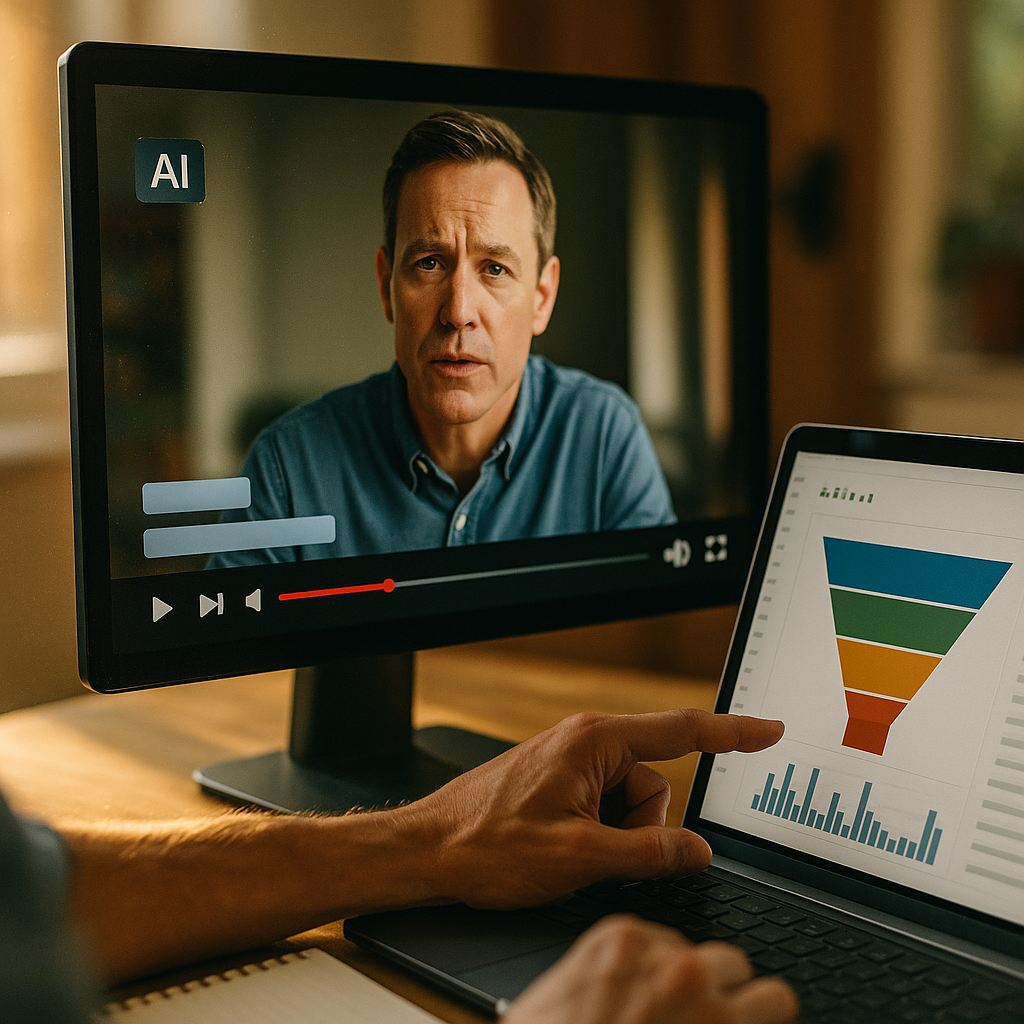
A creator’s video gets cited 400 times by AI assistants in a month. Great news, right? Not necessarily. If those citations all land in top-of-funnel “what is” queries and none in “best” or “vs” comparisons, that video is generating awareness, not conversions. AI video citation volume has become the vanity metric of the moment, and most brand dashboards still treat every citation as equally valuable. It’s time to fix that.
Citation Count Is the New Impression, and That’s a Problem
Remember when marketers obsessed over impressions before anyone cared about click-through rate? We’re repeating that cycle with generative AI. Tools that track how often a video gets referenced inside ChatGPT, Gemini, or Perplexity answers are proliferating fast, and brands are rushing to report “citation volume” the way they once reported reach.
The problem is simple: raw citation counts tell you nothing about intent. A video cited in response to “how does retinol work” sits in a completely different funnel stage than one cited in “best retinol serum for sensitive skin under $40.” Both count as one citation in most tracking tools today. That’s a measurement gap, not a data limitation, and it’s costing marketers budget decisions based on incomplete signals.
Treating every AI citation as equally valuable is like treating every website visitor the same regardless of whether they landed on your homepage or your checkout page.
We’ve written before about how attribution models need to evolve for a zero-click world. Funnel placement is the next layer of that evolution, and it’s arguably more urgent because it directly affects budget allocation.
What Funnel Placement Actually Means for AI Video Answers
Funnel placement, in this context, describes where a cited video sits in the buyer’s decision journey based on the query that triggered the citation. Think of three rough tiers:
- Awareness queries: “what is,” “how does,” “why do people use.” Informational, low purchase intent.
- Consideration queries: “best,” “top,” “vs,” “alternatives to.” The buyer is comparing options.
- Decision queries: “where to buy,” “discount code,” “is [product] worth it,” “[product] review.” High intent, close to transaction.
A video that dominates awareness citations but never shows up in decision-stage queries is a brand-building asset. A video cited heavily at the decision stage is a revenue asset. They deserve different budgets, different creator briefs, and frankly, different KPIs attached to them.
Why Marketers Keep Mixing These Metrics Up
Part of the confusion comes from tooling immaturity. Most AI visibility platforms launched in the last two years focused on detecting whether a brand or creator got mentioned at all. Detection was the hard problem to solve first, so vendors solved for that. Query classification, the harder second layer, is still catching up.
Part of it is also organizational habit. SEO teams have spent a decade optimizing for keyword volume and rankings, and it’s tempting to port that same mental model onto AI citations. But search rankings and AI citations don’t behave the same way. A single AI answer might cite three or four sources at once, and the “ranking” concept barely applies. What matters more is which query intent triggered the citation and whether that intent maps to a funnel stage your brand cares about.
According to eMarketer, an increasing share of product research now begins inside AI chat interfaces rather than traditional search, which means funnel-stage visibility inside those interfaces is no longer optional homework. It’s core measurement infrastructure.
Building a Citation-to-Funnel Scoring Model
Here’s a practical framework marketers can adapt without waiting for a perfect vendor solution:
- Tag the triggering query. Whenever a citation tracking tool logs a mention, capture the actual prompt or query pattern that generated it, not just the platform and timestamp.
- Classify by intent keyword. Build a simple taxonomy (informational, comparative, transactional) and run triggering queries through it, either manually for smaller volumes or via a lightweight classifier for scale.
- Weight citations by funnel value, not frequency. A decision-stage citation might be worth five times an awareness-stage citation in your internal scoring, depending on your sales cycle.
- Cross-reference with conversion data. Where possible, tie citation-triggered traffic or brand search lift back to actual purchase behavior, even if the attribution path is fuzzy.
- Report a funnel-weighted score alongside raw volume. Give stakeholders both numbers so they understand the difference between exposure and influence.
This isn’t dramatically different from how HubSpot and other CRM vendors have long encouraged lifecycle-stage tagging for leads. We’re just applying the same discipline to AI citation data instead of email opens.
Video Specific Wrinkles Worth Watching
Video citations behave differently than text citations in a few notable ways that make funnel analysis trickier.
First, AI systems often cite a specific timestamp or segment within a longer video, not the whole asset. That means a 12-minute unboxing video might get cited for a decision-stage claim at minute 8, while the rest of the video is pure entertainment. Funnel tagging needs to happen at the segment level, not just the video level, or you’ll misclassify high-value moments as generic awareness content.
Second, platform matters enormously. We’ve covered how YouTube citations behave differently in Google’s AI systems compared to ChatGPT, largely because Google has direct access to YouTube’s transcript and engagement data while other assistants rely more on scraped or licensed summaries. That structural difference affects which funnel stages get surfaced and how reliably.
Third, shopping-adjacent video content is increasingly pulled into AI-generated product carousels rather than plain text answers. If your video gets pulled into a carousel experience, that’s arguably a stronger decision-stage signal than a text citation, since the user is one tap from a purchase page. Our piece on shopping carousel placement goes deeper on optimizing for that specific surface.
A citation buried in a text answer and a citation surfaced inside a shopping carousel are not the same unit of value, even if your tracking dashboard counts them identically.
Where the Data Actually Comes From
Marketers keep asking where funnel-stage citation data is supposed to come from if most platforms don’t expose it natively. Realistically, there are three sources right now:
- Vendor-provided query logs. A handful of AI visibility monitoring tools now expose the actual triggering prompt alongside the citation, which lets you classify intent yourself.
- Manual prompt testing. Running your own battery of awareness, consideration, and decision prompts through ChatGPT, Gemini, and Perplexity, then logging which videos or creators get cited at each stage. Tedious but free.
- Search Console style signals. Google’s AI Overviews reporting inside Google Search Console has started surfacing some query-level detail for AI-generated results, which can be cross-referenced with your video content inventory.
None of these are perfect. Combine at least two sources if you want confidence in your funnel-weighted reporting.
Compliance and Risk Don’t Disappear at the Funnel Stage Question
There’s a risk dimension here too, and it’s easy to overlook when you’re heads down in citation dashboards. Decision-stage citations often involve product claims, pricing, or comparative statements, exactly the kind of content that draws regulatory scrutiny. If an AI system is citing your creator’s video as the source for a claim about efficacy or price, and that claim is outdated or was never disclosed properly, you’ve got exposure that goes beyond a measurement problem.
This is where funnel-stage tagging and compliance review should share infrastructure rather than living in separate teams. High-value decision-stage citations deserve a compliance pass, not just a performance review. Tools like the ones covered in our piece on the content audit process can help flag stale or risky claims before they get amplified further by AI systems that don’t know or care that the underlying product spec changed six months ago. The FTC has made clear that disclosure obligations don’t disappear just because the citing mechanism is an AI assistant rather than a search snippet.
Putting It Into Practice Next Quarter
If you’re building a measurement plan around this, start small. Pick your top ten most-cited creator videos, tag the triggering queries for each, and bucket them into the three funnel stages. You’ll likely find an uneven distribution, probably heavy on awareness, light on decision. That gap is actionable. Brief creators specifically for comparison and bottom-funnel content types (reviews, “worth it” videos, head-to-head comparisons), since those formats are what AI systems reach for when answering decision-stage prompts.
Also worth checking: whether your existing creator content is even structured in a way AI systems can parse for those high-intent claims. If a video buries the price comparison in unscripted rambling at minute nine, don’t be surprised when it never gets cited for a “cheapest option” query. Structure matters as much as substance.
FAQs
What is AI video citation volume?
AI video citation volume refers to the number of times a video (or a creator’s video content) gets referenced or linked to as a source inside AI-generated answers from tools like ChatGPT, Gemini, or Perplexity. It’s typically tracked as a raw count over a given time period.
Why isn’t citation volume alone a useful marketing metric?
Because it doesn’t distinguish between low-intent awareness citations and high-intent decision-stage citations. A video cited heavily for informational queries may generate brand exposure but little revenue impact, while a video cited less often but at the decision stage can drive direct conversions.
How do you determine funnel placement for an AI citation?
Funnel placement is determined by analyzing the query or prompt that triggered the citation. Informational queries (“what is”) indicate awareness stage, comparative queries (“best,” “vs”) indicate consideration stage, and transactional queries (“where to buy,” “review,” “worth it”) indicate decision stage.
Which AI platforms currently expose citation-level query data?
Coverage varies and changes frequently. Some AI visibility monitoring tools now log the triggering prompt alongside detected citations, and Google has begun surfacing limited AI Overviews query data inside Search Console. Manual prompt testing remains a reliable supplement.
Does funnel-stage citation data affect compliance risk?
Yes. Decision-stage citations often involve product claims, pricing, or comparative statements that carry disclosure and accuracy obligations. Brands should route high-value decision-stage citations through compliance review, not just performance reporting.
Next step: audit your ten most-cited videos this week, tag each citation by triggering query intent, and report the funnel-weighted split to stakeholders alongside raw volume. That single change will reshape how you brief creators and allocate budget next quarter.
Top Influencer Marketing Agencies
The leading agencies shaping influencer marketing in 2026
Agencies ranked by campaign performance, client diversity, platform expertise, proven ROI, industry recognition, and client satisfaction. Assessed through verified case studies, reviews, and industry consultations.
Moburst

-
2

The Shelf
Boutique Beauty & Lifestyle Influencer AgencyA data-driven boutique agency specializing exclusively in beauty, wellness, and lifestyle influencer campaigns on Instagram and TikTok. Best for brands already focused on the beauty/personal care space that need curated, aesthetic-driven content.Clients: Pepsi, The Honest Company, Hims, Elf Cosmetics, Pure LeafVisit The Shelf → -
3

Audiencly
Niche Gaming & Esports Influencer AgencyA specialized agency focused exclusively on gaming and esports creators on YouTube, Twitch, and TikTok. Ideal if your campaign is 100% gaming-focused — from game launches to hardware and esports events.Clients: Epic Games, NordVPN, Ubisoft, Wargaming, Tencent GamesVisit Audiencly → -
4

Viral Nation
Global Influencer Marketing & Talent AgencyA dual talent management and marketing agency with proprietary brand safety tools and a global creator network spanning nano-influencers to celebrities across all major platforms.Clients: Meta, Activision Blizzard, Energizer, Aston Martin, WalmartVisit Viral Nation → -
5

The Influencer Marketing Factory
TikTok, Instagram & YouTube CampaignsA full-service agency with strong TikTok expertise, offering end-to-end campaign management from influencer discovery through performance reporting with a focus on platform-native content.Clients: Google, Snapchat, Universal Music, Bumble, YelpVisit TIMF → -
6

NeoReach
Enterprise Analytics & Influencer CampaignsAn enterprise-focused agency combining managed campaigns with a powerful self-service data platform for influencer search, audience analytics, and attribution modeling.Clients: Amazon, Airbnb, Netflix, Honda, The New York TimesVisit NeoReach → -
7

Ubiquitous
Creator-First Marketing PlatformA tech-driven platform combining self-service tools with managed campaign options, emphasizing speed and scalability for brands managing multiple influencer relationships.Clients: Lyft, Disney, Target, American Eagle, NetflixVisit Ubiquitous → -
8

Obviously
Scalable Enterprise Influencer CampaignsA tech-enabled agency built for high-volume campaigns, coordinating hundreds of creators simultaneously with end-to-end logistics, content rights management, and product seeding.Clients: Google, Ulta Beauty, Converse, AmazonVisit Obviously →