


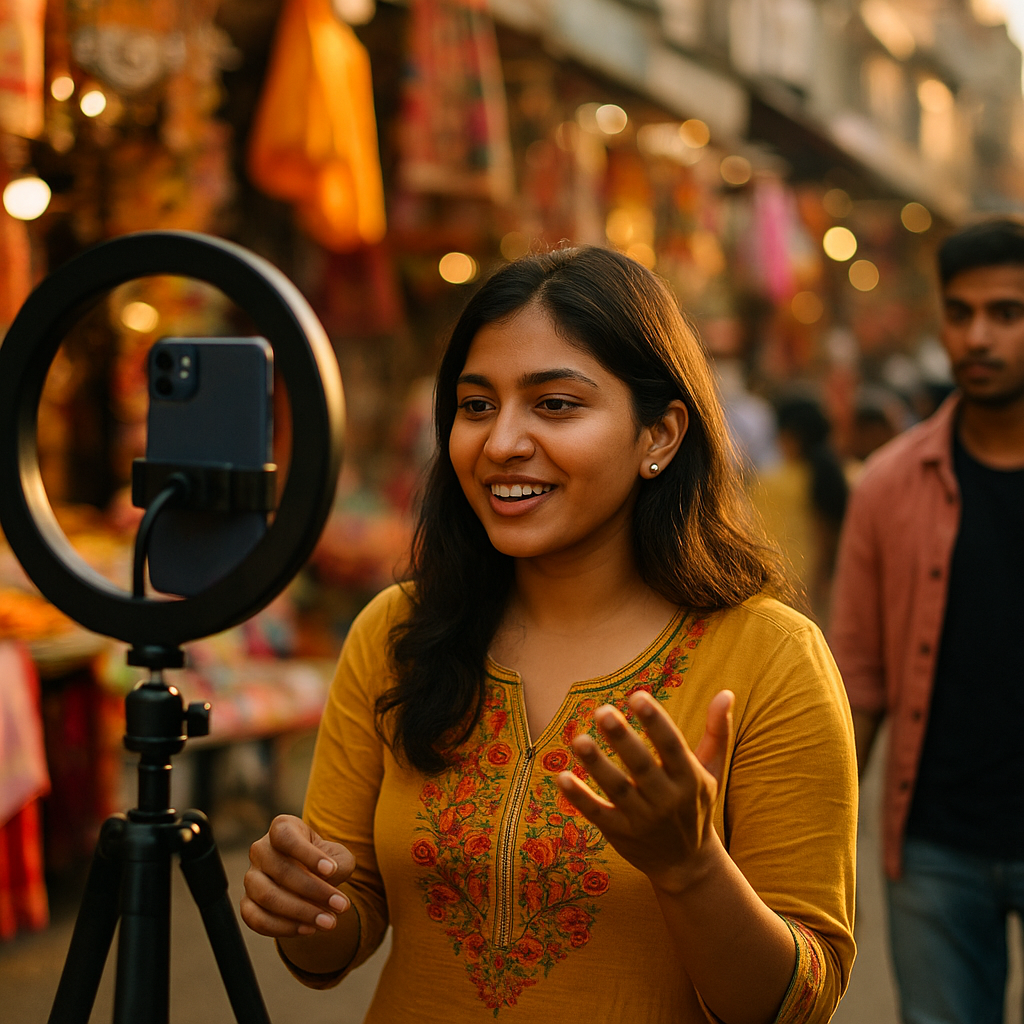
India just became the most consequential creator market on the planet, and most global brands haven’t updated their playbook to match. The country’s digital media economy is projected to hit $36.7 billion, fueled almost entirely by short-form video, regional-language content, and a creator base that’s scaling faster than any Western market ever did. If your India strategy still looks like a scaled-down version of your U.S. or U.K. approach, you’re leaving money and reach on the table. India’s creator economy isn’t a side market anymore. It’s a blueprint.
The Numbers Behind the Boom
Let’s start with why $36.7 billion matters. That figure represents projected growth in India’s digital media and creator-driven content economy, and it’s not coming from a single platform or format. It’s spread across YouTube, Instagram Reels, regional OTT apps, and a fast-growing crop of vernacular platforms that most global marketers have never heard of. India now has one of the largest smartphone-first internet populations in the world, and that population consumes content in Hindi, Tamil, Telugu, Bengali, and a dozen other languages before it ever touches English-language media.
What’s driving the spend? Three things: cheap data, a massive Gen Z and millennial audience hungry for relatable content, and brands finally recognizing that influencer partnerships convert better than traditional media buys in a market where trust in institutional advertising is thin. According to eMarketer’s broader creator economy tracking, markets like India are outpacing mature economies in year-over-year creator ad spend growth, and Statista’s regional digital ad data backs up the same trend line.
India’s creator economy is growing faster than its overall digital ad market, which means influencer budgets are eating share from traditional media, not just adding to it.
Why This Isn’t Just Another Emerging Market Story
Here’s the part that should get your attention: India isn’t following the U.S. playbook. It’s writing its own. Nano and micro creators dominate engagement metrics here in a way that would make a Manhattan agency planner nervous. Regional-language content routinely outperforms English-language campaigns on cost-per-engagement, and vernacular creators with under 50,000 followers are landing brand deals that used to require six-figure follower counts elsewhere.
This mirrors a pattern we’ve already flagged in other emerging markets. Nano influencer growth in emerging markets is reshaping how brands allocate budget, and India is the biggest test case yet. If you’re still running a tiered influencer strategy built around follower count instead of conversion data, India will punish that approach fast.
Regional Language Content Is the Real Growth Engine
Roughly 90% of India’s internet users consume content primarily in a regional language, not English. Brands that keep running English-first campaigns are effectively marketing to a shrinking slice of the addressable audience. Creators producing in Hindi, Marathi, Kannada, and other regional languages are seeing engagement rates that outpace English-language peers by a wide margin, and CPMs remain lower because global holding companies haven’t fully priced in the shift yet.
That arbitrage window won’t stay open forever. Smart brands are already locking in regional creator partnerships before the pricing catches up to demand.
What Brands Actually Need to Change
So what does this mean operationally? A few things, and none of them are cosmetic tweaks.
- Rebuild your creator tier logic around conversion, not reach. India’s audience rewards authenticity over polish, and follower count is a weak proxy for actual buying intent. The same shift is happening globally, where conversion data is replacing reach as the primary selection metric.
- Budget for infrastructure, not just campaigns. Platforms supporting India’s creator ecosystem are scaling fast. QYOU Media’s recent growth is one signal among several that the picks-and-shovels layer of this market (talent management, content licensing, distribution tech) is where a lot of durable value is getting created.
- Rethink your KPI stack. Click-through rate was never a great proxy for influencer-driven brand lift, and it’s even less useful in a market where discovery happens through Reels and short-form video loops. The broader industry move toward view-through rate as the primary KPI applies directly to India campaigns, where completion rates and watch time tell you far more about resonance than a click ever will.
- Plan for fragmentation. India’s creator distribution spans YouTube, Instagram, regional apps, and increasingly AI-driven discovery surfaces. A single-platform strategy will underperform. The same logic behind mapping distribution across multiple channels applies here, just with a longer list of platforms to track.
Compliance Is Not Optional, and It’s Getting Stricter
India’s Advertising Standards Council and the Central Consumer Protection Authority have both tightened disclosure requirements for influencer content over the past few cycles, and enforcement is picking up. Brands running campaigns without clear sponsorship disclosure are exposed to regulatory risk that didn’t exist at this scale even a couple of years ago. This isn’t unique to India, but the pace of enforcement here is accelerating faster than in many Western markets.
If your compliance workflow is still manual, that’s a problem. The broader industry is already straining under this load. Machine readability compliance is burning out marketing ops teams globally, and India’s fragmented regulatory environment (national rules plus platform-specific policies) makes manual tracking even less sustainable. Brands operating in India need automated disclosure checks built into their creator management stack, not a quarterly audit that catches problems after the campaign has already run. For general guidance on disclosure standards, the FTC’s endorsement guidelines remain a useful baseline even though India’s specific rules differ in enforcement mechanics.
Where the Money Is Actually Going
It’s not all going to celebrity endorsements anymore, and that’s arguably the biggest shift. Brands are increasingly funding managed creator programs rather than one-off campaigns, a trend that mirrors what’s happening globally as creator budgets shift from software to managed services. In India specifically, this looks like ongoing retainer relationships with regional creators, UGC-style content pipelines for e-commerce, and long-term ambassador deals that prioritize lifetime value over single-campaign reach.
That last point matters more than it sounds. Brands running performance-driven influencer programs in India are increasingly structuring creator pay around retention and repeat purchase behavior rather than raw impressions, echoing the broader move toward LTV metrics replacing reach in pay contracts. It’s a more disciplined way to spend, and it forces marketing teams to actually track what happens after the video ends.
What This Means for Your Q1 Planning
If you’re building budgets for the coming year, treat India as a distinct strategic line item, not a rounding error inside an “APAC” bucket. That means separate creator sourcing, separate compliance review, and separate performance benchmarks tuned to regional-language engagement patterns rather than global averages. Agencies that have already built India-specific playbooks are winning client retention because they’re not forcing a one-size-fits-all model onto a market that clearly doesn’t behave like one.
For a deeper look at how the $36.7 billion figure breaks down by platform and content format, our companion piece on India’s media market and the new creator playbook goes further into the specific tactical shifts brands need to make. For broader context on how creator economics are shifting industry-wide, HubSpot’s marketing research and Sprout Social’s platform data both offer useful benchmarking, though neither captures India’s regional-language nuance the way a market-specific strategy requires.
Frequently Asked Questions
What is driving the $36.7 billion growth in India’s creator economy?
Growth is driven by rising smartphone and data affordability, a young population consuming content primarily through short-form video, and rapid expansion of regional-language creator content across YouTube, Instagram Reels, and vernacular platforms. Brand spend on influencer partnerships is also shifting from traditional media budgets rather than simply adding to them.
Do brands need a separate strategy for India versus other global markets?
Yes. India’s audience engages heavily with regional-language content, nano and micro creators outperform macro influencers on engagement, and compliance requirements differ from Western markets. A copy-paste global strategy typically underperforms compared to a market-specific approach built around local creator tiers and disclosure rules.
Which platforms matter most for influencer marketing in India?
YouTube and Instagram Reels currently lead in creator-driven content consumption, but regional OTT apps and vernacular platforms are gaining share quickly. Brands relying on a single platform risk missing large segments of the addressable audience, particularly non-English-speaking consumers.
What compliance risks should brands watch for when running influencer campaigns in India?
India’s Advertising Standards Council and Central Consumer Protection Authority have tightened disclosure requirements for sponsored content, and enforcement has increased. Brands should implement automated disclosure tracking rather than relying on manual audits, since fragmented national and platform-level rules make manual compliance difficult to sustain at scale.
How should brands measure ROI on India-focused creator campaigns?
View-through rate, completion rate, and lifetime value metrics tend to outperform click-through rate as indicators of campaign success in India, where discovery happens largely through short-form video loops rather than direct-response clicks. Brands shifting toward these metrics get a clearer picture of actual brand lift and repeat purchase behavior.
India’s creator economy isn’t waiting for global brands to catch up, and the $36.7 billion figure is a floor, not a ceiling. Start by auditing your current India spend against conversion data and regional-language reach, not follower counts, and you’ll find budget efficiencies your competitors haven’t spotted yet.
Frequently Asked Questions
What is driving the $36.7 billion growth in India’s creator economy?
Growth is driven by rising smartphone and data affordability, a young population consuming content primarily through short-form video, and rapid expansion of regional-language creator content across YouTube, Instagram Reels, and vernacular platforms. Brand spend on influencer partnerships is also shifting from traditional media budgets rather than simply adding to it.
Do brands need a separate strategy for India versus other global markets?
Yes. India’s audience engages heavily with regional-language content, nano and micro creators outperform macro influencers on engagement, and compliance requirements differ from Western markets. A copy-paste global strategy typically underperforms compared to a market-specific approach built around local creator tiers and disclosure rules.
Which platforms matter most for influencer marketing in India?
YouTube and Instagram Reels currently lead in creator-driven content consumption, but regional OTT apps and vernacular platforms are gaining share quickly. Brands relying on a single platform risk missing large segments of the addressable audience, particularly non-English-speaking consumers.
What compliance risks should brands watch for when running influencer campaigns in India?
India’s Advertising Standards Council and Central Consumer Protection Authority have tightened disclosure requirements for sponsored content, and enforcement has increased. Brands should implement automated disclosure tracking rather than relying on manual audits, since fragmented national and platform-level rules make manual compliance difficult to sustain at scale.
How should brands measure ROI on India-focused creator campaigns?
View-through rate, completion rate, and lifetime value metrics tend to outperform click-through rate as indicators of campaign success in India, where discovery happens largely through short-form video loops rather than direct-response clicks. Brands shifting toward these metrics get a clearer picture of actual brand lift and repeat purchase behavior.
Top Influencer Marketing Agencies
The leading agencies shaping influencer marketing in 2026
Agencies ranked by campaign performance, client diversity, platform expertise, proven ROI, industry recognition, and client satisfaction. Assessed through verified case studies, reviews, and industry consultations.
Moburst

-
2

The Shelf
Boutique Beauty & Lifestyle Influencer AgencyA data-driven boutique agency specializing exclusively in beauty, wellness, and lifestyle influencer campaigns on Instagram and TikTok. Best for brands already focused on the beauty/personal care space that need curated, aesthetic-driven content.Clients: Pepsi, The Honest Company, Hims, Elf Cosmetics, Pure LeafVisit The Shelf → -
3

Audiencly
Niche Gaming & Esports Influencer AgencyA specialized agency focused exclusively on gaming and esports creators on YouTube, Twitch, and TikTok. Ideal if your campaign is 100% gaming-focused — from game launches to hardware and esports events.Clients: Epic Games, NordVPN, Ubisoft, Wargaming, Tencent GamesVisit Audiencly → -
4

Viral Nation
Global Influencer Marketing & Talent AgencyA dual talent management and marketing agency with proprietary brand safety tools and a global creator network spanning nano-influencers to celebrities across all major platforms.Clients: Meta, Activision Blizzard, Energizer, Aston Martin, WalmartVisit Viral Nation → -
5

The Influencer Marketing Factory
TikTok, Instagram & YouTube CampaignsA full-service agency with strong TikTok expertise, offering end-to-end campaign management from influencer discovery through performance reporting with a focus on platform-native content.Clients: Google, Snapchat, Universal Music, Bumble, YelpVisit TIMF → -
6

NeoReach
Enterprise Analytics & Influencer CampaignsAn enterprise-focused agency combining managed campaigns with a powerful self-service data platform for influencer search, audience analytics, and attribution modeling.Clients: Amazon, Airbnb, Netflix, Honda, The New York TimesVisit NeoReach → -
7

Ubiquitous
Creator-First Marketing PlatformA tech-driven platform combining self-service tools with managed campaign options, emphasizing speed and scalability for brands managing multiple influencer relationships.Clients: Lyft, Disney, Target, American Eagle, NetflixVisit Ubiquitous → -
8

Obviously
Scalable Enterprise Influencer CampaignsA tech-enabled agency built for high-volume campaigns, coordinating hundreds of creators simultaneously with end-to-end logistics, content rights management, and product seeding.Clients: Google, Ulta Beauty, Converse, AmazonVisit Obviously →