


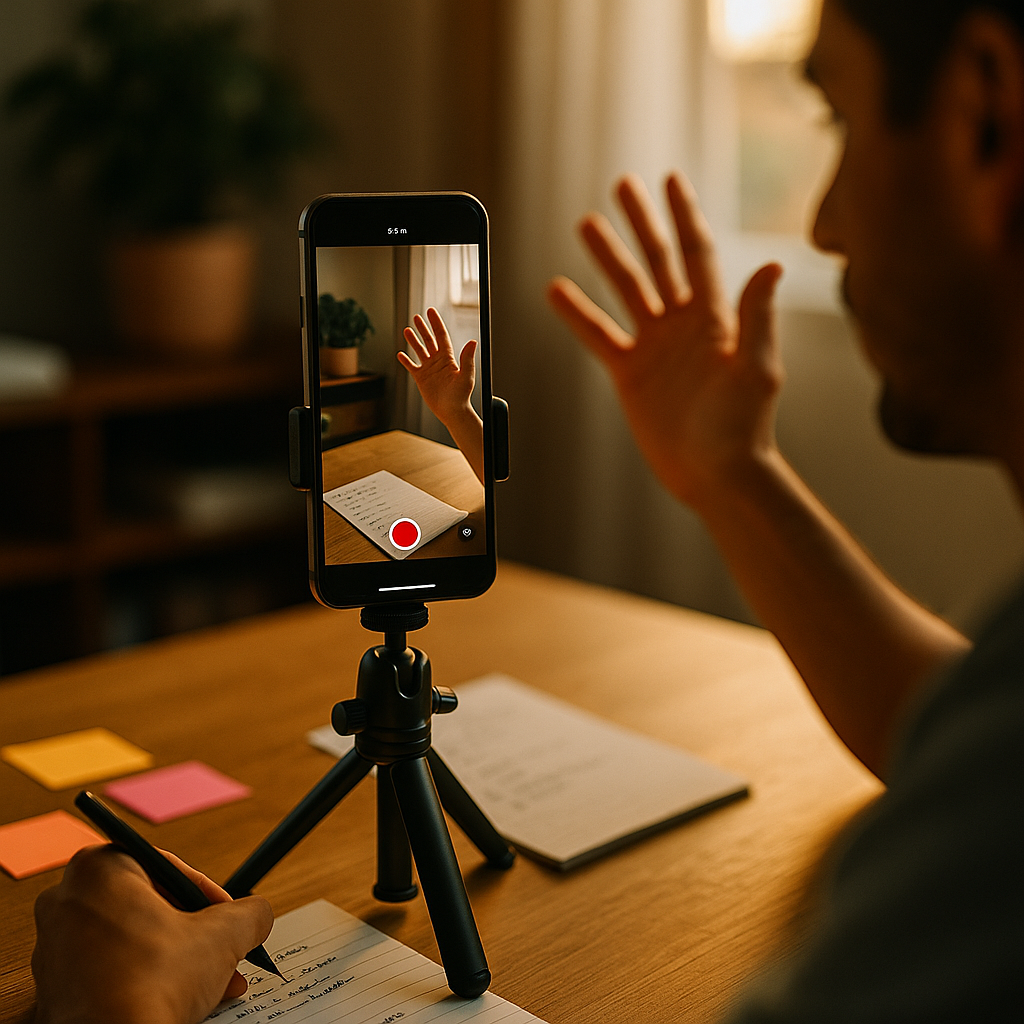
The average TikTok or Reels view lasts under two seconds before a thumb decides whether to stay or scroll. That’s the brutal math behind structuring 15-second creator drops for retention, and it means brands can no longer treat short-form as a shrunk-down version of a 60-second ad. It’s a different discipline entirely, one built on pacing, payoff, and a hook that earns the next half-second. Get the structure wrong, and even a great creator can’t save the view-through rate.
Why Fifteen Seconds Became the Battleground
Feed algorithms on TikTok, Instagram, and YouTube Shorts now reward completion rate and rewatch behavior more than raw impressions. A 15-second drop that gets watched twice signals more relevance to the algorithm than a 45-second video watched once and abandoned. That’s why so many brands are compressing their creator briefs into tighter windows: the format isn’t a creative preference, it’s a distribution hack.
eMarketer has repeatedly flagged short-form video as the fastest-growing content category for ad spend, and platforms have responded by tuning their ranking signals to favor snappy, high-completion content over longer-form storytelling. If your brand is still briefing creators for slow-burn narratives, you’re optimizing for a feed that no longer exists.
A 15-second drop isn’t a shorter ad. It’s a compressed decision tree where every second either earns the next one or loses the viewer for good.
The Anatomy of a Retention-Optimized Drop
Fifteen seconds sounds impossibly short until you break it into beats. Most high-performing drops follow a rough four-part rhythm:
- Seconds 0 to 2: A visual or verbal disruption. Not a logo, not a brand name, a pattern interrupt.
- Seconds 2 to 6: The setup. This is where the creator establishes stakes: a problem, a question, a contradiction.
- Seconds 6 to 11: The payoff or reveal. This is the meat of the drop, and it should land before viewer attention decays.
- Seconds 11 to 15: A loop-back cue, whether that’s a visual callback to the opening frame or a line that makes the viewer want to rewatch.
That loop-back beat matters more than most briefs acknowledge. Rewatch rate is one of the strongest retention signals on TikTok, and creators who build in a reason to watch twice (a joke that only lands on second viewing, a visual detail planted early) consistently outperform creators who just deliver information cleanly.
Brief for the Hook Before You Brief for the Product
Here’s a mistake brands make constantly: they hand creators a product-first brief and expect the hook to emerge organically. It rarely does. The hook needs to be engineered first, then the product woven in around it. Formats like the POV ad format work well here because the “point of view” framing gives creators a built-in hook mechanism: the viewer is dropped into a scenario mid-action, which forces immediate curiosity.
Similarly, formats that rely on visual tension, like the price tag flip reveal, borrow suspense mechanics that naturally compress well into 15 seconds because the entire arc is built around a single delayed payoff.
Sequencing: Single Drops vs. Serialized Retention
A single 15-second drop can earn a view. But retention, in the audience-building sense, comes from sequencing. Brands running creator programs for sustained reach are increasingly structuring drops as connected micro-episodes rather than one-off assets. This is the logic behind episodic creator series, where each drop ends on a small unresolved thread that the next drop answers.
The vertical serial format takes this further by borrowing cliffhanger structure straight from streaming television, compressed into a feed-native runtime. If you haven’t looked at how the vertical serial cliffhanger format is being used for retention, it’s worth studying before you lock your next quarter’s creator calendar. The core insight: a 15-second drop doesn’t need to resolve everything. It needs to resolve enough to satisfy, while leaving one thread dangling.
For brands running multiple creators against the same campaign, sequencing also applies across people, not just across time. Multi-creator relay briefs let you stagger drops so audiences encounter the same hook from different creators within a short window, reinforcing recall without repeating identical footage.
What Actually Kills Retention in Short Drops?
Three culprits show up again and again in underperforming creator content:
- Delayed branding that reads as delayed payoff. If the first three seconds feel like throat-clearing, the algorithm and the viewer both move on.
- Overproduced polish. Ironically, a drop that looks too much like an ad triggers scroll-past behavior faster than something rough and native. This is why the trend toward intentionally imperfect content keeps gaining traction with brand marketers who’ve tested both approaches head to head.
- No loop mechanism. A drop that resolves too neatly gives viewers zero reason to watch again, which caps its ceiling on completion-based algorithms.
There’s also a subtler failure mode worth naming: briefs that try to cram a full value proposition into 15 seconds. That’s a losing game. The best snack-size drops communicate one idea, sharply, and trust the next drop (or the creator’s profile, or the product link) to carry the rest of the narrative weight.
Compliance Doesn’t Disappear Just Because the Clip Is Short
Fifteen seconds is not an exemption from disclosure requirements. The FTC’s endorsement guidance applies regardless of runtime, and short-form’s fast pacing makes it easy for creators to bury or rush a disclosure in a way that regulators and platforms increasingly flag. Brands should build disclosure timing into the storyboard itself, not treat it as an afterthought added in editing.
This is also where comment-bait tactics get risky. Short drops that bait engagement through misleading captions or fake controversy can spike comments in the short term but create compliance exposure and audience distrust. If your team is experimenting with high-engagement hooks, it’s worth reviewing how to structure comment-bait content formats without crossing into deceptive territory. Retention built on a bait-and-switch hook rarely survives past one viewing anyway.
Retention earned through a real payoff compounds. Retention earned through a misleading hook decays fast and can trigger platform or regulatory scrutiny.
Measuring What Actually Matters
Views and likes are vanity metrics for this format. The KPIs that actually indicate a drop is working:
- Average watch time as a percentage of total runtime (aim for 80%+ on a well-built 15-second drop)
- Rewatch or loop rate, visible in TikTok’s native analytics and increasingly in Meta’s Reels insights via Meta Business Suite
- Save and share rate, which correlates strongly with long-term distribution beyond the initial push
- Click-through to profile or link, especially when drops are part of a discovery to conversion content ladder where the short drop is the top-funnel entry point
Tools like Sprout Social and platform-native dashboards from TikTok Ads Manager can pull these metrics at scale across a creator roster, which matters if you’re running more than a handful of drops per week. Without that visibility, you’re briefing on instinct, and instinct doesn’t scale across a multi-creator program.
Data from Statista and platform benchmarking tools consistently show that shorter runtimes correlate with higher completion rates but lower absolute engagement time, meaning the format trades depth for frequency. Brands need to decide, deliberately, which trade-off serves their funnel stage best.
Where This Fits in a Broader Creator Program
Fifteen-second drops shouldn’t operate in isolation. They work best as the top of a funnel that includes longer-form trust-building content elsewhere, whether that’s founder-led video for authority or trust-first unboxing content for consideration-stage trust. The snack-size drop’s job is to stop the scroll and plant a hook. Everything downstream can do the heavier lifting.
The brands seeing the best returns from this format treat it as a system, not a one-off tactic: consistent structural beats, sequenced releases, disclosed compliance, and metrics tracked past vanity numbers. That’s a genuinely different operating model than “post a short video and hope.”
Next step: audit your last ten short-form creator drops against the four-beat structure above. If fewer than half hit a real payoff before the eleven-second mark, your briefs need rework before your next production cycle, not your budget.
Frequently Asked Questions
How long should the hook be in a 15-second creator drop?
Aim for a disruption within the first two seconds. Anything longer risks losing the viewer before the algorithm even registers a meaningful watch signal.
Do shorter drops actually get more distribution than longer videos?
Not automatically. Platforms reward completion rate and rewatch behavior, so a well-structured 15-second drop with high completion can outperform a longer video with a low finish rate, but a poorly structured short drop underperforms both.
Should every creator drop end on a cliffhanger?
Not every single drop, but sequenced content benefits from at least a partial unresolved thread. Fully resolved drops give viewers no reason to seek out the next one or rewatch the current one.
How do I keep disclosure compliant in such a short runtime?
Build the disclosure into the storyboard from the start rather than adding it in post. A clear on-screen or verbal disclosure in the first few seconds satisfies most platform and FTC expectations without disrupting pacing.
What’s the biggest mistake brands make briefing short-form creator drops?
Treating them as trimmed-down versions of longer ads. Short drops need their own structure built around a single idea and a strong hook, not a condensed version of a full-length script.
Top Influencer Marketing Agencies
The leading agencies shaping influencer marketing in 2026
Agencies ranked by campaign performance, client diversity, platform expertise, proven ROI, industry recognition, and client satisfaction. Assessed through verified case studies, reviews, and industry consultations.
Moburst

-
2

The Shelf
Boutique Beauty & Lifestyle Influencer AgencyA data-driven boutique agency specializing exclusively in beauty, wellness, and lifestyle influencer campaigns on Instagram and TikTok. Best for brands already focused on the beauty/personal care space that need curated, aesthetic-driven content.Clients: Pepsi, The Honest Company, Hims, Elf Cosmetics, Pure LeafVisit The Shelf → -
3

Audiencly
Niche Gaming & Esports Influencer AgencyA specialized agency focused exclusively on gaming and esports creators on YouTube, Twitch, and TikTok. Ideal if your campaign is 100% gaming-focused — from game launches to hardware and esports events.Clients: Epic Games, NordVPN, Ubisoft, Wargaming, Tencent GamesVisit Audiencly → -
4

Viral Nation
Global Influencer Marketing & Talent AgencyA dual talent management and marketing agency with proprietary brand safety tools and a global creator network spanning nano-influencers to celebrities across all major platforms.Clients: Meta, Activision Blizzard, Energizer, Aston Martin, WalmartVisit Viral Nation → -
5

The Influencer Marketing Factory
TikTok, Instagram & YouTube CampaignsA full-service agency with strong TikTok expertise, offering end-to-end campaign management from influencer discovery through performance reporting with a focus on platform-native content.Clients: Google, Snapchat, Universal Music, Bumble, YelpVisit TIMF → -
6

NeoReach
Enterprise Analytics & Influencer CampaignsAn enterprise-focused agency combining managed campaigns with a powerful self-service data platform for influencer search, audience analytics, and attribution modeling.Clients: Amazon, Airbnb, Netflix, Honda, The New York TimesVisit NeoReach → -
7

Ubiquitous
Creator-First Marketing PlatformA tech-driven platform combining self-service tools with managed campaign options, emphasizing speed and scalability for brands managing multiple influencer relationships.Clients: Lyft, Disney, Target, American Eagle, NetflixVisit Ubiquitous → -
8

Obviously
Scalable Enterprise Influencer CampaignsA tech-enabled agency built for high-volume campaigns, coordinating hundreds of creators simultaneously with end-to-end logistics, content rights management, and product seeding.Clients: Google, Ulta Beauty, Converse, AmazonVisit Obviously →