


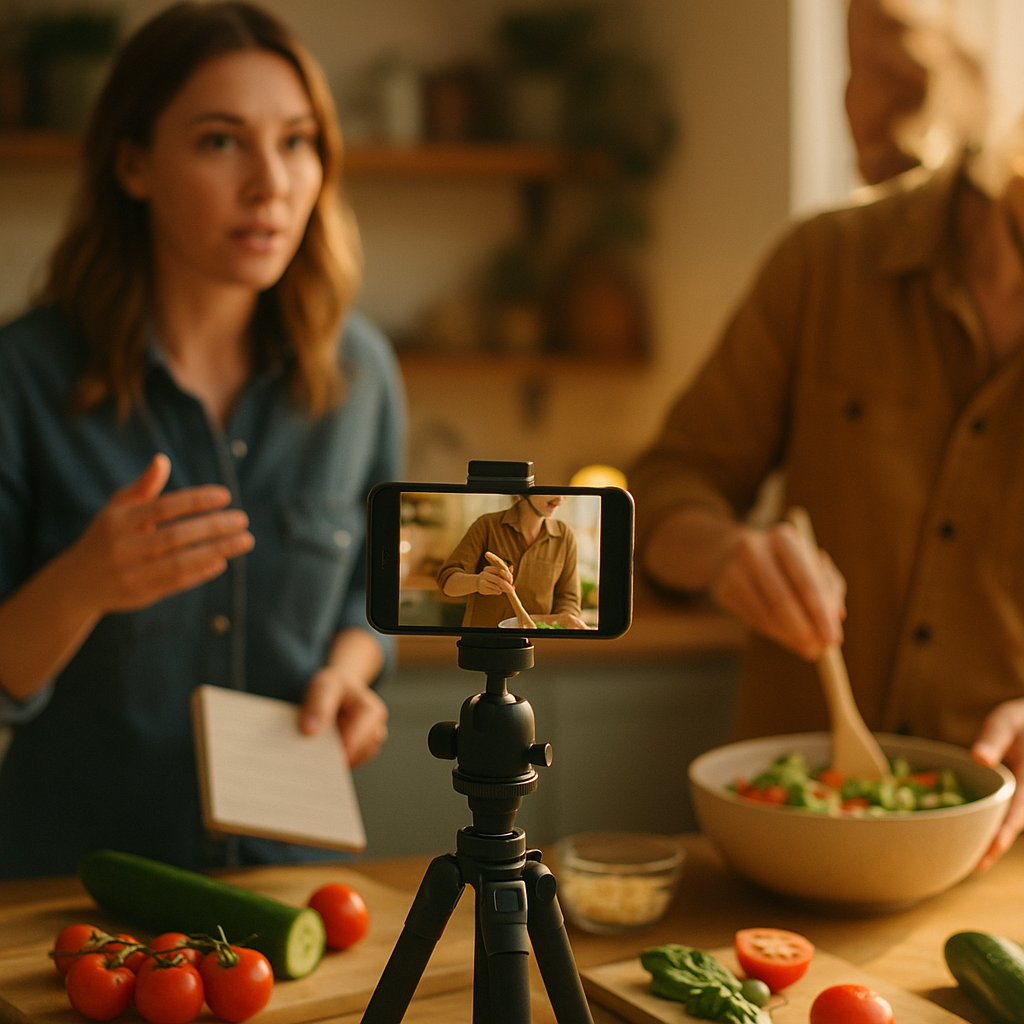
Recipe content drives 73% higher purchase intent than standard product demos, according to recent food category research from Tastewise. Yet most CPG brands still treat recipe and how-to video partnerships like an afterthought, bolted onto a broader creator brief instead of built as their own format. That’s a mistake. Done right, recipe partnerships with food creators are one of the most durable, re-shareable, and conversion-friendly formats a packaged goods brand can run.
This guide breaks down how to brief, structure, and measure recipe and how-to video partnerships so they actually move units, not just impressions.
Why Recipe Content Outperforms Standard Product Placement
Here’s the uncomfortable truth about most influencer food content: a creator holding up a jar of sauce and smiling at the camera doesn’t tell anyone what to do with it. Recipe and how-to formats solve that problem by design. They give the viewer a use case, a reason to buy, and a reason to save the video for later.
That “save” behavior matters more than marketers usually give it credit for. Recipe videos get bookmarked and revisited at a far higher rate than lifestyle or unboxing content, because viewers treat them as reference material. A sauce demo gets watched once. A five-ingredient dinner recipe gets saved, shared in a group chat, and watched again the night someone actually cooks it.
Recipe content isn’t just an engagement play, it’s an inventory play. Every saved video is a future grocery list with your product already on it.
There’s also a format-fit advantage. Recipe and how-to content works across Instagram Reels, TikTok, YouTube Shorts, and long-form YouTube without major rework, which makes it one of the more efficient formats for cross-platform distribution budgets.
Picking the Right Food Creator Tier for Your SKU
Not every creator type suits every product. A niche sauce brand launching a limited SKU doesn’t need a celebrity chef with 2 million followers. It needs a mid-tier creator whose audience actually cooks from their videos.
- Macro food creators (500K+): Best for brand awareness launches, new category entries, or when you need reach fast. Expect higher cost per view but strong top-of-funnel lift.
- Mid-tier creators (50K to 500K): The sweet spot for most CPG recipe campaigns. Engaged, niche-specific audiences (meal prep, budget cooking, gluten-free, air fryer content) who trust recommendations and actually follow recipes.
- Micro and nano creators (under 50K): Ideal for always-on ambassador programs, local market tests, or UGC-style recipe content that gets repurposed as paid social.
Platform data from Sprout Social consistently shows mid-tier creators delivering stronger engagement rates per dollar than mega-influencers across food and lifestyle categories. For CPG brands with finite activation budgets, that’s where the math usually works out best.
Match the Creator’s Content Style to Your Product’s Use Occasion
A shelf-stable snack brand needs a creator who does quick, no-cook content. A spice blend brand needs someone who actually cooks dinner on camera regularly, not someone who does one-off recipe content as a novelty. Review the creator’s last 15 to 20 posts before you brief anything. If their audience is used to five-minute recipes and you’re asking for a 40-minute braise, the format mismatch will tank completion rates no matter how good the production is.
Briefing the Format: What to Specify and What to Leave Open
The biggest mistake brands make with recipe partnerships is over-scripting the creative while under-specifying the brand requirements. Food creators know their audience’s attention span better than your brand team does. Let them own the recipe development and pacing. Your job is to lock down the non-negotiables.
Specify these elements in every brief:
- Exact product placement moments (opening shot, mid-recipe use, final plated shot)
- Required verbal or on-screen mention of the product name and key claim
- Disclosure language and placement, timed to FTC guidance on clear and conspicuous disclosures
- Any ingredient substitutions that are off-limits (competitor products, allergen conflicts)
- Caption requirements including a trackable link or promo code
Leave these elements open to the creator:
- Recipe concept and flavor direction
- Video pacing, music choice, and editing style
- Hook structure for the first three seconds
- Whether the content is filmed as a single recipe or a quick multi-step how-to series
If you’re worried about compliance language sounding awkward inside organic-feeling content, it’s worth studying how other formats handle claims under review. The approach used in myth busting video scripts translates well to recipe claims about nutrition or ingredient quality, since both formats require precise, defensible language around product benefits.
The Hook Problem Nobody Talks About
Recipe videos live or die in the first three seconds, same as any short-form content. But food creators often default to showing the finished dish first, which works for retention but can bury the product mention. Brief creators to reference the product by name or category within that opening hook, even if it’s just a quick “this five-minute pasta uses one jar of sauce” line before the cooking starts. It costs nothing creatively and protects your brand recall numbers.
Structuring the Partnership: One-Off vs. Series
Single recipe videos work fine for product launches or seasonal pushes. But the real compounding value in recipe partnerships comes from running a series. A creator doing “five ways to use [product]” across four weeks builds anticipation, gives you four distinct pieces of content to repurpose, and signals to the algorithm (and the audience) that this is an ongoing relationship, not a paid cameo.
This mirrors a pattern that’s proven effective in other review and demo formats. The logic behind multi part review series applies directly here: sequential content builds trust incrementally, and each installment gets a performance lift from the audience that already engaged with the previous one.
For brands running recurring recipe content, consider structuring it like a mini content calendar:
- Week one: Core recipe using the product as the hero ingredient
- Week two: A quicker, lower-effort variation (weeknight or “lazy day” angle)
- Week three: A seasonal or occasion-based recipe (holiday, game day, back to school)
- Week four: A creator Q&A or “what I’d change” follow-up that builds authenticity
Measuring What Actually Matters
Views are the easiest metric and the least useful one for recipe content. What you actually want to track:
- Save rate: The single strongest indicator that a recipe video is doing its job. Higher saves correlate with future purchase intent far more than views or likes.
- Completion rate: Shows whether your product placement moments are landing before viewers drop off.
- Comment sentiment and recipe requests: “Where do I buy this” and “what brand is that” comments are qualitative gold for retargeting creative.
- Promo code or link redemption: The hard conversion number, even if it undercounts true attribution.
- Repurposing value: How much of the content can move into paid social without reshoots.
If a recipe video gets fewer saves than a static product post from the same creator, the format isn’t working, no matter how high the view count looks.
Benchmarking against category data from eMarketer or Statista helps set realistic expectations before a campaign launches, especially for brands new to influencer-led recipe content.
When How-To Beats Recipe
Not every CPG product fits a recipe format. Cleaning products, supplements, and non-food items benefit more from a straightforward how-to structure: application, result, repeat use case. The format principles still apply (clear hook, specified placement, open creative execution), but the content should lean into demonstration rather than culinary storytelling. For brands in this category, the pacing techniques used in speed run demo videos offer a useful template for compressing a how-to into a scroll-stopping format without losing clarity.
Avoiding the Compliance Trap
Recipe content gets flagged more often than brands expect, usually because of health or nutrition claims slipped in casually by the creator (“this is basically guilt-free” or “way healthier than store-bought”). Build a short list of banned phrases into your brief and have a compliance reviewer check scripts or outlines before filming, not after. It’s far cheaper to fix a script than to pull a published video and renegotiate usage rights.
For brands that work with creators across multiple content types, it’s worth building a standing compliance checklist that reviewers can apply consistently, borrowing from how other formats handle claims under FTC disclosure rules for endorsements and testimonials.
Frequently Asked Questions
FAQs
How long should a branded recipe video be?
For short-form platforms, 30 to 60 seconds performs best for engagement and completion rate. Long-form YouTube recipe content can run 5 to 10 minutes if it includes genuine instructional value, but the product placement moments should still happen in the first 15 seconds to protect recall.
Should the brand provide the recipe or let the creator develop it?
Let the creator develop it. Their audience trusts their taste and cooking style, and a brand-written recipe often feels stiff on camera. Provide ingredient requirements and claim guardrails, then let the creator build the actual dish.
How many recipe videos should a single partnership include?
A series of three to four videos over a month typically outperforms a single one-off video, both for content repurposing value and for building a sense of ongoing creator endorsement rather than a one-time paid post.
What’s the biggest compliance risk in recipe and how-to content?
Unscripted health or nutrition claims made casually during cooking. Brief creators with a short list of banned phrases and review scripts before filming to avoid post-publication corrections.
How do I measure ROI on a recipe video partnership?
Track save rate and completion rate as leading indicators, then tie promo code or link redemption to hard conversion numbers. Views alone don’t correlate strongly with purchase intent in this format.
Recipe and how-to video partnerships work best when brands stop treating them as a content checkbox and start treating them as a repeatable system: right creator tier, tight compliance guardrails, loose creative control, and a measurement plan built around saves and completions, not vanity views.
FAQs
How long should a branded recipe video be?
For short-form platforms, 30 to 60 seconds performs best for engagement and completion rate. Long-form YouTube recipe content can run 5 to 10 minutes if it includes genuine instructional value, but the product placement moments should still happen in the first 15 seconds to protect recall.
Should the brand provide the recipe or let the creator develop it?
Let the creator develop it. Their audience trusts their taste and cooking style, and a brand-written recipe often feels stiff on camera. Provide ingredient requirements and claim guardrails, then let the creator build the actual dish.
How many recipe videos should a single partnership include?
A series of three to four videos over a month typically outperforms a single one-off video, both for content repurposing value and for building a sense of ongoing creator endorsement rather than a one-time paid post.
What’s the biggest compliance risk in recipe and how-to content?
Unscripted health or nutrition claims made casually during cooking. Brief creators with a short list of banned phrases and review scripts before filming to avoid post-publication corrections.
How do I measure ROI on a recipe video partnership?
Track save rate and completion rate as leading indicators, then tie promo code or link redemption to hard conversion numbers. Views alone don’t correlate strongly with purchase intent in this format.
Top Influencer Marketing Agencies
The leading agencies shaping influencer marketing in 2026
Agencies ranked by campaign performance, client diversity, platform expertise, proven ROI, industry recognition, and client satisfaction. Assessed through verified case studies, reviews, and industry consultations.
Moburst

-
2

The Shelf
Boutique Beauty & Lifestyle Influencer AgencyA data-driven boutique agency specializing exclusively in beauty, wellness, and lifestyle influencer campaigns on Instagram and TikTok. Best for brands already focused on the beauty/personal care space that need curated, aesthetic-driven content.Clients: Pepsi, The Honest Company, Hims, Elf Cosmetics, Pure LeafVisit The Shelf → -
3

Audiencly
Niche Gaming & Esports Influencer AgencyA specialized agency focused exclusively on gaming and esports creators on YouTube, Twitch, and TikTok. Ideal if your campaign is 100% gaming-focused — from game launches to hardware and esports events.Clients: Epic Games, NordVPN, Ubisoft, Wargaming, Tencent GamesVisit Audiencly → -
4

Viral Nation
Global Influencer Marketing & Talent AgencyA dual talent management and marketing agency with proprietary brand safety tools and a global creator network spanning nano-influencers to celebrities across all major platforms.Clients: Meta, Activision Blizzard, Energizer, Aston Martin, WalmartVisit Viral Nation → -
5

The Influencer Marketing Factory
TikTok, Instagram & YouTube CampaignsA full-service agency with strong TikTok expertise, offering end-to-end campaign management from influencer discovery through performance reporting with a focus on platform-native content.Clients: Google, Snapchat, Universal Music, Bumble, YelpVisit TIMF → -
6

NeoReach
Enterprise Analytics & Influencer CampaignsAn enterprise-focused agency combining managed campaigns with a powerful self-service data platform for influencer search, audience analytics, and attribution modeling.Clients: Amazon, Airbnb, Netflix, Honda, The New York TimesVisit NeoReach → -
7

Ubiquitous
Creator-First Marketing PlatformA tech-driven platform combining self-service tools with managed campaign options, emphasizing speed and scalability for brands managing multiple influencer relationships.Clients: Lyft, Disney, Target, American Eagle, NetflixVisit Ubiquitous → -
8

Obviously
Scalable Enterprise Influencer CampaignsA tech-enabled agency built for high-volume campaigns, coordinating hundreds of creators simultaneously with end-to-end logistics, content rights management, and product seeding.Clients: Google, Ulta Beauty, Converse, AmazonVisit Obviously →