


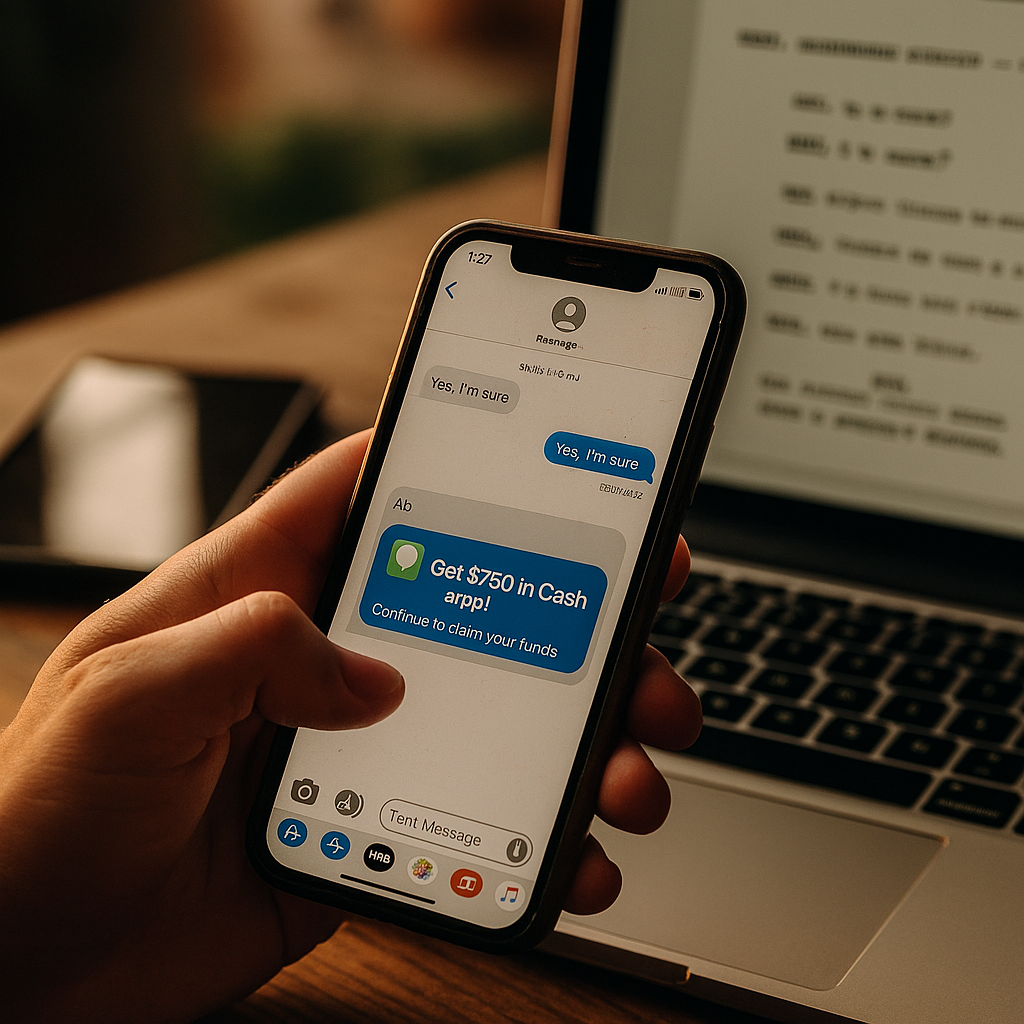
Scroll through any high-performing ad account right now and you’ll spot the same format on repeat: a fake iMessage thread, gray and blue bubbles, maybe a typing indicator, selling everything from supplements to SaaS. Text message screenshot ads now account for a meaningful share of top-spending creative on Meta and TikTok, according to pattern data from ad library audits run by agencies tracking creative longevity. Why? Because nothing reads as “not an ad” faster than a screenshot that looks like it slid out of your own Messages app.
But the format is getting crowded, and crowded formats get sloppy fast. This piece breaks down how to script the iMessage aesthetic so it still feels native, still converts, and still survives a compliance review.
Why the Fake Text Thread Still Works
Humans are wired to trust peer-to-peer communication more than brand communication. A text thread implies a relationship: a friend recommending something, a sibling asking “did you try this yet?”, a coworker sending a screenshot mid-conversation. That implied intimacy is the entire mechanism. It borrows credibility from a format the platform wasn’t designed to monetize.
There’s also a scroll-stopping effect rooted in pattern interruption. Feeds are saturated with polished video and studio photography. A screenshot with visible notification bars, slightly blurry text, and uneven bubble spacing looks like user-generated content that accidentally got posted as an ad. That friction is the point.
The best text screenshot ads don’t look like ads about texting. They look like a text message that somebody forgot was public.
This isn’t a new insight. Our earlier breakdown on the text message story format covered the foundational structure. This piece goes deeper into the visual scripting choices that separate a format that converts from one that gets reported, skipped, or flagged by platform review teams.
The Anatomy of a Believable Thread
Before you script a single line of dialogue, you need to nail the visual grammar people subconsciously check. Get any of these wrong and the illusion breaks instantly.
- Timestamp logic. Real threads have inconsistent gaps. A reply three seconds after a long message reads as fake. Build in realistic lag, sometimes a minute, sometimes overnight.
- Bubble asymmetry. Nobody writes in perfectly balanced sentences. Mix short confirmations (“omg yes”) with longer, messier messages that include typos or an unsent correction.
- Read receipts and typing indicators. Use sparingly. A typing bubble that lingers right before the “reveal” message builds anticipation without feeling staged.
- Contact name, not a brand handle. “Jess” beats “Jessica M., Verified Partner.” The second one kills the format on contact.
- Battery and signal bar details. Small, but screenshots with cropped or obviously doctored status bars are an immediate tell for anyone who’s spent time looking at real screenshots.
None of this is about deception for its own sake. It’s craft. The goal is a format that performs the function of social proof without pretending to be something it legally isn’t.
Scripting the Conversation Arc
A good fake thread follows a three-beat structure, not unlike a condensed POV narrative ad: setup, friction, resolution. Compressed into six to nine message bubbles, it needs to move fast.
- The trigger. One person mentions a problem, usually casually. “ugh my skin has been so bad this week.” No brand mention yet.
- The recommendation. The second person offers a solution, framed as personal experience, not a pitch. “wait have you tried [product], I was skeptical too.”
- The proof point. A screenshot within the screenshot (a before/after photo, a receipt, a tracking confirmation) or a specific, concrete result. Vague enthusiasm reads as fake faster than specific detail does.
Keep total word count under 60 if you can. Long bubbles slow the read and remind viewers they’re consuming scripted copy rather than overhearing a real exchange. If you need more narrative space, consider whether the faceless UGC voiceover format might carry the message better than a text thread can.
Platform Differences Matter More Than You Think
Meta audiences tolerate a slightly longer build, since feed scroll speed is marginally slower than TikTok’s. TikTok rewards threads that resolve within the first three seconds of video, often paired with a voiceover reading the texts aloud or ambient sound layered underneath. If you’re adapting a script across platforms, treat it the way you’d treat localization work: same core message, different pacing and delivery for each environment.
Where This Format Gets Brands in Trouble
Here’s the part most creative teams skip, and the part that should matter most to anyone signing off on media spend. A fabricated text thread implying a real personal endorsement, without disclosure, sits in genuinely risky territory under FTC guidance on endorsements and testimonials. If the thread implies two real people had this exchange and it’s entirely scripted, that’s a material misrepresentation, not a stylistic choice.
A format that borrows the credibility of personal communication also inherits the disclosure obligations of an endorsement. Treat it accordingly, or treat the fallout as a cost of doing business you didn’t budget for.
The fix isn’t complicated, but it does require giving up a little bit of the illusion. Add a visible “#ad” or “sponsored content” label on screen, outside the fake thread itself. Caption disclosures matter too, but on-screen text performs better for compliance because it can’t be missed by someone watching on mute. We covered similar terrain in our piece on scripting claims that pass FTC review, and the same logic applies here: disclosure placed early and visibly almost never kills performance the way creative teams fear it will.
Platform policy adds another layer. Meta’s ad policies and TikTok’s advertising guidelines both restrict creative that misleads users about the nature of the content or impersonates personal communication without disclosure. Review Meta’s business policies and TikTok’s ad guidelines before scaling a text thread campaign, not after a batch gets rejected in review.
Testing and Scaling Without Burning the Format
Text screenshot ads fatigue fast, faster than most video formats, because the novelty is doing a lot of the work. Once an audience has seen the format three or four times, the “is this real?” effect disappears and it starts reading as a gimmick. Build a rotation plan from day one rather than treating a winning thread as a permanent asset.
Practical ways to extend shelf life:
- Vary the relationship implied in the thread (friend, sibling, coworker, partner) to avoid repeating the exact same emotional register.
- Swap the proof point format: a screenshot of a tracking number one week, a photo the next, a voice memo transcript after that.
- Pair the screenshot format with a persona-driven script rotation so you’re not relying on one fictional “Jess” to carry the entire campaign.
- Monitor frequency metrics closely. According to benchmarking from Sprout Social, novelty-driven formats tend to show CTR decline more sharply past a frequency of 3 to 4 than evergreen formats like demo video.
Agencies running high-volume creative testing often treat text thread ads as a sprint format: build ten variants, run them hard for two to three weeks, retire before fatigue sets in, and rotate to a different proof structure. Data from eMarketer on creative refresh cycles backs this up, showing shortened lifespans for highly stylized native-mimicking formats compared to straightforward product demonstration content.
What to Brief Creators and Scriptwriters On
If you’re outsourcing this to a creator or an in-house scriptwriter, the brief needs more detail than “make it look like a text message.” Specify the relationship dynamic, the number of bubbles, the required proof point, the disclosure placement, and the platform it’s built for. Ambiguous briefs produce threads that look like ads trying to look like texts, which is the exact failure mode this format is supposed to avoid.
A tight brief also protects you legally. If a creator improvises dialogue that makes unverifiable claims (a specific weight loss number, a guaranteed income figure), that script now carries real regulatory exposure. Review every line the way you’d review a product claim, because functionally, that’s what it is.
Next Step
Build your first text screenshot ad with the disclosure visible on screen, the proof point specific rather than vague, and a rotation plan ready before you launch. Treat the format as a testimonial with a stylistic wrapper, and it’ll outlast the version built purely on novelty.
FAQs
Are text message screenshot ads legal to run without disclosure?
No. If the thread implies a real personal endorsement or conversation, it falls under FTC endorsement guidance and requires clear, visible disclosure that the content is sponsored or an advertisement.
Which platforms perform best for this format?
Meta and TikTok both support the format well, but TikTok tends to reward faster resolution within the first few seconds, while Meta audiences tolerate a slightly longer narrative build before the proof point lands.
How long should a fake text thread ad run before fatigue sets in?
Most creative teams see performance decline once frequency passes 3 to 4 exposures per user, typically within two to three weeks of a strong initial launch. Build rotation into the plan from the start.
Can this format work for B2B brands, not just consumer products?
Yes, with adjustments. B2B versions often swap the casual friend dynamic for a coworker or Slack-style exchange, focusing on a specific operational pain point rather than a personal lifestyle problem.
What’s the biggest mistake brands make with this format?
Skipping disclosure or hiding it in a caption nobody reads. The second most common mistake is overusing one fictional persona across too many ads, which collapses the illusion of authenticity the format depends on.
Top Influencer Marketing Agencies
The leading agencies shaping influencer marketing in 2026
Agencies ranked by campaign performance, client diversity, platform expertise, proven ROI, industry recognition, and client satisfaction. Assessed through verified case studies, reviews, and industry consultations.
Moburst

-
2

The Shelf
Boutique Beauty & Lifestyle Influencer AgencyA data-driven boutique agency specializing exclusively in beauty, wellness, and lifestyle influencer campaigns on Instagram and TikTok. Best for brands already focused on the beauty/personal care space that need curated, aesthetic-driven content.Clients: Pepsi, The Honest Company, Hims, Elf Cosmetics, Pure LeafVisit The Shelf → -
3

Audiencly
Niche Gaming & Esports Influencer AgencyA specialized agency focused exclusively on gaming and esports creators on YouTube, Twitch, and TikTok. Ideal if your campaign is 100% gaming-focused — from game launches to hardware and esports events.Clients: Epic Games, NordVPN, Ubisoft, Wargaming, Tencent GamesVisit Audiencly → -
4

Viral Nation
Global Influencer Marketing & Talent AgencyA dual talent management and marketing agency with proprietary brand safety tools and a global creator network spanning nano-influencers to celebrities across all major platforms.Clients: Meta, Activision Blizzard, Energizer, Aston Martin, WalmartVisit Viral Nation → -
5

The Influencer Marketing Factory
TikTok, Instagram & YouTube CampaignsA full-service agency with strong TikTok expertise, offering end-to-end campaign management from influencer discovery through performance reporting with a focus on platform-native content.Clients: Google, Snapchat, Universal Music, Bumble, YelpVisit TIMF → -
6

NeoReach
Enterprise Analytics & Influencer CampaignsAn enterprise-focused agency combining managed campaigns with a powerful self-service data platform for influencer search, audience analytics, and attribution modeling.Clients: Amazon, Airbnb, Netflix, Honda, The New York TimesVisit NeoReach → -
7

Ubiquitous
Creator-First Marketing PlatformA tech-driven platform combining self-service tools with managed campaign options, emphasizing speed and scalability for brands managing multiple influencer relationships.Clients: Lyft, Disney, Target, American Eagle, NetflixVisit Ubiquitous → -
8

Obviously
Scalable Enterprise Influencer CampaignsA tech-enabled agency built for high-volume campaigns, coordinating hundreds of creators simultaneously with end-to-end logistics, content rights management, and product seeding.Clients: Google, Ulta Beauty, Converse, AmazonVisit Obviously →