


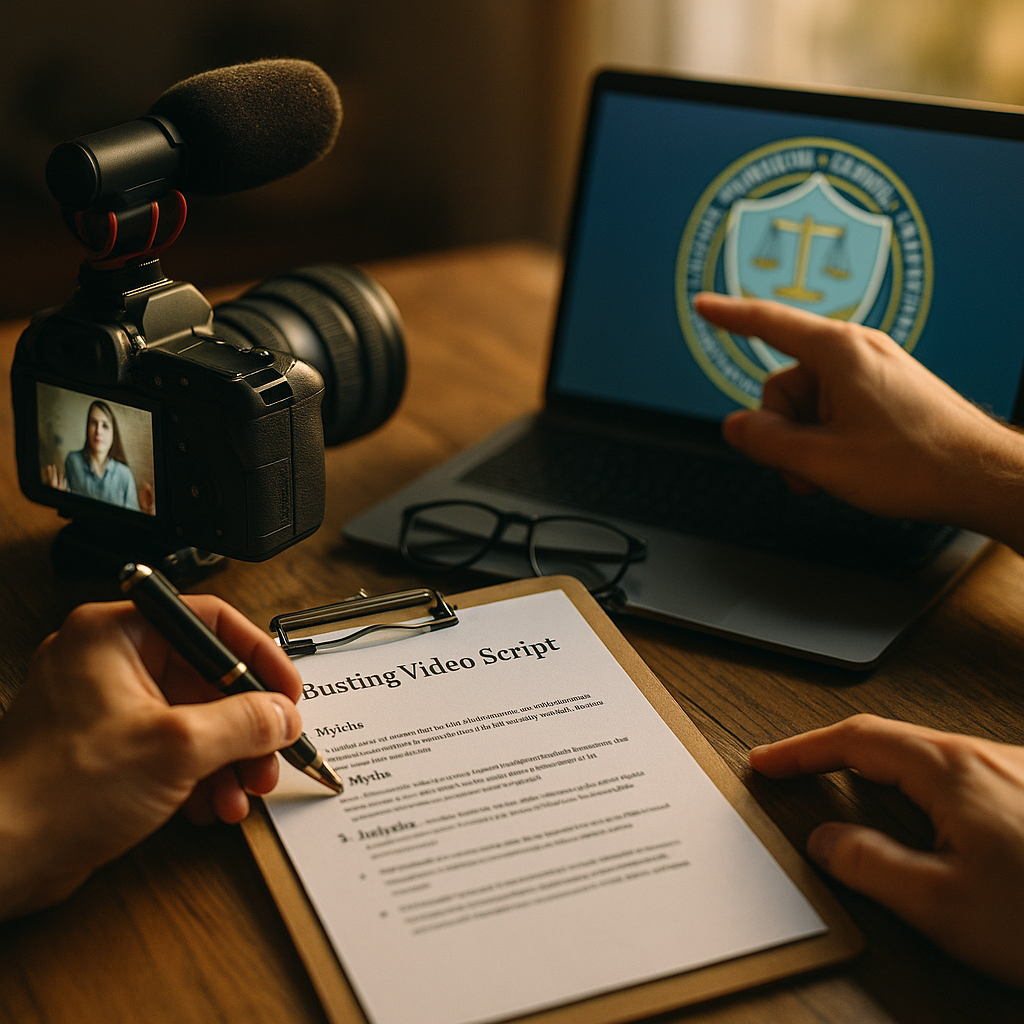
The FTC issued more than $300 million in advertising-related settlements over the past few years, and a growing share trace back to creator content that made “busting a myth” into an excuse for an unsubstantiated claim. Myth-busting video scripts convert like crazy because they hijack curiosity and confirmation bias at once. But the same format that makes them persuasive also makes them a magnet for compliance risk, unless you structure the claims correctly from the first line.
This piece breaks down how to write myth-busting scripts that keep the hook, keep the conversion lift, and still pass legal and platform review without a rewrite three days before launch.
Why Myth-Busting Content Triggers Extra Scrutiny
Think about what a myth-busting script actually does structurally. It states a false belief, then “corrects” it with the brand’s preferred narrative. That correction almost always reads as a comparative or superiority claim, even when the script never intends it that way. “Myth: all retinol irritates skin. Fact: ours doesn’t” is a textbook efficacy claim wearing a myth-busting costume.
Reviewers at the FTC, and increasingly at Meta and TikTok’s ad review teams, know this pattern well. They’re not evaluating the format. They’re evaluating the claim buried inside it. A video can look educational and still get flagged if the “fact” segment contains language that implies clinical proof, guaranteed results, or universal applicability without substantiation.
If your “fact” line would need a citation in a scientific paper, it needs a citation in your script too, or it needs to be softened into an opinion.
The Three-Part Claim Structure That Holds Up
Every durable myth-busting script follows a version of this architecture. Skip a part and you’re exposed.
- The myth statement: framed as a common belief, not a straw man you invented to make your product look better.
- The correction, scoped precisely: qualified language (“in my experience,” “for most users,” “according to [source]”) instead of absolute claims.
- The substantiation anchor: a visible or verbal reference to where the correction comes from, even if it’s just “per the brand’s lab testing” or “per dermatologist guidance.”
Miss the third part and your script is just an opinion dressed up as a fact. That’s fine for some content, risky for anything making a health, financial, or safety claim.
Example: Before and After
Before: “Myth: supplements don’t work fast. Fact: this one shows results in 3 days.” That’s an unsubstantiated efficacy claim with a specific timeframe, exactly the kind of language that draws FTC attention.
After: “A lot of people think supplements take weeks to feel anything. In my own experience, I noticed a difference by day three, though results vary by person.” Same hook, same emotional payoff, dramatically lower legal exposure because it’s framed as personal experience rather than universal fact.
This is the same discipline we covered in Day 1 vs Day 30 proof videos, where timeline claims need the same qualifying language to avoid implying guaranteed outcomes.
Where Brands Actually Get Burned
It’s rarely the obvious stuff. Nobody at a reputable agency is writing “cures cancer” into a script anymore. The risk hides in the subtle stuff: absolute language (“always,” “never,” “guaranteed”), implied comparisons (“unlike other brands”), and missing disclosure when the creator is paid, gifted, or an employee.
Run a quick audit on your last ten myth-busting scripts. How many use the word “proven” without a source attached? How many imply the brand’s product is the only one that solves the myth, without naming a study or even a general category of evidence? That’s where legal review notes pile up, and that’s where reshoots cost you the most time and budget.
The fastest way to blow a production budget isn’t a bad hook. It’s a reshoot after legal catches an absolute claim in week two of a campaign.
According to FTC guidance on endorsements, claims must be substantiated at the time they’re made, not after the fact. That means your script review process needs to happen before filming, not after a video is already live and performing well. Waiting until a video gets traction to check the claims is backwards, and it’s the single most common mistake brands make with creator content at scale.
Disclosure Isn’t Optional, Even in Educational Framing
A lot of brands assume myth-busting content gets a disclosure pass because it “feels” educational rather than promotional. It doesn’t. If the creator is compensated, gifted product, or has any material connection to the brand, the paid partnership disclosure applies regardless of how the content is framed. The FTC has been explicit that disclosure requirements don’t bend based on content format, tone, or whether the creator personally believes the claim.
Put the disclosure early, ideally in the first three seconds, and repeat it in on-screen text throughout, not just in the caption. Platforms like TikTok and Instagram have their own built-in disclosure tools, and using them alongside verbal disclosure is the belt-and-suspenders approach that keeps both legal and platform compliance teams satisfied. For more on pairing credible voices with compliant claims, see expert reaction videos scripting credibility, which covers similar substantiation issues from a different script angle.
Scripting Formula: Myth, Context, Correction, Source
Here’s a four-beat structure that writers can plug into any myth-busting brief without reinventing the wheel each time.
- Myth (3-5 seconds): State the belief plainly. Don’t editorialize yet.
- Context (5-8 seconds): Explain why people believe it. This builds credibility and shows you’re not strawmanning.
- Correction (8-12 seconds): Offer the nuanced, qualified take. This is where “in my experience” or “according to” language lives.
- Source or CTA (3-5 seconds): Point to where the correction comes from, or redirect to the brand’s own claims page where full substantiation lives.
This mirrors the comparison logic used in dupe comparison videos, where the same qualifying language prevents implied superiority claims from triggering platform takedowns.
A Word on Tone
Qualified language doesn’t have to sound lawyerly. “In my experience” reads more natural on camera than “individual results may vary,” even though they mean roughly the same thing. Write for the ear, not the legal brief. A good script should pass both a compliance read and a read-aloud test where it still sounds like a real person talking, not a disclaimer scroll at the end of a pharma ad.
Testing Scripts Before They Go to Production
Smart teams run myth-busting scripts through a three-person check before filming: a legal or compliance reviewer, a brand marketer, and ideally the creator themselves, since creators often know instinctively when a line feels “off” even before legal flags it. Build this into your brief template rather than treating it as an afterthought.
Platforms are also getting stricter on their own ad review, independent of FTC enforcement. Meta’s advertising standards and TikTok’s ad policies both flag unsubstantiated health, financial, and efficacy claims at the creative review stage, which means a script that fails internal review will likely fail platform review too. Treat these as the same gate, not two separate hurdles.
Data from eMarketer shows branded content disclosure and claim substantiation remain among the top reasons ad creative gets rejected on major platforms, right alongside landing page mismatches. If your myth-busting scripts keep getting bounced, it’s worth auditing the claim language specifically before blaming creative fatigue or audience targeting.
For brands running these scripts across multiple creators or languages, consistency matters too. A qualified claim in English can turn absolute in translation if localization isn’t handled carefully, something covered in depth in AI actor localization for scripted content.
Quick Reference: Red Flag Words to Flag in Review
- “Proven,” “guaranteed,” “clinically shown” (without an attached, named source)
- “Always,” “never,” “everyone,” “nobody” (absolute framing)
- “Unlike [competitor/other brands]” (implied comparative claim)
- Specific timeframes for results (“in 3 days,” “overnight”) without qualifying language
- Health, safety, or financial outcomes stated as fact rather than experience
Run every script against this list before it goes into production. It takes five minutes and saves a reshoot.
FAQs
Frequently Asked Questions
What makes myth-busting video scripts riskier than standard product videos?
The “fact” portion of a myth-busting script almost always functions as an efficacy or comparative claim, even when it’s framed as education. That hidden claim is what draws FTC and platform scrutiny, not the myth-busting format itself.
Do myth-busting videos need paid partnership disclosure?
Yes. If the creator has any material connection to the brand, including gifted product, disclosure is required regardless of whether the content feels educational or informational in tone.
What qualifying language keeps a correction claim compliant?
Phrases like “in my experience,” “for most people,” or “according to [named source]” scope the claim to personal experience or cited evidence rather than universal fact, which significantly reduces legal exposure.
Should legal review happen before or after filming?
Before. Reviewing claims after a video is live and performing well means any required changes come with a reshoot cost and a disruption to campaign momentum.
Can myth-busting scripts still convert well if they’re heavily qualified?
Yes. Qualified language written naturally, for the ear rather than as a legal disclaimer, still carries the emotional hook of correcting a misconception without sacrificing conversion performance.
Next step: pull your last five myth-busting scripts, run them against the red flag word list above, and send anything with an unqualified claim back to the writer before it goes near a camera.
Top Influencer Marketing Agencies
The leading agencies shaping influencer marketing in 2026
Agencies ranked by campaign performance, client diversity, platform expertise, proven ROI, industry recognition, and client satisfaction. Assessed through verified case studies, reviews, and industry consultations.
Moburst

-
2

The Shelf
Boutique Beauty & Lifestyle Influencer AgencyA data-driven boutique agency specializing exclusively in beauty, wellness, and lifestyle influencer campaigns on Instagram and TikTok. Best for brands already focused on the beauty/personal care space that need curated, aesthetic-driven content.Clients: Pepsi, The Honest Company, Hims, Elf Cosmetics, Pure LeafVisit The Shelf → -
3

Audiencly
Niche Gaming & Esports Influencer AgencyA specialized agency focused exclusively on gaming and esports creators on YouTube, Twitch, and TikTok. Ideal if your campaign is 100% gaming-focused — from game launches to hardware and esports events.Clients: Epic Games, NordVPN, Ubisoft, Wargaming, Tencent GamesVisit Audiencly → -
4

Viral Nation
Global Influencer Marketing & Talent AgencyA dual talent management and marketing agency with proprietary brand safety tools and a global creator network spanning nano-influencers to celebrities across all major platforms.Clients: Meta, Activision Blizzard, Energizer, Aston Martin, WalmartVisit Viral Nation → -
5

The Influencer Marketing Factory
TikTok, Instagram & YouTube CampaignsA full-service agency with strong TikTok expertise, offering end-to-end campaign management from influencer discovery through performance reporting with a focus on platform-native content.Clients: Google, Snapchat, Universal Music, Bumble, YelpVisit TIMF → -
6

NeoReach
Enterprise Analytics & Influencer CampaignsAn enterprise-focused agency combining managed campaigns with a powerful self-service data platform for influencer search, audience analytics, and attribution modeling.Clients: Amazon, Airbnb, Netflix, Honda, The New York TimesVisit NeoReach → -
7

Ubiquitous
Creator-First Marketing PlatformA tech-driven platform combining self-service tools with managed campaign options, emphasizing speed and scalability for brands managing multiple influencer relationships.Clients: Lyft, Disney, Target, American Eagle, NetflixVisit Ubiquitous → -
8

Obviously
Scalable Enterprise Influencer CampaignsA tech-enabled agency built for high-volume campaigns, coordinating hundreds of creators simultaneously with end-to-end logistics, content rights management, and product seeding.Clients: Google, Ulta Beauty, Converse, AmazonVisit Obviously →