


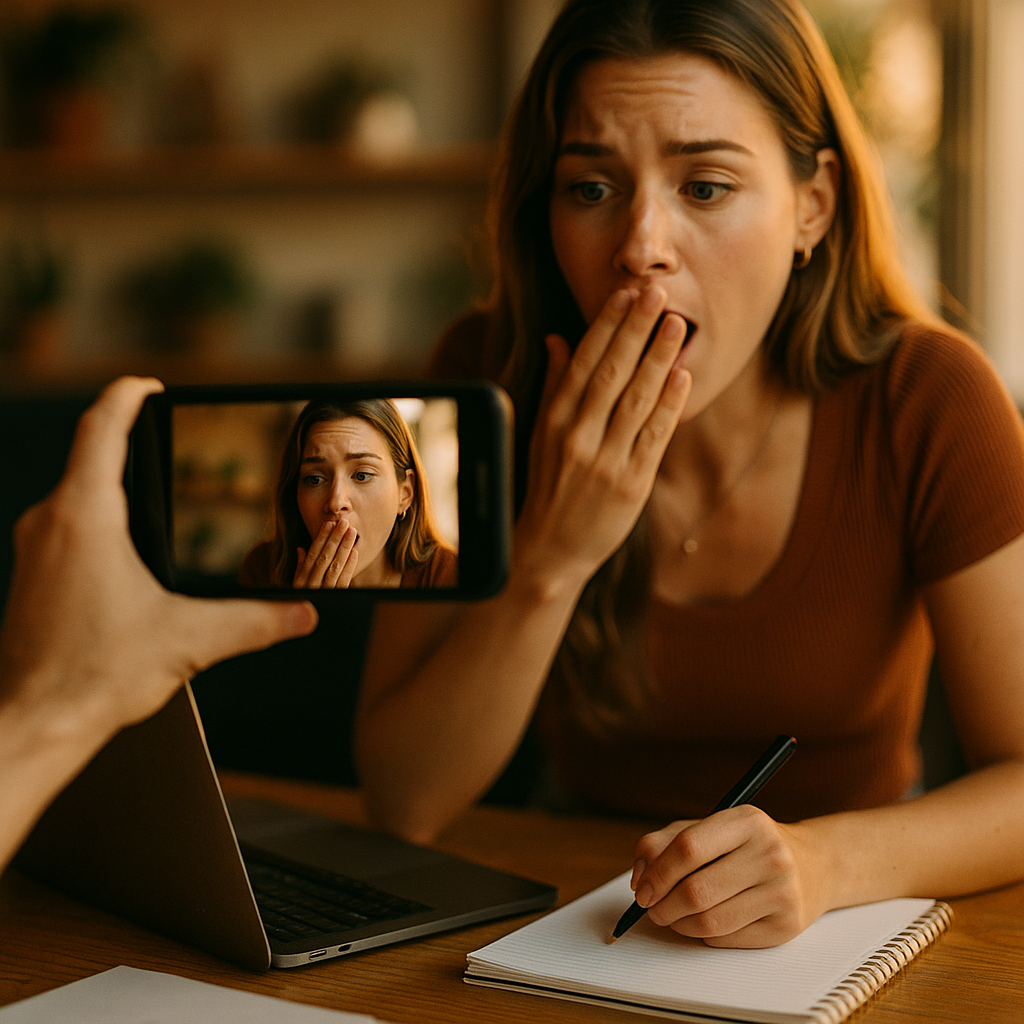
A brand ran the same product message two ways: one polished third-person review, one shaky first-person clip filmed from the unboxer’s own hands. The POV version pulled a 34% higher click-through rate and cost a third less to produce. That’s not an isolated fluke. It’s becoming the default expectation on feeds where viewers scroll past anything that smells like an ad. The POV ad format works because it removes the narrator, and with it, the skepticism.
Why First-Person Footage Beats the Polished Review Format
Third-person reviews have a structural problem: they position the creator as a spokesperson, and audiences have gotten very good at spotting spokespeople. The moment a viewer senses “this person is talking at me on behalf of a brand,” trust drops. POV content sidesteps that entirely by putting the camera in the position of the viewer’s own eyes, hands, or perspective. There’s no reviewer to distrust because there’s no reviewer on screen at all.
This isn’t just a vibe. Short-form platforms reward watch time and completion rate above almost everything else, and POV footage tends to win both. Viewers stay because they’re mentally inserted into the scene, not observing it from a distance. A hand reaching into a package, a first bite shot from below the chin, a phone screen filmed as if it’s the viewer’s own thumb scrolling. It’s a subtle trick, but it works because it mimics how people actually experience products rather than how they’re told to experience them.
The strongest POV briefs never mention “acting like the viewer.” They mechanically remove every visual cue that a second person exists behind the presentation, and let the format do the persuading.
What Makes a POV Brief Different?
Most creative briefs describe what to say. A POV brief has to describe what to see, and critically, what the camera physically is. Before you brief a single creator, decide who or what the lens represents. Common options include:
- The customer’s own hands unboxing, applying, or using the product, with no face in frame.
- The customer’s eyes looking down at a device, a menu, or a mirror reflection.
- A “ride-along” perspective, such as sitting in the passenger seat during a product demo.
Once that’s locked, the brief needs to specify camera height, angle, and hand movement speed, because these details break the illusion faster than a bad script ever could. A camera held too high suddenly reads as “someone filming a person” rather than “you, experiencing this.” Influencers Time has covered similar mechanics in our piece on trust-first unboxing, where the same first-person logic drives authenticity.
Brief for the Body, Not Just the Script
Traditional briefs lead with talking points. POV briefs should lead with physical blocking: where the hands enter frame, how long the product sits in view before use, whether there’s a countertop, a car dashboard, a bathroom mirror. Give creators a shot list built around body movement, then let dialogue happen naturally over it, if at all. Some of the best-performing POV ads on TikTok and Instagram Reels have almost no spoken narration, just ambient sound and on-screen text.
The Shot List That Actually Works
Here’s a practical structure that agencies are using in production briefs right now:
- Cold open (0 to 2 seconds): hands already mid-action, no setup, no intro line.
- Discovery beat (2 to 6 seconds): the product enters frame as if the viewer just noticed it.
- Tactile beat (6 to 15 seconds): texture, sound, or reaction shot from a low, personal angle.
- Payoff (15 to 25 seconds): the result, filmed from the same POV perspective, never cutting to a third-person wide shot.
Note what’s missing: there’s no “creator introduces themselves” beat. That’s intentional. Every second spent establishing a presenter is a second working against the format’s core advantage. If you need brand context, put it in on-screen text or a caption, not in a spoken intro.
This pacing logic overlaps heavily with what we outlined in watch time first creative briefs, where hook speed determines whether the algorithm even gives the video a chance.
Common Mistakes That Kill the Illusion
POV content is deceptively hard to brief well. The most frequent failure isn’t bad acting, it’s bad camera logic. A few patterns show up constantly in underperforming POV ads:
- Mirror shots that reveal the creator’s face mid-scene, which suddenly reintroduces a third-person presence and breaks immersion.
- Overly stable, gimbal-smooth footage that reads as professionally filmed rather than personally experienced. A little shake sells realism.
- Scripted dialogue that sounds like ad copy, which reminds viewers a brand wrote this. Natural mutters and reactions outperform polished lines almost every time.
- Skipping disclosure, which is both a compliance risk and, frankly, unnecessary. A brief on-screen “#ad” or “partner” tag doesn’t hurt performance and keeps you aligned with FTC endorsement guidelines.
That last point matters more than brands like to admit. POV’s power comes from feeling unsponsored, which makes disclosure discipline even more important, not less. Hiding the partnership isn’t worth the risk, and it isn’t necessary for the format to work. A small tag in the corner rarely costs you the illusion.
Measuring Performance: What to Track
Standard influencer KPIs still apply, but POV content rewards a slightly different read. Watch these four metrics closely:
- Completion rate, since POV’s whole value proposition is holding attention through the payoff beat.
- Replay rate, which often signals the tactile or ASMR-adjacent moments are landing.
- Comment sentiment, specifically whether viewers reference “I felt like I was there” language, a strong proxy for immersion working as intended.
- Click-through on the payoff frame, if you’re running shoppable overlays, since that’s the moment intent peaks.
Platforms like TikTok Ads Manager and Meta’s ad reporting both surface hook rate and completion data natively, so there’s no excuse for guessing. Pair that with a Sprout Social or similar listening tool to catch qualitative signal in the comments, which often tells you why a POV cut is working before the numbers fully confirm it.
If your POV ad’s top comment is “wait is this an ad,” you’ve built a format that’s working exactly as intended and staying compliant at the same time.
Scaling the Format Without Losing the Magic
Once a POV cut proves out, the temptation is to templatize it across every creator on the roster. Resist doing that too literally. The format’s strength is specificity, a real hand, a real kitchen, a real moment of hesitation before using the product. Over-templatizing strips that out and turns POV into just another kind of third-person ad wearing a first-person costume.
Instead, brief for the underlying mechanics (camera position, pacing, no-face rule, disclosure placement) and let each creator bring their own environment and reaction. This is the same principle behind our studio-style UGC production approach: consistent structure, varied execution. It also pairs well with a broader content ladder strategy, since a single POV shoot can often be recut for discovery, consideration, and conversion placements without reshooting.
Data from platforms tracking short-form ad performance, referenced in eMarketer’s creative benchmarking coverage, consistently shows first-person and native-feeling formats outperforming produced ad units on cost per completed view. That trend isn’t slowing down heading into next year’s budget planning.
Frequently Asked Questions
What exactly is a POV ad format?
A POV ad format is short-form content filmed from a first-person perspective, using the viewer’s implied eyes or hands as the camera, rather than showing a creator narrating to the audience in a traditional review.
Why does POV content outperform third-person reviews?
It removes the visible spokesperson, which lowers the viewer’s skepticism and increases immersion. Viewers process the scene as something happening to them, not something being pitched at them, which tends to improve completion rate and click-through.
Do POV ads still need influencer disclosure?
Yes. Disclosure requirements from the FTC apply regardless of camera perspective. A brief on-screen tag or caption disclosure keeps the campaign compliant without meaningfully hurting performance.
What’s the biggest mistake brands make when briefing POV content?
Writing the brief like a script instead of a shot list. POV performance depends on camera blocking, pacing, and physical realism far more than on dialogue, and briefs that lead with talking points usually produce stiff, unconvincing footage.
Can POV content be repurposed across multiple funnel stages?
Often, yes. A single POV shoot can be recut for top-of-funnel discovery, mid-funnel consideration ads, and bottom-funnel conversion placements, since the raw footage rarely needs reshooting, only different edits and overlays.
Next campaign brief, swap the “creator introduces the product” line for a shot list built around hands, pacing, and a single uninterrupted perspective. Test it against your current third-person review cut, and let completion rate settle the argument.
Top Influencer Marketing Agencies
The leading agencies shaping influencer marketing in 2026
Agencies ranked by campaign performance, client diversity, platform expertise, proven ROI, industry recognition, and client satisfaction. Assessed through verified case studies, reviews, and industry consultations.
Moburst

-
2

The Shelf
Boutique Beauty & Lifestyle Influencer AgencyA data-driven boutique agency specializing exclusively in beauty, wellness, and lifestyle influencer campaigns on Instagram and TikTok. Best for brands already focused on the beauty/personal care space that need curated, aesthetic-driven content.Clients: Pepsi, The Honest Company, Hims, Elf Cosmetics, Pure LeafVisit The Shelf → -
3

Audiencly
Niche Gaming & Esports Influencer AgencyA specialized agency focused exclusively on gaming and esports creators on YouTube, Twitch, and TikTok. Ideal if your campaign is 100% gaming-focused — from game launches to hardware and esports events.Clients: Epic Games, NordVPN, Ubisoft, Wargaming, Tencent GamesVisit Audiencly → -
4

Viral Nation
Global Influencer Marketing & Talent AgencyA dual talent management and marketing agency with proprietary brand safety tools and a global creator network spanning nano-influencers to celebrities across all major platforms.Clients: Meta, Activision Blizzard, Energizer, Aston Martin, WalmartVisit Viral Nation → -
5

The Influencer Marketing Factory
TikTok, Instagram & YouTube CampaignsA full-service agency with strong TikTok expertise, offering end-to-end campaign management from influencer discovery through performance reporting with a focus on platform-native content.Clients: Google, Snapchat, Universal Music, Bumble, YelpVisit TIMF → -
6

NeoReach
Enterprise Analytics & Influencer CampaignsAn enterprise-focused agency combining managed campaigns with a powerful self-service data platform for influencer search, audience analytics, and attribution modeling.Clients: Amazon, Airbnb, Netflix, Honda, The New York TimesVisit NeoReach → -
7

Ubiquitous
Creator-First Marketing PlatformA tech-driven platform combining self-service tools with managed campaign options, emphasizing speed and scalability for brands managing multiple influencer relationships.Clients: Lyft, Disney, Target, American Eagle, NetflixVisit Ubiquitous → -
8

Obviously
Scalable Enterprise Influencer CampaignsA tech-enabled agency built for high-volume campaigns, coordinating hundreds of creators simultaneously with end-to-end logistics, content rights management, and product seeding.Clients: Google, Ulta Beauty, Converse, AmazonVisit Obviously →