


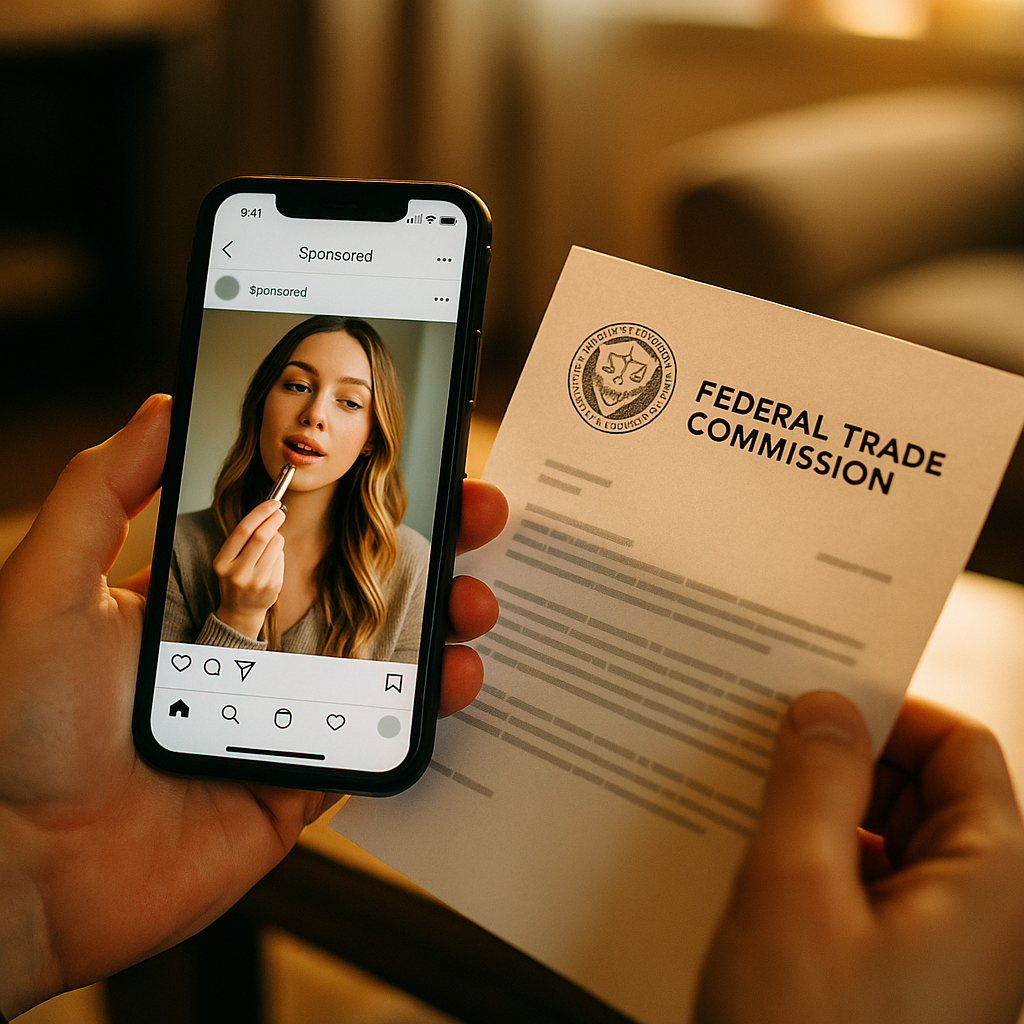
Zero. That’s how many organic followers see most whitelisted dark post ads before the FTC comes knocking. No public post, no visible #ad tag, no paper trail on the creator’s own feed. Just a targeted ad running under someone else’s name, and a growing pile of enforcement actions proving that whitelisting disclosure gaps are one of the least understood compliance risks in influencer marketing today.
Brands love whitelisting (also called creator-boosted content or branded content ads) because it works. Media buyers get to run paid media through a trusted creator’s handle, targeting lookalike audiences with performance-grade optimization while borrowing the authenticity of an organic-looking post. The problem is that “looking organic” and “being disclosed” are not the same thing, and regulators have made clear they see the gap between those two ideas as a feature, not a bug, of how brands are using dark posts.
What Whitelisting Actually Does to Disclosure
Whitelisting grants a brand advertising access to a creator’s ad account ID, letting the brand run paid media “as” that creator. The ad shows up in a feed with the creator’s name, photo, and handle attached, but it never appears on the creator’s public profile. That’s the whole point: dark posts let brands test dozens of variants, target niche segments, and kill underperforming creative without cluttering a creator’s grid or triggering audience fatigue.
Here’s where it breaks. The FTC’s Endorsement Guides require clear and conspicuous disclosure whenever there’s a material connection between a brand and an endorser, and that requirement doesn’t evaporate just because the post is served as an ad rather than published organically. A dark post still needs #ad or “Paid partnership with [Brand]” language that a reasonable consumer would notice before they even engage with the content. Plenty of whitelisted campaigns skip that step entirely, or bury it in a tiny platform-generated label that most users scroll straight past.
A disclosure that exists only inside an ad unit, invisible to organic reach and easy to miss inside a paid feed, does not satisfy the FTC’s “clear and conspicuous” standard, regardless of how the platform’s own paid-partnership tools are configured.
Why This Keeps Slipping Past Legal Review
Ask ten brand marketers whether their whitelisted ads carry proper disclosure, and most will point to the platform’s built-in “Paid Partnership” tag as the answer. That tag helps, but it’s not sufficient on its own, especially when a creative team strips it out during A/B testing or when the ad runs through a Meta Advantage+ campaign that reformats creative dynamically. Ad platforms were built for performance, not compliance. Nobody flagged disclosure as a launch blocker because nobody on the media buying team thought of it as their job.
That’s the operational failure point. Compliance sits with legal or brand marketing. Media buying sits with performance teams, often at an agency, sometimes a completely separate vendor from the one that negotiated the creator contract. Whitelisting cuts across both functions, and in most orgs there’s no single owner checking that the disclosure surviving in the paid unit matches what legal actually approved.
The FTC’s Track Record Says This Isn’t Theoretical
The FTC has been explicit that dark posts and boosted content fall inside its jurisdiction. Its updated Endorsement Guides, along with the accompanying FAQ material published by the agency, specifically address paid social and note that native-feeling ad formats don’t get a disclosure exemption just because they resemble organic content. Brands that treat whitelisting as a media tactic exempt from the same rules governing organic sponsored posts are reading the guidance wrong. You can review the current guidance directly at the FTC’s official site.
The agency has also shown a pattern of pursuing both the creator and the brand behind an undisclosed endorsement, which matters because whitelisting arrangements often obscure who technically “published” the ad. If a brand’s media team configured and launched the buy, that brand carries direct exposure, not just downstream liability through an indemnification clause. Legal teams that assumed creator contracts alone would shield the brand are increasingly finding that assumption tested.
State regulators have picked up the same thread. Several state attorneys general have opened disclosure sweeps that specifically include paid social and boosted content, not just organic influencer posts. If your compliance program is still organized around what shows up on a creator’s public grid, you’re only covering half the surface area regulators are now checking. Our state AG sweep audit guide breaks down what these investigations actually look for.
Where Brands Get Whitelisting Disclosure Wrong
- Assuming platform tools are compliance tools. Meta’s branded content ad label and TikTok’s Spark Ads disclosure setting are helpful, but they’re opt-in features that creative teams can bypass, disable, or configure incorrectly during upload.
- Losing disclosure during creative iteration. A campaign starts with a properly disclosed hero asset, then the performance team spins up fifteen creative variants for testing. Somewhere around variant six, the disclosure language quietly disappears from the copy.
- Treating dark posts as outside the creator contract’s scope. Many influencer agreements specify disclosure requirements for content the creator posts, but say nothing about content the brand runs as a dark post using the creator’s identity. That’s a contract gap, not a compliance win.
- No audit trail linking ad IDs to approved creative. When a brand can’t produce documentation showing which disclosed asset ran under which ad ID, on which date, they can’t defend the campaign if the FTC or a state AG asks.
None of this is exotic. It’s the same operational sloppiness that shows up whenever a fast-moving performance function (media buying) intersects with a slower-moving compliance function (legal review). The fix isn’t complicated, but it does require someone to actually own it.
Building a Whitelisting Compliance Checklist That Holds Up
Start by mapping every whitelisting arrangement currently live across your brand and agency partners. That sounds basic, but plenty of marketing orgs genuinely don’t have a master list, because whitelisting permissions get granted creator by creator, campaign by campaign, often by different people on the media team.
Once you have the list, verify three things for each active campaign:
- The disclosure language embedded in the creative itself, not just the platform’s ad label, states the material connection clearly.
- The disclosure survives every creative variant, including any dynamically generated or AI-assisted versions used for testing.
- There’s a documented chain connecting the creator contract’s disclosure clause to the actual ad unit that ran, with screenshots or exportable ad IDs kept on file.
This is essentially the same discipline brands should already be applying to organic creator content approvals. If your workflow for that is inconsistent, start with our breakdown of creator ad approval audits, then extend the same rigor to dark post buys specifically. A single approval workflow covering both organic and whitelisted content removes the gap where most violations currently live.
Brands running whitelisted content across multiple states should also revisit disclosure language against the strictest applicable jurisdiction rather than a lowest-common-denominator federal standard. California’s rules, for instance, go further than baseline FTC guidance in certain respects, and our state compliance map is a useful reference point when your paid social runs nationally but your legal exposure doesn’t.
What Happens When Human Review Isn’t in the Loop
A growing share of whitelisting campaigns now run through automated creative optimization tools that generate and rotate variants without a human checking each one before launch. That’s efficient for performance, dangerous for compliance. If disclosure language isn’t hardcoded into the base template that automated systems pull from, it can vanish silently across dozens of live variants before anyone notices.
Brands using AI-assisted creative pipelines for whitelisted content need a human-in-the-loop checkpoint specifically for disclosure, separate from general brand safety review. Our human-in-the-loop workflow guide covers how to build that checkpoint without slowing down launch timelines to a crawl. The goal isn’t to review every asset manually forever, it’s to build a template-level safeguard so disclosure can’t be stripped out downstream.
Industry benchmarking from eMarketer continues to show branded content and creator-boosted ads capturing a growing share of social ad budgets, which means the volume of whitelisted creative running without adequate disclosure oversight is scaling right alongside spend. That trajectory alone should be enough to move disclosure review from a “nice to have” to a hard launch gate for any brand running dark posts through creator identities.
Agencies managing whitelisting on a brand’s behalf should also carry documented proof of process, not just a verbal assurance that “we handle disclosure.” Ask for the actual audit trail. If an agency can’t produce it, that’s a vendor risk question worth escalating before the next campaign launches, not after a regulator asks the same question.
Takeaway
Treat every whitelisted ad as a disclosure event first and a media buy second: build disclosure into the creative template itself, assign one owner to verify it survives every variant, and keep an ad-ID-level audit trail before the campaign, not after a regulator asks for one.
Frequently Asked Questions
Does whitelisting require the same disclosure as an organic sponsored post?
Yes. The FTC’s Endorsement Guides apply based on the existence of a material connection between brand and endorser, not on whether the content is organic or paid. A dark post running under a creator’s identity still needs clear, conspicuous disclosure embedded in the creative itself.
Is the platform’s built-in branded content label enough on its own?
Not reliably. Platform labels help but can be stripped out, disabled, or misconfigured during creative iteration, especially across multiple ad variants. Brands should verify disclosure language exists in the creative asset independent of the platform tag.
Who is liable if a whitelisted ad lacks proper disclosure, the brand or the creator?
Both can face exposure, but the FTC has increasingly pursued brands directly when the brand’s media team configured and launched the ad, regardless of whose identity the ad ran under.
How should brands document compliance for whitelisted campaigns?
Keep a record linking each live ad ID to the approved, disclosed creative asset, including timestamps and screenshots. This audit trail is the primary evidence brands can produce if a regulator or state AG requests proof of disclosure practices.
Do AI-generated ad variants increase whitelisting disclosure risk?
Yes. Automated creative optimization tools can rotate dozens of variants without human review, and if disclosure isn’t hardcoded into the base template, it can disappear across generated versions without anyone catching it before launch.
Top Influencer Marketing Agencies
The leading agencies shaping influencer marketing in 2026
Agencies ranked by campaign performance, client diversity, platform expertise, proven ROI, industry recognition, and client satisfaction. Assessed through verified case studies, reviews, and industry consultations.
Moburst

-
2

The Shelf
Boutique Beauty & Lifestyle Influencer AgencyA data-driven boutique agency specializing exclusively in beauty, wellness, and lifestyle influencer campaigns on Instagram and TikTok. Best for brands already focused on the beauty/personal care space that need curated, aesthetic-driven content.Clients: Pepsi, The Honest Company, Hims, Elf Cosmetics, Pure LeafVisit The Shelf → -
3

Audiencly
Niche Gaming & Esports Influencer AgencyA specialized agency focused exclusively on gaming and esports creators on YouTube, Twitch, and TikTok. Ideal if your campaign is 100% gaming-focused — from game launches to hardware and esports events.Clients: Epic Games, NordVPN, Ubisoft, Wargaming, Tencent GamesVisit Audiencly → -
4

Viral Nation
Global Influencer Marketing & Talent AgencyA dual talent management and marketing agency with proprietary brand safety tools and a global creator network spanning nano-influencers to celebrities across all major platforms.Clients: Meta, Activision Blizzard, Energizer, Aston Martin, WalmartVisit Viral Nation → -
5

The Influencer Marketing Factory
TikTok, Instagram & YouTube CampaignsA full-service agency with strong TikTok expertise, offering end-to-end campaign management from influencer discovery through performance reporting with a focus on platform-native content.Clients: Google, Snapchat, Universal Music, Bumble, YelpVisit TIMF → -
6

NeoReach
Enterprise Analytics & Influencer CampaignsAn enterprise-focused agency combining managed campaigns with a powerful self-service data platform for influencer search, audience analytics, and attribution modeling.Clients: Amazon, Airbnb, Netflix, Honda, The New York TimesVisit NeoReach → -
7

Ubiquitous
Creator-First Marketing PlatformA tech-driven platform combining self-service tools with managed campaign options, emphasizing speed and scalability for brands managing multiple influencer relationships.Clients: Lyft, Disney, Target, American Eagle, NetflixVisit Ubiquitous → -
8

Obviously
Scalable Enterprise Influencer CampaignsA tech-enabled agency built for high-volume campaigns, coordinating hundreds of creators simultaneously with end-to-end logistics, content rights management, and product seeding.Clients: Google, Ulta Beauty, Converse, AmazonVisit Obviously →