


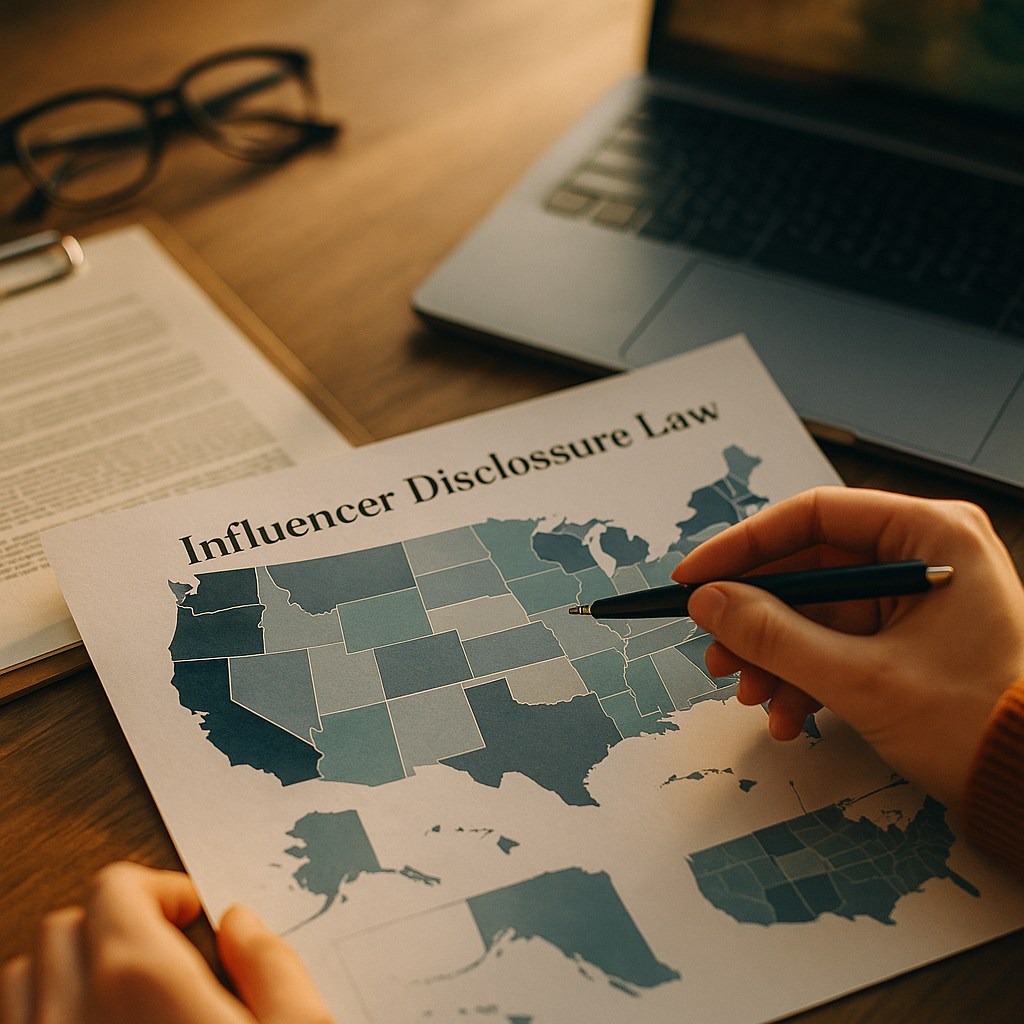
Fifty states, fifty sets of rules, and one very expensive assumption: that following the FTC’s guidance alone keeps your brand safe. California’s new influencer disclosure law just proved that assumption wrong. It layers state-level penalties, broader “endorser” definitions, and platform-specific enforcement on top of federal requirements, and it won’t be the last state to do it. If your legal team is still treating California’s new influencer disclosure law as a regional footnote, you’re already behind.
What California Actually Changed
California’s update to its consumer protection statutes extends disclosure obligations beyond traditional endorsements into affiliate links, gifted product hauls, and AI-generated brand content. The law mirrors the FTC’s Endorsement Guides in spirit but adds teeth: state attorney general enforcement, private right of action in some cases, and statutory damages that don’t require proving actual consumer harm. That last part matters. Under federal law, the FTC generally has to show a pattern of deceptive practice before penalties stick. California doesn’t need that runway.
The practical effect: a single undisclosed #ad on an affiliate post from a California-based creator, or one seen by California consumers, can trigger liability even if the campaign otherwise complies with FTC rules. Brands running national programs can no longer treat disclosure as a one-size-fits-all checkbox.
A campaign that’s fully FTC-compliant can still expose a brand to state-level penalties if it ignores California’s broader endorser definition and stricter enforcement posture.
Why “FTC Compliant” No Longer Means “Safe”
For years, brand compliance teams built one disclosure standard, mapped it to the FTC Endorsement Guides, and called it done. That playbook is dying. States are increasingly passing their own consumer protection amendments that reference influencer marketing directly, and they don’t always align with federal language. New York has floated similar measures. Texas and Illinois have expanded consumer protection statutes that plaintiffs’ attorneys are already testing against influencer content. The result is a patchwork that looks a lot like data privacy law did five years ago: a handful of aggressive states set the bar, and everyone else either follows or gets left with gaps.
This isn’t hypothetical anxiety. State AG offices have shown a willingness to open sweeps against brands and creators over disclosure failures, and enforcement priorities shift with political leadership. For a deeper look at how these investigations actually unfold, see our breakdown of state AG disclosure sweeps and what they audit first.
The State-by-State Compliance Map (What Brands Need to Track)
There is no single federal preemption clause that wipes out state-level influencer disclosure rules, so brands need a living map rather than a static policy doc. Here’s the framework we recommend building, organized by risk tier.
Tier 1: States With Active or Pending Influencer-Specific Statutes
- California: Broadest endorser definition, statutory damages, AG enforcement plus limited private right of action.
- New York: Consumer protection amendments explicitly referencing paid endorsements and virtual/AI influencers, still moving through legislative review.
- Illinois: Expanded deceptive trade practices act interpreted by courts to cover undisclosed affiliate content.
Tier 2: States Relying on General Consumer Protection Law, Actively Enforced
- Texas: Deceptive Trade Practices Act used against influencer campaigns in recent AG actions, no influencer-specific statute yet.
- Florida: Unfair and Deceptive Trade Practices Act applied to health and finance-adjacent influencer content in particular.
- Washington: Consumer Protection Act enforcement active around dietary supplement and financial product endorsements.
Tier 3: States Following FTC Guidance Without Independent Enforcement History
The remaining states largely defer to FTC precedent and haven’t shown independent enforcement appetite yet. That doesn’t mean they’re safe forever. It means they’re one viral consumer complaint away from becoming Tier 2.
Build this map as a quarterly-refreshed document, not a one-time legal memo. Legislative sessions move fast, and a bill that stalls this year can resurface with teeth next year.
Where Brands Actually Get Caught
In practice, enforcement rarely starts with a splashy AG press release. It starts with a consumer complaint, a competitor tip, or a journalist’s inquiry, and then it snowballs. The patterns we see most often:
- Affiliate hauls without clear disclosure placement. A disclosure buried in a caption’s fourth line doesn’t satisfy “clear and conspicuous” standards in California or anywhere else.
- Gifted product content treated as “not really an ad.” Under both FTC guidance and most state statutes, gifting above a nominal value triggers disclosure obligations, full stop.
- AI-generated or AI-assisted content with no synthetic media label. States are starting to fold AI disclosure into the same statutes covering paid endorsement, which overlaps heavily with obligations covered in our synthetic media labeling guide.
- Misclassifying creators as independent contractors when the relationship looks more like employment. This is a separate but related exposure worth reviewing alongside disclosure risk. See our coverage of DOL classification rules.
Notice a theme? Almost none of these failures come from malicious intent. They come from operational gaps: unclear contract language, no centralized disclosure template, and creative teams who assume “the creator will handle it.” That assumption is exactly what state regulators are counting on.
Building a Compliance Workflow That Survives a 50-State Patchwork
Trying to write a separate disclosure policy for every state is a losing game. Instead, build to the strictest applicable standard and let it cascade downward. Here’s the operational sequence that works for most mid-to-enterprise brands:
- Set your disclosure baseline to California’s standard. If you comply there, you’re very likely compliant everywhere else, at least for now.
- Bake disclosure requirements into the contract, not just the brief. Verbal reminders get lost. Contractual language with defined placement and wording requirements survives creator turnover and agency handoffs.
- Audit approval workflows before content goes live, not after. A pre-publish check catches missing hashtags and mislabeled AI content before it becomes a legal exposure. Our creator ad approval audit guide walks through the checklist.
- Track creator location and audience geography together. A creator based in Ohio with a majority California audience can still trigger California jurisdiction depending on how the statute is applied.
- Document everything. Enforcement actions often hinge on whether a brand can show a good-faith compliance process, not just a perfect outcome.
According to eMarketer, influencer marketing spend in the U.S. continues climbing year over year, which means the exposure surface for disclosure violations grows right alongside it. More campaigns, more creators, more jurisdictions, more chances for something to slip.
Set your internal disclosure standard to the strictest state on your map, and every other jurisdiction becomes easier to satisfy, not harder.
What About International Creators and Cross-Border Campaigns?
State law adds one layer of complexity. Cross-border creator relationships add another. If your influencer program includes creators outside the U.S. who reach American audiences, you’re stacking state disclosure rules on top of tax and payment compliance questions. Our guide on cross-border creator payments and withholding covers the tax side, but the disclosure side deserves equal attention. A creator in another country posting sponsored content that reaches California consumers doesn’t get a jurisdictional pass just because they’re not physically in the state.
This is also where AI-generated spokespeople and virtual influencers complicate things further. If your brand uses synthetic talent, biometric and publicity rights questions intersect with disclosure law in ways most legal teams haven’t fully mapped yet. Worth a look at our piece on biometric privacy and virtual influencer contracts if that’s part of your program.
Practical Next Steps for Compliance and Legal Teams
Start by pulling every active influencer contract signed in the last twelve months and checking disclosure language against California’s standard specifically, not just FTC boilerplate. Cross-reference creator location and audience data against your Tier 1 and Tier 2 state map. Then build a quarterly review cadence with legal, since state legislatures introduce new consumer protection bills constantly, and what’s Tier 3 today can become Tier 1 by next session. Resources like the FTC’s Endorsement Guides remain the federal floor, not the ceiling.
Insurance is worth a conversation too. Some brands are now adding disclosure and endorsement liability riders to their influencer program coverage, which our creator partnership insurance guide breaks down in more detail.
Frequently Asked Questions
Does California’s new influencer disclosure law apply to brands based outside California?
Yes. The law generally applies based on where consumers see the content, not where the brand or creator is headquartered. If your campaign reaches California audiences, California’s standard likely applies.
How is California’s law different from FTC Endorsement Guides?
California’s statute adds state attorney general enforcement, statutory damages that don’t require proof of consumer harm in some cases, and a broader definition of what counts as a compensated endorsement, including gifted products and affiliate links.
What counts as adequate disclosure under the new rules?
Disclosure needs to be clear, conspicuous, and unavoidable to an average viewer. That generally means placed at the start of a caption or verbally stated early in video content, not buried in hashtags at the end of a long post.
Do gifted products require disclosure even if there’s no formal contract?
In most cases, yes. If the value of the gift is more than nominal and there’s an expectation the creator will post about it, disclosure obligations typically apply regardless of a formal payment arrangement.
Which states should brands prioritize after California?
New York and Illinois currently have the most active legislative movement or enforcement history beyond California. Texas, Florida, and Washington have shown willingness to apply general consumer protection statutes to influencer content, even without influencer-specific laws on the books.
Can a brand be held liable for a creator’s disclosure failure?
Often yes. Regulators increasingly view brands as jointly responsible for ensuring disclosure compliance, especially when the brand supplied creative direction, product, or payment.
Bottom Line for 2026 Campaign Planning
Build your disclosure standard to California’s bar now, document your review process, and revisit your state compliance map every quarter, because the patchwork isn’t slowing down and neither is enforcement appetite.
Frequently Asked Questions
Does California’s new influencer disclosure law apply to brands based outside California?
Yes. The law generally applies based on where consumers see the content, not where the brand or creator is headquartered. If your campaign reaches California audiences, California’s standard likely applies.
How is California’s law different from FTC Endorsement Guides?
California’s statute adds state attorney general enforcement, statutory damages that don’t require proof of consumer harm in some cases, and a broader definition of what counts as a compensated endorsement, including gifted products and affiliate links.
What counts as adequate disclosure under the new rules?
Disclosure needs to be clear, conspicuous, and unavoidable to an average viewer. That generally means placed at the start of a caption or verbally stated early in video content, not buried in hashtags at the end of a long post.
Do gifted products require disclosure even if there’s no formal contract?
In most cases, yes. If the value of the gift is more than nominal and there’s an expectation the creator will post about it, disclosure obligations typically apply regardless of a formal payment arrangement.
Which states should brands prioritize after California?
New York and Illinois currently have the most active legislative movement or enforcement history beyond California. Texas, Florida, and Washington have shown willingness to apply general consumer protection statutes to influencer content, even without influencer-specific laws on the books.
Can a brand be held liable for a creator’s disclosure failure?
Often yes. Regulators increasingly view brands as jointly responsible for ensuring disclosure compliance, especially when the brand supplied creative direction, product, or payment.
Top Influencer Marketing Agencies
The leading agencies shaping influencer marketing in 2026
Agencies ranked by campaign performance, client diversity, platform expertise, proven ROI, industry recognition, and client satisfaction. Assessed through verified case studies, reviews, and industry consultations.
Moburst

-
2

The Shelf
Boutique Beauty & Lifestyle Influencer AgencyA data-driven boutique agency specializing exclusively in beauty, wellness, and lifestyle influencer campaigns on Instagram and TikTok. Best for brands already focused on the beauty/personal care space that need curated, aesthetic-driven content.Clients: Pepsi, The Honest Company, Hims, Elf Cosmetics, Pure LeafVisit The Shelf → -
3

Audiencly
Niche Gaming & Esports Influencer AgencyA specialized agency focused exclusively on gaming and esports creators on YouTube, Twitch, and TikTok. Ideal if your campaign is 100% gaming-focused — from game launches to hardware and esports events.Clients: Epic Games, NordVPN, Ubisoft, Wargaming, Tencent GamesVisit Audiencly → -
4

Viral Nation
Global Influencer Marketing & Talent AgencyA dual talent management and marketing agency with proprietary brand safety tools and a global creator network spanning nano-influencers to celebrities across all major platforms.Clients: Meta, Activision Blizzard, Energizer, Aston Martin, WalmartVisit Viral Nation → -
5

The Influencer Marketing Factory
TikTok, Instagram & YouTube CampaignsA full-service agency with strong TikTok expertise, offering end-to-end campaign management from influencer discovery through performance reporting with a focus on platform-native content.Clients: Google, Snapchat, Universal Music, Bumble, YelpVisit TIMF → -
6

NeoReach
Enterprise Analytics & Influencer CampaignsAn enterprise-focused agency combining managed campaigns with a powerful self-service data platform for influencer search, audience analytics, and attribution modeling.Clients: Amazon, Airbnb, Netflix, Honda, The New York TimesVisit NeoReach → -
7

Ubiquitous
Creator-First Marketing PlatformA tech-driven platform combining self-service tools with managed campaign options, emphasizing speed and scalability for brands managing multiple influencer relationships.Clients: Lyft, Disney, Target, American Eagle, NetflixVisit Ubiquitous → -
8

Obviously
Scalable Enterprise Influencer CampaignsA tech-enabled agency built for high-volume campaigns, coordinating hundreds of creators simultaneously with end-to-end logistics, content rights management, and product seeding.Clients: Google, Ulta Beauty, Converse, AmazonVisit Obviously →