


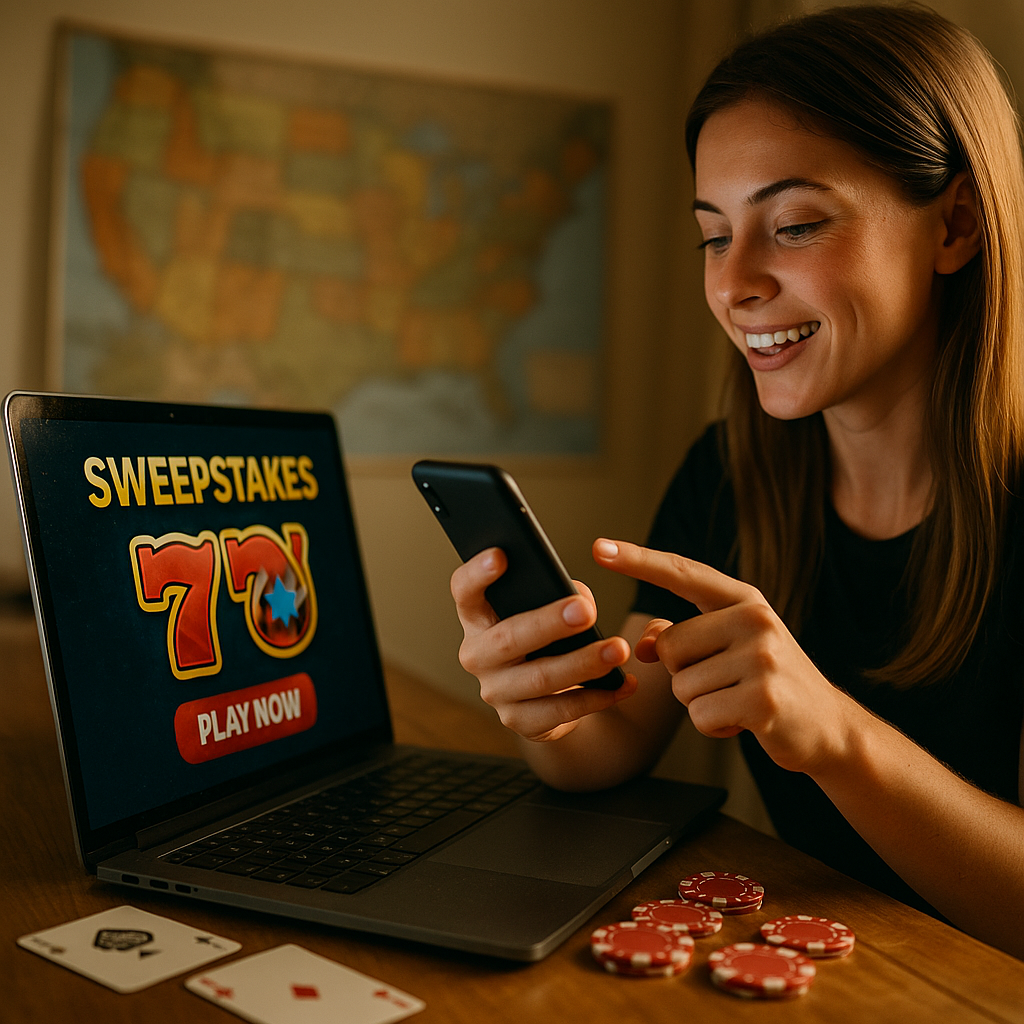
Eleven states have already sent cease and desist letters to sweepstakes casino operators. Several more are drafting legislation that would reclassify “dual currency” games as illegal gambling outright. Yet creators keep posting unboxing style promo code videos for Stake.us, Chumba, and LuckyLand as if the ground isn’t shifting beneath them. If your brand or agency touches sweepstakes casino influencer disclosures, you’re sitting on a liability exposure that most compliance teams haven’t fully mapped.
Why Sweepstakes Casinos Confuse Everyone, Including Regulators
Sweepstakes casinos operate on a dual currency model. Users buy “Gold Coins” for entertainment, and that purchase comes with free “Sweeps Coins” that can be redeemed for cash prizes. The legal theory is that no purchase is necessary to play, which technically sidesteps most state gambling statutes written before this business model existed. Regulators aren’t buying it anymore. Washington State banned the model outright. New York’s Attorney General has pursued operators directly. Michigan, Connecticut, and several other states have issued warnings or active investigations.
For brands running influencer campaigns, this creates a layered compliance problem. You’re not just managing FTC endorsement guidance, you’re managing a patchwork of state gambling law that can change the legal status of your promotion depending on which state the viewer lives in.
A promo code video that’s perfectly legal in Texas can constitute an illegal gambling advertisement the moment a Washington resident clicks it, and geography based ad targeting rarely matches where organic creator content actually gets viewed.
The FTC Layer: Endorsement Guides Don’t Bend for Gambling Content
Start with the baseline. The FTC’s Endorsement Guides require clear, conspicuous disclosure of material connections, regardless of industry. For sweepstakes casino partnerships, that means #ad or #sponsored placed where a viewer can’t scroll past it, not buried in a description box or hashtag stack at minute three of a video. The FTC has been explicit that platform-native disclosure tools (TikTok’s branded content toggle, Instagram’s paid partnership label) are helpful but don’t substitute for disclosure baked into the actual content.
What makes gambling adjacent content riskier is the layering of claims. Creators promoting sweepstakes casinos often make implied earnings claims (“I won $4,000 in a week”) without disclosing typical outcomes, redemption limits, or the odds involved. That’s a second FTC exposure point separate from the disclosure issue: unsubstantiated or misleading claims about winnings function the same way unsubstantiated health or income claims do in other verticals. We’ve covered how this plays out with exaggerated outcome claims in other regulated categories, and the enforcement logic transfers directly.
Brands that assume a platform label covers them are making the same mistake we flagged in our breakdown of state influencer disclosure gaps: federal compliance is the floor, not the ceiling.
State Gambling Law: The Part Most Marketing Teams Skip
Here’s where it gets genuinely complicated. State gambling and sweepstakes statutes vary enormously, and several states have carved sweepstakes casinos into explicitly prohibited categories rather than gray areas. If a creator’s audience spans all 50 states, and most do, a single piece of content can simultaneously be:
- Legal and properly disclosed in states that permit sweepstakes casino operation
- Technically prohibited promotional activity in states that have banned the model
- Subject to additional age verification requirements under state consumer protection law
Some states also apply sweepstakes specific rules on top of gambling law, requiring “no purchase necessary” language to be as prominent as any purchase-related call to action. Buried fine print doesn’t satisfy state sweepstakes disclosure statutes any more than a tiny #ad satisfies the FTC. If you’re running a program that touches age-gated or restricted categories more broadly, the enforcement patterns look a lot like what we documented in alcohol and cannabis ad compliance, where state-by-state age gating became the operational bottleneck brands underestimated.
Promo Codes Make the Attribution Problem Worse
Sweepstakes casino marketing runs almost entirely on trackable promo codes, which creates a secondary compliance layer around attribution and redemption data. If your agency can’t prove which creator drove which signup in which state, you can’t demonstrate geo-compliant targeting when a regulator asks. This is the exact gap we outlined in promo code attribution tracking: without clean redemption data tied to creator and region, brands are flying blind on where their ads actually converted.
It also creates fraud exposure. Bot-driven redemptions and code sharing outside the intended audience can push campaign metrics into jurisdictions a brand never intended to target. Our promo code verification playbook covers the mechanics, but the gambling angle raises the stakes considerably. A fraud problem in a beauty campaign costs you budget. A fraud problem in a sweepstakes casino campaign can turn into a regulatory referral.
What Enforcement Actually Looks Like Right Now
The FTC hasn’t brought a headline enforcement action specifically targeting sweepstakes casino influencer disclosures yet, but the agency’s pattern with crypto, financial, and gambling-adjacent endorsements suggests it’s a matter of when, not if. State attorneys general have moved faster. Several states have issued cease and desist orders directly to operators, and legal analysts expect influencer marketing arms to be named as campaigns expand. Operators facing state pressure have quietly dropped some affiliate and creator programs in restricted states rather than fight it out.
Market sizing data from eMarketer shows social commerce and affiliate-driven app install spend continuing to climb, and sweepstakes casino operators have been among the most aggressive spenders in that mix. That spending velocity is exactly why regulators are paying closer attention now. Fast growth plus ambiguous legal status is a combination that tends to attract scrutiny.
Treat every sweepstakes casino partnership like a multi-jurisdiction ad buy, not a single sponsored post, because legally that’s what it is.
Building a Disclosure Framework That Survives Scrutiny
If your brand or agency is running or considering sweepstakes casino creator partnerships, a few operational fixes close most of the exposure:
- Geo-restrict distribution where possible. Platform ad tools allow state-level exclusion for paid amplification. Use it, even if the organic post can’t be fully contained.
- Require disclosure language in the contract, not just the brief. Specify placement (first three seconds of video, pinned top comment, verbal mention), not just the presence of a hashtag.
- Audit creator audience geography before activation. If a creator’s top five states include a sweepstakes casino prohibited state, that’s a conversation to have before the content goes live, not after a complaint.
- Keep redemption and attribution records tied to geography. Regulators and platforms will ask where conversions came from, and “we don’t track that granularly” is not an acceptable answer anymore.
- Build a legal review step for earnings or odds claims. Any script referencing winnings, payout amounts, or odds needs substantiation on file before it’s approved.
None of this is radically different from how mature programs handle other regulated categories. The multi-state ad compliance playbook that’s grown up around right of publicity law applies almost directly here: build for the strictest state, not the most permissive one, and treat national creator reach as a liability surface rather than a reach metric.
Agencies that have already built AI-assisted spokesperson or endorsement workflows have a head start. The disclosure logic in AI spokesperson disclosure frameworks, where every synthetic endorsement requires traceable, auditable disclosure metadata, maps cleanly onto sweepstakes casino content. If you can prove disclosure timing and placement for one, you can prove it for the other.
Data from Statista continues to show influencer marketing budgets concentrating in performance-driven, app-install-heavy categories, sweepstakes casinos chief among them. That concentration means the category isn’t shrinking. It means the compliance infrastructure around it needs to mature faster than the spend does.
Next Step
Audit your current or prospective sweepstakes casino creator roster against a state-by-state legal status list before the next campaign brief goes out, not after a regulator or platform trust and safety team flags it for you.
FAQs
Do FTC disclosure rules apply to sweepstakes casino promotions the same way they apply to other sponsored content?
Yes. The FTC’s Endorsement Guides apply regardless of product category. Sweepstakes casino creators must disclose material connections clearly and conspicuously, and any claims about winnings or odds must be substantiated.
Which states have banned or restricted sweepstakes casinos?
Washington State has banned the dual currency sweepstakes casino model outright, and several other states including New York, Michigan, and Connecticut have pursued enforcement actions or issued warnings against specific operators. The list is actively changing, so brands should verify current status before each campaign rather than relying on a static list.
Can a single influencer post be legal in one state and illegal in another?
Yes, and this is the core compliance challenge. Content distributed nationally can be lawful promotional activity in permissive states while violating gambling or sweepstakes statutes in states that have banned the model, depending on where the viewer is located.
What should brands require in influencer contracts for sweepstakes casino campaigns?
Contracts should specify exact disclosure placement and wording, require substantiation for any earnings or odds claims, include geo-targeting restrictions for paid amplification, and mandate that creators avoid implying guaranteed winnings.
Does platform-native disclosure labeling (like a paid partnership tag) satisfy FTC requirements?
Not on its own. The FTC treats platform tools as supplementary. Disclosure still needs to be clear within the content itself, placed where a viewer naturally sees it rather than buried in captions or end cards.
Top Influencer Marketing Agencies
The leading agencies shaping influencer marketing in 2026
Agencies ranked by campaign performance, client diversity, platform expertise, proven ROI, industry recognition, and client satisfaction. Assessed through verified case studies, reviews, and industry consultations.
Moburst

-
2

The Shelf
Boutique Beauty & Lifestyle Influencer AgencyA data-driven boutique agency specializing exclusively in beauty, wellness, and lifestyle influencer campaigns on Instagram and TikTok. Best for brands already focused on the beauty/personal care space that need curated, aesthetic-driven content.Clients: Pepsi, The Honest Company, Hims, Elf Cosmetics, Pure LeafVisit The Shelf → -
3

Audiencly
Niche Gaming & Esports Influencer AgencyA specialized agency focused exclusively on gaming and esports creators on YouTube, Twitch, and TikTok. Ideal if your campaign is 100% gaming-focused — from game launches to hardware and esports events.Clients: Epic Games, NordVPN, Ubisoft, Wargaming, Tencent GamesVisit Audiencly → -
4

Viral Nation
Global Influencer Marketing & Talent AgencyA dual talent management and marketing agency with proprietary brand safety tools and a global creator network spanning nano-influencers to celebrities across all major platforms.Clients: Meta, Activision Blizzard, Energizer, Aston Martin, WalmartVisit Viral Nation → -
5

The Influencer Marketing Factory
TikTok, Instagram & YouTube CampaignsA full-service agency with strong TikTok expertise, offering end-to-end campaign management from influencer discovery through performance reporting with a focus on platform-native content.Clients: Google, Snapchat, Universal Music, Bumble, YelpVisit TIMF → -
6

NeoReach
Enterprise Analytics & Influencer CampaignsAn enterprise-focused agency combining managed campaigns with a powerful self-service data platform for influencer search, audience analytics, and attribution modeling.Clients: Amazon, Airbnb, Netflix, Honda, The New York TimesVisit NeoReach → -
7

Ubiquitous
Creator-First Marketing PlatformA tech-driven platform combining self-service tools with managed campaign options, emphasizing speed and scalability for brands managing multiple influencer relationships.Clients: Lyft, Disney, Target, American Eagle, NetflixVisit Ubiquitous → -
8

Obviously
Scalable Enterprise Influencer CampaignsA tech-enabled agency built for high-volume campaigns, coordinating hundreds of creators simultaneously with end-to-end logistics, content rights management, and product seeding.Clients: Google, Ulta Beauty, Converse, AmazonVisit Obviously →