


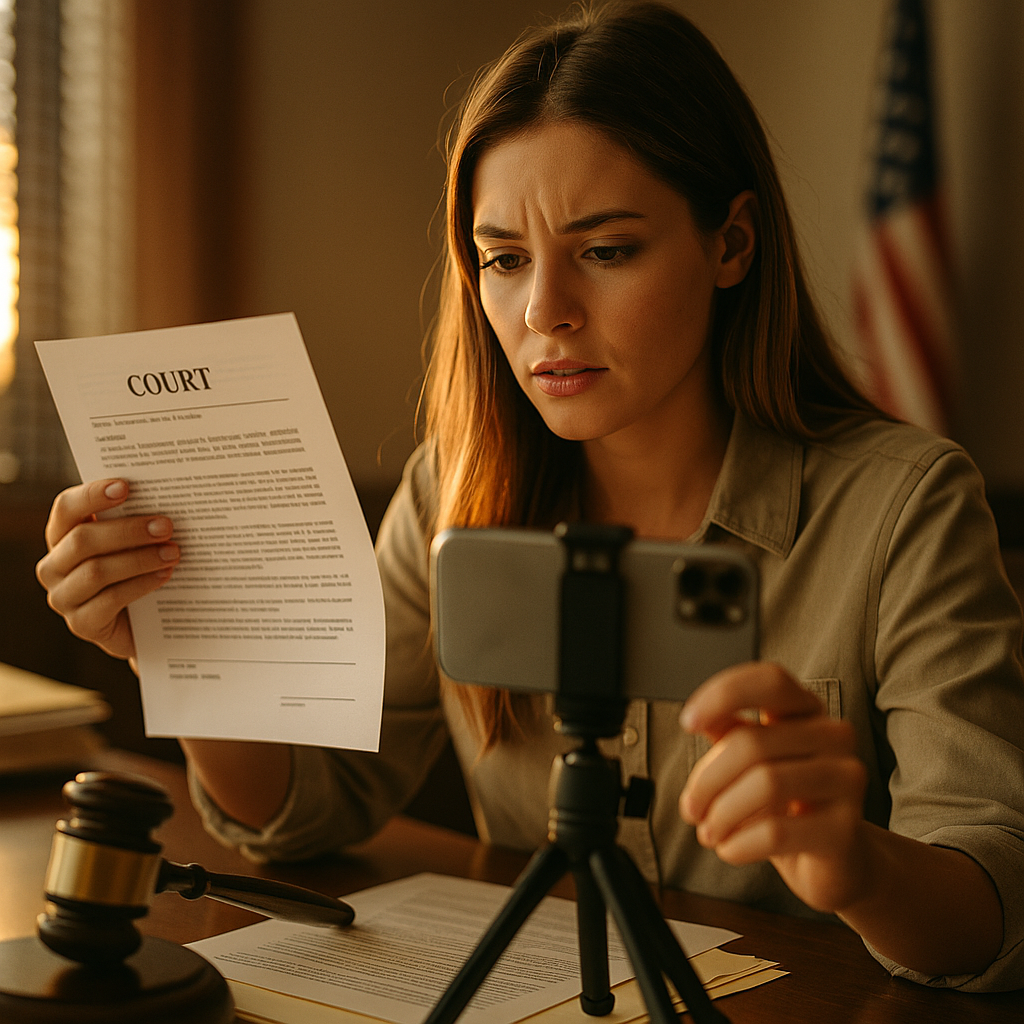
Here’s an uncomfortable number for anyone running a national influencer program: the FTC can fine you, but it can’t touch the private lawsuits now piling up under state consumer protection statutes. State-level influencer disclosure laws in California and New York have quietly outpaced federal rules, and most brand compliance checklists still haven’t caught up. If your program treats FTC guidance as the ceiling instead of the floor, you’re exposed.
The FTC Baseline Was Never the Whole Story
For years, brands built disclosure policy around one document: the FTC’s Endorsement Guides. Clear and conspicuous disclosure. No burying #ad in a hashtag pile. Material connections disclosed regardless of payment form. It’s a reasonable framework, and it’s still the federal floor.
But the FTC enforces through administrative action, consent decrees, and the occasional headline-grabbing settlement. It rarely sues individual creators, and it moves slowly. States don’t have that patience, and increasingly, they don’t need the FTC’s permission to act.
California and New York have both layered state consumer protection law on top of federal guidance, and the layering isn’t cosmetic. It changes who can sue, what counts as a violation, and how much a single noncompliant post can cost.
California’s Consumer Protection Statutes Raise the Stakes
California’s Unfair Competition Law and Consumers Legal Remedies Act were written long before influencer marketing existed, but California’s attorney general and private plaintiffs’ bar have applied them aggressively to sponsored content disputes. The key difference from FTC enforcement: these statutes allow private individuals, not just regulators, to bring claims.
That matters enormously for brand risk calculus. A single consumer, or a class of them, can file suit over an undisclosed partnership without ever waiting for the FTC to notice. California also treats disclosure placement with less tolerance for ambiguity than federal guidance historically has, pushing brands toward on-screen, unmissable disclosure rather than caption-buried hashtags.
Under FTC rules, a vague disclosure might draw a warning letter. Under California’s consumer protection framework, the same post can become the basis for a private lawsuit with statutory damages attached.
California has also moved aggressively on adjacent disclosure issues, including AI-generated content labeling, which brands running synthetic or AI-augmented creator campaigns need to track separately. We broke down the mechanics in our piece on California’s AI labeling rules, and the enforcement posture there mirrors the broader pattern: California regulators expect disclosure to be unavoidable, not technically present.
New York Leans on Deceptive Practices Law
New York takes a different route to a similar destination. General Business Law Section 349, the state’s core deceptive acts and practices statute, gives both the New York Attorney General and private plaintiffs standing to pursue misleading advertising, including undisclosed sponsorships. New York’s AG office has shown particular interest in influencer campaigns tied to financial products and health claims, sectors where federal enforcement has historically lagged.
New York’s approach doesn’t necessarily demand different disclosure language than the FTC requires. What it changes is the enforcement surface area. A New York resident who feels misled by an undisclosed partnership has a direct statutory path to damages that doesn’t exist at the federal level in the same form.
Combine that with New York’s status as a major hub for finance, fashion, and media influencer campaigns, and you get a state where disclosure sloppiness carries outsized financial risk relative to campaign volume.
Why This Creates a Patchwork Problem for National Brands
Most influencer programs run nationally. A creator based in Texas posts content that reaches audiences in California, New York, and forty-eight other states simultaneously. Which law applies?
In practice, courts have generally looked at where the harm occurred, meaning the consumer’s location, not the creator’s or the brand’s headquarters. That means a single piece of content can trigger California’s private right of action, New York’s GBL 349 exposure, and FTC jurisdiction all at once, depending on who’s watching and who clicks “buy.”
This is the same patchwork dynamic reshaping other corners of creator compliance. We’ve covered how it plays out in data handling in our state privacy law patchwork breakdown, and the disclosure version of the problem follows nearly identical logic: comply with the strictest applicable state, and you’re generally safe everywhere else.
The Private Right of Action Problem
Here’s what actually keeps legal teams up at night: private right of action states don’t require a regulator to act first. A single influencer post with ambiguous disclosure can become a class action lawsuit filed by a plaintiff’s firm that specializes in consumer protection claims, with statutory damages calculated per violation.
FTC settlements, by contrast, tend to focus on injunctive relief and modest civil penalties for first-time violations. The economics are completely different. A brand that’s comfortable with FTC risk tolerance may be dramatically underestimating California or New York exposure.
This is also where AI-generated spokesperson content adds complexity. If a brand uses a synthetic or AI-augmented creator without disclosing the artificial nature of the endorsement, both federal and state frameworks can apply simultaneously. Our analysis of AI spokesperson disclosure rules covers how that enforcement gap is widening as synthetic content becomes mainstream in paid campaigns.
What Happens When State and Federal Rules Conflict?
They rarely conflict outright. State disclosure laws generally raise the bar rather than contradict FTC guidance, which means compliant-with-California content is almost always compliant-with-FTC content too. The friction comes from specificity: a disclosure that satisfies the FTC’s “clear and conspicuous” standard might still fail a stricter state reading of what counts as unavoidable placement.
The safest operational posture is designing for the strictest jurisdiction by default. That typically means on-screen text disclosure for video content, not just verbal mentions, and disclosure placed before the fold on static posts rather than trailing after a wall of hashtags.
Building a Compliance Framework That Covers Both
Brands running multi-state influencer programs need a disclosure standard that doesn’t require legal review on a state-by-state basis for every post. That’s operationally unworkable at scale, especially for programs running hundreds of creator deals per quarter.
- Default every contract to the strictest applicable disclosure standard, treating California and New York requirements as the baseline rather than the exception.
- Require on-screen, platform-native disclosure tags (Instagram’s paid partnership label, TikTok’s branded content toggle) in addition to caption hashtags, since native tools satisfy both FTC and most state placement standards.
- Build a retention policy for disclosure proof, including screenshots and posting timestamps, so you can demonstrate compliance if a private claim surfaces months after a campaign ends. Our guide on content retention for audit trails covers what documentation actually holds up.
- Audit creator contracts for indemnification language that accounts for state-level private lawsuits, not just FTC enforcement, since standard boilerplate often only references federal risk.
Platform tools help, but they don’t eliminate liability. Meta and TikTok’s branded content labels satisfy disclosure intent, but they don’t override state requirements around placement clarity or the underlying need for truthful claims. Check Meta’s branded content policies and TikTok’s advertising guidelines for the native tooling, then layer your own legal standard on top.
Industry research backs up why this matters financially, not just legally. Sponsored content spend continues climbing according to eMarketer’s influencer marketing forecasts, which means the volume of potential disclosure violations is scaling right alongside budgets. More posts, more states, more exposure.
Where This Is Headed
Expect more states to follow California and New York’s lead rather than wait for federal reform. State attorneys general have discovered that consumer protection statutes written for traditional advertising translate cleanly to influencer content, and private plaintiffs’ firms have discovered a profitable niche. Neither trend reverses on its own.
Brands that build toward the strictest state standard now avoid the scramble later. Retrofitting disclosure policy after a lawsuit is expensive and public; designing for it upfront is neither.
Frequently Asked Questions
FAQs
Do California and New York disclosure laws apply to creators who don’t live in those states?
Generally yes, based on where the audience or consumer is located rather than where the creator is based. Courts have typically focused on where the alleged harm occurred, meaning a creator in another state can still trigger California or New York exposure if their content reaches and misleads consumers in those states.
Can a brand be sued even if the FTC never investigates the campaign?
Yes. California’s consumer protection statutes and New York’s General Business Law Section 349 both allow private individuals to file lawsuits independent of FTC action. A campaign can face state-level litigation without any federal regulator ever getting involved.
Is hashtag disclosure like #ad still enough under state law?
It can be, but placement matters more under stricter state interpretations. Burying #ad after a long string of unrelated hashtags has been treated as inadequate in enforcement contexts, and brands are generally safer using platform-native disclosure tools plus a prominent, early hashtag or on-screen text.
Does this apply to UGC and whitelisted content, not just organic influencer posts?
Yes. Paid amplification of creator content, including whitelisting and boosted posts, carries the same disclosure obligations and the same state-level exposure. If anything, paid distribution increases scrutiny since it reaches larger, more clearly defined audiences.
What’s the fastest way to reduce multi-state disclosure risk?
Standardize every contract and creative brief around the strictest applicable state requirement, require native platform disclosure tags in addition to captions, and retain documented proof of compliance for each post well beyond the campaign’s active flight dates.
Top Influencer Marketing Agencies
The leading agencies shaping influencer marketing in 2026
Agencies ranked by campaign performance, client diversity, platform expertise, proven ROI, industry recognition, and client satisfaction. Assessed through verified case studies, reviews, and industry consultations.
Moburst

-
2

The Shelf
Boutique Beauty & Lifestyle Influencer AgencyA data-driven boutique agency specializing exclusively in beauty, wellness, and lifestyle influencer campaigns on Instagram and TikTok. Best for brands already focused on the beauty/personal care space that need curated, aesthetic-driven content.Clients: Pepsi, The Honest Company, Hims, Elf Cosmetics, Pure LeafVisit The Shelf → -
3

Audiencly
Niche Gaming & Esports Influencer AgencyA specialized agency focused exclusively on gaming and esports creators on YouTube, Twitch, and TikTok. Ideal if your campaign is 100% gaming-focused — from game launches to hardware and esports events.Clients: Epic Games, NordVPN, Ubisoft, Wargaming, Tencent GamesVisit Audiencly → -
4

Viral Nation
Global Influencer Marketing & Talent AgencyA dual talent management and marketing agency with proprietary brand safety tools and a global creator network spanning nano-influencers to celebrities across all major platforms.Clients: Meta, Activision Blizzard, Energizer, Aston Martin, WalmartVisit Viral Nation → -
5

The Influencer Marketing Factory
TikTok, Instagram & YouTube CampaignsA full-service agency with strong TikTok expertise, offering end-to-end campaign management from influencer discovery through performance reporting with a focus on platform-native content.Clients: Google, Snapchat, Universal Music, Bumble, YelpVisit TIMF → -
6

NeoReach
Enterprise Analytics & Influencer CampaignsAn enterprise-focused agency combining managed campaigns with a powerful self-service data platform for influencer search, audience analytics, and attribution modeling.Clients: Amazon, Airbnb, Netflix, Honda, The New York TimesVisit NeoReach → -
7

Ubiquitous
Creator-First Marketing PlatformA tech-driven platform combining self-service tools with managed campaign options, emphasizing speed and scalability for brands managing multiple influencer relationships.Clients: Lyft, Disney, Target, American Eagle, NetflixVisit Ubiquitous → -
8

Obviously
Scalable Enterprise Influencer CampaignsA tech-enabled agency built for high-volume campaigns, coordinating hundreds of creators simultaneously with end-to-end logistics, content rights management, and product seeding.Clients: Google, Ulta Beauty, Converse, AmazonVisit Obviously →