


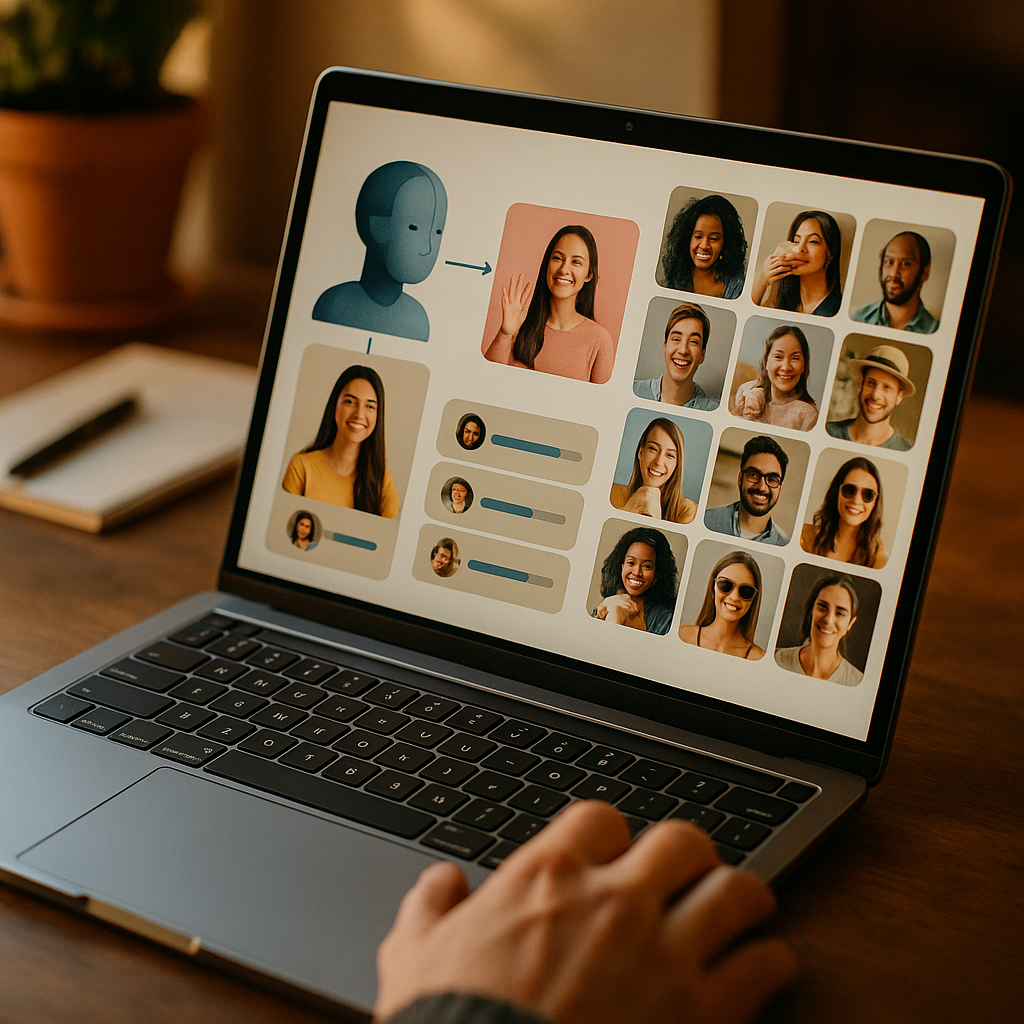
Brands now need hundreds, sometimes thousands, of nano creators to make a single campaign work. The old way, a human scrolling hashtags and DMing strangers, caps out around 50 to 100 qualified creators a month per recruiter. Nano creator recruitment has quietly become the bottleneck that determines whether a creator program scales or stalls, and AI agent matching is the only lever strong enough to fix the math.
This guide is for the marketer who already believes in nano creators but has watched their recruiting pipeline collapse under manual sourcing. We’ll walk through how AI agent matching actually works, how to design a program around it, and where the guardrails need to sit so volume doesn’t wreck brand safety.
Why Manual Sourcing Breaks Somewhere Around Creator 200
Nano creators (typically 1,000 to 20,000 followers) convert well because audiences trust them. That’s the whole pitch. But sourcing them manually is a discovery problem at massive scale: there’s no centralized directory, engagement rates shift weekly, and most nano accounts never show up in standard influencer databases built for mid-tier and macro talent.
A recruiter working spreadsheets and platform search bars might vet 15 to 20 profiles an hour, checking audience authenticity, posting consistency, and brand fit. Multiply that by the hundreds of creators a modern always-on program needs across categories, regions, and languages, and you need a team that most finance leaders won’t approve. That tension shows up constantly in headcount planning conversations, where creator ops teams ask for more recruiters and get told to find efficiency instead.
The math doesn’t work with people alone: scaling nano recruitment 5x with headcount means scaling recruiting cost 5x too, which erodes the exact CAC advantage nano creators are supposed to deliver.
What AI Agent Matching Actually Does
AI agent matching isn’t a fancier search filter. It’s a workflow where autonomous agents continuously crawl platform APIs and public data, score creators against a brand’s fit criteria, and route qualified matches into a recruitment queue, often with draft outreach already written. Think of it as replacing the discovery and first-pass vetting steps, not the relationship building.
The agents typically run on three layers: a sourcing layer that pulls candidate profiles from TikTok, Instagram, and YouTube Shorts; a scoring layer that applies weighted criteria (engagement rate, audience geography, content category, posting cadence, past brand mentions); and an outreach layer that triggers personalized first contact once a creator clears a threshold score.
Done well, this compresses a process that took weeks into days. Done poorly, it floods your inbox with low-quality matches that still need a human to clean up, which defeats the purpose. The difference almost always comes down to how tightly the scoring model is calibrated before launch, not the sophistication of the AI itself.
The Scoring Criteria That Actually Predict Performance
Most programs over-index on follower count and engagement rate alone, which is exactly what makes nano creator fraud so easy to miss at scale. A more reliable scoring stack weighs:
- Audience authenticity signals (comment-to-like ratios, follower growth velocity)
- Content category consistency over the last 90 days
- Historical brand partnership disclosure behavior
- Geographic and language match to target market
- Response rate to past brand outreach, where available
If your agent matching tool can’t ingest and weight these signals, you’re automating a bad process faster, not fixing it. This is the same logic that underpins fake follower risk checks in manual vetting, just applied at machine speed.
Program Design: Building the Matching Stack Without Starting From Zero
You don’t need to build agent matching infrastructure from scratch, and most teams shouldn’t try. The design decision that matters most is where the AI layer plugs into your existing creator ops workflow.
A workable structure looks like this: agents handle sourcing and first-pass scoring, a smaller human team handles final vetting and relationship management, and a contract and payment layer automates onboarding for creators below a certain spend threshold. This mirrors the role split described in creator testing pod staffing models, where ratios matter more than raw headcount.
Some agencies have built dedicated infrastructure around this exact problem. Moburst, a global growth agency founded in 2013 that works with brands including Google, Uber and Samsung, runs an influencer marketing teams practice that pairs creator recruitment and vetting with content repurposing into paid media, an approach that treats nano creator sourcing as a continuous pipeline rather than a campaign-by-campaign scramble.
Before you commit budget to a matching platform, run a 30 to 60 day pilot against a single category. Measure time-to-qualified-creator against your current manual baseline, and track false-positive rate (matches that fail human vetting). If the agent isn’t cutting time-to-recruit by at least 50% while holding vetting standards flat, the model needs recalibration before it touches full-program volume.
Guardrails: Keeping Volume From Outrunning Compliance
Scaling recruitment velocity without scaling compliance oversight is how brands end up with FTC disclosure violations spread across hundreds of nano accounts instead of a handful of macro ones. The FTC’s endorsement guidance applies the same way to a 3,000-follower creator as it does to a celebrity, and enforcement doesn’t scale down with creator size.
Build disclosure compliance checks directly into the agent’s onboarding workflow, not as a manual afterthought. Automated contract templates with clear FTC-compliant language, paired with a legal review tier for higher-risk categories (health, finance, children’s products), keeps volume from becoming liability. This is the same tiering logic covered in legal review SLA frameworks for creator contracts.
Platform policy also shifts the sourcing layer’s effectiveness overnight. When TikTok or Instagram changes API access or creator discovery rules, agent matching pipelines built around those APIs can break without warning. Programs that scaled fast on a single platform’s data access have felt this pain already, which is why scenario planning for platform policy shifts needs to sit alongside your matching tool evaluation, not after it.
Measuring What Actually Matters Once Volume Scales
More matched creators means nothing if CAC doesn’t move in the right direction. Before scaling an AI matching program past a pilot, set hard thresholds: what CAC and ROAS range justifies continued nano spend, and at what point does additional volume stop producing marginal returns? That framework is laid out in detail in nano creator CAC and ROAS thresholds, and it should be the gate your matching program reports against weekly, not quarterly.
Research from eMarketer has consistently shown nano and micro creators outperforming larger tiers on engagement rate, which is the entire economic case for investing in recruitment infrastructure here rather than consolidating budget into fewer, bigger partnerships. Sprout Social’s annual index data points the same direction: audiences increasingly discount content from creators who feel too polished or too distant from their niche.
Build a rolling scorecard that weighs recruitment velocity, vetting pass rate, and CAC by cohort, similar to the structure in UGC scaling scorecards. Review it monthly, not annually. Matching models drift as platforms change and creator pools saturate, and a scorecard that’s a year old is telling you about a program that no longer exists.
Keeping a Bench, Not Just a Pipeline
One underrated benefit of AI agent matching: it makes it cheap to maintain a standing bench of pre-vetted nano creators rather than recruiting fresh for every campaign. Agents can re-score the existing bench against new briefs in hours, surfacing creators who already cleared vetting but weren’t right for the last campaign. This is the exact operating model described in rapid activation roster planning, and it’s where the real time savings compound over a full year of programs, not just the first launch.
For additional context on how marketing automation platforms generally define lead scoring and matching logic, HubSpot’s resources on automated scoring models offer a useful parallel, even though they’re built for B2B lead gen rather than creator sourcing.
Start with one category, one platform, and a 60-day pilot. Measure time-to-recruit and vetting pass rate against your manual baseline before you let an AI agent anywhere near your full nano creator budget.
FAQs
What is AI agent matching in creator recruitment?
It’s a workflow where autonomous software agents source creator profiles from platform data, score them against brand-defined fit criteria, and route qualified matches into a recruitment queue, often with draft outreach ready to send.
How many nano creators can AI matching realistically source per month?
Programs running calibrated matching tools commonly see output in the hundreds per month per category, compared to 50 to 100 through fully manual sourcing by a single recruiter.
Does AI matching replace human vetting entirely?
No. Agents handle first-pass scoring and discovery, but final vetting, relationship management, and contract negotiation still need human oversight, especially for higher-risk categories like health or finance.
What’s the biggest risk of scaling nano recruitment with AI?
Compliance drift. Volume can outrun FTC disclosure checks and brand safety review if those steps aren’t built into the automated onboarding workflow from day one.
How do I know if an AI matching tool is actually working?
Track time-to-qualified-creator against your manual baseline and monitor false-positive rate, meaning matches that fail human vetting. A working tool should cut recruitment time significantly while holding vetting standards flat.
Top Influencer Marketing Agencies
The leading agencies shaping influencer marketing in 2026
Agencies ranked by campaign performance, client diversity, platform expertise, proven ROI, industry recognition, and client satisfaction. Assessed through verified case studies, reviews, and industry consultations.
Moburst

-
2

The Shelf
Boutique Beauty & Lifestyle Influencer AgencyA data-driven boutique agency specializing exclusively in beauty, wellness, and lifestyle influencer campaigns on Instagram and TikTok. Best for brands already focused on the beauty/personal care space that need curated, aesthetic-driven content.Clients: Pepsi, The Honest Company, Hims, Elf Cosmetics, Pure LeafVisit The Shelf → -
3

Audiencly
Niche Gaming & Esports Influencer AgencyA specialized agency focused exclusively on gaming and esports creators on YouTube, Twitch, and TikTok. Ideal if your campaign is 100% gaming-focused — from game launches to hardware and esports events.Clients: Epic Games, NordVPN, Ubisoft, Wargaming, Tencent GamesVisit Audiencly → -
4

Viral Nation
Global Influencer Marketing & Talent AgencyA dual talent management and marketing agency with proprietary brand safety tools and a global creator network spanning nano-influencers to celebrities across all major platforms.Clients: Meta, Activision Blizzard, Energizer, Aston Martin, WalmartVisit Viral Nation → -
5

The Influencer Marketing Factory
TikTok, Instagram & YouTube CampaignsA full-service agency with strong TikTok expertise, offering end-to-end campaign management from influencer discovery through performance reporting with a focus on platform-native content.Clients: Google, Snapchat, Universal Music, Bumble, YelpVisit TIMF → -
6

NeoReach
Enterprise Analytics & Influencer CampaignsAn enterprise-focused agency combining managed campaigns with a powerful self-service data platform for influencer search, audience analytics, and attribution modeling.Clients: Amazon, Airbnb, Netflix, Honda, The New York TimesVisit NeoReach → -
7

Ubiquitous
Creator-First Marketing PlatformA tech-driven platform combining self-service tools with managed campaign options, emphasizing speed and scalability for brands managing multiple influencer relationships.Clients: Lyft, Disney, Target, American Eagle, NetflixVisit Ubiquitous → -
8

Obviously
Scalable Enterprise Influencer CampaignsA tech-enabled agency built for high-volume campaigns, coordinating hundreds of creators simultaneously with end-to-end logistics, content rights management, and product seeding.Clients: Google, Ulta Beauty, Converse, AmazonVisit Obviously →