


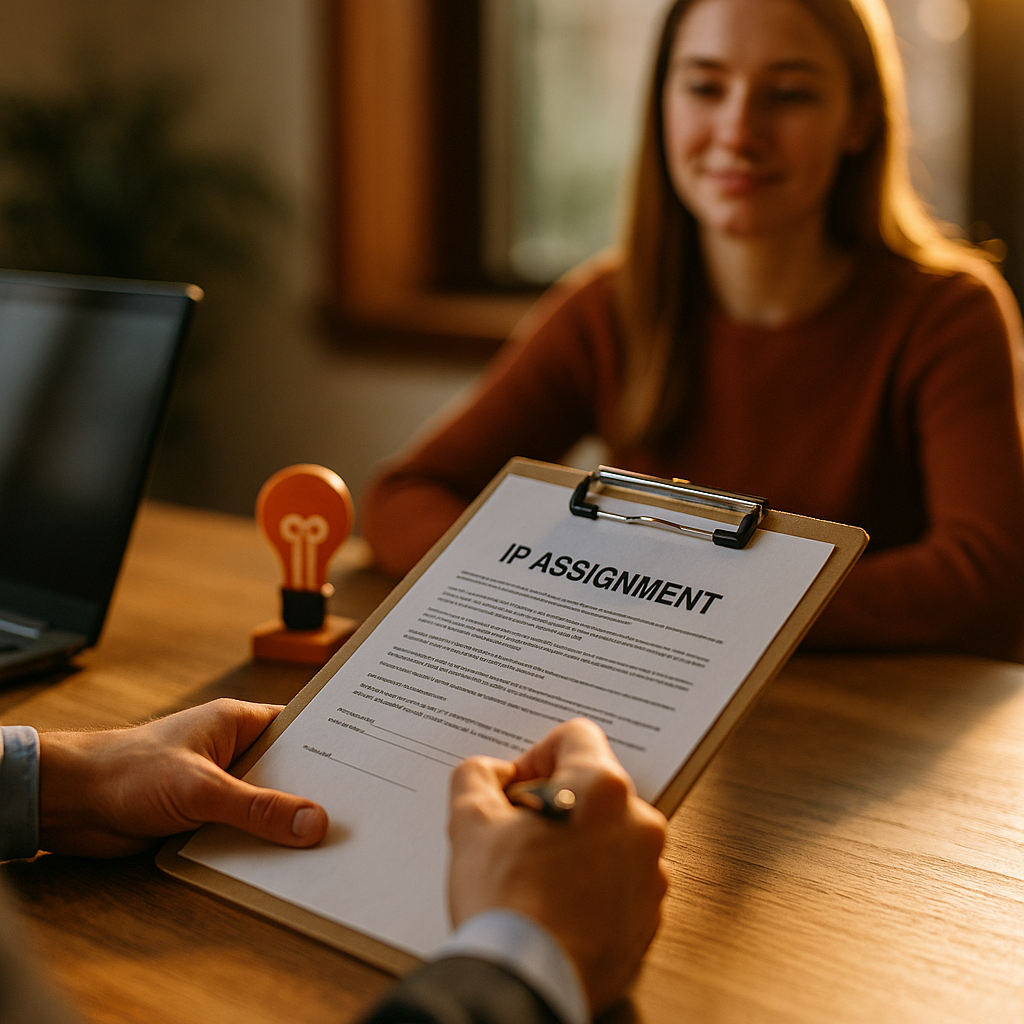
Sixty two percent of brands running employee advocacy or creator programs have never had legal review the ownership language in their creator agreements, according to internal audits cited across marketing operations circles. That’s not a compliance footnote. That’s a lawsuit waiting for a trigger. When an employee posts a viral video using company products, company IP, and company time, who actually owns that content once the relationship ends? The answer hinges entirely on your IP assignment clauses, and most brands haven’t written one that would survive a real dispute.
The “Work for Hire” Assumption That Gets Brands Burned
Most marketing and HR leaders assume that anything an employee creates on company time automatically belongs to the company. That’s mostly true, but “mostly” is doing a lot of legal heavy lifting. Under U.S. copyright law, work-for-hire status applies cleanly to employees acting within the scope of their employment. The problem is that employee creator programs rarely stay inside that scope.
An employee who films a product demo during work hours, using a company-issued phone, on a company account: that’s clean work-for-hire territory. An employee who posts the same demo to their personal TikTok, using their own face, voice, and audience: that’s a different animal entirely. Courts have repeatedly found that personal social accounts create ambiguity around ownership, especially when the creator built that audience before joining the company.
If your creator agreement doesn’t explicitly define “scope of employment” for content purposes, you’re relying on a legal doctrine that predates influencer marketing by decades.
This ambiguity gets worse when programs blur employee and contractor lines. If your “employee creators” are actually classified as independent contractors for tax purposes but treated like staff for content direction, you’ve stacked an IP ownership problem on top of a misclassification risk. That’s the exact scenario explored in our breakdown of DOL influencer classification rules, and the two issues tend to surface together in litigation.
Where Employee Creator Programs Actually Get Messy
Employee creator programs (think: brand ambassador initiatives, “employees as influencers” pilots, internal UGC pushes) differ from traditional influencer contracts in one critical way. The relationship is ongoing and multidimensional. An influencer signs a contract for a campaign, delivers content, gets paid, done. An employee shows up every day, wears multiple hats, and the line between “official brand content” and “personal expression that happens to feature the brand” gets blurry fast.
- Timing ambiguity: Did the employee film this during lunch, after hours, or on a company retreat that blends both?
- Tool ambiguity: Was the content edited on a personal laptop using a personal Adobe license, or company software?
- Platform ambiguity: Was it posted to a brand-owned account or the employee’s personal handle, which they’ll keep after departure?
- Likeness ambiguity: Does the company have rights to reuse the employee’s face and voice in the content after they leave?
Each of these ambiguities needs its own contractual answer. Generic “all work product belongs to the company” boilerplate, lifted from a standard employment agreement, doesn’t address any of them. It was written for engineers and designers, not creators building personal social equity while representing your brand.
What an IP Assignment Clause Actually Needs to Cover
A defensible assignment clause for an employee creator program should do more than declare ownership. It needs to anticipate the disputes that actually happen. Based on patterns across enterprise creator program contracts, here’s what belongs in the clause:
- A clear definition of “Program Content” that separates it from personal content, tied to specific triggers (company account, company brief, company compensation, or use of company equipment).
- An explicit assignment of copyright in Program Content to the company, not just a license, since licenses expire or get renegotiated and companies generally want permanent rights to campaign assets.
- A carve-out for personal brand equity, acknowledging that the employee retains ownership of their personal account, audience, and any content not meeting the Program Content definition.
- A likeness and voice release scoped to specific uses (paid media, internal training, recruiting) with an expiration tied to employment end date or a defined survival period.
- Moral rights waiver language where jurisdiction allows it, since some countries (much of the EU, for example) treat moral rights as non-transferable regardless of what the contract says.
- A post-termination usage window specifying how long the company can keep using content featuring a departed employee before it must be pulled or re-cleared.
Item six is the one brands skip most often, and it’s the one that generates the angriest exit disputes. Nobody wants to see their face in a company ad campaign eighteen months after they’ve quit and joined a competitor. Building a sunset clause into the original agreement avoids that entirely.
The Personal Brand Carve-Out Isn’t Optional Anymore
Here’s the tension nobody likes to name directly: your best employee creators are good at this because they’ve built genuine personal brands, often before you ever hired them. If your assignment clause tries to claim ownership over their entire creative output, you’ll either lose your best talent or end up in a dispute that damages the relationship beyond repair.
The smarter approach, and the one increasingly standard in enterprise creator programs, is a bright-line test. Content becomes “Program Content” (company-owned) only when it meets defined criteria: posted from a brand account, created under a specific brief, compensated separately from base salary, or using company-owned production resources. Everything else remains the employee’s personal IP, even if it mentions the company or features company products.
The brands winning at employee advocacy aren’t the ones claiming the most IP. They’re the ones drawing the clearest lines, so creators know exactly what’s theirs and what isn’t.
This mirrors a challenge that’s already reshaped traditional influencer contracting. Similar ambiguity around control and compensation has pushed regulators to scrutinize whether influencer relationships accidentally create employment status, a risk we’ve mapped in detail in EU influencer contracts and accidental employee status. The inverse problem, employees behaving like independent creators, deserves the same level of contractual precision.
AI Complicates Everything: Voice Clones, Face Clones, and Training Data
Assume for a moment that your assignment clause is airtight on traditional content ownership. Does it say anything about AI? Because if an employee’s likeness gets fed into a company AI avatar system, or their voice gets cloned for a training video generator, that’s a separate rights question entirely, and most existing employee agreements are silent on it.
Voice and face cloning rights need their own explicit consent language, distinct from general copyright assignment. Assigning ownership of a video doesn’t automatically grant rights to synthesize a digital version of the person in it. This gap is exactly why brands working with contracted talent have started building dedicated clauses around synthetic likeness, detailed in our guide to AI voice and face clone contracts. Employee creator programs need the equivalent, arguably with more urgency, since employees can’t easily walk away from a job the way a contracted influencer can walk away from a brand deal.
There’s also a training data question. If your marketing team feeds employee-generated content into a generative AI system to build brand voice models, does your assignment clause cover that use case? Most don’t, because most were drafted before generative AI tools became standard marketing infrastructure. Update the clause, don’t assume old language stretches to cover new technology. The same caution applies to broader deepfake and synthetic media exposure, covered in our rundown of contract clauses closing the deepfake gap.
Operationalizing Ownership: Who Actually Owns This Process
Legal drafts the clause. Marketing operates the program. HR onboards the employees. If those three functions don’t sync, the clause exists on paper but never gets enforced in practice. That’s the operational failure mode that turns a well-written contract into a useless one.
Build a simple intake checklist that flags Program Content at the moment of creation, not months later during a dispute. Tag content in your DAM or asset management system by ownership category. Train managers running creator briefs to document compensation and brief scope every time, since that documentation becomes the evidence that separates Program Content from personal content if a disagreement ever surfaces. Platforms like HubSpot and social management tools such as Sprout Social increasingly support content tagging workflows that can support this kind of audit trail natively.
Review the clause annually. Creator program structures shift fast, and a clause written for a 2023-era employee advocacy pilot probably doesn’t reflect how your program runs today. Treat it the way you’d treat any other compliance document tied to a fast-moving regulatory and platform environment, similar to how brands now audit disclosure workflows in response to evolving FTC guidance on endorsements.
FAQs
Frequently Asked Questions
Does an employer automatically own content an employee creates for a brand social account?
Generally yes, under the work-for-hire doctrine, if the content was created within the scope of employment. But scope of employment needs explicit contractual definition. Without it, ambiguity around timing, tools, and platform can create disputes, especially when personal accounts are involved.
Can an employee refuse to sign an IP assignment clause?
Yes, and many do, especially creators with established personal brands. Companies typically address this with a carve-out structure that assigns ownership only of clearly defined Program Content, leaving personal content and audience ownership with the employee.
What happens to content ownership after an employee leaves the company?
This depends entirely on what the original agreement specifies. Best practice includes a post-termination usage window defining exactly how long the company can continue using content featuring a departed employee before requiring removal or renewed consent.
Do IP assignment clauses need to address AI voice or face cloning separately?
Yes. Standard copyright assignment does not automatically grant rights to create synthetic likenesses, voice clones, or AI avatars. These require distinct, explicit consent language separate from general content ownership provisions.
How often should companies update employee creator IP agreements?
An annual review is a reasonable baseline, though any major shift in program structure, AI tool adoption, or platform policy should trigger an earlier review. Creator program structures evolve quickly, and stale contract language creates unnecessary legal exposure.
Next step: Pull your current employee creator agreement and check for exactly one thing: does it define “Program Content” with concrete, objective triggers? If the answer is no, that’s the single edit to prioritize before your next content dispute forces the issue.
Top Influencer Marketing Agencies
The leading agencies shaping influencer marketing in 2026
Agencies ranked by campaign performance, client diversity, platform expertise, proven ROI, industry recognition, and client satisfaction. Assessed through verified case studies, reviews, and industry consultations.
Moburst

-
2

The Shelf
Boutique Beauty & Lifestyle Influencer AgencyA data-driven boutique agency specializing exclusively in beauty, wellness, and lifestyle influencer campaigns on Instagram and TikTok. Best for brands already focused on the beauty/personal care space that need curated, aesthetic-driven content.Clients: Pepsi, The Honest Company, Hims, Elf Cosmetics, Pure LeafVisit The Shelf → -
3

Audiencly
Niche Gaming & Esports Influencer AgencyA specialized agency focused exclusively on gaming and esports creators on YouTube, Twitch, and TikTok. Ideal if your campaign is 100% gaming-focused — from game launches to hardware and esports events.Clients: Epic Games, NordVPN, Ubisoft, Wargaming, Tencent GamesVisit Audiencly → -
4

Viral Nation
Global Influencer Marketing & Talent AgencyA dual talent management and marketing agency with proprietary brand safety tools and a global creator network spanning nano-influencers to celebrities across all major platforms.Clients: Meta, Activision Blizzard, Energizer, Aston Martin, WalmartVisit Viral Nation → -
5

The Influencer Marketing Factory
TikTok, Instagram & YouTube CampaignsA full-service agency with strong TikTok expertise, offering end-to-end campaign management from influencer discovery through performance reporting with a focus on platform-native content.Clients: Google, Snapchat, Universal Music, Bumble, YelpVisit TIMF → -
6

NeoReach
Enterprise Analytics & Influencer CampaignsAn enterprise-focused agency combining managed campaigns with a powerful self-service data platform for influencer search, audience analytics, and attribution modeling.Clients: Amazon, Airbnb, Netflix, Honda, The New York TimesVisit NeoReach → -
7

Ubiquitous
Creator-First Marketing PlatformA tech-driven platform combining self-service tools with managed campaign options, emphasizing speed and scalability for brands managing multiple influencer relationships.Clients: Lyft, Disney, Target, American Eagle, NetflixVisit Ubiquitous → -
8

Obviously
Scalable Enterprise Influencer CampaignsA tech-enabled agency built for high-volume campaigns, coordinating hundreds of creators simultaneously with end-to-end logistics, content rights management, and product seeding.Clients: Google, Ulta Beauty, Converse, AmazonVisit Obviously →