


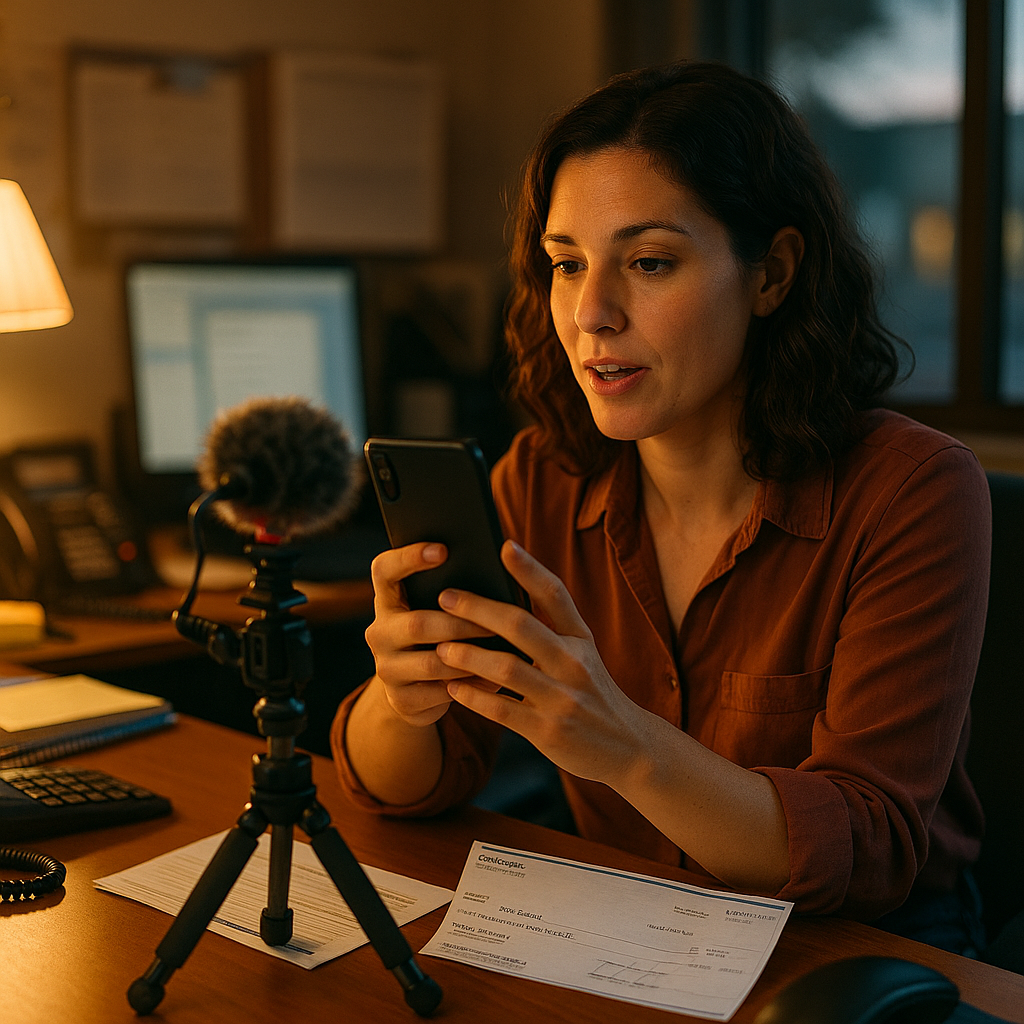
Here’s an uncomfortable number: the U.S. Department of Labor recovered over $212 million in back wages for wage and hour violations in a recent fiscal year, and off-the-clock work is one of the fastest-growing categories of claims. Now layer on employee creator programs, where retail associates, nurses, and warehouse staff are asked to film TikToks about their workday. Who’s paying for the twenty minutes they spend editing that clip at home? If your answer is “nobody,” you have a wage and hour problem hiding inside your marketing strategy.
The Off-the-Clock Problem, Defined
Off-the-clock work happens whenever a nonexempt employee performs job-related tasks without being paid for the time. Under the Fair Labor Standards Act (FLSA), that includes anything an employer “suffers or permits,” whether or not it was formally scheduled. Filming a product demo before a shift starts, replying to comments on a lunch break, or reshooting a video that didn’t get approved: all of it counts if the content is tied to the employee’s job.
Employee creator programs, sometimes called employee generated content (EGC) or employee advocacy programs, ask staff to become brand voices on TikTok, Instagram, and LinkedIn. It’s a genuinely smart tactic. Authentic, front-line content converts better than polished brand ads in most benchmarks. But the same programs that boost trust scores can quietly generate unpaid labor claims if legal and HR aren’t in the room when marketing designs the workflow.
If content creation happens outside scheduled hours and the employee is nonexempt, that time is legally compensable, regardless of whether marketing labeled it “optional.”
Why the FLSA Doesn’t Care About Your Content Calendar
Marketing teams think in campaigns and content calendars. Wage and hour law thinks in minutes worked. Those two frameworks collide constantly in employee creator programs. A brand might tell an associate “post when you feel inspired,” assuming that framing makes participation voluntary and therefore unpaid. Courts and the DOL don’t see it that way. If the content benefits the employer, if participation is expected or rewarded (even informally, through recognition or promotion consideration), and if a manager knows the work is happening, that time is generally compensable.
This is the same logic that has produced years of off-the-clock litigation around checking email after hours or finishing paperwork at home. Filming a “day in the life” reel is no different in the eyes of the law than staying late to close out a register.
Nonexempt Employees Are the Highest-Risk Group
Exempt, salaried employees generally aren’t owed overtime, so the risk calculus changes for them (though state laws vary, and misclassification is its own separate headache). Nonexempt hourly workers are where the real exposure sits. Retail, hospitality, healthcare, and logistics brands running employee creator programs almost always staff them with hourly employees, precisely because front-line authenticity is what makes the content work. That’s also precisely the population most protected by overtime law.
Ask yourself: does your program ask hourly staff to film outside their shift? Edit on personal devices at home? Respond to DMs or comments after clocking out? Each of those is a potential unpaid work claim waiting for a plaintiff’s attorney to notice.
What Actually Counts as Compensable Time?
The de minimis rule sometimes gets cited as a shield: the DOL has historically allowed employers to disregard “insignificant periods of time” that are administratively difficult to track, typically a few minutes here and there. But courts have narrowed this doctrine considerably, and several state laws (California chief among them) reject it almost entirely. Relying on de minimis as your compliance strategy is a bet you’ll likely lose if a program scales past a handful of employees.
Compensable time in an employee creator program can include:
- Filming footage before or after a scheduled shift
- Editing video or writing captions on personal time
- Responding to comments, DMs, or brand mentions outside work hours
- Attending informal training or briefings on content strategy
- Reshoots requested after initial submission, if done off the clock
None of this means employee creator programs are inherently unworkable. It means the workflow needs the same rigor you’d apply to any other compensable task, with clear time tracking and clear boundaries around what happens on versus off the clock.
Where Programs Go Wrong: Incentives Without Infrastructure
Most wage and hour exposure in this space isn’t malicious. It’s a marketing team building an employee advocacy program with genuine enthusiasm, offering gift cards or recognition for participation, and never looping in HR or legal to define paid versus unpaid time. The incentive structure itself can become evidence: if a brand offers bonuses tied to post frequency or view counts, it’s hard to later argue participation was casual and unpaid.
This is exactly the gap covered in our related piece on employee influencer program governance, which argues that legal review has to happen before launch, not after the first viral post triggers a complaint. Marketing teams that treat governance as a launch blocker rather than a compliance safeguard are the ones who end up explaining a class action to the CFO.
Offering a bonus tied to post frequency turns a “voluntary” program into evidence of expected, compensable work.
Building the Guardrails: A Practical Checklist
Fixing this doesn’t require killing the program. It requires operational discipline. A few moves that materially reduce exposure:
- Classify content creation as a job duty during scheduled hours only. Build filming time into shifts rather than asking staff to “capture moments” whenever inspiration strikes.
- Track time explicitly. If editing or posting genuinely must happen off shift, use a timesheet code for it and pay for it. This is not optional once you know it’s happening.
- Separate voluntary personal posting from brand-directed content. If an employee posts about their job unprompted on their own account with no brand involvement, that’s personal speech. The moment a manager requests, reviews, or rewards specific content, it becomes work.
- Audit incentive structures. Recognition programs, contests, and bonuses tied to content output should be reviewed by employment counsel, not just brand or comms teams.
- Document everything. Written policies distinguishing paid content time from personal social media use are your best defense if a claim surfaces.
Programs that get this right tend to look a lot like the headcount and process planning covered in creator ops headcount planning, where a dedicated ops function owns scheduling, tracking, and legal sign-off instead of leaving it to whichever brand manager is running point that quarter.
The Legal Risk Doesn’t Stop at Wages
Wage and hour exposure often travels with other compliance issues. If employees are creating sponsored-style content about their employer, FTC endorsement guidance still applies, and disclosure failures compound the legal headache. The Federal Trade Commission has been explicit that employee endorsements require the same “material connection” disclosure as any paid influencer relationship. A brand facing a wage claim and an FTC inquiry at the same time is not a hypothetical; it’s the natural outcome of a program built without cross-functional oversight.
It’s also worth remembering that employee generated content sits inside a broader creator economy conversation about measurement and governance. Resources like eMarketer’s creator economy research and platform guidance from LinkedIn’s employee advocacy tools can help teams benchmark what “typical” participation looks like, which in turn helps HR and legal set realistic, defensible policies rather than guessing at industry norms.
What Happens When It Goes Wrong
Wage and hour class actions move fast once one employee talks to an attorney. Discovery in these cases often includes Slack messages, internal content calendars, and manager check-ins, all of which can show that “voluntary” posting was actually expected and monitored. Brands that have already faced a creator-related crisis know the drill: legal, comms, and HR all need a shared response plan before the first demand letter arrives, not after. The same crisis-response thinking outlined in our creator crisis playbook applies here, just with a different regulator in the room.
There’s also a measurement angle worth flagging. Programs that can’t clearly show how much time content creation actually takes are the same programs that can’t defend a wage claim or justify the ROI to a CFO. The scorecard approach described in aligning ROI and CMO metrics is as much a legal hedge as a budgeting tool: if you’re tracking time and output rigorously for finance, you’re also building the documentation trail that protects you legally.
Next Step
Before your next employee creator campaign goes live, pull HR and employment counsel into the workflow design, not the post-launch review. Classify every content-related task as either “on the clock and paid” or “personal and unprompted,” with nothing left ambiguous in between.
FAQs
What is off-the-clock content creation and why does it matter for wage and hour law?
Off-the-clock content creation happens when a nonexempt employee films, edits, or posts brand-related content outside scheduled work hours without pay. Under the FLSA, this time is generally compensable if the employer knew about it or benefited from it, regardless of whether the work was labeled voluntary.
Are salaried employees exempt from this risk?
Exempt salaried employees are typically not owed overtime, but misclassification is a separate risk. State laws vary, and simply paying someone a salary doesn’t automatically exempt them from overtime protections if their role doesn’t meet specific duties tests.
Can requiring employees to post on personal accounts trigger overtime pay?
Yes, if the posting is directed, reviewed, or incentivized by the employer, it can count as compensable work. Purely voluntary posting with no employer involvement is different, but the line blurs quickly once managers request, approve, or reward specific content.
What is the FLSA de minimis rule, and does it protect employers?
The de minimis rule allows employers to disregard truly insignificant amounts of unpaid time that are hard to track. Courts have narrowed this doctrine significantly, and several states reject it outright, so it’s an unreliable defense for any program involving regular content creation tasks.
How should brands structure employee creator programs to avoid wage and hour claims?
Build content creation into scheduled shifts, track any off-shift time and pay for it, separate voluntary personal posts from brand-directed content, audit incentive structures with employment counsel, and document policies clearly in writing.
Top Influencer Marketing Agencies
The leading agencies shaping influencer marketing in 2026
Agencies ranked by campaign performance, client diversity, platform expertise, proven ROI, industry recognition, and client satisfaction. Assessed through verified case studies, reviews, and industry consultations.
Moburst

-
2

The Shelf
Boutique Beauty & Lifestyle Influencer AgencyA data-driven boutique agency specializing exclusively in beauty, wellness, and lifestyle influencer campaigns on Instagram and TikTok. Best for brands already focused on the beauty/personal care space that need curated, aesthetic-driven content.Clients: Pepsi, The Honest Company, Hims, Elf Cosmetics, Pure LeafVisit The Shelf → -
3

Audiencly
Niche Gaming & Esports Influencer AgencyA specialized agency focused exclusively on gaming and esports creators on YouTube, Twitch, and TikTok. Ideal if your campaign is 100% gaming-focused — from game launches to hardware and esports events.Clients: Epic Games, NordVPN, Ubisoft, Wargaming, Tencent GamesVisit Audiencly → -
4

Viral Nation
Global Influencer Marketing & Talent AgencyA dual talent management and marketing agency with proprietary brand safety tools and a global creator network spanning nano-influencers to celebrities across all major platforms.Clients: Meta, Activision Blizzard, Energizer, Aston Martin, WalmartVisit Viral Nation → -
5

The Influencer Marketing Factory
TikTok, Instagram & YouTube CampaignsA full-service agency with strong TikTok expertise, offering end-to-end campaign management from influencer discovery through performance reporting with a focus on platform-native content.Clients: Google, Snapchat, Universal Music, Bumble, YelpVisit TIMF → -
6

NeoReach
Enterprise Analytics & Influencer CampaignsAn enterprise-focused agency combining managed campaigns with a powerful self-service data platform for influencer search, audience analytics, and attribution modeling.Clients: Amazon, Airbnb, Netflix, Honda, The New York TimesVisit NeoReach → -
7

Ubiquitous
Creator-First Marketing PlatformA tech-driven platform combining self-service tools with managed campaign options, emphasizing speed and scalability for brands managing multiple influencer relationships.Clients: Lyft, Disney, Target, American Eagle, NetflixVisit Ubiquitous → -
8

Obviously
Scalable Enterprise Influencer CampaignsA tech-enabled agency built for high-volume campaigns, coordinating hundreds of creators simultaneously with end-to-end logistics, content rights management, and product seeding.Clients: Google, Ulta Beauty, Converse, AmazonVisit Obviously →