


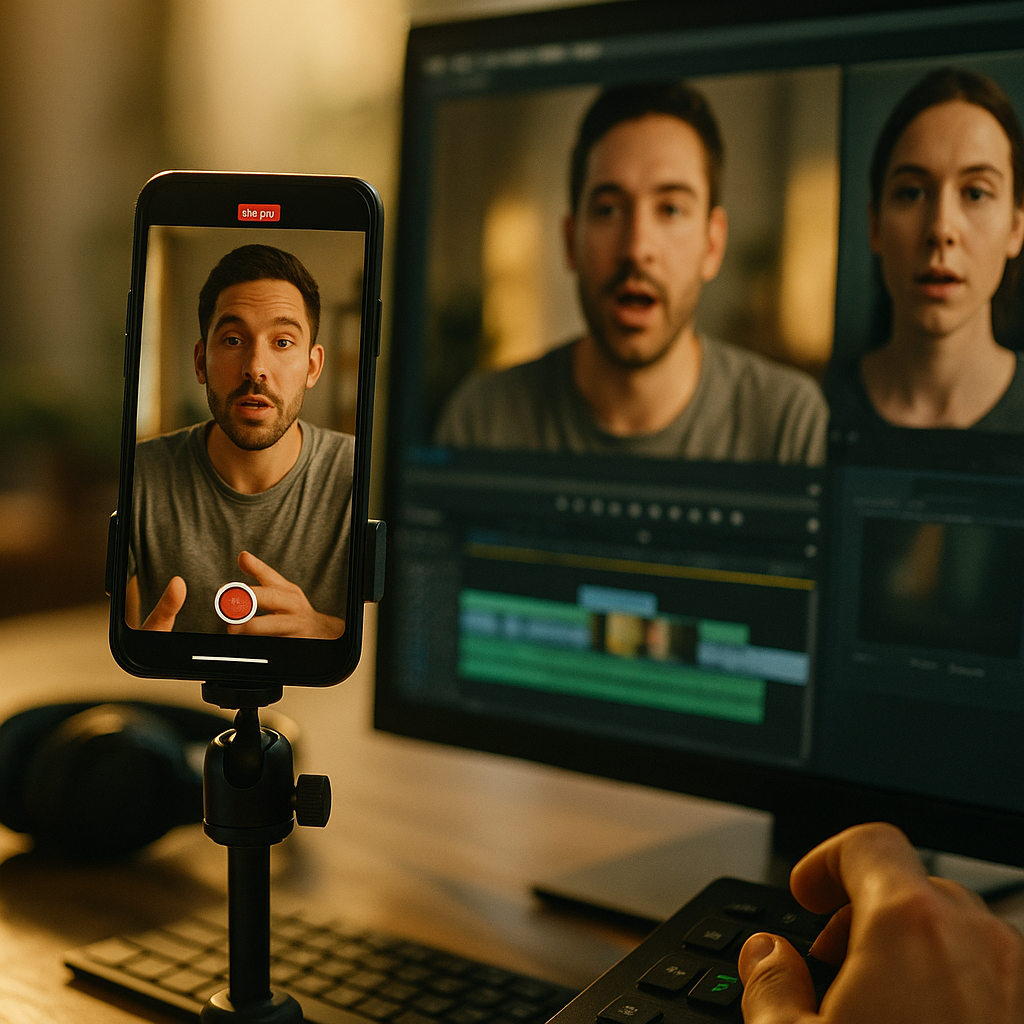
Ninety-two percent of TikTok users say they’ve discovered a new product on the app, and increasingly that discovery happens in a language the brand never scripted for. AI dubbing is quietly becoming the difference between a creator video that performs in one market and one that scales across twelve. The question for brand teams isn’t whether to localize anymore. It’s whether your dubbing stack can keep pace with your content calendar without torching your budget or your compliance posture.
Why Global Creator Video Broke the Old Localization Playbook
Traditional dubbing was built for film and TV: long lead times, studio booth recordings, and per-minute rates that made sense when you were localizing a two-hour feature once a year. Creator marketing doesn’t work that way. A single influencer partnership might spin out fifteen short-form cuts across six markets in a week. Run that through a legacy localization vendor and you’re looking at weeks of turnaround and costs that dwarf the media spend itself.
Brands chasing international creator reach hit this wall constantly. You sign a UK-based creator whose content resonates, then discover your German, Brazilian, and Indonesian audiences never see it because subtitling alone kills watch time and traditional dubbing is too slow and too expensive to justify at creator-content volume.
The real cost of skipping localization isn’t a missed market. It’s paying full creator fees for content that only half your addressable audience can actually engage with.
That’s the gap AI dubbing and localization tools are built to close: near-instant turnaround, voice cloning that preserves the creator’s tone, and pricing that scales with content volume instead of punishing it.
What AI Dubbing Actually Solves (and What It Doesn’t)
Modern AI dubbing platforms, think HeyGen, ElevenLabs, Rask AI, Papercup, and Deepdub, handle three jobs simultaneously: translation, voice synthesis, and lip resync. The lip resync piece is what separates this generation of tools from the robotic dubs of a few years back. Instead of a mismatched mouth flapping over foreign audio, models now adjust the visual mouth movement to match the translated phonemes, which is the single biggest driver of watch-through improvement in localized creator content.
Voice cloning is the other half. A creator’s voice is part of their brand equity. Fans in Mexico City want to hear something that sounds like the creator, not a generic dubbing-studio voice actor. Tools that clone the original speaker’s vocal characteristics and apply them across languages preserve that authenticity, which matters enormously for parasocial trust, the entire reason creator marketing outperforms traditional media in the first place.
What these tools still don’t solve well: humor, slang, and cultural nuance. A joke that lands in English frequently falls flat when translated literally, even with perfect lip sync. Idioms, regional slang, and culturally specific references need human linguists in the loop, not just a translation API. Brands that skip this step end up with technically accurate dubs that feel stiff or, worse, unintentionally offensive in the target market.
The Tools Landscape: Fragmented, Fast-Moving, Not Yet Consolidated
Unlike more mature martech categories, AI dubbing hasn’t consolidated around two or three dominant vendors. You’ve got generalist AI video platforms (HeyGen, Synthesia) adding dubbing as a feature, pure-play dubbing specialists (Papercup, Deepdub, Rask AI) competing on voice quality and language breadth, and voice-tech companies (ElevenLabs) expanding into full video localization workflows. Each has a different strength.
- Voice fidelity leaders: ElevenLabs and Deepdub tend to win blind listening tests for naturalness and emotional range, which matters for creator content where tone carries the message.
- Enterprise workflow leaders: Rask AI and Synthesia offer better batch-processing and API integration for teams pushing high volumes of short-form video weekly.
- Language breadth: Papercup and HeyGen support the widest range of target languages, which matters if your creator program spans APAC, LATAM, and MENA simultaneously.
This fragmentation mirrors what’s happening across the broader AI video production stack, where cost-per-usable-asset varies wildly depending on the tool and use case, a dynamic explored in detail in this comparison of AI video generation costs. The lesson translates directly to dubbing: don’t pick a vendor on marketing claims alone. Test with your actual creator content and measure watch-through, not just translation accuracy.
Where It Breaks: Consent, Accents, and Compliance Risk
Here’s the uncomfortable part nobody wants to put in the deck: voice cloning a creator’s voice into six languages raises real consent and IP questions. Does your creator agreement explicitly grant rights to synthesize their voice for localized versions? Most legacy influencer contracts don’t address this at all, because the technology didn’t exist when they were drafted.
The FTC has already signaled increased scrutiny of AI-generated endorsements and synthetic media in advertising, and regulators in the UK, per guidance from the Information Commissioner’s Office, are watching how synthetic voice and likeness data gets processed and stored. If your dubbing vendor retains voice model training data without clear consent language, that’s a liability sitting quietly in your MarTech stack.
A cloned voice without explicit, written cross-market usage rights isn’t a localization asset. It’s a lawsuit waiting for a jurisdiction.
Practically, this means every creator contract going forward needs a specific clause covering AI voice synthesis, target markets, retention period for voice models, and revocation rights. Legal teams that treat this as boilerplate will get burned. Build it into the standard influencer agreement template now, not after the first cease-and-desist letter.
Accent and dialect accuracy is the second failure point. A Portuguese dub that defaults to European Portuguese when your target market is Brazil will read as tone-deaf to local audiences, no matter how good the lip sync is. Vet vendors specifically on dialect coverage, not just language coverage.
Building an Operational Workflow That Actually Scales
The brands getting this right treat AI dubbing as a pipeline step, not a one-off production task. That means integrating dubbing tools with the same content repurposing infrastructure already handling cutdowns, captions, and format adaptation. If your team is already evaluating AI content repurposing engines for speed and brand voice accuracy, dubbing should plug into that same review checkpoint rather than existing as a separate vendor relationship with its own approval chain.
A workable process looks like this:
- Source selection: Identify creator assets with proven performance in the home market before investing in localization. Don’t dub content that hasn’t validated organically.
- Automated first pass: Run translation, voice synthesis, and lip resync through your chosen tool.
- Human linguistic review: A native-speaking reviewer checks for cultural fit, slang accuracy, and tonal mismatch before anything ships.
- Compliance check: Confirm the creator contract covers the specific target markets and that consent documentation is on file.
- Performance tagging: Track watch-through and engagement by locale so you can kill underperforming language expansions quickly instead of pouring budget into markets that don’t respond.
This last point matters more than teams expect. Not every market wants dubbed content. Some audiences, particularly in Northern Europe, actually prefer subtitles and view dubbing as inauthentic. Test before you scale a language across your entire content library.
According to data cited by eMarketer, short-form video consumption continues to grow fastest in markets outside North America and Western Europe, which is exactly where dubbing infrastructure matters most and where legacy localization vendors have historically underinvested. That’s the opportunity gap AI tools are filling, but only for brands with the operational discipline to run the workflow correctly.
Discovery matters too. If you’re finding creators for these expanded markets manually, you’re leaving efficiency on the table. Teams pairing localization with smarter sourcing methods, like the approaches detailed in AI creator discovery versus human scouting, tend to identify the right regional talent faster and negotiate cross-market rights into the initial agreement rather than renegotiating after the fact.
Measuring ROI: What to Actually Track
Dubbing spend needs its own attribution logic, not a blended view lumped into general content production costs. Track cost-per-dubbed-minute against watch-through rate improvement by locale. If a market shows minimal lift after dubbing versus subtitles, redirect that budget. Most teams find that three to five priority languages capture the bulk of incremental reach, with long-tail languages delivering diminishing returns unless the brand has genuine strategic presence there.
Also track creator sentiment. Some creators are protective of their voice and image being synthesized, even with contractual permission. Regular check-ins on how localized versions are landing with the creator, not just the audience, protects the relationship long-term. HubSpot’s research on creator partnership retention consistently shows that transparency around content usage extends contract renewal rates, and voice cloning is the newest frontier of that transparency conversation.
Next Step
Audit your current creator contracts for AI voice synthesis language before you scale a single dubbing pilot, then run a two-market test measuring watch-through against your home-market baseline before committing budget across your full content library.
Frequently Asked Questions
What is AI dubbing and how is it different from traditional dubbing?
AI dubbing uses machine learning models to translate speech, synthesize a matching voice, and adjust lip movement automatically, cutting turnaround from weeks to hours compared to studio-based dubbing that requires voice actors and manual syncing.
Does AI dubbing work for short-form creator content like TikTok and Reels?
Yes, and it’s arguably the strongest use case since short clips process quickly and the lower production complexity compared to long-form video makes lip resync errors less noticeable to viewers.
Do I need creator consent to clone their voice for dubbing?
Absolutely. Voice cloning without explicit written consent covering target markets, retention, and revocation rights creates significant legal exposure, and contracts drafted before this technology existed likely don’t cover it.
Which languages should brands prioritize first for AI dubbing?
Prioritize languages tied to markets where you already have commercial presence or measurable organic engagement, typically three to five languages capture most of the incremental reach before returns diminish.
Can AI dubbing handle humor and cultural references accurately?
Not reliably on its own. Idioms, slang, and jokes usually need a native-speaking human reviewer to adapt them culturally, since literal translation frequently produces flat or confusing results even with perfect lip sync.
How much does AI dubbing typically cost compared to traditional localization?
Pricing varies by vendor and volume, but AI dubbing generally runs a fraction of traditional studio dubbing costs per minute, making it viable for high-volume creator content where legacy localization pricing never made economic sense.
Top Influencer Marketing Agencies
The leading agencies shaping influencer marketing in 2026
Agencies ranked by campaign performance, client diversity, platform expertise, proven ROI, industry recognition, and client satisfaction. Assessed through verified case studies, reviews, and industry consultations.
Moburst

-
2

The Shelf
Boutique Beauty & Lifestyle Influencer AgencyA data-driven boutique agency specializing exclusively in beauty, wellness, and lifestyle influencer campaigns on Instagram and TikTok. Best for brands already focused on the beauty/personal care space that need curated, aesthetic-driven content.Clients: Pepsi, The Honest Company, Hims, Elf Cosmetics, Pure LeafVisit The Shelf → -
3

Audiencly
Niche Gaming & Esports Influencer AgencyA specialized agency focused exclusively on gaming and esports creators on YouTube, Twitch, and TikTok. Ideal if your campaign is 100% gaming-focused — from game launches to hardware and esports events.Clients: Epic Games, NordVPN, Ubisoft, Wargaming, Tencent GamesVisit Audiencly → -
4

Viral Nation
Global Influencer Marketing & Talent AgencyA dual talent management and marketing agency with proprietary brand safety tools and a global creator network spanning nano-influencers to celebrities across all major platforms.Clients: Meta, Activision Blizzard, Energizer, Aston Martin, WalmartVisit Viral Nation → -
5

The Influencer Marketing Factory
TikTok, Instagram & YouTube CampaignsA full-service agency with strong TikTok expertise, offering end-to-end campaign management from influencer discovery through performance reporting with a focus on platform-native content.Clients: Google, Snapchat, Universal Music, Bumble, YelpVisit TIMF → -
6

NeoReach
Enterprise Analytics & Influencer CampaignsAn enterprise-focused agency combining managed campaigns with a powerful self-service data platform for influencer search, audience analytics, and attribution modeling.Clients: Amazon, Airbnb, Netflix, Honda, The New York TimesVisit NeoReach → -
7

Ubiquitous
Creator-First Marketing PlatformA tech-driven platform combining self-service tools with managed campaign options, emphasizing speed and scalability for brands managing multiple influencer relationships.Clients: Lyft, Disney, Target, American Eagle, NetflixVisit Ubiquitous → -
8

Obviously
Scalable Enterprise Influencer CampaignsA tech-enabled agency built for high-volume campaigns, coordinating hundreds of creators simultaneously with end-to-end logistics, content rights management, and product seeding.Clients: Google, Ulta Beauty, Converse, AmazonVisit Obviously →