


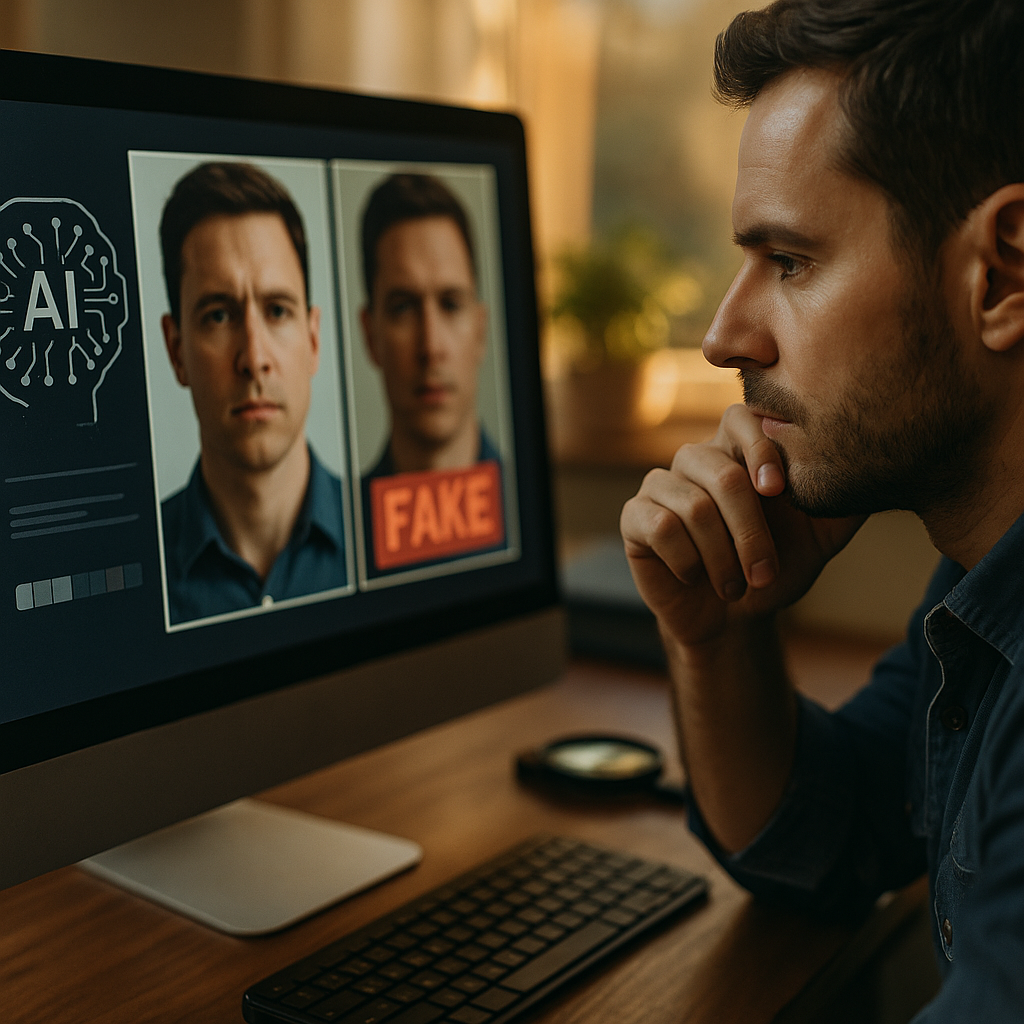
One in ten marketers has already flagged suspicious AI-manipulated content from a “creator” they were about to pay. That’s not a hypothetical. It’s the kind of number that should make every brand reconsider how it vets footage before launch. AI deepfake detection tools have gone from a niche trust and safety concern to a line item on the campaign checklist, and if your team hasn’t added one yet, you’re running blind on authenticity risk.
The Problem Isn’t Hypothetical Anymore
Synthetic media generation has gotten cheap, fast, and shockingly convincing. Tools that produce talking-head videos, voice clones, or fully synthetic “creators” are now accessible to anyone with a laptop and a subscription. That’s great for ad production budgets. It’s a nightmare for brand safety teams trying to confirm that the person in a sponsored video is who they claim to be, said what they actually said, and consented to the usage rights on the contract.
Deepfake fraud attempts targeting businesses have surged according to multiple industry trackers, and influencer marketing sits squarely in the blast radius. A fabricated testimonial, a manipulated “before and after,” or a cloned voice reading a script the creator never approved can all slip through a standard content review if nobody’s actually checking for synthetic manipulation.
If your approval workflow still relies on “it looks real to me,” you’re one convincing deepfake away from a brand safety incident that lands in the trade press.
What These Tools Actually Catch (and What They Don’t)
Detection tools generally work by analyzing pixel-level artifacts, inconsistent lighting or blinking patterns, audio-video sync drift, and metadata anomalies. Vendors like Reality Defender, Hive Moderation, and Sensity AI have built detection models trained on large datasets of known synthetic content. Some, like Microsoft’s Video Authenticator lineage tools and Intel’s FakeCatcher, use physiological signals such as blood flow patterns in facial video to flag manipulation in near real time.
Here’s the catch: none of them are infallible. Detection accuracy drops significantly against newer generation models, and most tools were trained on older deepfake techniques. A tool that confidently flags a 2023-era face swap might miss a modern diffusion-based generation entirely. That’s not a reason to skip detection. It’s a reason to treat it as one layer in a broader verification stack, not a magic “verified authentic” stamp.
Building an Evaluation Framework Before You Buy
Don’t let a vendor demo make the decision for you. Run any detection tool through a structured evaluation before it touches your creator approval workflow. Here’s what actually matters:
- Detection method transparency. Ask the vendor exactly what signals the model analyzes. If they won’t explain it beyond “proprietary AI,” that’s a red flag, not a trade secret worth protecting.
- Training data recency. Deepfake generation techniques evolve monthly. A tool last retrained a year ago is already behind the curve.
- False positive rate. A tool that flags every lightly edited video as synthetic will train your team to ignore alerts entirely, which defeats the purpose.
- Turnaround time. Campaign timelines don’t bend for a 48-hour analysis queue. You need results fast enough to fit inside your existing content approval window.
- Audio and video coverage. Voice cloning is growing faster than video deepfakes in some fraud categories. Make sure the tool doesn’t only check visuals.
- Integration path. Can it plug into your existing creator platform or does it require a manual upload-and-wait process for every asset?
Score vendors against this list before you sign anything. A flashy accuracy percentage on a vendor’s homepage means little if it can’t integrate into the workflow your team already runs.
Where Detection Fits in the Campaign Timeline
Authenticity verification works best as a gate, not an afterthought. Build it into the same stage where you’d normally check usage rights, FTC disclosure language, and brand safety guidelines. Practically, that means running raw creator submissions through detection before they go into final edit, not after the campaign is already live and the asset has been paid media boosted.
This matters especially for programs that run through agentic discovery or automated sourcing. If you’re sourcing creators at volume through agentic discovery tools, you’re moving faster and touching more unfamiliar talent, which raises the odds that something synthetic slips through unnoticed. Speed and verification need to scale together, not trade off against each other.
Authenticity Checks Are Only Half the Battle
Deepfake detection solves one problem: is this content synthetically manipulated? It doesn’t solve a related, equally damaging problem: is this “creator” even real to begin with. Fabricated personas with AI-generated profile photos and fake engagement histories have been caught running entire sponsored campaigns. That’s a different vetting layer, closer to the fraud-score work covered in fake follower audit tools, and it needs to run alongside, not instead of, content authenticity checks.
There’s also a legitimate-use wrinkle worth naming. Plenty of brands now intentionally commission AI-generated actor content for ads, and tools like those covered in our look at AI actor video platforms are built specifically for that purpose. Deepfake detection isn’t about banning synthetic media outright. It’s about knowing which content in your pipeline is disclosed AI and which is undisclosed manipulation pretending to be a real human endorsement. The FTC has been explicit that the latter creates disclosure liability regardless of intent, so this isn’t just a reputational question, it’s a compliance one too. Brands should review current guidance directly from the Federal Trade Commission on endorsement and synthetic media disclosure.
Detection tools answer “is this real.” Your compliance team still has to answer “was this disclosed correctly.” Skipping either step leaves a gap big enough for a regulator or a competitor to walk through.
Build, Buy, or Bolt On?
Most mid-market and enterprise brands won’t build detection capability in-house. The cost of maintaining a model that keeps pace with generation techniques is a research problem, not a marketing ops problem. The more realistic decision is whether to buy a standalone detection tool or look for the capability bundled into a broader creator intelligence platform.
Platforms like CreatorIQ have been expanding verification and compliance features as part of their broader suite, which is worth weighing against point-solution vendors. If you’re already evaluating platform depth, it’s worth reading how other teams assessed feature value versus cost in our breakdown of creator intelligence platform ROI. A bundled feature might not be as sharp as a dedicated detection vendor, but it reduces vendor sprawl, which has its own operational cost.
If your creator program is scaling fast, also think about how detection fits into your broader vendor stack decisions. The same discipline that applies to evaluating AI tooling generally, covered in our piece on AI infrastructure vendor vetting, applies directly here: don’t adopt a point solution that can’t talk to the rest of your stack.
What a Realistic Rollout Looks Like
Start small. Pick a single high-visibility campaign, run every creator asset through your chosen detection tool alongside your normal approval process, and track how often it flags something your human reviewers missed (and vice versa). This pilot period tells you more about real-world accuracy than any vendor case study will.
Expect friction. Legal and compliance teams will want documented chain-of-custody for flagged content. Creative teams will push back if detection adds days to turnaround. Brief both groups early, because an unexplained new gate in the approval process creates more resistance than the tool itself ever will.
Track a few simple metrics across the pilot: average detection turnaround time, number of assets flagged, false positive rate confirmed by manual review, and total added cost per campaign. Industry benchmarking from firms like eMarketer and trust and safety research from Sprout Social can help contextualize whether your fraud exposure is in line with category norms or running hotter than peers.
A Quick Gut Check Before You Sign a Contract
Ask the vendor to run a known, publicly documented deepfake sample and a known authentic sample through their system live, on the call. If they hesitate or ask for time to “prepare” the demo, that’s informative. A tool confident in its detection accuracy should have no problem proving it on the spot.
Frequently Asked Questions
What exactly do AI deepfake detection tools look for in creator content?
They analyze pixel-level artifacts, facial movement inconsistencies, audio-video sync, lighting irregularities, and metadata to flag content that shows signs of synthetic generation or manipulation rather than an unedited, authentic recording.
Can deepfake detection tools catch every type of manipulated content?
No. Detection accuracy depends heavily on how recently the tool’s model was trained, and newer generation techniques can slip past older detection systems. Treat these tools as one layer of verification, not a guaranteed catch-all.
Where should detection fit into a campaign approval workflow?
Run it before final edit and before paid amplification, at the same stage where you’d check usage rights and FTC disclosure compliance. Treating it as a late-stage afterthought defeats the purpose of catching issues before launch.
Is deepfake detection the same as fake follower or fraud auditing?
No, they solve different problems. Deepfake detection checks whether content itself has been synthetically manipulated. Fraud auditing checks whether the creator’s audience and engagement are authentic. Brands need both layers, not just one.
Do brands need to disclose when they intentionally use AI-generated creator content?
Yes. Regulatory guidance treats undisclosed synthetic endorsements as a compliance risk regardless of intent. Brands using AI actors or avatars should label the content clearly and consult current FTC endorsement guidance.
Should smaller brands invest in standalone detection tools or wait for platform features?
If budget is tight, evaluating creator platforms that bundle verification features can reduce cost and vendor sprawl. Larger programs running high-volume or high-risk campaigns usually justify a dedicated detection vendor.
Next step: pick one upcoming campaign, run every creator asset through a shortlisted detection tool alongside your normal human review, and measure the gap between what each process catches before you commit budget to a full rollout.
Top Influencer Marketing Agencies
The leading agencies shaping influencer marketing in 2026
Agencies ranked by campaign performance, client diversity, platform expertise, proven ROI, industry recognition, and client satisfaction. Assessed through verified case studies, reviews, and industry consultations.
Moburst

-
2

The Shelf
Boutique Beauty & Lifestyle Influencer AgencyA data-driven boutique agency specializing exclusively in beauty, wellness, and lifestyle influencer campaigns on Instagram and TikTok. Best for brands already focused on the beauty/personal care space that need curated, aesthetic-driven content.Clients: Pepsi, The Honest Company, Hims, Elf Cosmetics, Pure LeafVisit The Shelf → -
3

Audiencly
Niche Gaming & Esports Influencer AgencyA specialized agency focused exclusively on gaming and esports creators on YouTube, Twitch, and TikTok. Ideal if your campaign is 100% gaming-focused — from game launches to hardware and esports events.Clients: Epic Games, NordVPN, Ubisoft, Wargaming, Tencent GamesVisit Audiencly → -
4

Viral Nation
Global Influencer Marketing & Talent AgencyA dual talent management and marketing agency with proprietary brand safety tools and a global creator network spanning nano-influencers to celebrities across all major platforms.Clients: Meta, Activision Blizzard, Energizer, Aston Martin, WalmartVisit Viral Nation → -
5

The Influencer Marketing Factory
TikTok, Instagram & YouTube CampaignsA full-service agency with strong TikTok expertise, offering end-to-end campaign management from influencer discovery through performance reporting with a focus on platform-native content.Clients: Google, Snapchat, Universal Music, Bumble, YelpVisit TIMF → -
6

NeoReach
Enterprise Analytics & Influencer CampaignsAn enterprise-focused agency combining managed campaigns with a powerful self-service data platform for influencer search, audience analytics, and attribution modeling.Clients: Amazon, Airbnb, Netflix, Honda, The New York TimesVisit NeoReach → -
7

Ubiquitous
Creator-First Marketing PlatformA tech-driven platform combining self-service tools with managed campaign options, emphasizing speed and scalability for brands managing multiple influencer relationships.Clients: Lyft, Disney, Target, American Eagle, NetflixVisit Ubiquitous → -
8

Obviously
Scalable Enterprise Influencer CampaignsA tech-enabled agency built for high-volume campaigns, coordinating hundreds of creators simultaneously with end-to-end logistics, content rights management, and product seeding.Clients: Google, Ulta Beauty, Converse, AmazonVisit Obviously →