


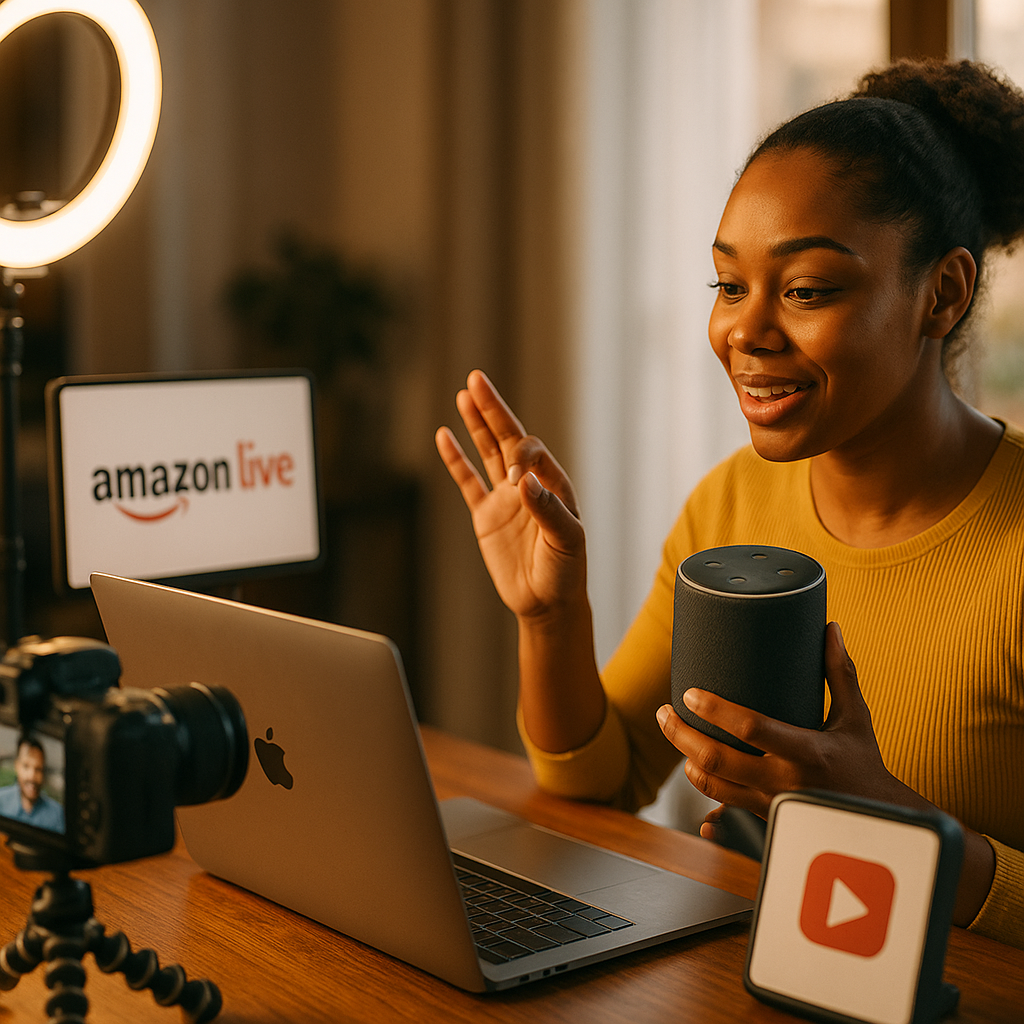
Amazon Live streams with an active affiliate creator convert at rates most brands would kill for on any other channel, yet the majority of consumer brands still treat the platform as an afterthought. If your influencer program doesn’t include a dedicated Amazon Live playbook, you’re leaving a high-intent, purchase-ready audience for competitors to claim.
Livestream shopping never became the American juggernaut some predicted after China’s runaway success with the format. But Amazon Live quietly built something more durable: a low-friction, checkout-native stream experience embedded in the platform where people already have their credit cards saved. That’s not a growth story. That’s a conversion story.
Why Amazon Live Deserves a Line Item in Your Budget
Most brand marketers I talk to still lump Amazon Live in with “social live shopping,” then dismiss it because TikTok Live and Instagram Live shopping never took off in the West the way they did in China. That comparison misses the point entirely. Amazon Live isn’t competing for attention on an entertainment feed. It’s sitting inside a shopping platform, on product detail pages, in search results, and on the Amazon Live channel itself, where every viewer already has one foot in the checkout funnel.
That changes the math on creator recruitment. You’re not paying for reach or vanity engagement. You’re paying for a warm audience that’s actively comparison-shopping, and a creator who can answer objections in real time before they bounce to a competitor’s listing.
Amazon Live shifts the creator’s job from “build awareness” to “close the sale in the moment of highest purchase intent.” That’s a fundamentally different brief than a typical sponsored post.
Finding the Right Creators: Skip the Follower Count
Forget the vanity metrics you’d chase for a TikTok or Instagram deal. Amazon Live rewards a completely different skill set, and if you recruit based on Instagram follower count, you’ll end up with creators who freeze the moment there’s no script to read from.
- Amazon Influencer Program status. Prioritize creators already enrolled and active on the Amazon Influencer Program, since they understand the storefront mechanics, tagging, and commission structure already.
- QVC-style presentation instincts. The best Amazon Live talent can talk for ten straight minutes about a kitchen gadget without sounding bored or robotic. That’s a rare, teachable-but-not-really skill. Look for creators with retail, home shopping, or customer service backgrounds.
- Category authority over audience size. A micro-creator with 8,000 followers who reviews air fryers obsessively will outperform a lifestyle influencer with 200,000 followers who’s never used one. Category trust drives add-to-cart behavior on Amazon Live far more than general popularity.
- Comfort with real-time Q&A. Live viewers ask blunt questions. Does this run small? Is it dishwasher safe? Can I return it? Creators who can answer instantly, without stalling, keep viewers in the stream instead of tabbing away.
Sourcing pools worth checking: Amazon’s own creator connections tools inside Amazon Live Creator, plus agencies that specialize in retail media talent. Cross-reference against creators already tagging your ASINs organically, since they’ve proven product familiarity without you paying a dime yet.
Vetting Checklist Before You Sign Anyone
Pull the last five to ten streams a candidate has run. Watch at least one in full, not just the highlight clip they send you. You’re checking for pacing, product knowledge, and whether they can recover gracefully when a link doesn’t load or a question stumps them. A creator who laughs it off and keeps moving is worth more than one with a perfect script and zero improv skill.
Building a Brief That Actually Works for Live Formats
A standard influencer brief built for a pre-recorded Reel or TikTok will fail on Amazon Live. There’s no editing, no retakes, no cutting the awkward pause. Your brief needs to function more like a live-event runsheet than a content brief.
- Product priority order. List which SKUs need airtime first, since stream drop-off means your hero product should never be item number seven on the list.
- Key claims and compliance language. Spell out exactly what can and can’t be said about efficacy, ingredients, or comparisons to competitors. Live means no post-hoc editing if a creator oversteps, so this section needs to be airtight, not aspirational.
- Talking points, not scripts. Give creators bullet-point prompts (materials, use cases, common objections) rather than word-for-word copy. Scripted Amazon Live streams sound stilted and viewers can tell within seconds.
- Promo mechanics. Coupon codes, lightning deals, and bundle offers need to be confirmed live and tested before the stream starts. Nothing kills momentum like a creator saying “the code should work” mid-broadcast.
- Engagement prompts. Build in specific moments for the creator to ask viewers to comment a question, tap the product carousel, or share the stream. These aren’t filler, they’re what Amazon’s algorithm reads as engagement signal for surfacing the stream to more browsers.
- Fallback plan. What happens if inventory runs low mid-stream, or a product gets a bad review pulled up by a viewer? Give creators a pre-approved way to pivot without going off-message.
One more thing brands consistently underestimate: rehearsal time. A thirty-minute dry run with actual product in hand catches ninety percent of the friction points that would otherwise surface live, in front of paying customers.
Scheduling and Cadence: When Streams Actually Convert
Timing matters more on Amazon Live than almost any other creator format, because you’re fighting for placement in a live carousel that rotates constantly. Streams scheduled around major shopping events (Prime-related sales windows, holiday gifting season, back-to-school) get disproportionately more organic discovery because Amazon actively promotes live inventory during those windows.
Outside of peak periods, consistency beats frequency. A creator streaming your product once a week for two months will build more repeat-viewer trust than the same creator doing four rushed streams crammed into a single week. Treat it like a retail media flight, not a one-off activation.
Brands that treat Amazon Live as a recurring retail media placement, not a one-off stunt, see compounding returns as repeat viewers start recognizing and trusting the creator.
Measurement: What “Good” Actually Looks Like
Watch time, peak concurrent viewers, and click-throughs to the product page are the vanity-adjacent metrics Amazon surfaces first. Ignore them if you’re not also pulling attributed sales through your Amazon Attribution or Brand Analytics dashboard. The metric that matters is straightforward: units sold during and immediately following the stream, tied to the creator’s affiliate tag.
Set a baseline before you scale spend. Run three to five test streams with different creators and formats (unboxing style, tutorial style, live Q&A style) and compare conversion rate per viewer, not just total sales. That’s the number that tells you which creator archetype to double down on.
For brands also thinking about how AI-driven shopping surfaces are changing discovery beyond livestreams, it’s worth reviewing how Amazon’s AI shopping agent is reshaping listing requirements, since the same product data feeding those tools often overlaps with what a Live host needs on hand during a broadcast.
Compliance Isn’t Optional, and Live Makes It Harder
The FTC’s disclosure requirements apply to livestreams exactly the same as they do to static posts, but enforcement gets messier when there’s no edit pass. Creators need verbal disclosure baked into the opening thirty seconds of every stream, not buried after ten minutes of product chat. Review the FTC’s endorsement guidance with every new creator before their first broadcast, and don’t assume experienced Amazon Live hosts already know the current rules, since guidance has shifted more than once in recent years.
If you’re running creators across multiple platforms simultaneously, it’s worth comparing how disclosure expectations differ by channel. The distinctions between platform disclosure labels and verbal disclosure matter here too, since a creator who’s used to TikTok’s built-in tagging tools may forget Amazon Live has no equivalent automatic label.
Where This Fits in a Broader Creator Strategy
Amazon Live shouldn’t run in isolation. The strongest programs treat it as the bottom-of-funnel conversion layer that sits beneath broader creator awareness plays on TikTok, YouTube, and Instagram. A creator builds product familiarity on social, then drives the same audience to an Amazon Live stream for the actual purchase decision, closing the loop where checkout friction is lowest.
This mirrors a pattern showing up across other emerging formats too, where the same creator content increasingly needs to serve multiple discovery surfaces at once. If your team is already restructuring briefs so creator video works across AI shopping assistant surfaces, extending that thinking to Amazon Live is a natural next step rather than a separate workstream.
Budget allocation is the real test of whether a brand takes this seriously. If Amazon Live gets whatever’s left over after TikTok and Instagram spend, don’t expect results that justify a dedicated case study. Fund it like a retail media channel with its own KPIs, because that’s exactly what it is.
Worth benchmarking against industry data too. According to eMarketer’s retail media research, retail media spend continues to outpace traditional digital ad growth, and livestream shopping formats are increasingly cited as a driver of that shift among US retailers.
Frequently Asked Questions
FAQs
How much do Amazon Live creators typically charge?
Rates vary widely based on category authority and stream length, but most brands negotiate a base fee plus affiliate commission on sales generated during the broadcast, rather than a flat fee alone. Established hosts in competitive categories like beauty or home goods often command higher base rates due to proven conversion history.
Do I need Amazon Live Creator access to work with influencers?
Brands don’t need their own Creator access since creators stream through their own Amazon Influencer Program accounts, tagging your products directly. Your role is recruitment, briefing, providing product, and tracking performance through Amazon Attribution.
How long should an Amazon Live stream run?
Most effective streams run between twenty and forty-five minutes, long enough to cover multiple products and answer viewer questions, but tight enough to maintain energy and avoid viewer drop-off from pacing that drags.
Can I repurpose Amazon Live footage for other platforms?
Yes, and many brands clip highlight moments for use in Instagram Reels or TikTok, though disclosure requirements still apply on the repurposed platform even if the original stream already included them.
What’s the biggest mistake brands make recruiting Amazon Live creators?
Recruiting based on social media follower count instead of live presentation skill and category authority. A creator who thrives on scripted, edited content often struggles with the improvisational demands of unscripted live selling.
Next step: Run three test streams with different creator archetypes this quarter, measure conversion per viewer against your Amazon Attribution baseline, and reallocate budget toward whichever format actually moves units, not whichever felt the most polished.
Top Influencer Marketing Agencies
The leading agencies shaping influencer marketing in 2026
Agencies ranked by campaign performance, client diversity, platform expertise, proven ROI, industry recognition, and client satisfaction. Assessed through verified case studies, reviews, and industry consultations.
Moburst

-
2

The Shelf
Boutique Beauty & Lifestyle Influencer AgencyA data-driven boutique agency specializing exclusively in beauty, wellness, and lifestyle influencer campaigns on Instagram and TikTok. Best for brands already focused on the beauty/personal care space that need curated, aesthetic-driven content.Clients: Pepsi, The Honest Company, Hims, Elf Cosmetics, Pure LeafVisit The Shelf → -
3

Audiencly
Niche Gaming & Esports Influencer AgencyA specialized agency focused exclusively on gaming and esports creators on YouTube, Twitch, and TikTok. Ideal if your campaign is 100% gaming-focused — from game launches to hardware and esports events.Clients: Epic Games, NordVPN, Ubisoft, Wargaming, Tencent GamesVisit Audiencly → -
4

Viral Nation
Global Influencer Marketing & Talent AgencyA dual talent management and marketing agency with proprietary brand safety tools and a global creator network spanning nano-influencers to celebrities across all major platforms.Clients: Meta, Activision Blizzard, Energizer, Aston Martin, WalmartVisit Viral Nation → -
5

The Influencer Marketing Factory
TikTok, Instagram & YouTube CampaignsA full-service agency with strong TikTok expertise, offering end-to-end campaign management from influencer discovery through performance reporting with a focus on platform-native content.Clients: Google, Snapchat, Universal Music, Bumble, YelpVisit TIMF → -
6

NeoReach
Enterprise Analytics & Influencer CampaignsAn enterprise-focused agency combining managed campaigns with a powerful self-service data platform for influencer search, audience analytics, and attribution modeling.Clients: Amazon, Airbnb, Netflix, Honda, The New York TimesVisit NeoReach → -
7

Ubiquitous
Creator-First Marketing PlatformA tech-driven platform combining self-service tools with managed campaign options, emphasizing speed and scalability for brands managing multiple influencer relationships.Clients: Lyft, Disney, Target, American Eagle, NetflixVisit Ubiquitous → -
8

Obviously
Scalable Enterprise Influencer CampaignsA tech-enabled agency built for high-volume campaigns, coordinating hundreds of creators simultaneously with end-to-end logistics, content rights management, and product seeding.Clients: Google, Ulta Beauty, Converse, AmazonVisit Obviously →