


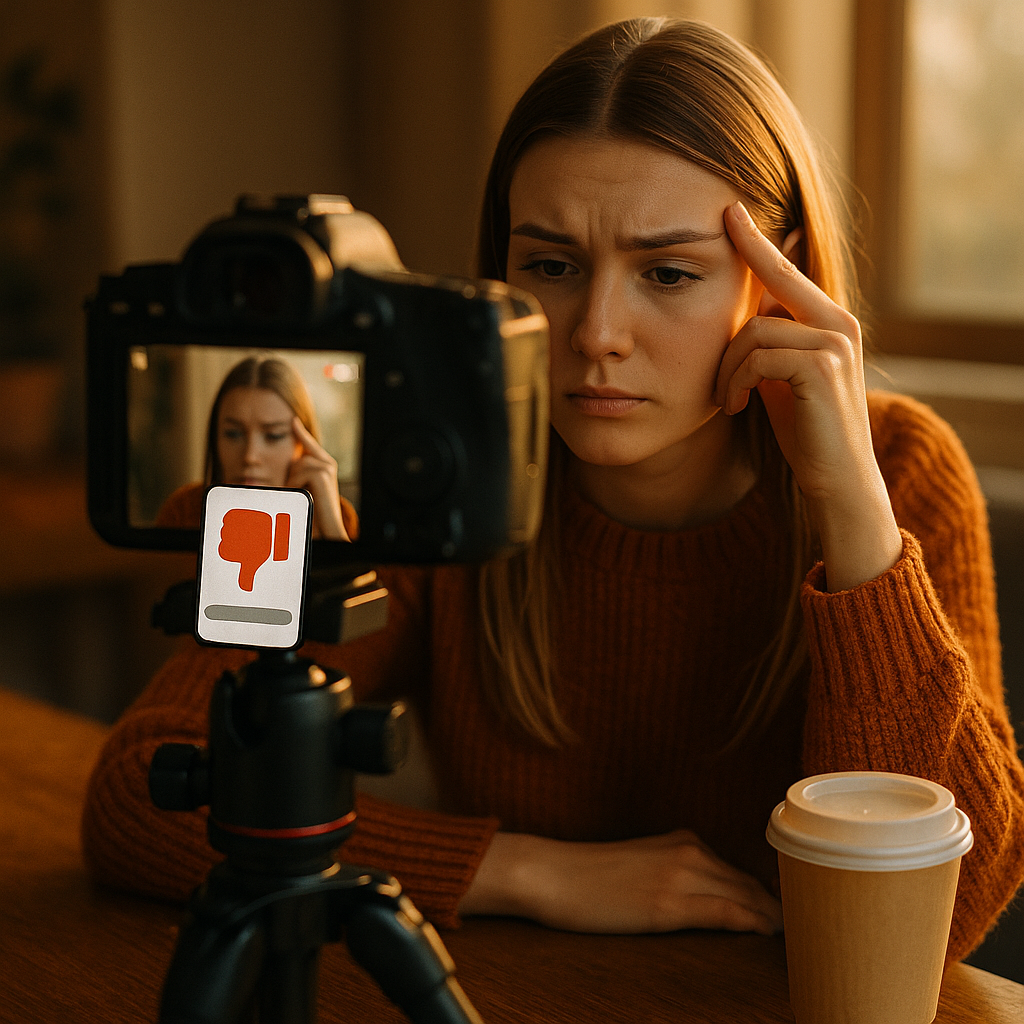
One in four UK influencer campaigns fails to clear the engagement benchmark the brand set before launch. Not underperforms slightly. Fails outright. That’s the 25 percent problem, and it’s been quietly eating marketing budgets while everyone celebrates record creator spend. If engagement rate still decides whether a campaign gets renewed, why does a quarter of UK activity keep missing the mark?
What the 25 Percent Problem Actually Means
The number itself isn’t mysterious. Industry benchmarking from agencies and platforms consistently shows that around a quarter of sponsored posts in the UK land below the engagement rate the brand briefed for, whether that’s a 3 percent threshold for a mid-tier lifestyle creator or a 6 percent target for a niche micro-influencer. Brands set these numbers based on historical averages, then watch a chunk of their roster quietly undershoot them month after month.
That gap matters because engagement rate is still the metric most procurement teams and CMOs reference when deciding whether influencer spend earned its keep. It’s the easiest number to put in a slide. It’s also, increasingly, the least reliable one.
A quarter of campaigns missing benchmark isn’t a rounding error. At scale, across hundreds of briefs a year, it represents a material chunk of wasted media spend that nobody in finance is flagging because the campaign “technically ran.”
Why UK Campaigns Keep Underperforming
Several forces are converging at once, and none of them are new exactly, but they’re compounding in ways that catch brands off guard.
- Audience fatigue on familiar formats. UK audiences have seen the unboxing, the “get ready with me,” and the discount code overlay a thousand times. Novelty decay is real, and it’s accelerating.
- Follower inflation without engagement to match. Bought or bot-inflated followings still slip through vetting, particularly at the mid-tier level where due diligence is lighter than it should be. The fraud problem runs deeper than most briefs account for, as detailed in recent fraud data showing fake followers drive the majority of influencer fraud cases.
- Platform algorithm shifts. Instagram and TikTok both continue to deprioritise reach for accounts posting formulaic branded content, which quietly suppresses engagement even when creative quality is high.
- Briefs optimised for reach, not resonance. Brands still chase follower count over fit. Persona-based casting is proving far more predictive of engagement than demographic targeting, yet most UK brands haven’t rebuilt their casting process around it.
None of this is catastrophic on its own. Together, it’s enough to drag a quarter of campaigns below the line every single cycle.
The Follower Count Trap
Here’s the uncomfortable truth: bigger isn’t better anymore, and most UK brands still buy as if it is. A creator with 400,000 followers and a 1.2 percent engagement rate will almost always underperform a creator with 40,000 followers and a 7 percent rate, yet the former still commands the bigger invoice because the number looks safer on a deck. The nano creator market has absorbed this lesson faster than mid and macro tiers, partly because nano rates have compressed enough to make smaller, more engaged audiences economically attractive again.
Procurement teams love a big follower number because it’s easy to justify in a budget review. Engagement rate requires more explanation, more context, more nuance. Guess which one wins when a campaign gets greenlit under time pressure.
Is Engagement Even the Right Metric?
This is the question UK marketers keep dodging. Engagement rate was built for a platform ecosystem that looked very different five years ago. It rewards comments and likes equally with saves and shares, treats a heart emoji the same as a genuine product question, and says nothing about whether anyone actually bought something.
Brands chasing lower funnel proof have started shifting weight toward conversion tracking and promo code attribution instead, and for good reason. As attribution data shows, promo codes still drive nearly 46 percent of trackable influencer attribution in the UK market, which tells you something: marketers don’t fully trust engagement rate to predict commercial outcomes anymore, so they’re building parallel measurement systems to compensate.
But awareness campaigns can’t be measured by conversion alone, and that’s where the industry gets stuck. Awareness ROI remains stubbornly unprovable for most brands, which leaves engagement rate as the default fallback metric even though everyone privately agrees it’s flawed. It’s not that engagement is useless. It’s that it’s being asked to do a job it was never designed for, proving both brand lift and sales impact with a single number.
Fixing the Funnel: What Works
UK marketers who are closing the engagement gap tend to do a handful of things differently, and none of it is revolutionary. It’s discipline, mostly.
- Vet beyond follower count. Pull historical engagement rate, audience authenticity scores, and comment quality before signing anyone, regardless of tier.
- Brief for format, not just message. Creators who control format (their own editing style, their own pacing) consistently outperform those forced into rigid brand templates.
- Use smaller, more targeted rosters. Ten well-matched nano or micro creators will usually outperform two macro names on engagement, and the scale of the nano creator pool in the UK now makes this genuinely feasible without sacrificing reach.
- Layer measurement. Track engagement rate alongside conversion signals and brand lift surveys, rather than leaning on one number to justify the whole programme.
- Audit disclosure compliance. Posts flagged for unclear sponsorship disclosure under ICO guidance tend to see engagement and trust metrics dip, since UK audiences are increasingly sensitive to undisclosed ads. Transparent labelling isn’t just a legal safeguard, it protects the number you’re trying to hit.
Confidence in the UK influencer channel is actually rising despite all this. UK marketers lead Europe in growth confidence for creator budgets, which makes the 25 percent problem more urgent, not less. Nobody wants to pour more budget into a channel that already lets a quarter of activity slip under the bar.
What the Data Tells You to Do Next
Run an audit on your last four quarters of influencer activity. Pull every campaign that missed its engagement benchmark and look for patterns: same creator tier, same format, same platform, same agency. Most brands find the 25 percent problem clusters around two or three specific weak points rather than being evenly spread, which makes it fixable rather than existential. Benchmarking tools from Sprout Social and reporting from eMarketer can help contextualise whether your underperformance is UK-wide or specific to your roster.
It’s worth remembering that engagement benchmarks themselves shift by platform, industry, and audience size, so a static target set two years ago may simply be outdated. Pulling fresh category data from Statista before the next planning cycle is a cheap way to avoid chasing a number that was never realistic to begin with.
Takeaway
Stop treating engagement rate as a pass/fail gate and start treating it as one signal among several. Audit your last year of campaigns for the pattern behind the 25 percent miss rate, fix the cluster, and rebuild your casting brief around fit rather than follower count before your next planning cycle.
FAQs
What does the 25 percent problem mean in UK influencer marketing?
It refers to the roughly one in four UK influencer campaigns that fail to meet the engagement benchmark set during campaign planning, despite running to completion and spending the full budget.
Why do engagement rates vary so much between creator tiers?
Smaller creator tiers typically maintain closer, more active relationships with their audiences, which drives higher comment and interaction rates, while larger accounts often see engagement dilute as follower counts grow faster than genuine audience attention.
Is engagement rate still a reliable metric for influencer ROI?
It’s useful but incomplete. Engagement rate signals audience attention but says little about purchase intent, which is why most UK brands now pair it with conversion tracking and promo code attribution.
How can brands reduce the risk of low-engagement campaigns?
Vet creators on historical engagement data rather than follower count, brief for creative flexibility, diversify toward smaller well-matched rosters, and audit disclosure compliance regularly since unclear sponsorship labelling can suppress audience trust and engagement.
Does fake follower fraud contribute to the 25 percent problem?
Yes. Inflated or bot-driven followings create a mismatch between apparent reach and real audience interaction, which is a major driver of campaigns that miss their engagement benchmark.
Top Influencer Marketing Agencies
The leading agencies shaping influencer marketing in 2026
Agencies ranked by campaign performance, client diversity, platform expertise, proven ROI, industry recognition, and client satisfaction. Assessed through verified case studies, reviews, and industry consultations.
Moburst

-
2

The Shelf
Boutique Beauty & Lifestyle Influencer AgencyA data-driven boutique agency specializing exclusively in beauty, wellness, and lifestyle influencer campaigns on Instagram and TikTok. Best for brands already focused on the beauty/personal care space that need curated, aesthetic-driven content.Clients: Pepsi, The Honest Company, Hims, Elf Cosmetics, Pure LeafVisit The Shelf → -
3

Audiencly
Niche Gaming & Esports Influencer AgencyA specialized agency focused exclusively on gaming and esports creators on YouTube, Twitch, and TikTok. Ideal if your campaign is 100% gaming-focused — from game launches to hardware and esports events.Clients: Epic Games, NordVPN, Ubisoft, Wargaming, Tencent GamesVisit Audiencly → -
4

Viral Nation
Global Influencer Marketing & Talent AgencyA dual talent management and marketing agency with proprietary brand safety tools and a global creator network spanning nano-influencers to celebrities across all major platforms.Clients: Meta, Activision Blizzard, Energizer, Aston Martin, WalmartVisit Viral Nation → -
5

The Influencer Marketing Factory
TikTok, Instagram & YouTube CampaignsA full-service agency with strong TikTok expertise, offering end-to-end campaign management from influencer discovery through performance reporting with a focus on platform-native content.Clients: Google, Snapchat, Universal Music, Bumble, YelpVisit TIMF → -
6

NeoReach
Enterprise Analytics & Influencer CampaignsAn enterprise-focused agency combining managed campaigns with a powerful self-service data platform for influencer search, audience analytics, and attribution modeling.Clients: Amazon, Airbnb, Netflix, Honda, The New York TimesVisit NeoReach → -
7

Ubiquitous
Creator-First Marketing PlatformA tech-driven platform combining self-service tools with managed campaign options, emphasizing speed and scalability for brands managing multiple influencer relationships.Clients: Lyft, Disney, Target, American Eagle, NetflixVisit Ubiquitous → -
8

Obviously
Scalable Enterprise Influencer CampaignsA tech-enabled agency built for high-volume campaigns, coordinating hundreds of creators simultaneously with end-to-end logistics, content rights management, and product seeding.Clients: Google, Ulta Beauty, Converse, AmazonVisit Obviously →