


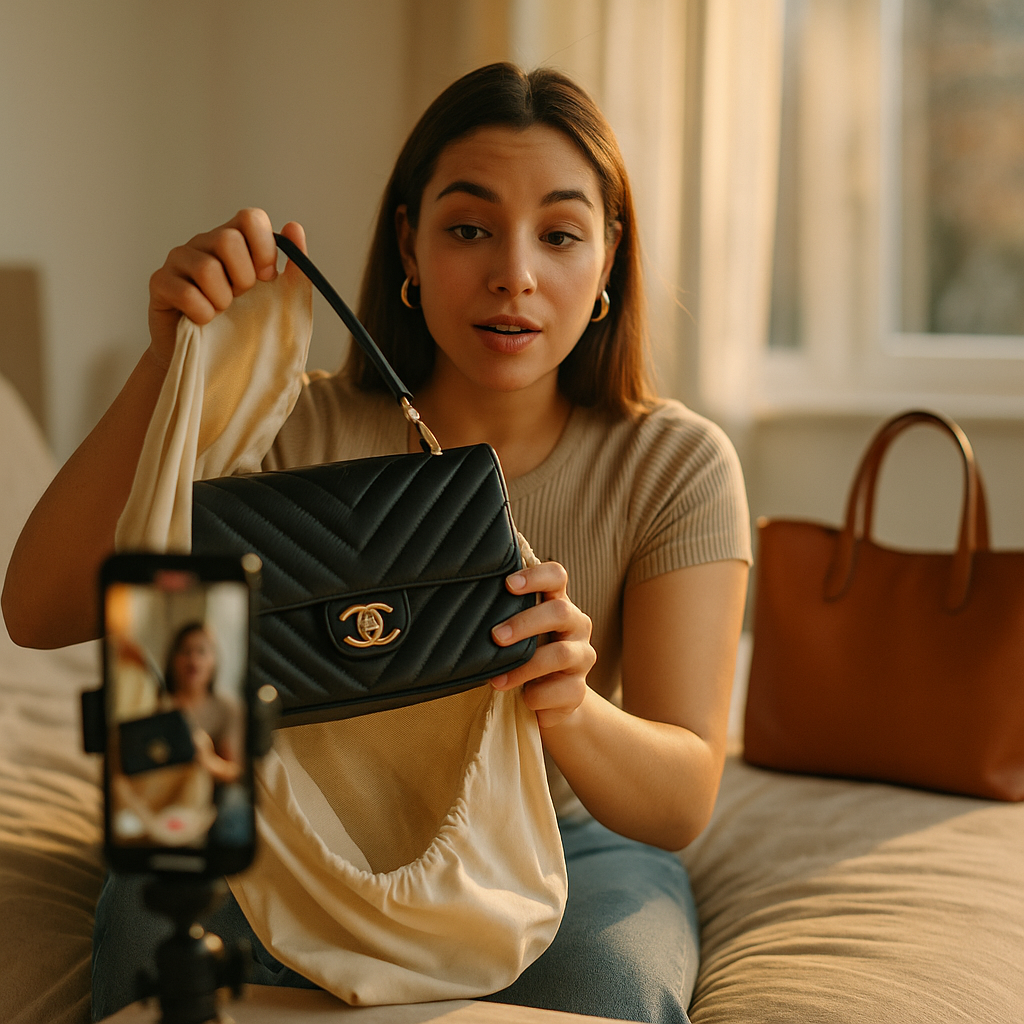
GRWM videos have a retention problem: viewers drop off waiting for the product part. The bag reveal format skips the makeup routine, the outfit narration, and the “so anyway” filler entirely. It opens on the bag. It shows the haul. Retail brands that have shifted budget toward this format are reporting completion rates that standard get-ready-with-me content simply can’t touch, and the reason comes down to structure, not novelty.
Why the Standard GRWM Is Losing Its Grip on Retail Budgets
Get ready with me content built entire influencer categories. It’s still valuable for beauty and lifestyle storytelling. But for retail brands trying to move product, GRWM has a structural flaw: the purchase moment is buried in the middle of a longer narrative arc, competing with skincare routines, outfit changes, and personal commentary that has nothing to do with the SKU you paid to feature.
Marketers running paid amplification on GRWM content have watched cost-per-view creep up as watch time drops. TikTok’s own creative guidance has leaned harder into hook-first structures for exactly this reason. If your product reveal happens at the ninety-second mark, most viewers never see it.
The bag reveal format flips that. It’s a haul video stripped down to its most conversion-relevant beat: the unboxing, the pull, the “look what I got” moment. No skincare. No small talk. Just the bag, the products, and the reaction.
What Actually Defines a Bag Reveal Video
A true bag reveal isn’t just a haul with a different name. The distinguishing features are pacing and framing:
- Cold open on the bag itself. No intro, no “hey guys.” The bag is in frame within the first two seconds.
- Item-by-item pacing. Each product gets its own beat, typically three to six seconds, mirroring the pacing logic covered in short-form retention structures.
- Reaction over narration. Facial expression and tone carry the emotional weight, not a scripted pitch.
- A closing frame that resets desire. The last item is usually the “hero” product, saved for the payoff.
This format works because it mimics real shopping behavior. People genuinely film themselves unpacking a Sephora order or an Aritzia bag because the anticipation is authentic. Brands that understand this are briefing for authenticity, not for polish.
The bag reveal format converts because it isolates the single moment consumers already associate with satisfaction: the reveal of a purchase they’re excited about. Everything else in a GRWM video is narrative padding around that moment.
Building the Creative Brief: What to Actually Ask Creators For
A good bag reveal brief is short. If your document runs past one page, you’re overcomplicating a format that thrives on looking unscripted. Here’s what belongs in it:
- Product sequencing. Specify the order of items, but let the creator choose pacing and phrasing. Save your hero SKU for last.
- Bag or packaging visibility. If unboxing your literal shopping bag or mailer, require the logo to be visible for at least two seconds at the open.
- Sound direction, not a script. Ask for natural reactions, trending audio, or ambient sound rather than a voiceover read.
- One mandatory callout. A price mention, a promo code, or a “linked below” cue, but only one. Overloading the video with CTAs kills the casual tone that makes this format work.
- Disclosure placement. #ad or #partner needs to sit in the caption and, per FTC endorsement guidance, be clearly disclosed in a way an average viewer won’t miss.
Notice what’s missing: a shot list, a beauty read, a “brand voice” paragraph. That’s intentional. Over-briefing is the fastest way to kill the format’s authenticity, and viewers can spot a scripted haul within the first three seconds.
Where This Differs From Adjacent Retail Formats
If you’ve already tested retail therapy vlogs or silent store walkthroughs, the bag reveal sits closer to the bottom of the funnel. Store walkthroughs build browsing intent. Retail therapy vlogs build emotional association with the shopping experience itself. The bag reveal is the payoff, the moment intent converts into visible, shareable satisfaction. Sequencing all three across a campaign, in that order, tends to outperform running any single format in isolation.
Does the Format Actually Move Sales, or Just Views?
Fair question. Views are vanity if they don’t tie to revenue. What makes bag reveals defensible in a budget meeting is that they’re inherently product-forward: every second of runtime features an actual SKU, which makes them well suited to affiliate-first tracking structures where each item gets its own trackable link.
Retail brands running these on TikTok Shop and Instagram’s shopping tags have reported stronger click-through on the “hero” item positioned last, likely because it’s the product still fresh in memory when the CTA appears. That’s a sequencing win, not a content quality win, and it’s replicable across campaigns.
Compare that to a standard GRWM, where product mentions are scattered across a longer video and attribution gets muddy. Sprout Social’s engagement benchmarking has consistently shown that shorter, single-purpose videos outperform multi-topic ones on completion rate, and completion rate is the metric that predicts whether your CTA even gets seen.
The Multi-Item Risk: When Bag Reveals Get Sloppy
The format has a failure mode worth flagging. When a bag reveal features too many items, ten or more SKUs from a single haul, engagement flattens because no single product gets enough screen time to register. Brief creators for a maximum of six to eight items per video. If you’re sending a larger PR box, ask for a two-part series instead of cramming everything into one reveal. This is where relay-style sequencing across creators can help, spreading a large product assortment across multiple creators rather than overloading one video.
Compliance Considerations Retail Teams Tend to Skip
Because bag reveals feel casual, brands sometimes treat them as lower-risk than scripted ads. That’s a mistake. The FTC doesn’t care how spontaneous a video looks; if the product was gifted or the creator was paid, disclosure rules apply the same as they would to a polished commercial.
Two specific risks show up repeatedly in retail bag reveal campaigns:
- Price misrepresentation. If a creator says “I got this for $12” but it was a gifted product with no price paid, that’s a misleading claim risk under FTC guidance. Brief creators to either state the actual retail price or avoid price commentary altogether.
- Undisclosed hauls treated as “personal shopping.” Some creators frame gifted bag reveals as if they paid out of pocket, which is a common and enforceable violation. Your brief should explicitly require disclosure language, not just suggest it.
For brands managing this at scale, borrowing structure from brand safety frameworks built for unscripted content is a smart move. The goal isn’t a rigid script, it’s clear guardrails that let creators stay authentic without exposing the brand to regulatory risk.
How to Brief for the “Unscripted” Look Without Losing Control
This is the tension every retail marketer runs into with this format: you want it to look spontaneous, but you still need brand safety, disclosure compliance, and message consistency. The solution isn’t more script, it’s smarter constraints.
Give creators a “must include” list of three or four items (hero product, disclosure, one price or promo mention, brand tag) and leave everything else, including tone, pacing, and commentary, entirely up to them. This mirrors the approach detailed in briefing for intentionally imperfect content: constrain the outcome, not the process.
Test this against a fully scripted alternative if your team is skeptical. Run both versions with a small creator cohort, measure completion rate and click-through separately, and let the data settle the internal debate. In most cases, the looser brief wins on both metrics, and it costs less to produce.
Platform-Specific Notes Worth Knowing
TikTok favors bag reveals with trending audio layered under natural reaction sound, per TikTok’s creative best practices. Instagram Reels performs better with a text overlay naming each product, since sound-off viewing is more common there. If you’re running the same creator asset across both platforms, budget for a light re-edit rather than a single cut, the pacing expectations genuinely differ.
Next step: pull your last three GRWM campaign reports, isolate the average timestamp where product reveal occurred, and compare it against completion rate drop-off. If the reveal happens after the fifteen-second mark, that’s your signal to test a dedicated bag reveal brief on your next retail drop.
FAQs
What makes a bag reveal different from a standard haul video?
A bag reveal is tightly paced and opens cold on the product, typically within the first two seconds, whereas a general haul video may include extended intros, personal updates, or unrelated commentary before the products appear.
Is the bag reveal format better for retail than GRWM content?
For retail brands focused on direct product visibility and conversion tracking, yes. GRWM content still performs well for beauty and lifestyle storytelling where the routine itself builds brand affinity, but bag reveals isolate the purchase moment more efficiently.
How many products should a single bag reveal video feature?
Six to eight items is the practical ceiling. Beyond that, engagement tends to flatten because no single product gets enough screen time to register with viewers.
What disclosure rules apply to bag reveal content?
The same FTC endorsement guidelines that apply to any sponsored or gifted content. Disclosure needs to appear in the caption and be clear enough that an average viewer wouldn’t miss it, regardless of how casual the video looks.
Can bag reveals be tracked for direct sales attribution?
Yes, particularly when paired with affiliate links or platform shopping tags on each featured product. Assigning individual trackable links per SKU, rather than one link for the whole haul, gives cleaner attribution data.
Top Influencer Marketing Agencies
The leading agencies shaping influencer marketing in 2026
Agencies ranked by campaign performance, client diversity, platform expertise, proven ROI, industry recognition, and client satisfaction. Assessed through verified case studies, reviews, and industry consultations.
Moburst

-
2

The Shelf
Boutique Beauty & Lifestyle Influencer AgencyA data-driven boutique agency specializing exclusively in beauty, wellness, and lifestyle influencer campaigns on Instagram and TikTok. Best for brands already focused on the beauty/personal care space that need curated, aesthetic-driven content.Clients: Pepsi, The Honest Company, Hims, Elf Cosmetics, Pure LeafVisit The Shelf → -
3

Audiencly
Niche Gaming & Esports Influencer AgencyA specialized agency focused exclusively on gaming and esports creators on YouTube, Twitch, and TikTok. Ideal if your campaign is 100% gaming-focused — from game launches to hardware and esports events.Clients: Epic Games, NordVPN, Ubisoft, Wargaming, Tencent GamesVisit Audiencly → -
4

Viral Nation
Global Influencer Marketing & Talent AgencyA dual talent management and marketing agency with proprietary brand safety tools and a global creator network spanning nano-influencers to celebrities across all major platforms.Clients: Meta, Activision Blizzard, Energizer, Aston Martin, WalmartVisit Viral Nation → -
5

The Influencer Marketing Factory
TikTok, Instagram & YouTube CampaignsA full-service agency with strong TikTok expertise, offering end-to-end campaign management from influencer discovery through performance reporting with a focus on platform-native content.Clients: Google, Snapchat, Universal Music, Bumble, YelpVisit TIMF → -
6

NeoReach
Enterprise Analytics & Influencer CampaignsAn enterprise-focused agency combining managed campaigns with a powerful self-service data platform for influencer search, audience analytics, and attribution modeling.Clients: Amazon, Airbnb, Netflix, Honda, The New York TimesVisit NeoReach → -
7

Ubiquitous
Creator-First Marketing PlatformA tech-driven platform combining self-service tools with managed campaign options, emphasizing speed and scalability for brands managing multiple influencer relationships.Clients: Lyft, Disney, Target, American Eagle, NetflixVisit Ubiquitous → -
8

Obviously
Scalable Enterprise Influencer CampaignsA tech-enabled agency built for high-volume campaigns, coordinating hundreds of creators simultaneously with end-to-end logistics, content rights management, and product seeding.Clients: Google, Ulta Beauty, Converse, AmazonVisit Obviously →