


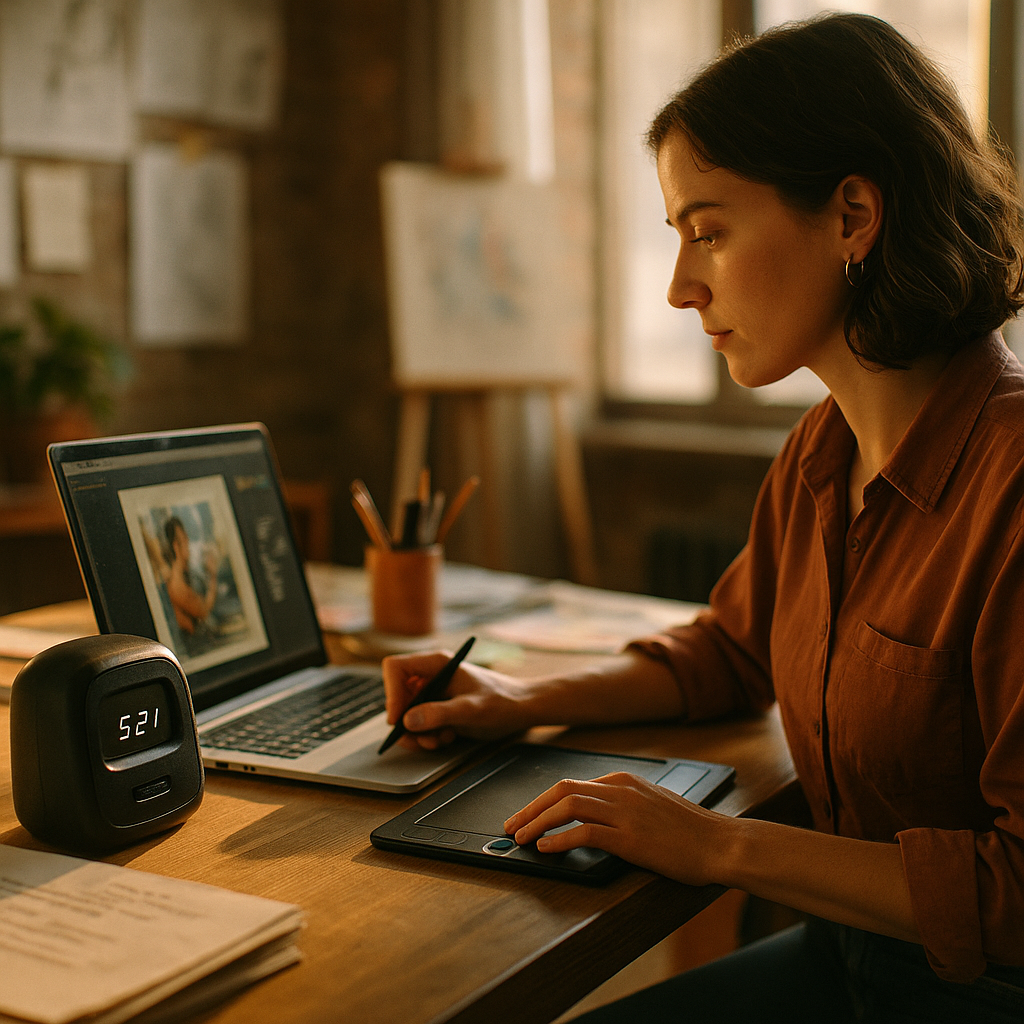
The Department of Labor doesn’t care that your employee creator’s “quick TikTok” took ninety minutes to script, shoot, and reshoot. If it’s compensable work under the FLSA, it needs a timestamp. Time tracking systems for employee creators have quietly become one of the biggest compliance blind spots in brand marketing, and most HR and legal teams still treat creator hours like a side project instead of payroll data.
This guide walks through how to build a time tracking setup that actually holds up if the Department of Labor comes knocking, or if a former employee creator files a wage claim two years after leaving your company.
Why This Problem Is Bigger Than Marketing Realizes
Employee influencer programs exploded because they’re cheap, authentic, and fast. Put your customer service rep on TikTok, let your product designer show off the new drop, and suddenly you’ve got organic reach without paying an agency fee. Sounds efficient. It is, until payroll and legal realize nobody is tracking the hours these employees spend creating content.
Here’s the catch: content creation performed by a non-exempt employee at their employer’s direction is compensable work under the Fair Labor Standards Act, whether it happens at a desk, in a break room, or on a Saturday afternoon at home. We covered the underlying legal exposure in employee influencer programs, but the compliance gap doesn’t end with recognizing the risk. It ends with a system that actually captures the hours.
If an employee creator can’t point to a timestamped record of their content hours, your company’s version of events becomes the only version, and that’s exactly the setup that invites a wage and hour lawsuit.
What Counts as Compensable Creator Time?
This is where most companies get tripped up. Marketing thinks in terms of “posts.” Legal thinks in terms of “hours worked.” The two frameworks rarely line up cleanly.
- Scripting and planning: Brainstorming a hook, writing a caption, researching trending sounds. If it’s directed by the employer’s content calendar, it’s compensable.
- Filming and reshoots: The obvious one, but multiply by every failed take, every wardrobe change, every “let’s do it again with better lighting.”
- Editing: Cutting footage, adding captions, color correction. Often the most underestimated time sink of the entire process.
- Approval loops: Waiting on brand or legal sign off doesn’t count as “worked” time in most jurisdictions, but responding to feedback and making revisions absolutely does.
- Off-hours posting and engagement: Responding to comments at the employer’s request, especially within a set window after posting, can count depending on how directive the instruction was.
Notice a pattern? Almost none of this happens inside a nine-to-five shift tracked by a standard time clock. That’s precisely why bolt-on solutions matter more here than in almost any other HR function.
Building the Time Tracking Stack: Four Non-Negotiables
A compliant system for creator hours needs to do four things well. Skip any one of them and you’ve got a paper trail full of holes.
1. Task-Level Categorization, Not Just Clock In/Clock Out
Generic time clock software wasn’t built for content work. You need line items: “scripting,” “filming,” “editing,” “approval revisions,” “posting and engagement.” Tools like Deputy, When I Work, or even a customized module inside Rippling or Gusto can support task tagging, but most companies have to configure this manually. Don’t assume your existing payroll platform handles it out of the box. Check.
2. Mobile-First Logging
Your employee creators aren’t filming at a desk. They’re in a stockroom, a parking lot, their kitchen. If the time tracking tool requires a desktop login, you’ve guaranteed underreporting. Mobile apps with one-tap task switching (start “filming,” stop “filming,” start “editing”) remove the friction that causes people to just estimate hours at the end of the week, which is where accuracy dies.
3. Approval Workflows With an Audit Trail
A manager needs to review and approve logged creator hours, the same way they’d approve any other timesheet. But here’s the part people miss: the system needs to preserve a record of edits. If a manager reduces a submitted hour total, that change needs a timestamp and a reason. Silent edits to employee time records are a classic red flag in DOL investigations.
4. Integration With Payroll, Not a Parallel Spreadsheet
If creator hours live in a separate Google Sheet that someone manually re-enters into payroll, you’ve built a system designed to fail an audit. Every gap between the tracking tool and the paycheck is a place where hours can quietly disappear. Direct integration, even a clunky CSV export/import routine, beats manual re-entry every time.
According to HubSpot’s workforce research, misclassified or unrecorded work hours remain among the top triggers for wage and hour claims in industries with hybrid, flexible, or remote content roles, exactly the profile of most employee creator programs.
Setting Thresholds: Where Does “De Minimis” Actually End?
Companies love to lean on the “de minimis” doctrine, the idea that a few minutes of untracked work don’t count. It’s real, but it’s narrower than most marketing teams assume. Responding to one comment on a lunch break? Probably de minimis. Spending twenty minutes every evening for a week responding to DMs about a sponsored post? That’s a pattern, and patterns are exactly what plaintiffs’ attorneys look for.
A reasonable operating rule: anything under five minutes, occasional, and not employer-directed can likely sit in the de minimis bucket. Anything recurring, anything tied to a specific content deliverable, needs to be logged. When in doubt, log it. The cost of over-tracking is a slightly bigger payroll line. The cost of under-tracking is a class action.
Overtime Exposure Nobody Budgets For
Here’s a scenario that plays out more often than brands admit. A retail employee, classified non-exempt, agrees to film content “on the side” for extra visibility. She’s already working 38 hours a week on the floor. Add six hours of filming and editing on weekends, and she’s now over 40. Under the FLSA, that’s overtime, at 1.5x her regular rate, whether or not anyone budgeted for it.
Marketing teams rarely loop in payroll before launching an employee creator initiative. That’s the operational failure at the root of most compliance messes here. Before any employee starts creating branded content, HR needs visibility into their current weekly hours, and finance needs a line item for potential overtime. Skipping this step is how a “free” organic content program turns into a wage claim with back pay, liquidated damages, and legal fees attached.
For a deeper look at how these compensable work gaps show up structurally inside employee influencer programs, see our breakdown on closing the FLSA compensable work gap. It pairs well with this setup guide because the legal exposure and the operational fix need to move together.
Don’t Forget State-Level Wrinkles
Federal FLSA rules are the floor, not the ceiling. California, New York, and Illinois all layer additional wage and hour protections on top, including stricter meal and rest break rules that intersect with content filming schedules. If an employee creator skips a legally mandated break to finish a shoot, that’s a separate violation entirely, independent of whether the filming hours themselves were compensated correctly.
This is also where AI-assisted scheduling tools introduce new risk. If you’re using an AI system to auto-schedule content shoots around employee availability, make sure it’s factoring in state break laws, not just calendar availability. Related exposure around AI-driven scheduling and payout systems is explored in our AI creator payout audit piece, which, while focused on platform workers, raises the same core question: does your automation account for labor law, or just logistics?
Documentation That Survives an Audit
If the DOL or a state labor agency ever asks for records, here’s the minimum documentation set that holds up:
- Time logs broken down by task category, not just total daily hours
- Manager approval records with timestamps and edit history
- Written policy defining what content activities count as compensable work
- Employee acknowledgment of the policy, ideally signed digitally with a date stamp
- Payroll records showing the logged hours actually made it into paychecks, including any overtime calculation
Missing any one of these doesn’t necessarily mean you’ll lose an audit. But it does mean you’re relying on testimony and reconstruction instead of contemporaneous records, and investigators trust records over memory every time.
Where This Intersects With Ownership and IP
Time tracking isn’t just a wage issue. It’s also evidence in ownership disputes. If an employee creator later claims a piece of content was made on personal time, using personal equipment, and therefore belongs to them, your time logs are the counter evidence. Clean records showing the work was done during compensated, employer-directed hours strengthen your position in IP assignment disputes. The same logs also support the broader ownership framework discussed in employee creator ownership clauses, where HR and legal need matching documentation to avoid conflicting claims later.
It’s worth building this connection into your rollout from day one. Treat time tracking, IP assignment, and disclosure policy as one integrated compliance package, not three separate initiatives running on different timelines.
A Simple Rollout Sequence
- Audit current employee creator activity to estimate actual weekly hours being spent, even informally, before building any system.
- Select a task-based time tracking tool that supports mobile logging and integrates with existing payroll software.
- Draft a written policy defining compensable content activities and get legal sign-off before distribution.
- Train managers on approval workflows and the audit trail requirements, not just the software mechanics.
- Run a 30-day pilot with a small group of employee creators, then adjust thresholds and categories before company-wide rollout.
For broader context on how disclosure obligations layer on top of these same employee-generated posts, our guide on employee generated content and FTC disclosure is worth reading alongside this one. The FTC and DOL are asking different questions, but they’re both looking at the same underlying content.
You can also check the Department of Labor’s own guidance directly at ftc.gov for disclosure-adjacent rules, and consult resources like Sprout Social’s workforce and creator management research for benchmarking how peer companies structure their programs.
Frequently Asked Questions
Do salaried, exempt employees need time tracking for creator work?
Generally no, exempt employees aren’t entitled to overtime and their compensable hours aren’t tracked the same way. But if an exempt employee’s primary duties shift substantially toward content creation, it can jeopardize their exempt classification entirely, which is a separate risk worth flagging to HR.
What if an employee creates content voluntarily, without being asked?
Truly voluntary content, created without employer direction, knowledge, or benefit, generally isn’t compensable. The moment a manager reviews it, requests changes, or the company reposts it officially, that voluntary status becomes questionable.
Can we just pay a flat stipend instead of tracking hourly work?
A flat stipend doesn’t satisfy FLSA requirements for non-exempt employees if actual hours worked would result in a higher amount owed, especially with overtime. Stipends can supplement tracked hourly pay, but they can’t replace it for non-exempt staff.
How long should we retain creator time tracking records?
Follow standard FLSA recordkeeping requirements, generally three years for payroll records and two years for supporting documentation like time cards. State requirements can extend this, so check local rules before setting a company-wide retention policy.
Does this apply to part-time and seasonal employee creators too?
Yes. FLSA compensable work rules apply regardless of full-time, part-time, or seasonal status. In fact, seasonal and part-time creators often present higher risk because their hours fluctuate more, making unrecorded overtime easier to miss.
Next step: Pull your current employee creator roster this week and check whether a single hour of their content work is logged anywhere payroll can see it. If the answer is no, that’s your starting point, not a policy document, not a vendor demo, just an honest audit of what’s actually happening right now.
Frequently Asked Questions
Do salaried, exempt employees need time tracking for creator work?
Generally no, exempt employees aren’t entitled to overtime and their compensable hours aren’t tracked the same way. But if an exempt employee’s primary duties shift substantially toward content creation, it can jeopardize their exempt classification entirely, which is a separate risk worth flagging to HR.
What if an employee creates content voluntarily, without being asked?
Truly voluntary content, created without employer direction, knowledge, or benefit, generally isn’t compensable. The moment a manager reviews it, requests changes, or the company reposts it officially, that voluntary status becomes questionable.
Can we just pay a flat stipend instead of tracking hourly work?
A flat stipend doesn’t satisfy FLSA requirements for non-exempt employees if actual hours worked would result in a higher amount owed, especially with overtime. Stipends can supplement tracked hourly pay, but they can’t replace it for non-exempt staff.
How long should we retain creator time tracking records?
Follow standard FLSA recordkeeping requirements, generally three years for payroll records and two years for supporting documentation like time cards. State requirements can extend this, so check local rules before setting a company-wide retention policy.
Does this apply to part-time and seasonal employee creators too?
Yes. FLSA compensable work rules apply regardless of full-time, part-time, or seasonal status. In fact, seasonal and part-time creators often present higher risk because their hours fluctuate more, making unrecorded overtime easier to miss.
Top Influencer Marketing Agencies
The leading agencies shaping influencer marketing in 2026
Agencies ranked by campaign performance, client diversity, platform expertise, proven ROI, industry recognition, and client satisfaction. Assessed through verified case studies, reviews, and industry consultations.
Moburst

-
2

The Shelf
Boutique Beauty & Lifestyle Influencer AgencyA data-driven boutique agency specializing exclusively in beauty, wellness, and lifestyle influencer campaigns on Instagram and TikTok. Best for brands already focused on the beauty/personal care space that need curated, aesthetic-driven content.Clients: Pepsi, The Honest Company, Hims, Elf Cosmetics, Pure LeafVisit The Shelf → -
3

Audiencly
Niche Gaming & Esports Influencer AgencyA specialized agency focused exclusively on gaming and esports creators on YouTube, Twitch, and TikTok. Ideal if your campaign is 100% gaming-focused — from game launches to hardware and esports events.Clients: Epic Games, NordVPN, Ubisoft, Wargaming, Tencent GamesVisit Audiencly → -
4

Viral Nation
Global Influencer Marketing & Talent AgencyA dual talent management and marketing agency with proprietary brand safety tools and a global creator network spanning nano-influencers to celebrities across all major platforms.Clients: Meta, Activision Blizzard, Energizer, Aston Martin, WalmartVisit Viral Nation → -
5

The Influencer Marketing Factory
TikTok, Instagram & YouTube CampaignsA full-service agency with strong TikTok expertise, offering end-to-end campaign management from influencer discovery through performance reporting with a focus on platform-native content.Clients: Google, Snapchat, Universal Music, Bumble, YelpVisit TIMF → -
6

NeoReach
Enterprise Analytics & Influencer CampaignsAn enterprise-focused agency combining managed campaigns with a powerful self-service data platform for influencer search, audience analytics, and attribution modeling.Clients: Amazon, Airbnb, Netflix, Honda, The New York TimesVisit NeoReach → -
7

Ubiquitous
Creator-First Marketing PlatformA tech-driven platform combining self-service tools with managed campaign options, emphasizing speed and scalability for brands managing multiple influencer relationships.Clients: Lyft, Disney, Target, American Eagle, NetflixVisit Ubiquitous → -
8

Obviously
Scalable Enterprise Influencer CampaignsA tech-enabled agency built for high-volume campaigns, coordinating hundreds of creators simultaneously with end-to-end logistics, content rights management, and product seeding.Clients: Google, Ulta Beauty, Converse, AmazonVisit Obviously →